



In-Depth Analysis: The Evolution of Shohei Ohtani’s Hitting Skills and His Underrated Excellence



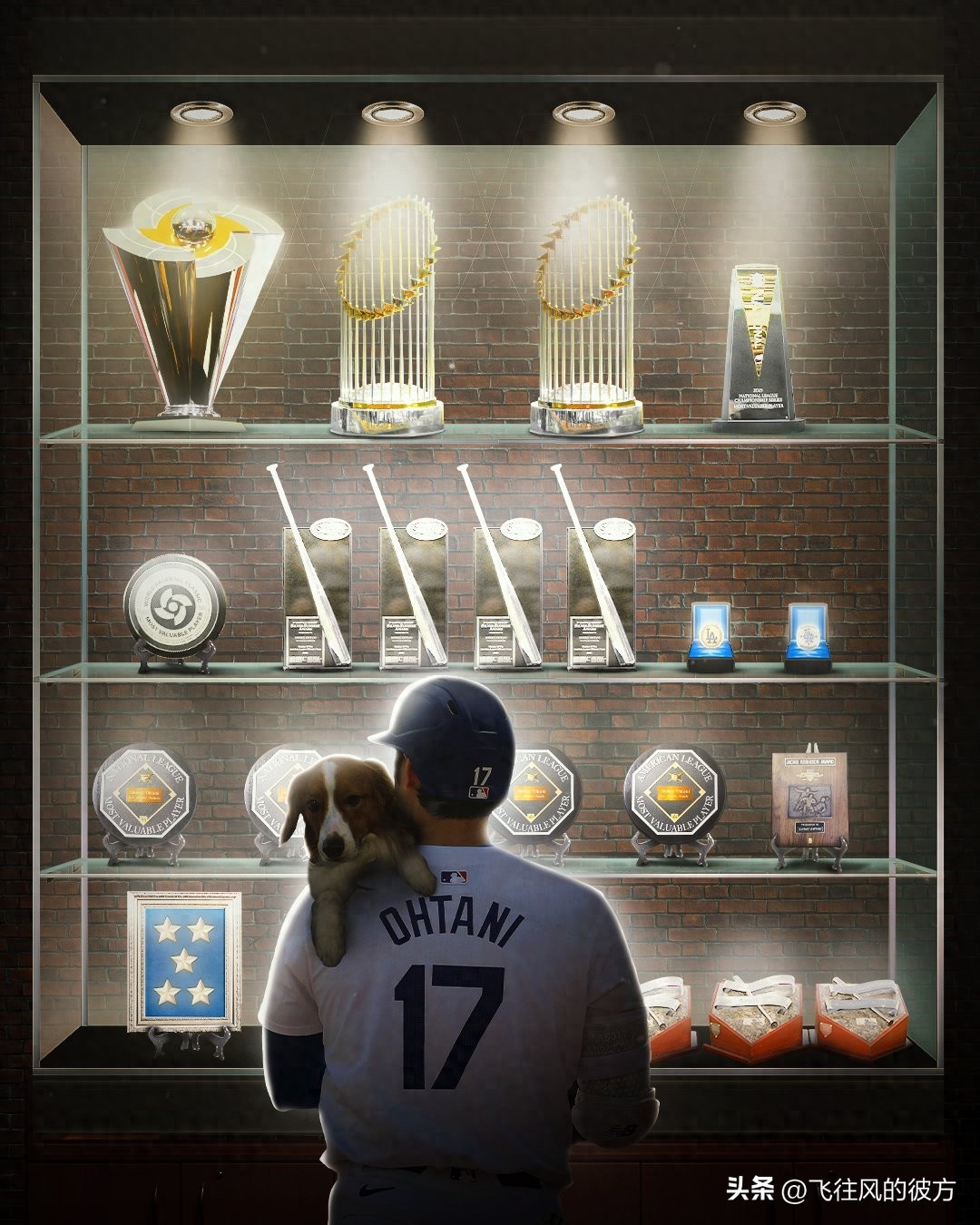
Shohei Ohtani is accomplishing unprecedented feats on the baseball field. While this might be obvious to many readers, his extraordinary performance always deserves to be recounted. This two-way phenom has won the Most Valuable Player (MVP) award three years in a row, with the last two trophies earned after joining the Los Angeles Dodgers, where he helped the team secure back-to-back World Series titles.
Since joining the Dodgers, Ohtani has created his own exclusive “50 homers and 50 stolen bases” club. He once hit three home runs and pitched six scoreless innings with 10 strikeouts in a decisive National League Championship Series game. Recently, he also hit four extra-base hits and reached base nine times in a single World Series game.
We all know some obvious reasons behind Ohtani’s success: since 2024, he has led the league in the number of “barrels” (solid hits), ranks fourth in stolen bases (79), and returned to the mound in 2025 in better form than ever. If there is any aspect of Ohtani that remains “underrated” or underreported, it might be how he overcame early weaknesses to transform into a well-rounded, flawless superstar.
Let’s delve deeper into some of the underrated key factors behind Ohtani’s success, especially his evolution as a hitter.
Fearless Against Every Pitch Type
During his first three MLB seasons with the Los Angeles Angels, Ohtani was devastating against fastballs, posting a slugging percentage of 0.586 and hitting 36 home runs in 556 plate appearances off fastballs. However, he was less effective against breaking balls and off-speed pitches, with a slugging percentage of just 0.396 and only 11 home runs against non-fastballs.
Since Ohtani’s breakout 2021 season when he won his first MVP, we have witnessed signs of his maturation as a hitter, as he began to hit all pitch types with power. This balanced strength against fastballs, breaking balls, and off-speed pitches has become increasingly consistent, especially after his final season with the Angels in 2023.
Ohtani’s yearly slugging percentages (SLG) against various pitch types since 2021:
- 2021: Fastballs 0.630 / Non-fastballs 0.557
- 2022: Fastballs 0.582 / Non-fastballs 0.460
- 2023: Fastballs 0.783 / Non-fastballs 0.558
- 2024: Fastballs 0.577 / Non-fastballs 0.714
- 2025: Fastballs 0.648 / Non-fastballs 0.595
To illustrate this more clearly, consider the number of home runs and “Run Value” (the total run contribution by the batter against specific pitch types) since he joined the Dodgers:
Ohtani’s rankings in home runs and run value by pitch type from 2024 onward:
- Home runs off breaking balls:Rank 1(37 HRs)
- Home runs off off-speed pitches:Rank 1(17 HRs)
- Run value off breaking balls:Rank 1(+49)
- Run value off off-speed pitches:Rank 1(+27)
- Run value off fastballs:Rank 4(+57)
- Home runs off fastballs:Rank 5(103 HRs)
This level of dominance is remarkable. Whether by home run totals or overall run contribution, Ohtani ranks among the top five hitters in the league against fastballs, breaking balls, and off-speed pitches. This comprehensive suppression of all pitch types puts pitchers in an unsolvable predicament, especially given the strong lineup supporting him.
In 2025, among eight pitch types he faced in at least 20 plate appearances, Ohtani’s slugging percentage was no lower than 0.571 in seven of them. The only exception was against horizontal sliders, where he posted a slugging percentage of 0.488 in 49 plate appearances.
Eliminating Left-Right Pitcher Splits
Ohtani has made significant progress. Compared to his rookie season when he posted a 0.654 OPS in 110 plate appearances against left-handed pitchers, his current performance is on a completely different level.
Looking back at his breakout 2021 season with the Angels, his improvement against lefties is clearly evident.
Ohtani’s seasonal stats against left-handed pitchers (OPS / home runs / plate appearances):
- 2018: 0.654, 2 HRs (110 PA)
- 2019: 0.794, 3 HRs (116 PA)
- 2020: 0.629, 1 HR (54 PA)
- 2021: 0.980, 18 HRs (224 PA)
- 2022: 0.787, 9 HRs (228 PA)
- 2023: 0.898, 11 HRs (170 PA)
- 2024: 0.867, 12 HRs (249 PA)
- 2025: 0.898, 15 HRs (244 PA)
When Ohtani first joined the Angels, he was often strategically deployed against left- or right-handed pitchers, so gaining more practical experience and plate appearances likely helped him improve in this area. Note that in his first two seasons, he had only 216 plate appearances against lefties combined, but in 2021 alone, he faced left-handed pitchers 224 times.
Additionally, a significant drop in his strikeout rate against left-handers has been crucial. From 2018 to 2020, his strikeout rate versus lefties was 31.1%. From 2021 to 2025, this dropped to 26.7%. Simply making more contact against lefties has created more opportunities for damage.
Increasing Launch Angle
As Ohtani evolved into a true elite hitter capable of handling all pitch types from both right- and left-handed pitchers, he also began hitting the ball more in the air.
In his rookie season of 2018, Ohtani’s fly ball rate (percentage of fly balls, line drives, or pop-ups) was 56.0%, while in 2019 and 2020, it hovered just above 50%. This meant about half his batted balls were grounders, which is not ideal for a power hitter of his caliber.
This trend shifted dramatically with his 2021 breakthrough. Since then, his fly ball rate has remained above 55% each season, with three seasons exceeding 60%. His fly ball rate from 2018 to 2020 was 52.5%, but from 2021 onward, it surged to 59.9%.
The benefits of hitting the ball in the air are clear. Ohtani’s power potential was evident from his MLB debut, but hitting half his balls on the ground limited his output. Since 2021, when he started hitting about 60% of balls in the air, he has amassed 233 home runs, second only to Aaron Judge’s 249 in the majors.
Putting these elements together, you can see how Ohtani has become one of baseball’s most complete hitters. Yes, he still swings and misses a lot—his 33.4% whiff rate in 2025 ranks in the bottom 4% of the league—but for a power hitter of his type, this is normal. Given his excellence in all other areas, this flaw is largely negligible.
Now 31 years old, Shohei Ohtani shows no signs of slowing down on either pitching or hitting fronts. With his continuous evolution in all aspects, there is no reason to expect his era-defining performance to end anytime soon.



 Links
Links
 Contact
Address:UNIT 1804 SOUTH BANK TOWER, 55 UPPER GROUND,LONDON ENGLAND SE1 9E
Number:+85259695367
E-mali:[email protected]
 App
App


