



20th Anniversary of Kobe's 81-Point Game! Former Raptors Coach Recalls the Miracle: Tried Every Tactic but Couldn't Stop Him



On January 23rd, 20 years ago, Kobe Bryant dropped 81 points in a game against the Raptors. The NBA's official site published a lengthy article honoring this miracle and spoke with Sam Mitchell, the opposing coach at the time. He reflected on this classic battle from the opponent’s perspective. Below is the full article from the official site—
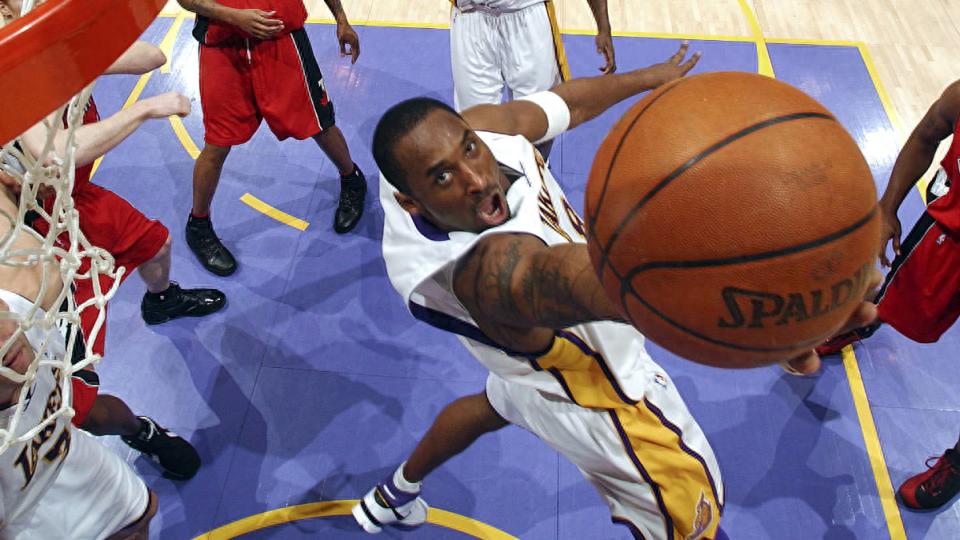
Time has a unique power; it stirs waves of forgetfulness, making people oblivious or pushing them toward the next trending event. In today's social media era, this tendency is even stronger—several generations have become prisoners of the present, completely disconnected from the past.
However, history always has exceptions. Some legendary moments remain as vivid and awe-inspiring as ever.
For example:
How many points did Kobe Bryant score in that game?
Was it 81 points? And has that miracle really passed by a full 20 years?
Today's fans and the NBA’s official records are separated by three or four generations from that single-game scoring record. Moreover, the 1962 game has no photos, no videos, not even a social media post—only a frozen image of a player holding a paper showing the score. Because of this, Kobe's 81 points became the Wilt Chamberlain 100 points of our era.
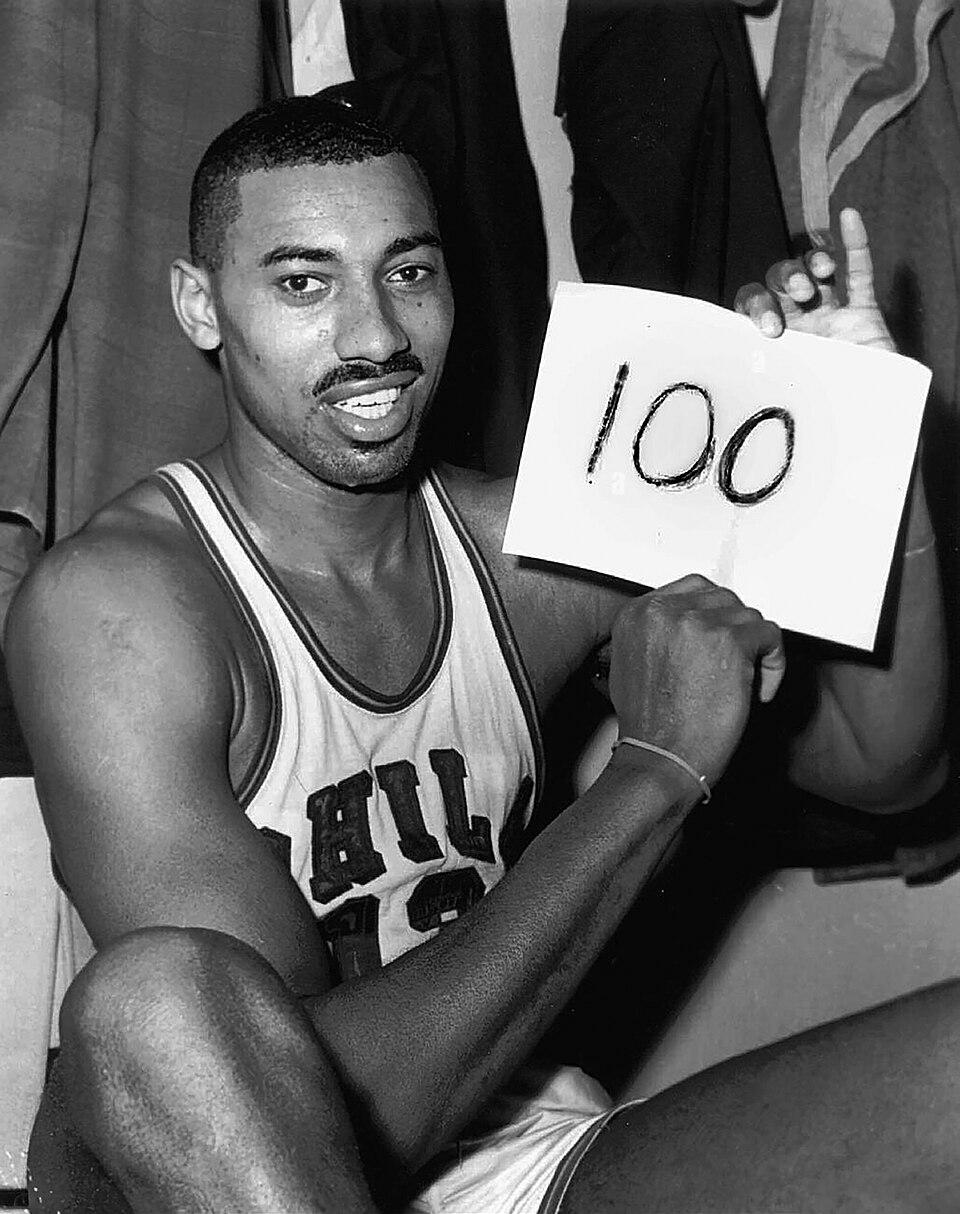
Under modern game rules and court conditions, this stands as an unshakable benchmark. This legend was created by an iconic star deeply rooted in people's hearts, with the entire game fully captured on video at a time when cutting-edge sports broadcasting was just emerging—perfect timing, place, and people combined to create Kobe's 81-point miracle.
Of course, this might not apply to the Toronto Raptors—on January 23, 2006, at the Staples Center in Los Angeles, they were the backdrop for Kobe’s legendary night.
“Honestly,” Sam Mitchell recently recalled, “I had already come to terms with it. After all, it was Kobe Bryant, man. He was on fire that night, and all we could do was watch helplessly. What else could we do?”
Mitchell was the Raptors' head coach then. He was supposed to do everything possible to contain Kobe, but it was as if every tactical weapon he had was locked away in the back kitchen of the arena’s restaurant. He tried every method—indeed, almost every tactic he could think of.
“We exhausted every trick to slow him down and stop his scoring,” Mitchell said. “I used every defensive strategy I could recall, even digging up some old college tactics—man-to-four defense, 2-3 zone. When was the last time you heard of someone using a 2-3 zone in the NBA?”Anyway, that day, we tried them all.”
Mitchell added, “But like I said, he’s a historic superstar. That night, no matter which team defended him, he still would have scored 81.”
Let’s look at the staggering stats: Kobe attempted 46 shots, made 28, shooting 60%; he scored 55 points by himself in the second half, while the entire Raptors team scored only 41 points in that half; he made 18 of 20 free throws and hit 7 three-pointers. Despite his high usage rate, in 42 minutes played, he only committed 3 turnovers and offset those with 3 steals.
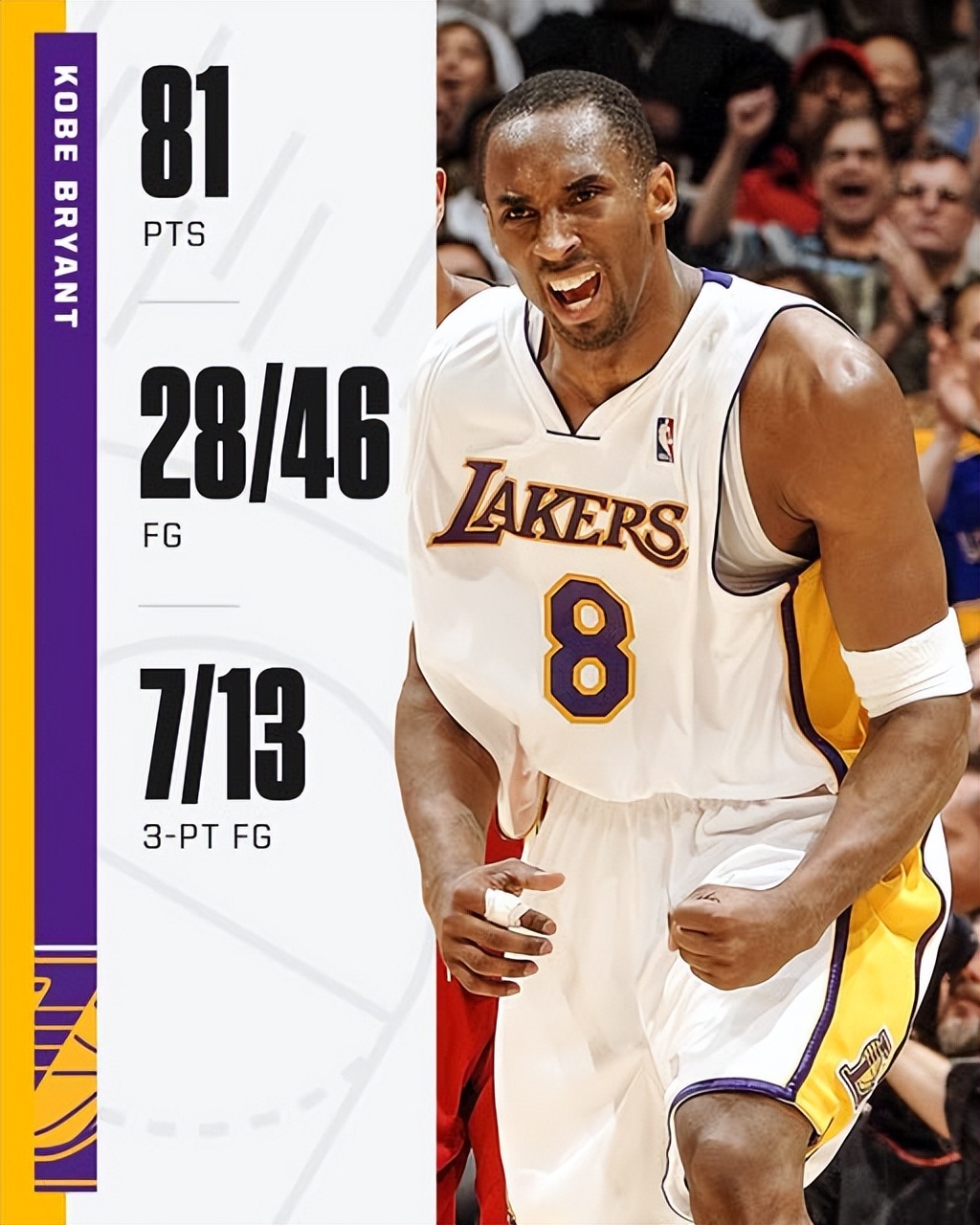
Kobe later admitted about this game: “At the time, I didn’t really realize or understand the miracle I was creating.”
These cold numbers only reveal a fraction of the legend. Like all great games, behind the score sheet lie countless details that stats cannot express. Stats won’t tell you how Kobe suddenly ignited in the second half and switched to “turbo mode”; they can’t recreate the game context—because the game was tight, he had to shoulder the scoring burden; nor will they tell you that before his explosion, when the usually late-arriving LA fans were just settling in, the Raptors were actually controlling the game.
“The fans weren’t booing the Lakers then, but they were a bit frustrated because we kept pushing fast breaks and easy layups,” Mitchell recalled. “If Kobe hadn’t decided to take over, we should have won by 30.”
But in reality, Kobe’s mindset underwent a dramatic shift, leading to a complete turnaround in the game.
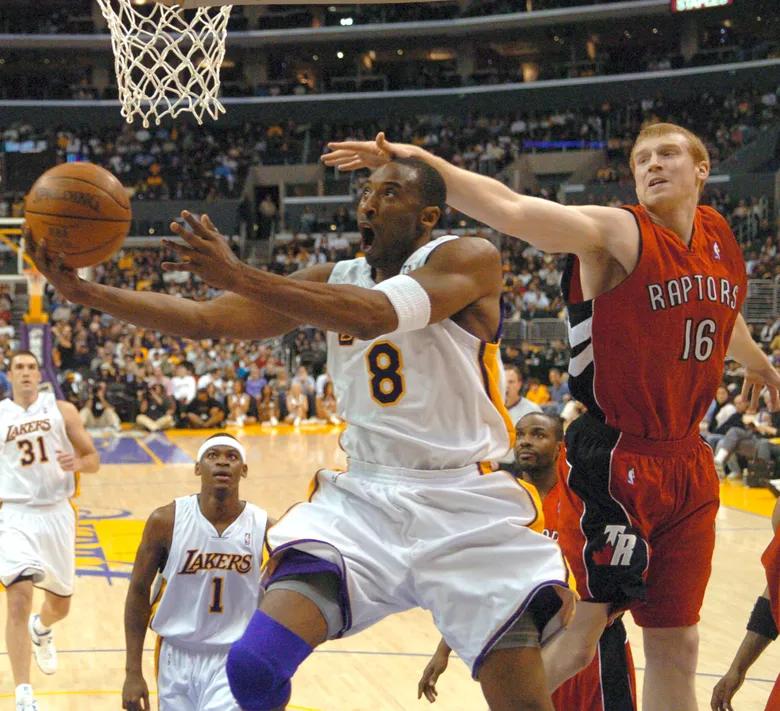
It’s worth noting that neither the Lakers nor Raptors were top-tier teams then. The Raptors were rebuilding and had a young center named Chris Bosh; Kobe’s Lakers starting lineup featured role players like Smush Parker and Chris Mihm. So, this game didn’t attract much attention before tip-off.
At halftime, the Raptors led 63-49, shooting 65%—their best half all season. If anyone looked set for a career night, it seemed to be the Raptors’ journeyman Mike James, who scored 19 in the first half but only added 7 more in the second.
During halftime in the Raptors’ locker room, no one considered defending Kobe a tough problem since he had scored only 26 points in the first half.For a star like him, especially against a rebuilding team, that scoring was quite ordinary. Besides, the team was comfortably ahead.
But everything changed once the second half whistle blew. Mitchell sensed a storm brewing early on.
“At the start of the third quarter, Kobe drove baseline, and Morris Peterson had perfectly cut off his path,” Mitchell recalled. “But Kobe suddenly stopped, faked three times in a row, then spun around dramatically and, with his back fully to the defender, hit a fadeaway jumper—the ball swished through the net.”
At that moment, everyone knew: the killer Kobe was back.
In that game, the Raptors mainly assigned Jalen Rose to guard Kobe, with Peterson and Joey Graham as backup defenders. Rose was well past his prime—it was his 12th NBA season, and teammates joked about his growing belly, teasing if he was “expecting.”
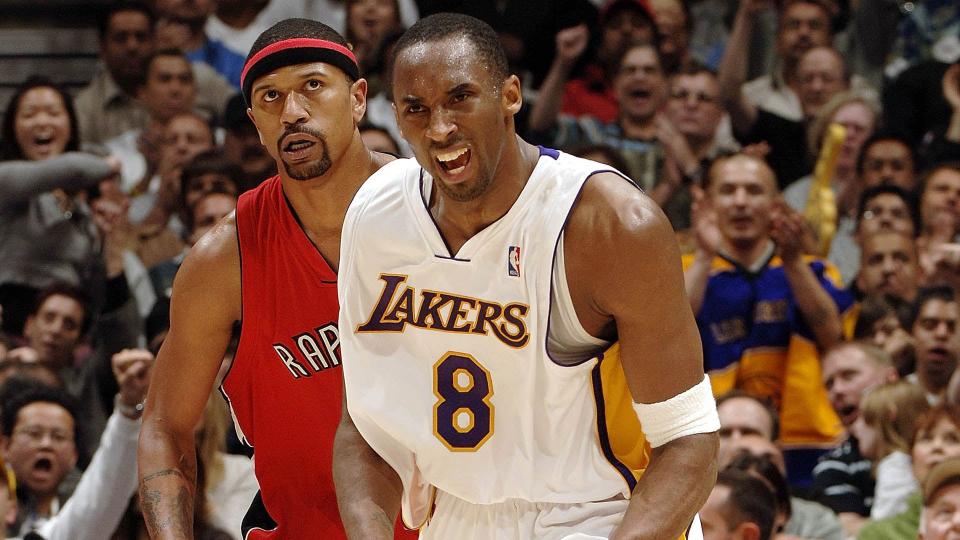
But honestly, even if the Raptors had deployed a defensive trio of Rodman, Draymond Green, and Hakeem Olajuwon, the result likely wouldn’t have changed.
“Watch the shots he made that night,” Mitchell said. “You’ll be amazed. He could fake three or four times, then shoot the moment he shook off his defender. I still don’t understand how he kept his balance.”
At the game’s start, the Raptors tried man-to-man defense on Kobe, but like all defensive plans that night, it failed. Years later, Jalen Rose admitted the Raptors should have double-teamed Kobe more. But Mitchell didn’t fully agree.
“I remember I had Calderon play front defense on Kobe—just don’t let him get the ball. If he can’t catch it, we still have a chance. Even if we double-teamed him, he could pass to Lamar Odom outside. Some say we should have triple-teamed him? Man, this isn’t high school ball; you can’t leave your big men wide open under the basket just to guard a player 18 feet out.”
In that game, Kobe scored against eight different Raptors defenders. He put up 18 points over Rose and 17 over Peterson.Calderon later said, “Those shots weren’t wide open at all. We stayed right on him the whole time.”
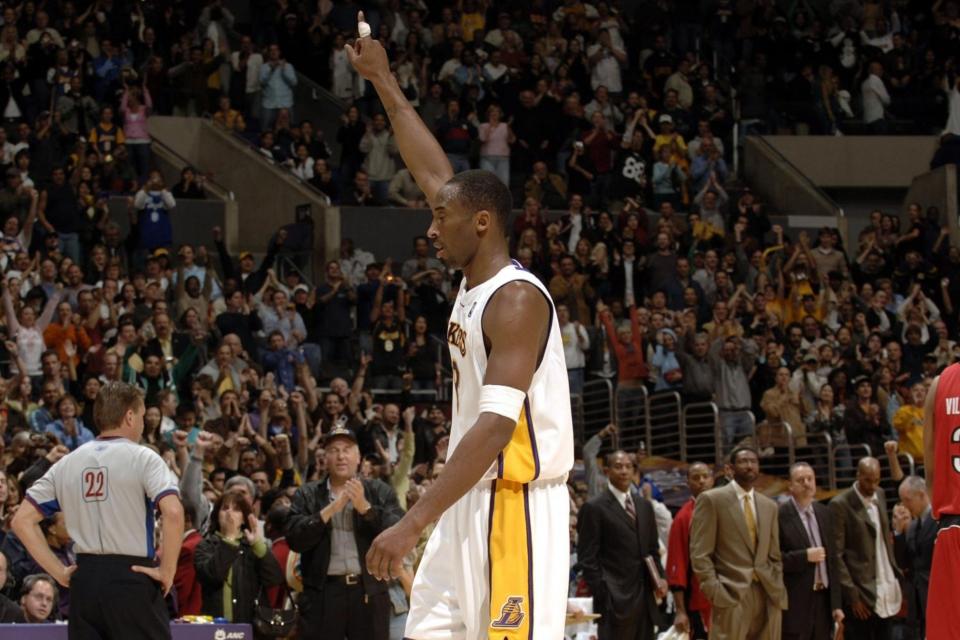
To be fair, the Raptors’ defense wasn’t terrible that night—although, as Rose said, they could have done better by assigning a dedicated defensive specialist or organizing more effective double-teams. It’s just that Kobe was unbelievably dominant.
“Those who say we should have done this or that should watch the game tape carefully,” Mitchell said. “Criticism doesn’t bother me because I know how hard we worked and how much effort the players gave.”
As the game went on, news of Kobe’s scoring spree spread throughout the league and across the U.S. When he scored 27 points in the third quarter alone, while the Raptors scored only 22, everyone began wondering what miracle the game would produce. A seemingly ordinary regular-season game sparked everyone’s imagination, wherever they were.
Just three months earlier, Kobe scored 62 points against the Mavericks, but Lakers coach Phil Jackson took him out after the third quarter, preventing him from chasing a higher total. Against the Raptors, the Lakers were once down by 18 points.
“The difference between those games,” Mitchell said, “was that Kobe had to take over this game to win. At halftime, he decided to fully seize control.”
That night, Kobe’s touch was so hot it seemed to melt the rim. Baseline jumpers, step-back threes, powerful dunks, and-ones, and steady free throws—his entire arsenal was on display. Throughout the fourth quarter, the Staples Center crowd was on its feet, roaring louder and louder, fueling Kobe’s fire. The Raptors players were frustrated and embarrassed but never acted out of line.
“Some said we should have sent a player to foul him hard,” Mitchell said. “Okay, let me ask: if I sent someone to foul him recklessly and Kobe got injured, what then? I’ve been a pro player and now a coach. Is my strategy against a hot player to have someone hurt him? What kind of competitive sports is that? Is that still basketball?”
“I know how to lose with dignity. When a player performs so insanely well and does it cleanly—no trash talk, no gestures, no showboating—the only thing you can do is tip your hat to the legend, not think about hurting him.”
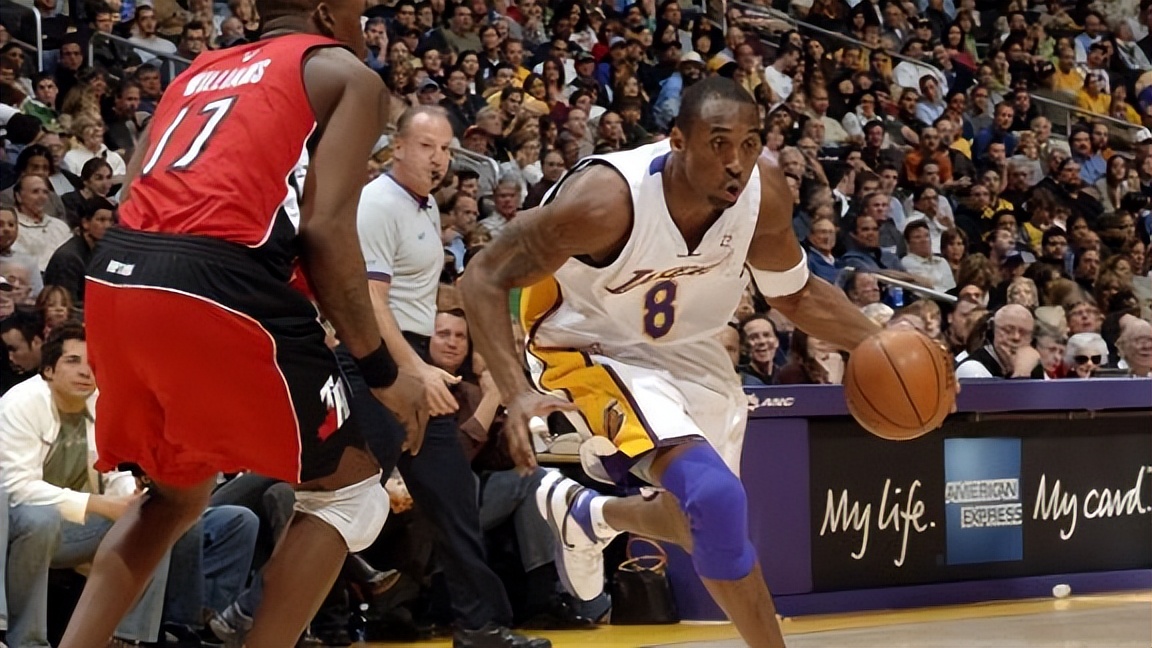
All you can do is try your best to stop him. But that night, Kobe gave no one that chance. He had to activate “nuclear mode” because his teammates were cold—Lakers bench shot 2-for-11, Odom 1-for-7, Kwame Brown 1-for-5. Phil Jackson later said in an interview, “That game, we had no choice but to fight to the end and give the ball to the player who was on fire.”
Kobe’s final two points came from two free throws with 42 seconds left. After the game, the Lakers printed commemorative T-shirts with “81” to honor this historic victory. What should have been an easy win for the Raptors ended with a Lakers 122-104 comeback. Mitchell admitted that the Raptors’ large halftime lead ironically cost them the game.
“We had never won in Los Angeles before,” he said. “That game meant a lot to us. If the gap had been only five or six points, Kobe might have stopped at a routine 35. But because we pushed him to the brink, we completely enraged him.”
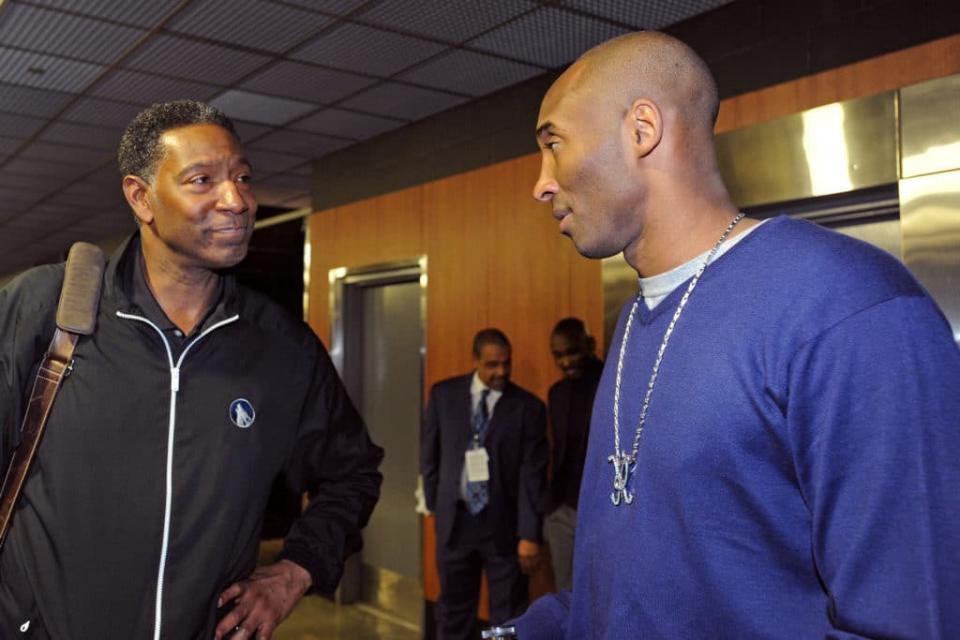
Years later, Kobe and Mitchell met by chance and talked about the game. Kobe’s words comforted the former Raptors coach a lot. Mitchell recalled the conversation:
“He said no one could stop him that night. To him, the hoop was as wide as the ocean—no matter how he shot, the ball would go in. He also said, ‘If I scored 81 and the team lost, people would call me selfish. The biggest difference between me and other players is that my goal has always been to win.’ That’s Kobe, that was his mindset then, and he never bragged about the 81 points.”
After all, he was Kobe Bryant. As Mitchell said, “There’s nothing more to say about him.”


Wonderfulshortvideo
Wild moment from pre game warmups where Wemby bounces it between his own legs to himself and throws down the dunk 🤯


KD on Reed Sheppard coming up clutch in the 4th! 🔥
Ja tough chasedown rejection 🏃 🚫
Shai Gilgeous-Alexander joins Wilt Chamberlain (3x) as the only players in NBA history to total 40+ pts, 10+ ast, and 5+ reb in a game on at least 80% shooting from the field 📈 💪
🤩A legendary London crossover w/ @marcelotwelve 🇧🇷
Giannis jams it through traffic 🔥
SGA gets inside for 2️⃣, putting him at 40pts on the night ❗️
 Links
Links
 Contact
Address:UNIT 1804 SOUTH BANK TOWER, 55 UPPER GROUND,LONDON ENGLAND SE1 9E
Number:+85259695367
E-mali:[email protected]
 App
App


