



The Lakers lost big in trading for Kessler! Trade grade only C-, while Ainge gets an A+ for the Jazz.



On July 2, Beijing time, ESPN graded the Kessler trade between the Lakers and the Jazz. In this deal, the Lakers sent two unprotected first-round picks (2031, 2033) and two first-round pick swap rights (2028, 2030) to the Jazz in exchange for Kessler, signing him to a four-year, $130 million contract. ESPN considers the Jazz the big winners and the Lakers the big losers. Here are the specific grades and analysis:
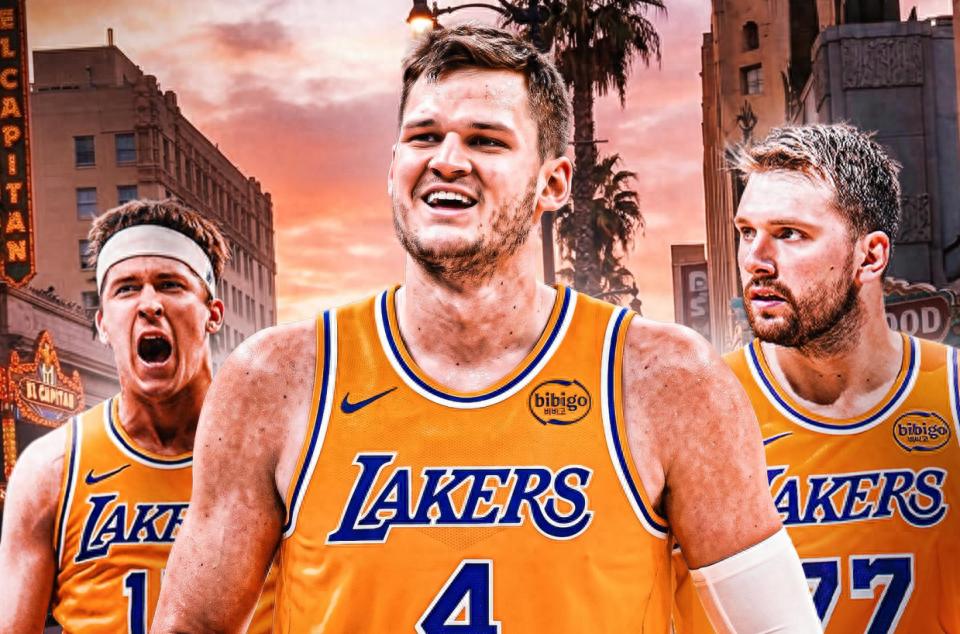
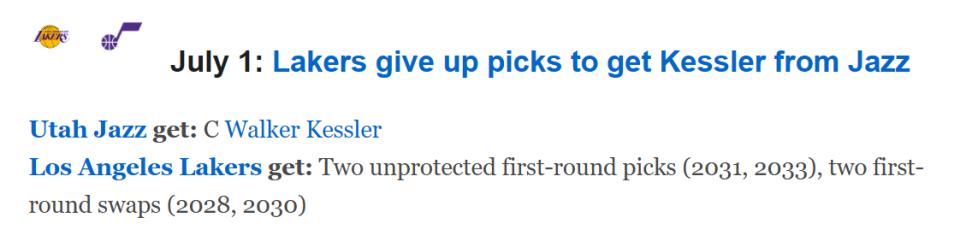
Jazz Trade Grade: A+
Jazz CEO Danny Ainge, as a player, defeated the Lakers in the 1984 Finals and led his team past the purple and gold in the 1992 and 1993 playoffs. After transitioning to management, he again guided his team past the Lakers to win the championship in 2008.
This trade is arguably one of the most impressive victories Ainge has ever achieved against the Lakers in his career, and its significance speaks for itself.
The Jazz were themselves in need of a center, so letting Kessler go was indeed a loss. The team re-signed Nurkic for two years, but at Nurkic’s current level, he can’t hold down the starting center spot on a championship contender. Jaren Jackson Jr. played his best basketball when paired with a true five, allowing him to play power forward. (Before Kessler left, he and Jackson never had the chance to share the court, so the Jazz lost the opportunity to see how many blocks this frontcourt duo could produce.)
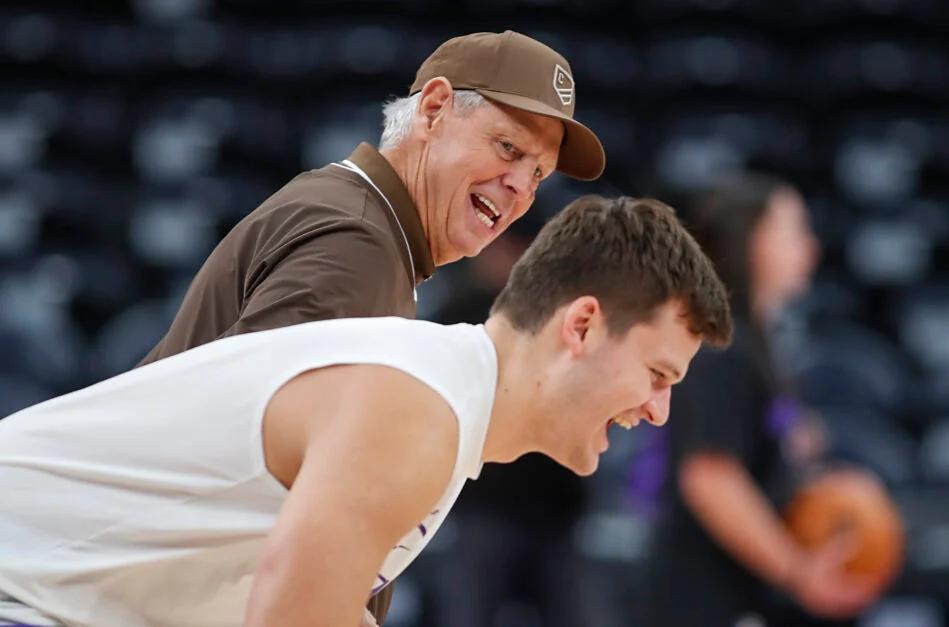
However, with two unprotected first-round picks and two pick swap rights on the table, the Jazz simply couldn’t refuse, nor were they forced to offer Kessler a salary beyond their comfort zone. Kessler’s future development remains uncertain; he may not deserve the max offer the market would give him, and the Jazz essentially cashed in by letting him go.
The draft assets the Jazz received from this trade are richer than what the Clippers got for Kawhi Leonard or what the Hornets got for LaMelo Ball. Even compared to the most famous sign-and-trade of this century—LeBron James’s “Decision” to Miami, where the Cavaliers got only two first-round picks and one swap—the Jazz came out ahead. Kessler is a promising young big man, but he is not a star player.
Now the Jazz have ample draft capital and multiple ways to fill the void left by Kessler: they can move Jackson to center and Markkanen to power forward, then reinforce the center position as needed; or they can use Nurkic as a stopgap while leveraging their massive draft assets to acquire a quality center in a long-term trade.
These alternatives are neither as immediate nor as effective as simply re-signing Kessler, so this trade will likely reduce the Jazz’s ability to contend for the playoffs and improve their record in the short term. But in the long run, the Jazz made a killing, and this is the first trade of this offseason to earn an A+ grade.
Lakers Trade Grade: C-
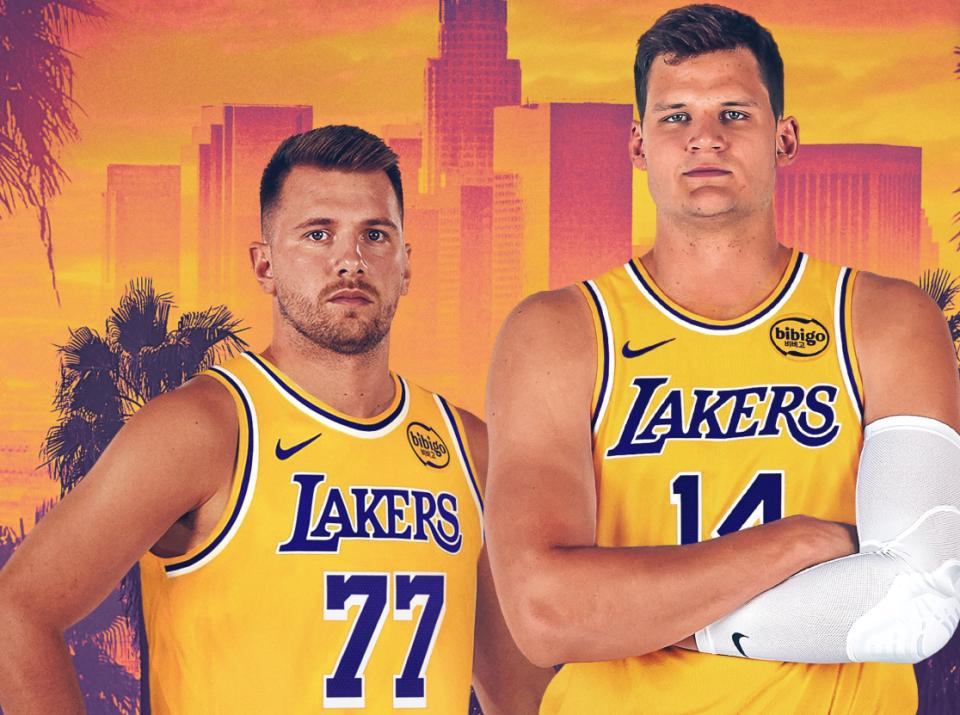
One day after the news of LeBron James’s departure surfaced, the Lakers immediately brought in Kessler. These two consecutive blockbuster announcements made one thing crystal clear: this Lakers team now fully belongs to Luka Doncic.
The ideal center to pair with Doncic is one who can roll to the rim for lobs and protect the basket. The 24-year-old Kessler fits this role perfectly.
If we exclude Victor Wembanyama, Kessler can be considered the league’s premier rim protector. His career block rate of 8.3% ranks second among active players, behind only Wembanyama. According to data from Genius IQ, among players who have defended at least 500 shots, when Kessler is the closest defender to the shooter, opponents shoot just 54.6% in the restricted area—the third-best mark in history, behind only Chet Holmgren and Wembanyama.
Offensively, Kessler’s scoring methods are relatively limited: more than a third of his career shots are dunks, which is why his career field goal percentage is a high 68%. Partnering with Doncic, he will get plenty of easy lob opportunities in transition.
However, Kessler’s efficiency as a pick-and-roll roller has never been ideal. According to Genius IQ data, over the entire 2024-25 season, he generated only 0.85 points per possession as the roll man, ranking last among 46 players who ran at least 1,000 pick-and-rolls.
But this statistic carries a huge bias: the ball handlers he worked with in the pick-and-roll were Keyonte George, Collin Sexton, and Collier—players who have yet to fulfill their potential. With Doncic and Austin Reaves, the pick-and-roll effectiveness will be vastly different.
Additionally, in the 2024-25 season, Kessler averaged 4.6 offensive rebounds per game, leading the league, which should help address the Lakers’ weakness—they ranked 24th in offensive rebound rate last season.
He is also developing his three-point range: in the previous season, he shot 6-of-8 from three over five games, while in the 2024-25 season he made just 6 of 34 attempts. After reviewing all 64 three-point attempts in Kessler’s career, it’s clear his shooting mechanics have been improving: early in his career, his left elbow was unstable and his release was shaky, but in the small sample of the previous season, his shooting form became much more consistent.
Even though Kessler has many strengths and is theoretically an ideal match for Doncic, the price the Lakers paid is still exorbitant.
Kessler has never proven himself to be an All-Star caliber big man. This deal is closer to the trades for Mikal Bridges or Desmond Bane—where a massive haul of picks was used to acquire a non-All-Star—and is completely incomparable to the Lakers’ 2019 trade for Anthony Davis.
As a two-way big, Kessler’s true capabilities still carry many unknowns. For example, his three-point shooting consistency is questionable: he shot just 20% from three and 54% from the free-throw line over his first three seasons. Relying on a handful of efficient attempts from the previous season is not enough to conclude that his outside shooting has made substantial progress.
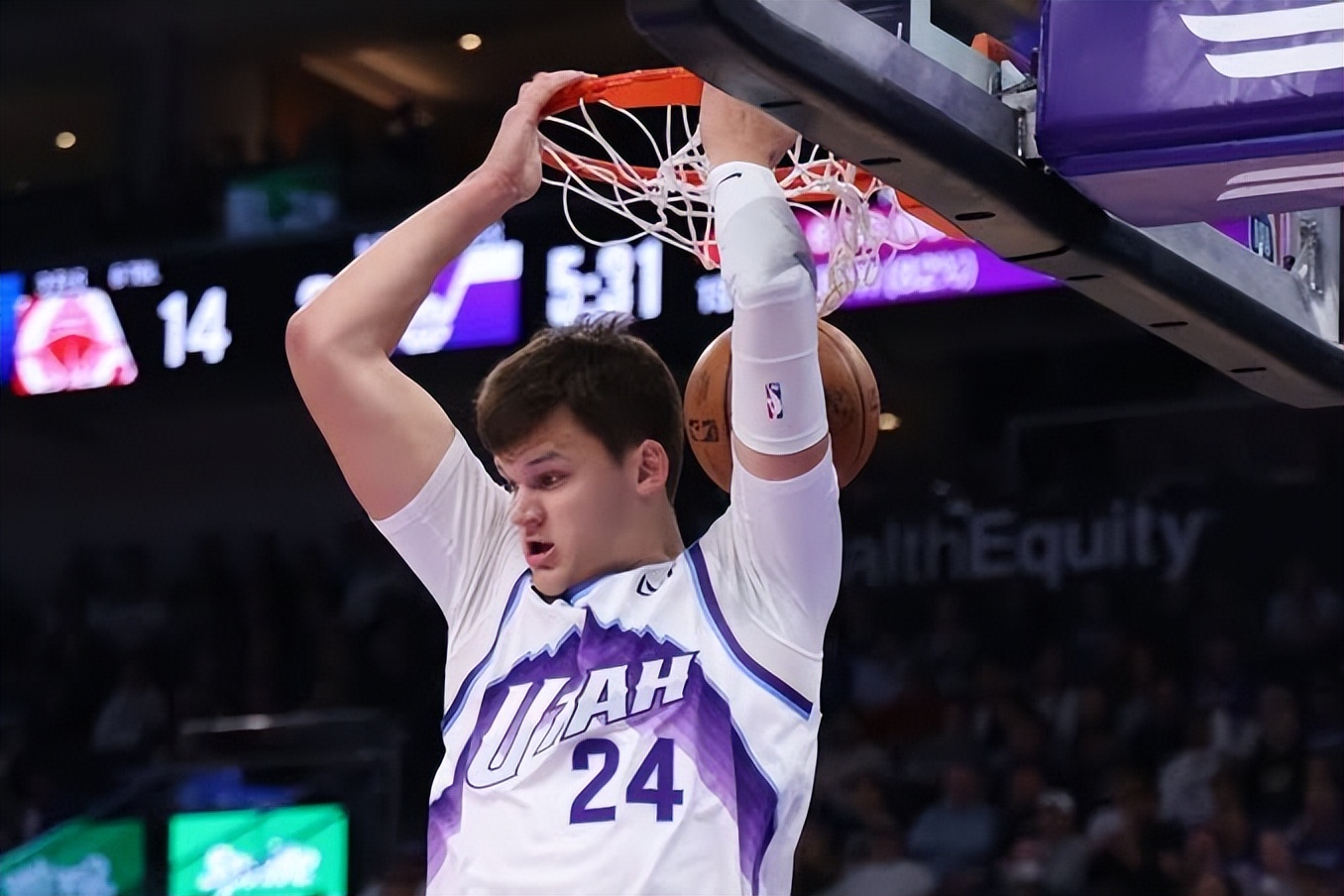
In the Lakers’ system, this weakness may have limited impact—they only need him to set screens, roll, and finish simple plays off Doncic’s passes. But the Lakers are giving him an average annual salary of $32.5 million, with a player option and trade kicker—a poor value, as they could sign a comparable rim-running, shot-blocking center for much less on the market.
Kessler had solid playing time early in his career, but last season he suffered a shoulder labrum tear and played only five games before being ruled out for the year. Additionally, he has never played in high-stakes, high-intensity games. When he came to the Jazz as part of the Rudy Gobert trade, the Jazz were already deep into a rebuild.
This trade also profoundly affects the Lakers’ future flexibility. On one hand, general manager Rob Pelinka indeed felt a sense of urgency: next offseason, Doncic and Reaves’ salaries will eat up most of the team’s cap space, so this season is the Lakers’ last chance to make a major free-agent signing with ample cap room. They urgently needed to lock down their long-term starting center.
But on the other hand, Pelinka has essentially mortgaged all of the team’s future draft flexibility: not only are they giving Kessler a near-max contract, but they also sent four future picks to the Jazz in one go. The Lakers already owe the Grizzlies a 2027 top-four protected first-round pick and the Mavericks an unprotected 2029 first-round pick, and they have no second-round picks before 2033.
For years to come, the Lakers will have almost no draft capital left to upgrade the roster. This trade must pay off and lead the Lakers to consistent championship contention, as the team has now bet everything on the core trio of Doncic, Reaves, and Kessler.


Wonderfulshortvideo
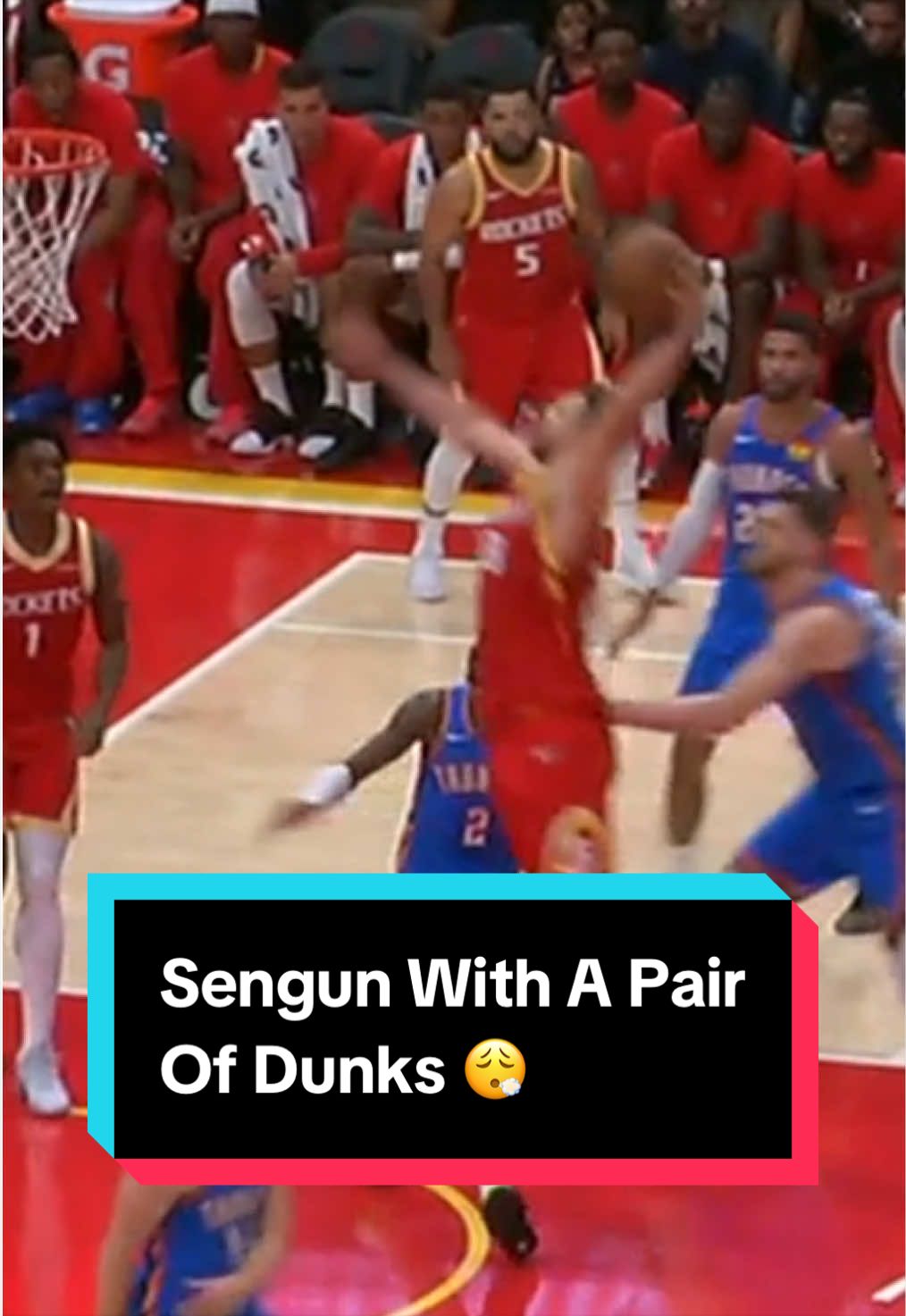
Quick rewind ⏮️. Full recap. Here’s everything from tonight @OKC Thunder vs. @houstonrockets 🏀


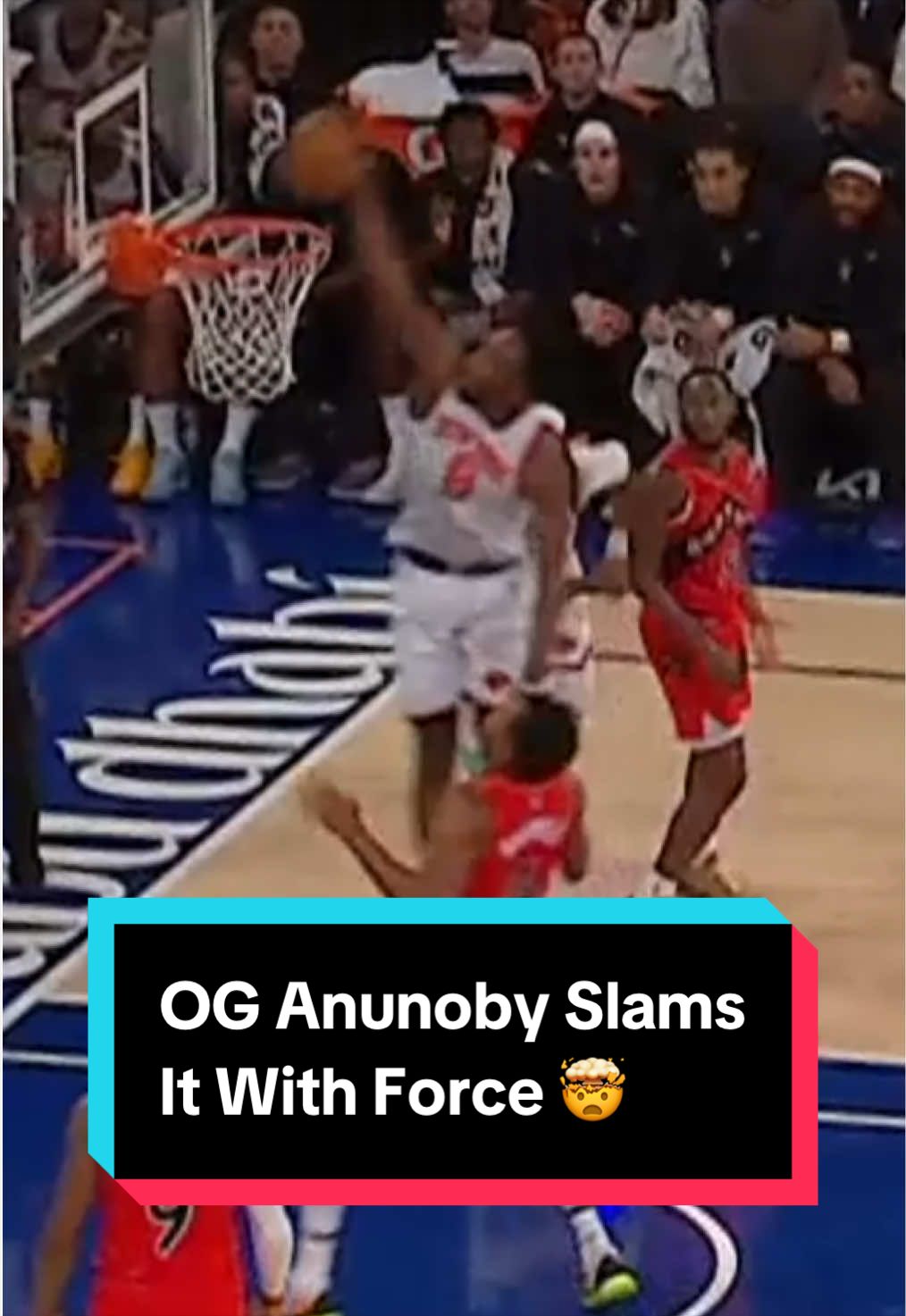
Quick rewind, full recap. Here’s everything from tonight’s @Raptors vs. @New York Knicks matchup ⏪🏀

Lakers Close Up: Building the Foundation
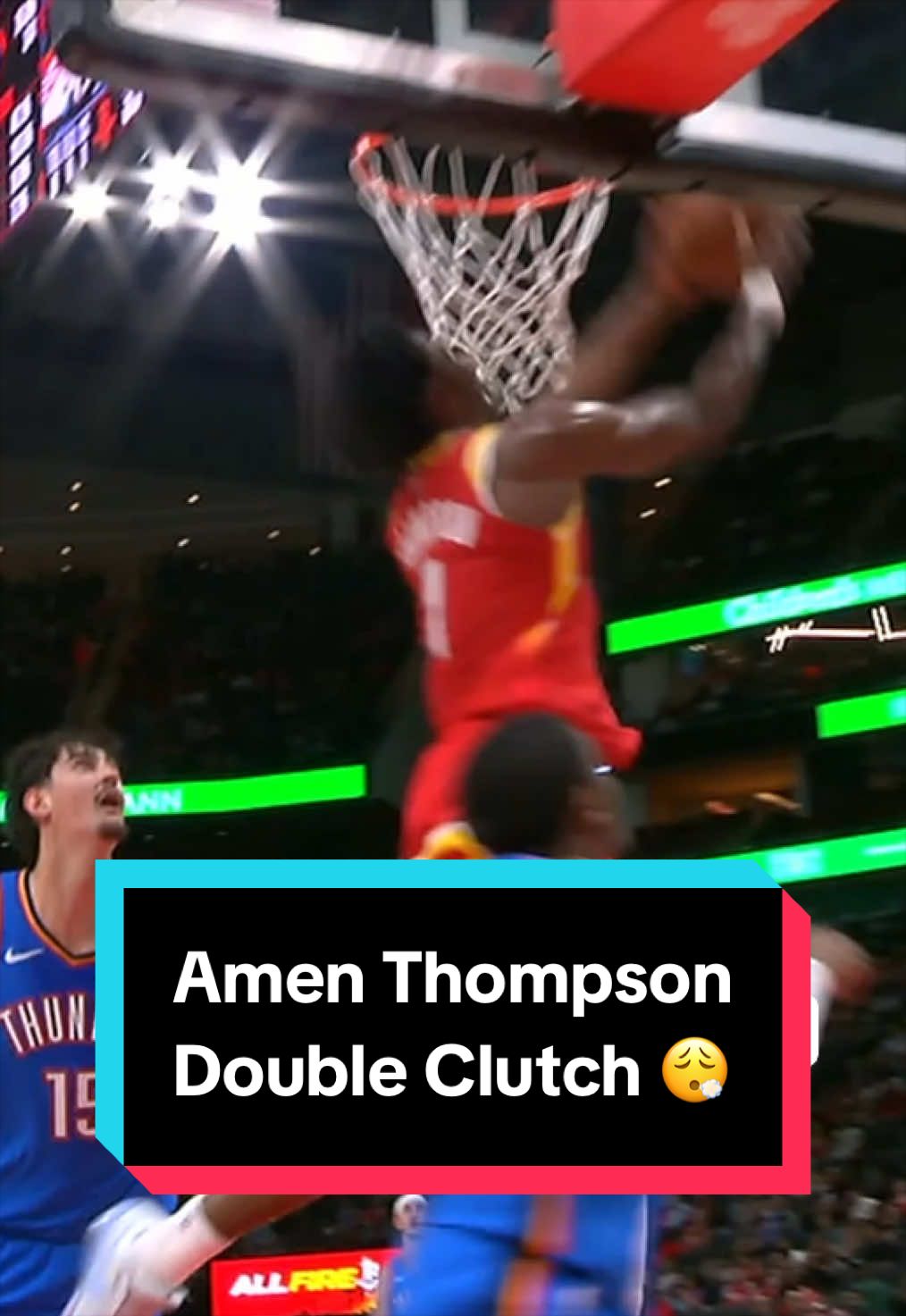
Amen Thompson getting UP 🤯
He was soaring 🤯
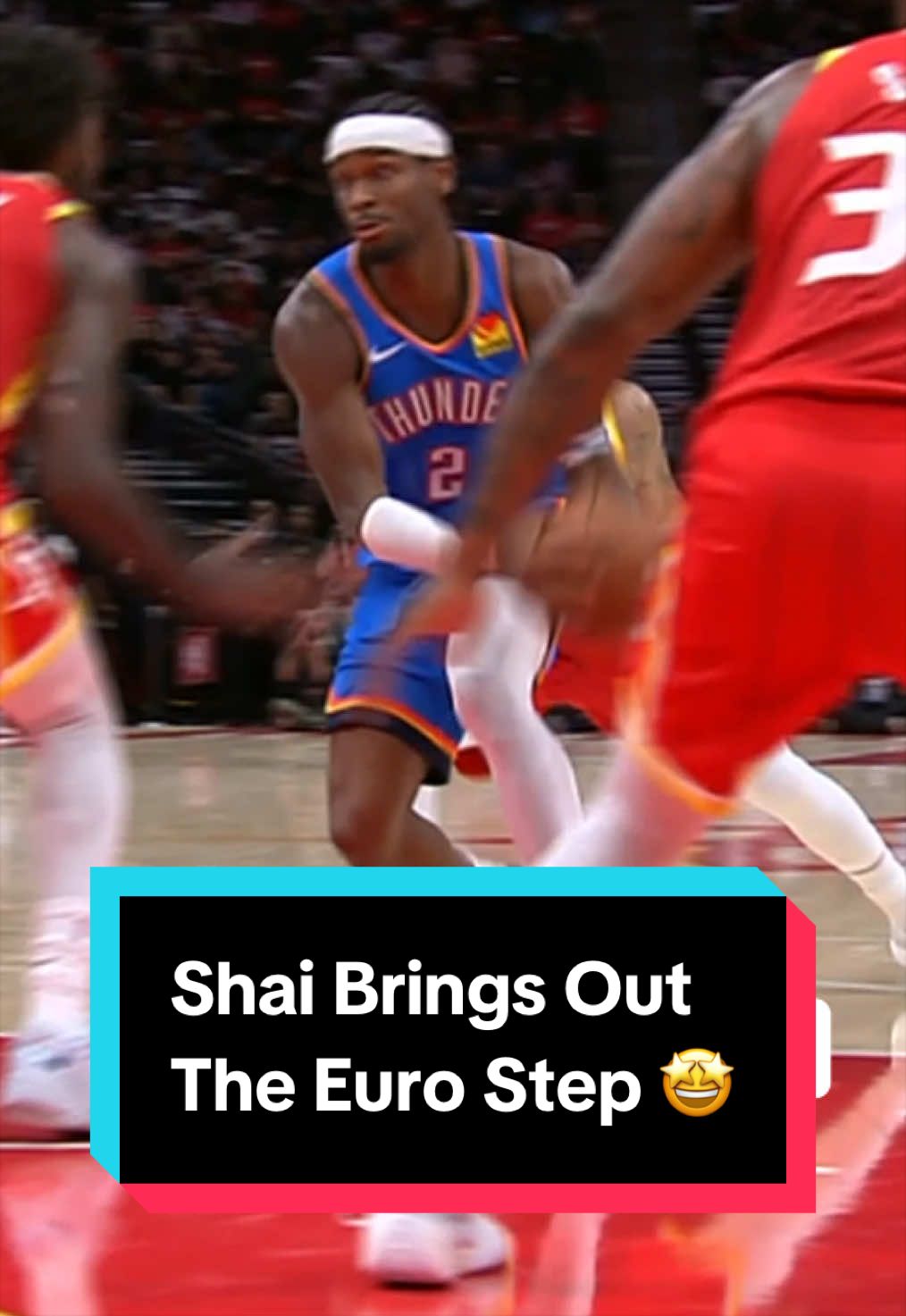
Shai weaving through the defense for the basket 🔥
“Just in case you forgot…”🔥😮💨
 Links
Links
 Contact
 App
App


