



Revealed: The 'unusual' clause in Bruno Fernandes' contract with Manchester United



Bruno Fernandes has attracted special attention in the European transfer scene following reports from the UK media about a key provision in his deal with Manchester United.
According to the reports, the Red Devils' captain reportedly holds a clause allowing him to leave Old Trafford for a fee of around 60 million Euros, provided he does not join another Premier League club.
This revelation quickly sparked widespread discussion among experts and in the executive offices of major European clubs. Bruno Fernandes is not only a cornerstone but also the soul of Manchester United’s playing style over recent seasons. His potential departure at what is considered an 'accessible' price raises many questions about the future of the Red Devils.

The most notable detail is that the clause excludes only clubs within the Premier League. This means teams from La Liga, Serie A, or Bundesliga could activate this clause if they meet the stated fee. In the current market context, 60 million Euros is not an excessive amount for top clubs seeking a high-caliber attacking midfielder capable of making an immediate impact.
Bruno Fernandes has long been regarded as an ambitious player. Since joining Manchester United, he quickly became central to every tactical setup. Beyond scoring and assisting goals, the Portuguese midfielder serves as a spiritual leader, frequently showing strong character on the pitch.
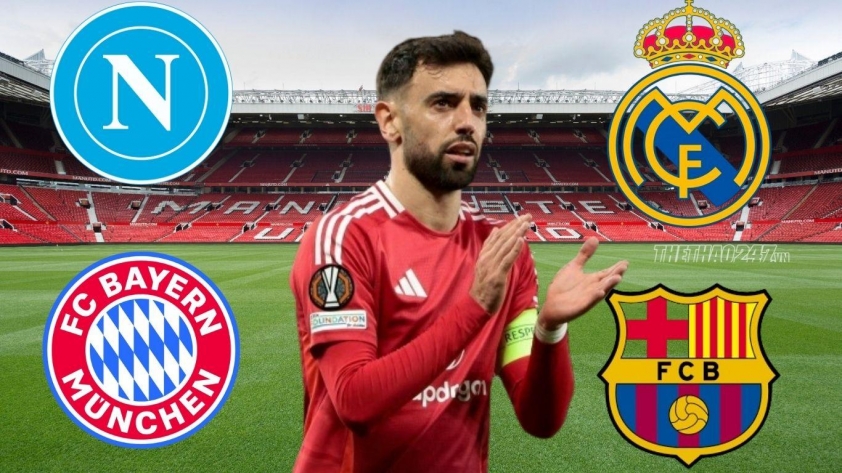
However, the prolonged instability at Old Trafford over recent seasons has significantly affected Bruno Fernandes' ambitions to compete for titles. Frequent managerial changes, lack of clear direction, and poor performances in major competitions have cast doubt over the futures of many key players. In this context, the exit clause is seen as a strategic escape, giving Bruno more control over the next step in his career.
On the other hand, Manchester United will have to carefully consider the implications if this scenario comes to pass. Losing Bruno Fernandes would not only be a blow in terms of quality but also a serious hit to the leadership structure within the dressing room. He currently serves as captain, acting as a bridge between the coaching staff and players, and often carries responsibility during the toughest moments.




Wonderfulshortvideo
The footwork, the finish 🤌


Did you get it? 🤔😅
The Wirtz x Sané link-up 🔗
Haaland’s movement 🥵
Which counterattack is
“afcon funny moments”
🤤🤤
 Links
Links
 Contact
Address:UNIT 1804 SOUTH BANK TOWER, 55 UPPER GROUND,LONDON ENGLAND SE1 9E
Number:+85259695367
E-mali:[email protected]
 App
App


