



The AFC launches the Asian Associations League, which has both advantages and disadvantages for the Chinese national team.




Written by Han Bing. On December 21, the AFC announced the introduction of the Asian Associations League, which will consolidate friendly matches of member association teams during international match days, establishing a stable and sustainable competition framework across the AFC. This aims to raise the competitive level of association teams, reduce disparities, and address challenges caused by Asia's vast geography, such as high cross-association match costs and complex logistics, striving to provide member associations with more valuable competitive advancement pathways.
The Asian Associations League is similar to the AFC Champions League replicating the UEFA Champions League; this time, it models after the UEFA Nations League, which has held four editions. It will likely use association team world rankings for tier classification, and given Asia’s vast territory, it might adopt East-West regional divisions like the AFC Champions League. To enhance competition quality and commercial value, results will likely be linked to Asian Cup and World Cup qualification spots.
For the Chinese national team, the Asian Associations League presents both pros and cons. In the short term, the benefits outweigh the drawbacks, offering more opportunities to face strong Asian teams and possibly easing World Cup qualification via additional playoff routes. However, in the long run, filling the national team’s friendly match calendar with this league leaves few chances to compete against strong European and American teams, limiting exposure to higher-level competitive and commercial warm-up matches.

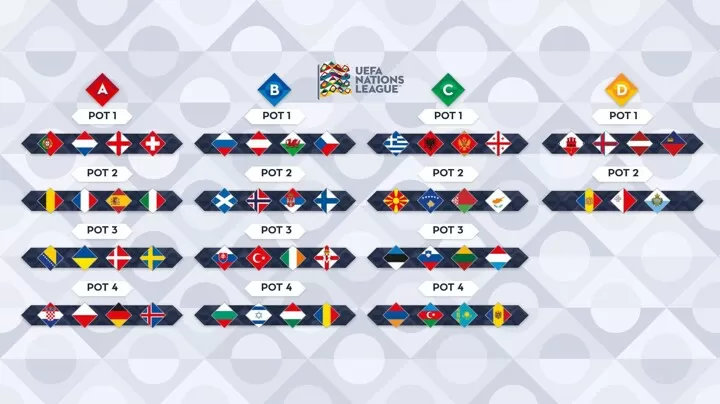
The Asian Associations League will most probably adopt the UEFA Nations League format. The UEFA Nations League started in the 2018/19 season and is held every two years, offset from the European Championship and World Cup qualifying cycles. UEFA member associations are divided into four tiers: Leagues A and B each have three groups, C and D have four groups, with four teams per group (except one group in C with three teams), playing home-and-away round-robin matches. The six group matches are scheduled over three international windows in the latter half of the year following the World Cup and Euros, with promotion and relegation between tiers. The top teams in League A groups contest a final four tournament the next June to decide the champion. Since 2020/21, the Nations League adjusted to 16 teams each in Leagues A, B, and C, while League D contains only seven teams.
Besides awarding a European championship title like the Euros, the UEFA Nations League’s most attractive feature is offering a competitive pathway via playoffs to qualify for the European Championship and World Cup. This is the key to enhancing the competition’s sporting and commercial value and serves as a “wild card” for lower-tier teams to enter these major tournaments. For the Euros, 16 (in 2020) or 12 (in 2024) teams — group winners from the four tiers plus the best teams that failed to qualify through standard qualifiers — compete in knockout playoffs for qualification. For the World Cup, second-placed teams who missed direct qualification join the best Nations League performers in playoff groups to compete for remaining spots.
North Macedonia (2020) and Georgia (2024) qualified for the European Championship for the first time in their histories via UEFA Nations League playoffs. Wales returned to the World Cup in 2022 after 64 years through the same route. In the 2026 World Cup European qualifiers, Sweden finished last in their group, while Romania, North Macedonia, and Northern Ireland all placed third but still gained playoff spots through Nations League performance, keeping their World Cup hopes alive.

The Asian Associations League will likely follow the UEFA Nations League’s pattern, holding group stages in the second half of even-numbered years. It will also allocate some Asian Cup and World Cup qualification places to increase the competition’s sporting and commercial appeal. This will significantly affect China’s chances of qualification. Currently, the Asian Cup is held one year after the World Cup, meaning the Asian Associations League in the following year's second half will likely provide a few “wild card” spots for the Asian World Cup qualifiers’ playoff rounds. For the Chinese team, which struggles to beat strong opponents in the final 18-team qualifying round, this represents a second, valuable route to the World Cup.
It is expected that the top-ranked teams in the Asian Associations League’s top tier will largely overlap with those qualifying for the final 18-team round. This means teams that fail to advance in the 18-team qualifiers but rank well in the Asian Associations League can still enter the Asian World Cup qualifiers’ playoffs through reserved spots. These playoffs will likely be four-team, single-elimination tournaments held in bubble formats, increasing the chance of upsets. Reaching the Asian playoffs is the Chinese team’s realistic goal in World Cup qualification, allowing their hopes to be extended until the very end.

Beyond the World Cup playoff “shortcut,” the Asian Associations League benefits the Chinese team by adding competitive matches of value comparable to the Asian Cup or final 18 qualifiers. The AFC has 47 member associations and will likely divide them into three tiers, with the top two tiers having four groups of four teams each, using a format similar to the UEFA Nations League. Ranked around 14th in Asia, China is expected to be placed in the top tier, giving them opportunities to compete against Asia’s top 16 teams, which helps familiarize them with opponents and prepare for World Cup qualifiers. If the league has four tiers, China would be in the second tier, but winning their group to promote to the top tier remains likely.
After missing the final 18 qualifiers this summer, the Chinese team went three consecutive international match windows without scheduled friendlies — their longest official competitive break in 36 years. At least in even-numbered years’ second halves, the Asian Associations League will ensure the Chinese Football Association does not worry about the team lacking matches. This league will become China’s third major Asian competition besides the Asian Cup and World Cup qualifiers, which is vital for building confidence and gaining match experience. Recently, China has lacked exposure to high-level Asian competition, so more matches help refine tactics and develop players. The new league guarantees at least six high-level matches per edition, clearly beneficial overall.
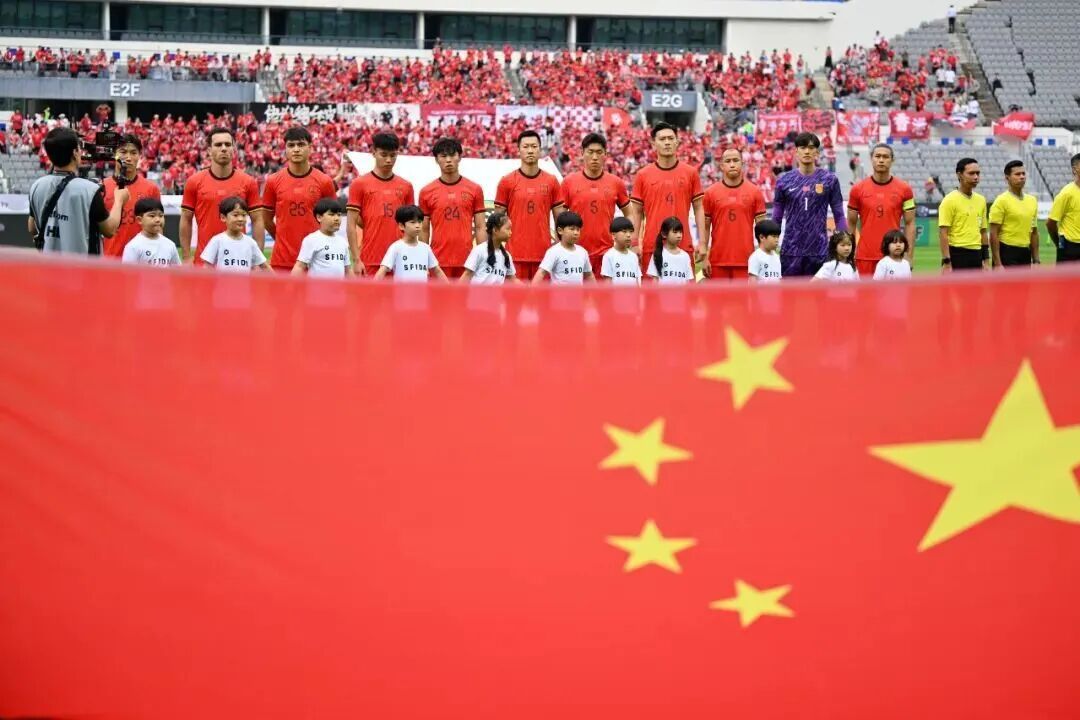
The tiered structure with promotion and relegation in the Asian Associations League will also motivate China to take matches seriously and strive for good results. Whether placed in the top or second tier, performing well not only improves the world ranking and secures staying in or promotion to the top tier but also serves as China’s goal in the league. Unlike previous friendlies without competitive stakes, this league will clearly inspire the team to give their best effort.
In recent years, many mid- to lower-tier European teams have made breakthroughs by regularly participating in the UEFA Nations League. Smaller nations like Iceland, Austria, Switzerland, Hungary, Wales, Scotland, Slovakia, Northern Ireland, North Macedonia, Albania, and Kosovo have all benefited greatly. Similarly, the Asian Associations League will provide more match opportunities to strengthen Asia’s second- and third-tier teams, which naturally benefits China. Facing more first- or second-tier Asian teams will improve China’s own strength, boost world rankings, and increase World Cup qualification chances.

For the Chinese team, which may remain a second-tier Asian power for some time, the Asian Associations League offers increased match experience and a new pathway to the World Cup, with benefits outweighing drawbacks. However, the AFC’s consolidation of Asian friendly matches effectively creates a monopoly within Asia. Consequently, World Cup qualifiers and the Asian Associations League will occupy most international match windows for Asian teams, leaving minimal opportunities to arrange friendlies against strong teams from other continents.
Currently, the Asian Cup is held one year after the World Cup. If the Asian Associations League fully replicates the UEFA Nations League, it could debut as early as after the 2026 World Cup. The league would hold group stages in the second half of even years, quarterfinals in March the following year, and a final four tournament in June. This means that even with the Asian Cup’s current odd-year schedule on a four-year cycle, the Asian Associations League will occupy at least half of the final 18 qualifiers’ schedule. The 18-team qualifiers will either have to compress their schedule into a single year or the Asian qualifying format will need major adjustments.
Taking the 2026–2030 World Cup cycle as an example, the 36-team qualifiers will likely occupy international windows in November 2027 and March and June 2028. Teams eliminated from the 36-team qualifiers will participate in Asian Cup qualifiers occupying September 2028, all of 2029, and March 2030 windows. The final 18 qualifiers will take place in September, October, and November 2028, plus March and June 2029, with Asian playoff matches in October and November. The Asian Associations League will use the second half of 2026 and 2028 for group stages and March and June of 2027 and 2029 for knockout rounds. The current scheduling clearly conflicts with Asian Cup and final 18 qualifiers.
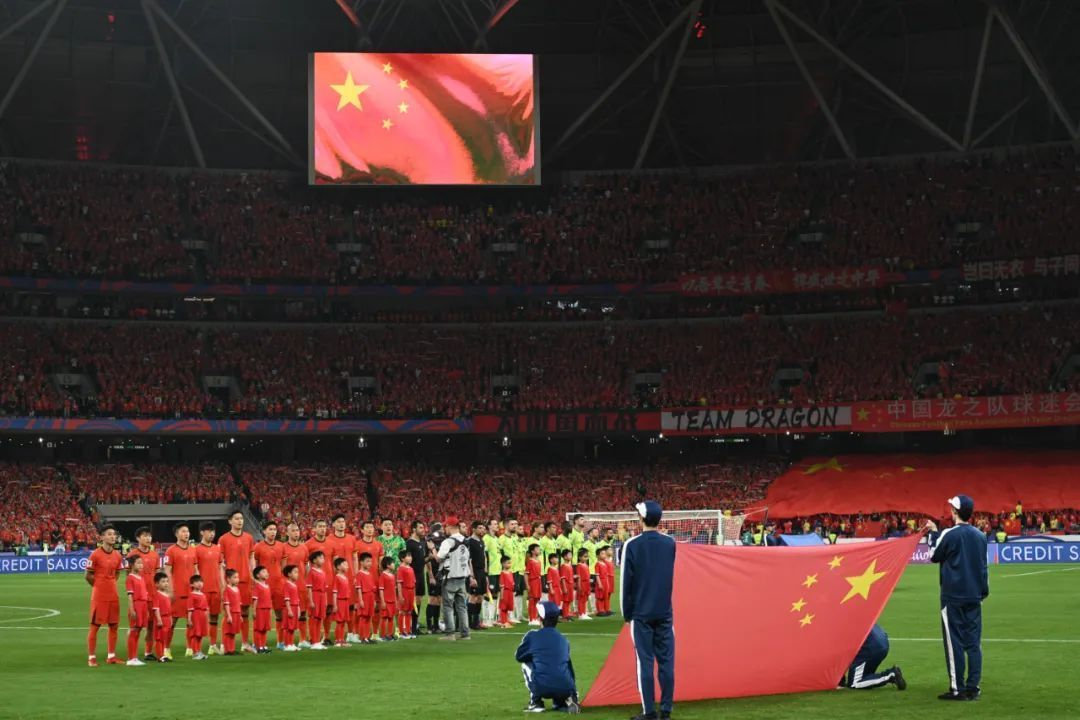
To ensure the smooth launch of this new competition, the AFC will have to adjust the schedules of the Asian Cup and World Cup qualifiers. This will increase the number of international match windows devoted to Asian competitions and might even lead the AFC to align the Asian Cup with the European Championship cycle, holding it every four years in even years. Such a move would further reduce the Chinese team’s opportunities to arrange friendlies against teams from other continents.
Previously, the Chinese team still had chances to arrange friendlies against strong European and American teams, usually in March after the Asian Cup or in March or June during World Cup years. But with the increasing number of UEFA Nations League matches, along with the European Championship and World Cup qualifiers, European teams’ international match calendars are almost fully booked, leaving only March and June windows in European Championship and World Cup years. In these windows, European and American teams prefer to face stronger opponents, leaving almost no opportunity for China to arrange such friendlies.
The Asian Associations League, along with the inevitable adjustments to the 36-team and final 18 qualifiers, will greatly reduce China’s available windows to arrange friendlies against strong teams from other continents. Strong Asian teams like Japan and South Korea have prioritized friendlies against European and American teams in recent years, possibly sending their second teams to the Asian Associations League while their first teams face Western opponents. China lacks such squad depth. The last time China played friendlies against teams from other continents was in March 2018 at the China Cup against Wales and the Czech Republic. Matches against European and American powers like Portugal in March 2010, France in June 2010, Paraguay and Uruguay in September and October 2010, Spain in June 2012, Sweden and Brazil in September 2012, the Netherlands in June 2013, and Serbia and Colombia in November 2017 are now constrained primarily by lack of international windows rather than the ability to invite strong opponents.



Wonderfulshortvideo
The footwork, the finish 🤌


Did you get it? 🤔😅
The Wirtz x Sané link-up 🔗
Haaland’s movement 🥵
Which counterattack is
“afcon funny moments”
🤤🤤
 Links
Links
 Contact
Address:UNIT 1804 SOUTH BANK TOWER, 55 UPPER GROUND,LONDON ENGLAND SE1 9E
Number:+85259695367
E-mali:[email protected]
 App
App


