



Southeast Asian media amazed by Vietnam's new billion-dollar stadium



Southeast Asian media see the major sports project in Ho Chi Minh City as more than just infrastructure; it represents a long-term ambition statement for Vietnam's football and sports.
Southeast Asian media, especially ASEAN Football, have collectively reported and praised the newly launched Rach Chiec National Sports Complex project in Ho Chi Minh City, considering it a strategic milestone for Vietnamese sports.
“Rach Chiec is not just a structure, but a declaration of the vision for Vietnamese football and sports for decades to come,” ASEAN Football commented, also believing this project will provide a significant boost to both Vietnamese football and Southeast Asia’s sports image internationally.
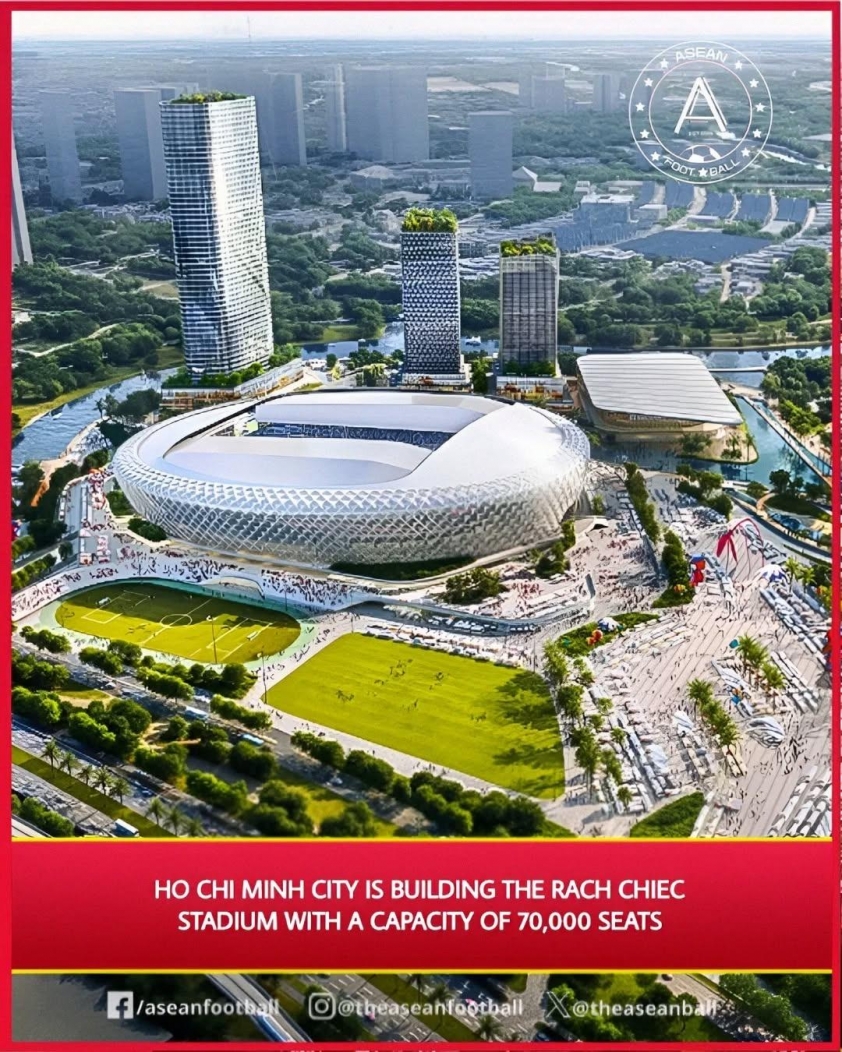
According to ASEAN Football, the groundbreaking ceremony on January 15 demonstrated Vietnam’s long-term ambition to own a world-class sports and entertainment mega complexcapable of competing with Asia’s most modern facilities. The centerpiece of the project is a central stadium with a capacity of more than 70,000 seats, designed with a flexible retractable roof that can open and close automatically, along with an advanced soundproofing system.
Beyond its impressive scale, Rach Chiec is highly praised for its technological features. Regional media especially highlight the modern air conditioning system, which can be adjusted by detailed spectator zones — a rarity even among top stadiums in Asia. This shows that Vietnam is not simply building a football stadium but aiming for a multifunctional space serving elite sports and major entertainment events.
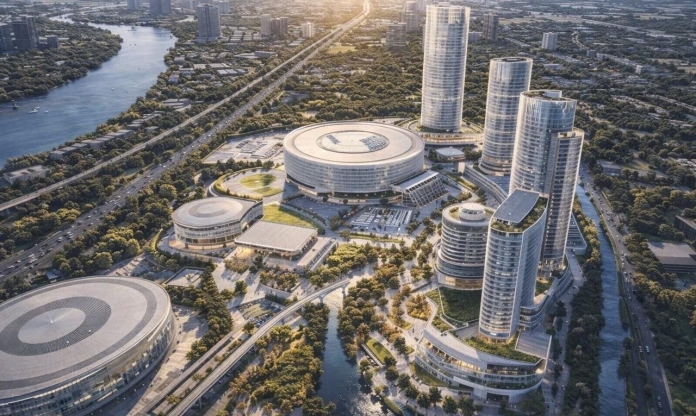
With a total investment of 5.5 billion USD (approximately 143 trillion VND), the Rach Chiec complex is planned as an integrated facility including an 18,000-seat indoor arena, aquatic sports center, multifunctional sports areas, parks, squares, and a conference center. ASEAN Football assesses this will become the new international sports and cultural hub of Southeast Asia in the future.
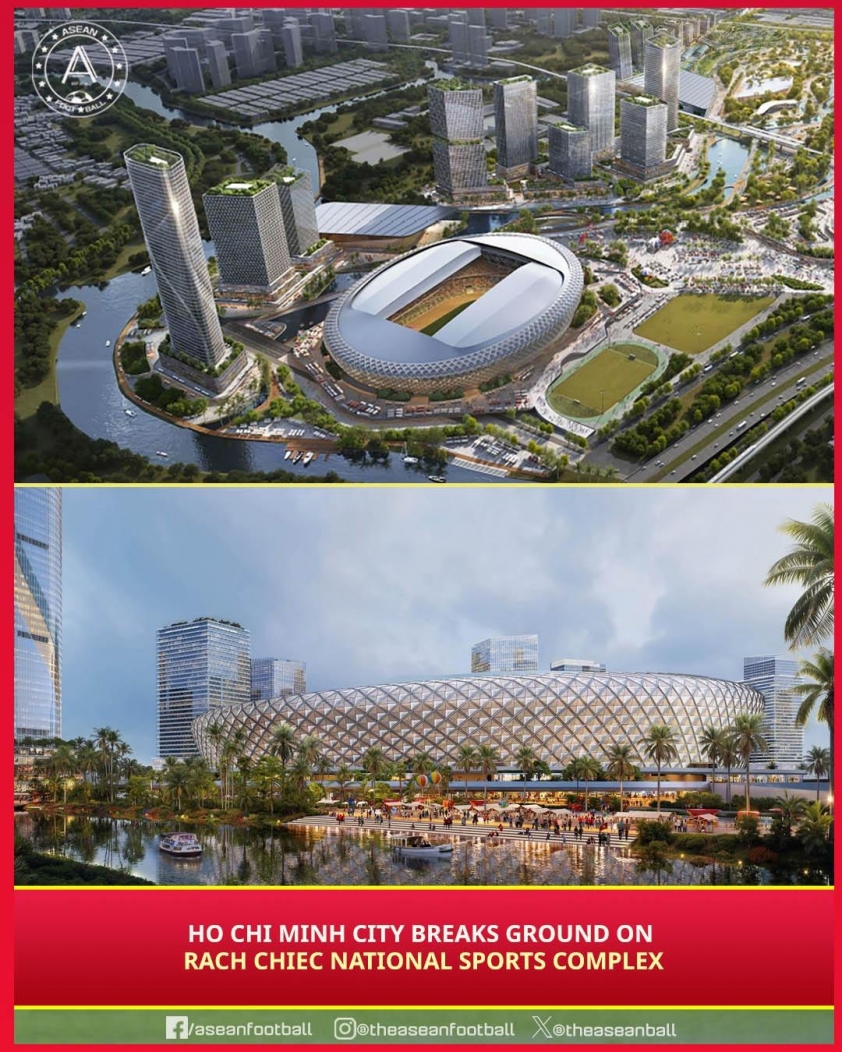
Additionally, the long-term goal of the project is to be ready to host major events such as ASIAD, the World Cup, and even the Olympics, thereby elevating Vietnam’s status on the global sports map. In the context of fierce competition among Southeast Asian countries for sports infrastructure, Vietnam’s groundbreaking of Rach Chiec is seen as a firm assertion of its ambition to lead the region.
ASEAN Football concludes that Rach Chiec not only holds significance for Vietnam but also contributes to raising the standard of sports infrastructure across Southeast Asia in its journey toward integration with the global sports arena.


Wonderfulshortvideo
The footwork, the finish 🤌


The Wirtz x Sané link-up 🔗
Class personified.
Which counterattack is
Griezmann with the cool finish 🥶
“afcon funny moments”
🤤🤤
 Links
Links
 Contact
Address:UNIT 1804 SOUTH BANK TOWER, 55 UPPER GROUND,LONDON ENGLAND SE1 9E
Number:+85259695367
E-mali:[email protected]
 App
App


