



Southeast Asian fans are stirred as Vietnam acquires 4 World Cup-standard stadiums



Vietnamese football is becoming the focus of Southeast Asian fans with widespread reports of securing four FIFA-compliant stadiums by the year 2030.
According to ASEAN FOOTBALL, Vietnam is entering a phase of rapid football infrastructure growth, launching three major stadium projects within less than three months. If these projects finish on schedule, Vietnam will have at least four FIFA-standard stadiums by 2030, including the Mỹ Đình National Stadium currently in use.
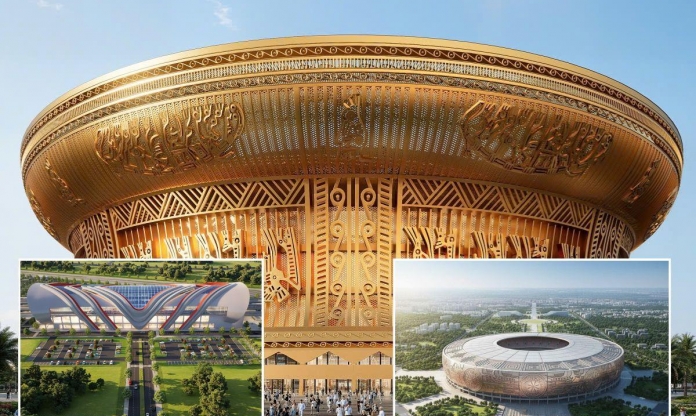
The three new stadiums represent a modern generation of venues, including Trống Đồng Stadium (Hanoi), PVF Stadium (Hưng Yên), and Rạch Chiếc Stadium (Ho Chi Minh City). Among them, Trống Đồng Stadium attracts special attention with a capacity of up to 135,000 seats, ranking among the largest stadiums worldwide, expected to be completed by 2028. PVF Stadium, with 60,000 seats, aims to serve both professional football and youth training, with completion anticipated by the end of 2027. Meanwhile, Rạch Chiếc Stadium, seating 70,000, is expected to become a new sports icon for Ho Chi Minh City, finishing in 2028.
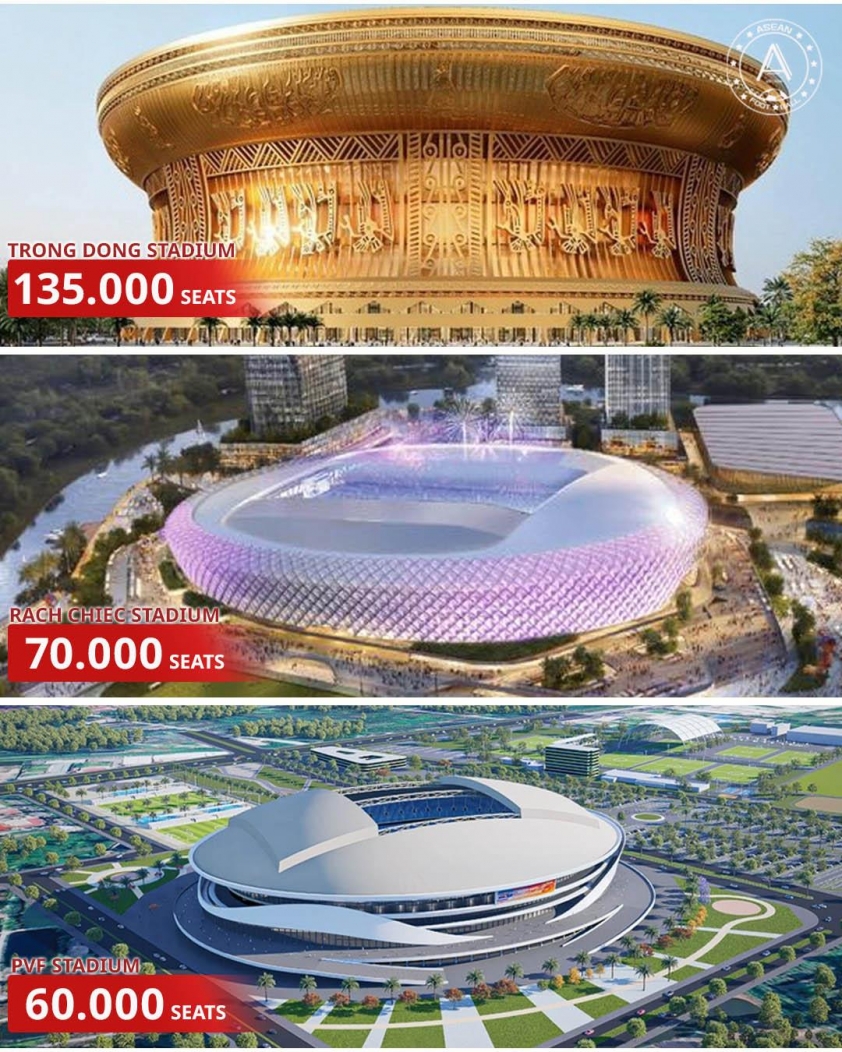
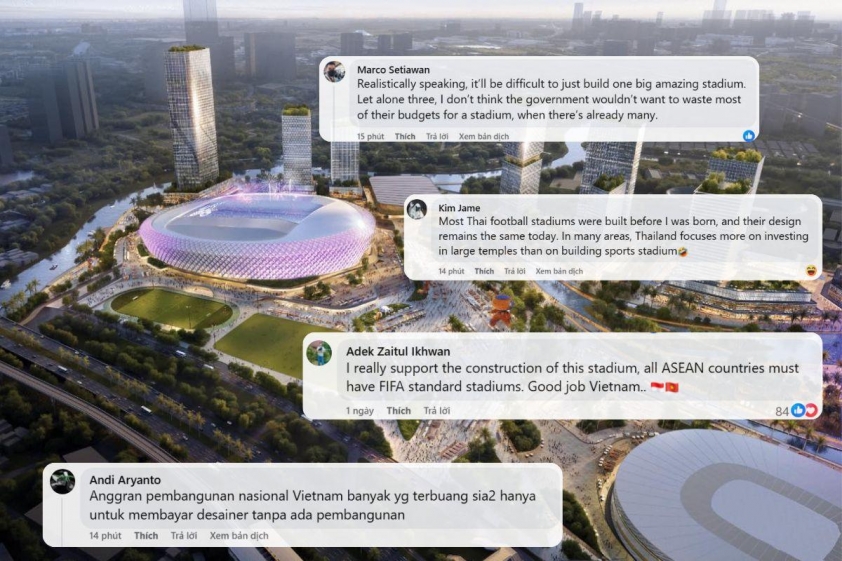
Once this information spread, Southeast Asian football fans quickly voiced their opinions. On regional forums, a Thai supporter expressed a bitter comparison: “Most stadiums in Thailand were built before I was born, and their designs have barely changed to this day. In many places, Thailand focuses more on building large temples than investing in sports stadiums.”
Meanwhile, Indonesian fans offered mixed views. Some expressed skepticism: “Honestly, building one large, modern stadium is already difficult, let alone three. I don’t think the government would want to spend most of the budget on stadiums when there are many other projects needing investment.”
However, quite a few fans in the region showed strong support. An Indonesian fan wrote: “I truly support the construction of these stadiums. All ASEAN countries should have FIFA-standard stadiums. Well done, Vietnam.”
Some fans even briefly but optimistically commented: “The World Cup is on its way.”
All three stadiums share a modern design standard, featuring retractable roofs, advanced technology, and innovative architecture, placing Vietnam among the top Southeast Asian countries with cutting-edge football infrastructure. Notably, all projects are privately funded, reflecting strong confidence from the business community in the future development of Vietnamese sports.
With the addition of these three new stadiums alongside the FIFA-standard Mỹ Đình Stadium, Vietnam will soon have four venues qualified to host major events, from the FIFA World Cup and AFC Asian Cup to the ASIAD and Olympic sports. This is not only a leap forward in facilities but also a long-term ambition statement for Vietnamese football, laying the foundation to elevate its status on the continental football map.




Wonderfulshortvideo
CR7 was really going through it 🤣🏆


 Links
Links
 Contact
Address:UNIT 1804 SOUTH BANK TOWER, 55 UPPER GROUND,LONDON ENGLAND SE1 9E
Number:+85259695367
E-mali:[email protected]
 App
App


