



The transformation pains of South Korea's "national team cradle"! Yongin FC, the new K League club, faces both opportunities and challenges




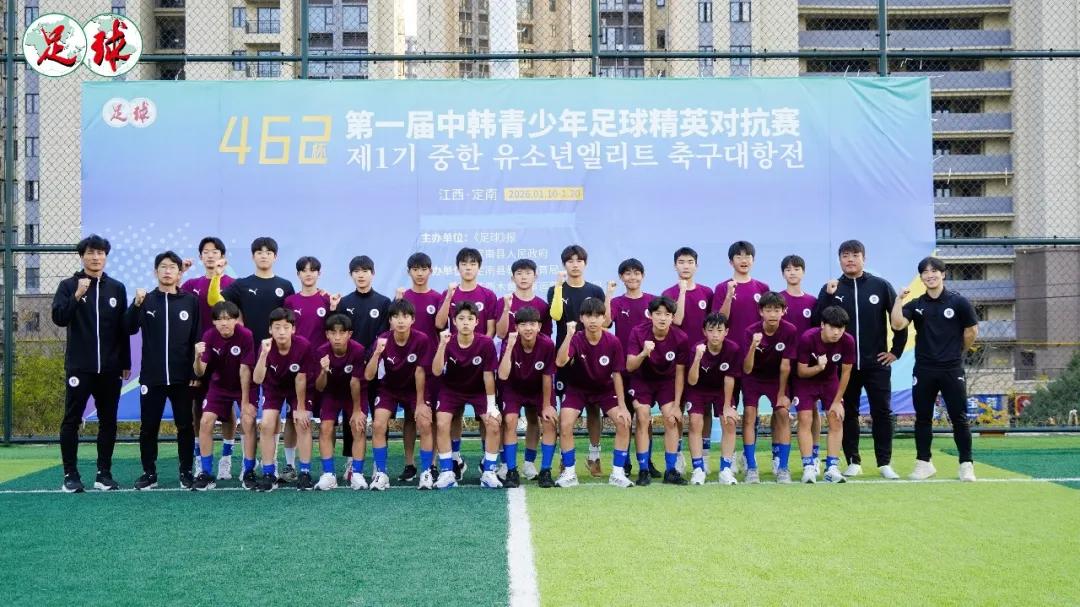
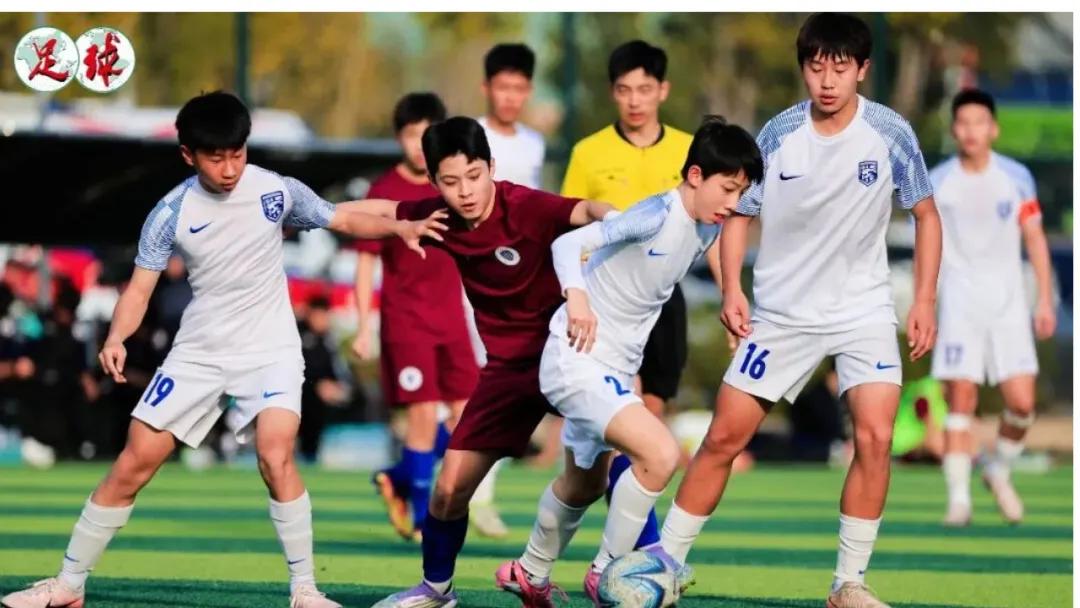
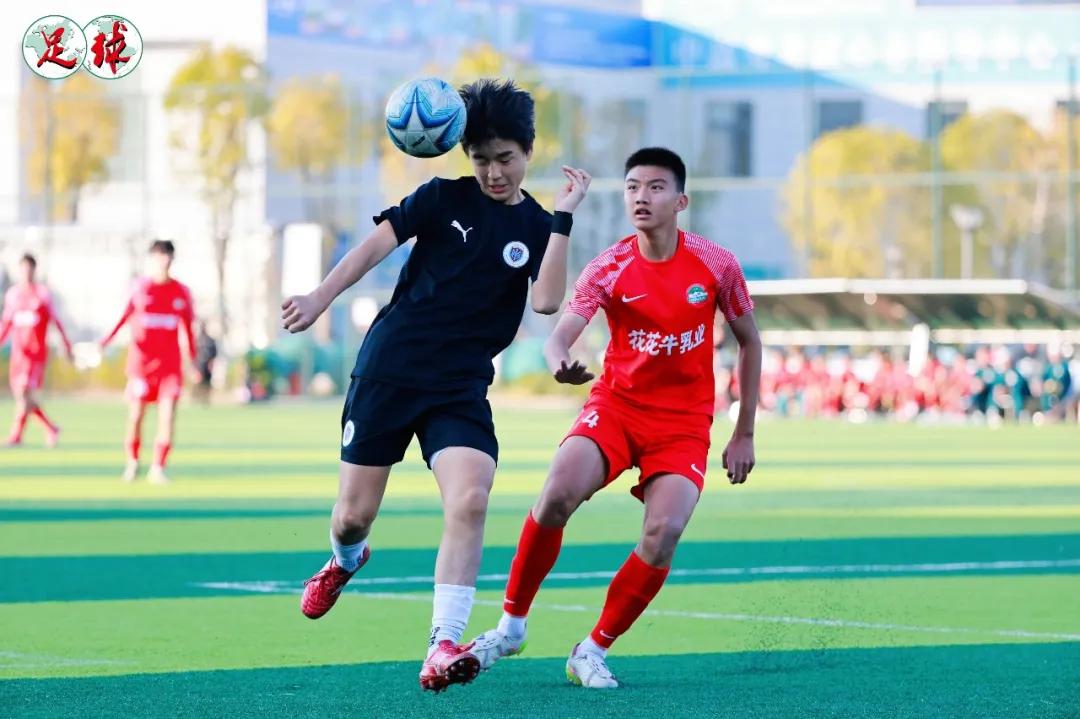
Han Bing reporting from Dingnan, Jiangxi Yongin FC players have two distinct sets of uniforms for matches and training. The deep purple match kit is adorned with a newly introduced emblem from last year, and the team hasn't yet printed numbers on their shorts; meanwhile, during training, when jackets are removed, they wear white jerseys fully branded with chest and shorts sponsors — these symbolize their roots at the Yongin City Football Center. The former reflects their hurriedly adopted new identity, while the latter holds the fading but still present memories of the past…
Crossing into the new year, the young players of Yongin FC completely changed their status. Last year, they were still elite trainees funded by the Yongin city government football center; this year, they have become the youth squads of a professional K2 League club. Unlike the other three participating Korean teams, Yongin FC’s youth training model is undergoing transformation pains: although the club still mainly relies on government funding, the non-profit football center youth training is fundamentally different from that of a professional club.

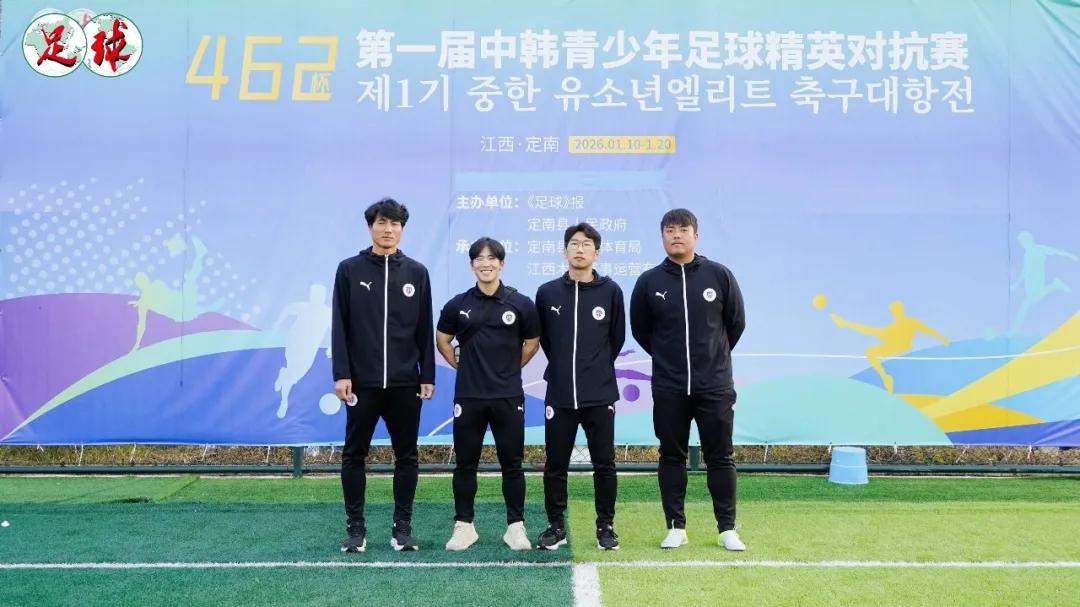
On Yongin’s match sidelines, a quiet middle-aged man watches everything attentively. Holding a master’s degree from the prestigious Dankook University, Yoon Seok-jun, leader of Yongin FC’s U15 squad, symbolizes in some ways Yongin’s youth training transformation. Without professional playing experience and formerly a local physical education teacher, Yoon joined Yongin FC’s youth system purely out of passion for football.
Born in Yongin, Yoon Seok-jun grew up during the peak era of the Yongin City Football Center. In 2001, the city government invested 31.1 billion KRW (about 200 million RMB) to build South Korea’s first football-themed park. When it opened in April 2003, the center covered 160,000 square meters with six football fields — two natural grass and four artificial turf — plus a dormitory accommodating 210 people.
At the time, the football center was among Asia’s best, placing youth players in four partner schools: Wonsam Middle School and Baegam Middle School (U15), and Baegam Comprehensive High School and Sin-gat High School (U18). Players attended classes in the morning and trained at the center in the afternoon. The center’s head coach was the renowned Huh Dong-moo, which gave it great prestige. It was also a nationwide talent pool, known as the “cradle” of the South Korean national team.
In 2004, these four school teams swept the Korean middle and high school leagues, winning six national championships. Over the past 20 years, youth from all over Korea came here, and the Yongin City Football Center developed complete U12, U15, and U18 teams. Yoon Seok-jun noted that due to widespread injuries, only 11 players arrived for the 2011 age group in Dingnan, 11 for 2012, and 3 for 2013, making their average age among the youngest of the 16 competing teams. Recently, about 140 trainees still study and train at Wonsam Middle School, Taeseong Middle School, and Deokyong High School.
Over more than two decades, the center has nurtured over 20 South Korean internationals and more than 200 professional players, including Kim Jin-su, Kim Bo-kyung, Jung In-hwan, Cho Kwang-ho, Yoon Jong-kyu, Lee Soon-min, and Lee Sang-hyeop. The center once set a record of 20 consecutive years where all U18 graduates became professionals or entered university, making it a model for youth football development in Korea. In January 2025, 11 U18 graduates from Yongin City Football Center turned pro or went to university, with two joining professional clubs and nine enrolling at Hanyang, Korea, or Yongin universities.

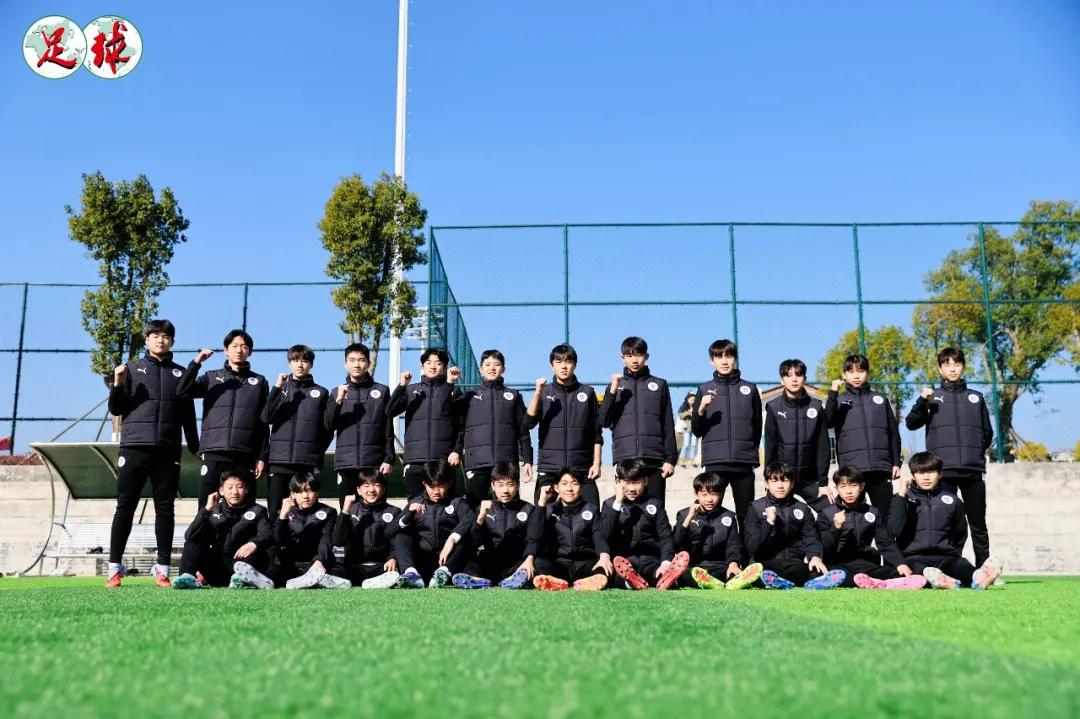
Yongin FC’s leader Yoon Seok-jun also revealed that for U12 and U15 players, the focus is more on nurturing their interest in football. The football center’s youth program has a relatively high dropout rate; typically, from an initial 40 players in the 13-15 age group, only about a dozen remain by the final year of middle school. Most drop out due to waning passion for football. Yoon said that in this competing Yongin FC squad, all 25 players are determined to become professionals, whereas a youth team from a domestic professional club reported only about 50% with such strong aspirations. This largely influences players’ attitudes and determination during training and matches.
Moreover, the Yongin City Football Center’s youth training system allows players to live on-site, fostering independence and team spirit. Notably, players eliminated from the football center usually return to their schools to continue competing in school leagues, which generally means they lose visibility from the center and professional scouts. However, the dropout rate has recently decreased because Korea’s low birthrate makes recruiting youth players in Yongin difficult, forcing searches nationwide, though they cannot compete with other football powerhouses or wealthy professional clubs.
Similarly to Korea’s broader youth training trends, Yongin Football Center is changing its traditional coaching methods. Training and matches emphasize encouragement over tactical instructions, with coaches rarely giving detailed directions during games, encouraging players to think independently and improve their game understanding. While the common domestic phenomenon of prioritizing academics or “retiring at 12” is rare in Korea, it doesn’t mean Korean youth neglect studies. Yongin City Football Center balances developing professional players and university students, with most U18 graduates each year successfully joining pro teams or universities.
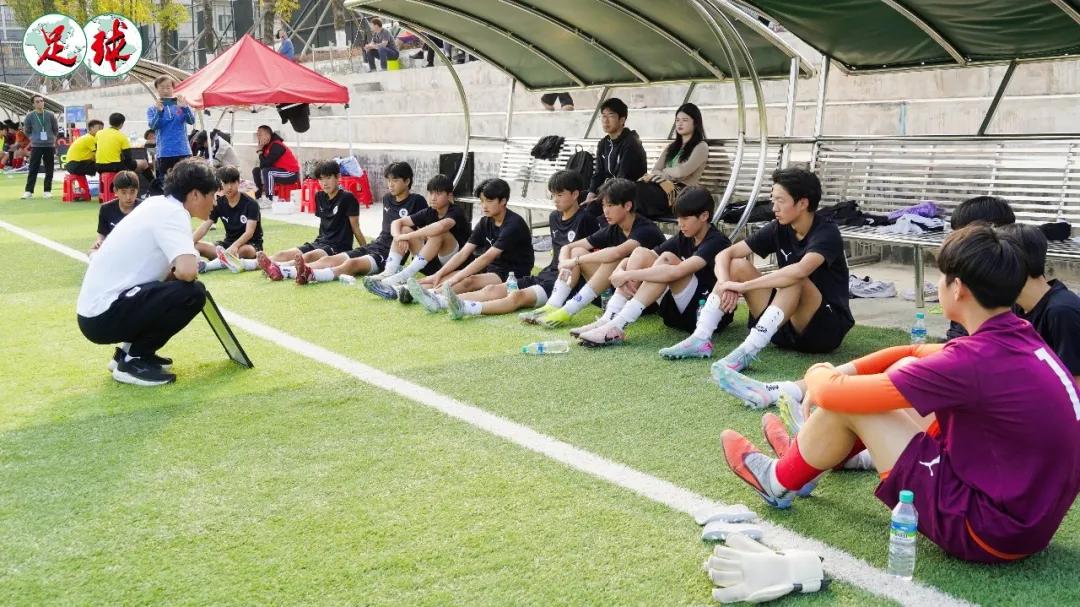
Although Yongin FC originates from a government-funded football center, the training and match intensity of this team is comparable to professional youth squads. On the night of their first match against Shanghai Port, Yongin FC requested a warm-up match the next morning to give their 2012 age group players more game experience. Following a widespread flu in the team, they rested for a day. After the study day, they resumed a schedule of one training and one match per day, with standard content but emphasizing short-term intensity and uneven-numbered pressing drills.
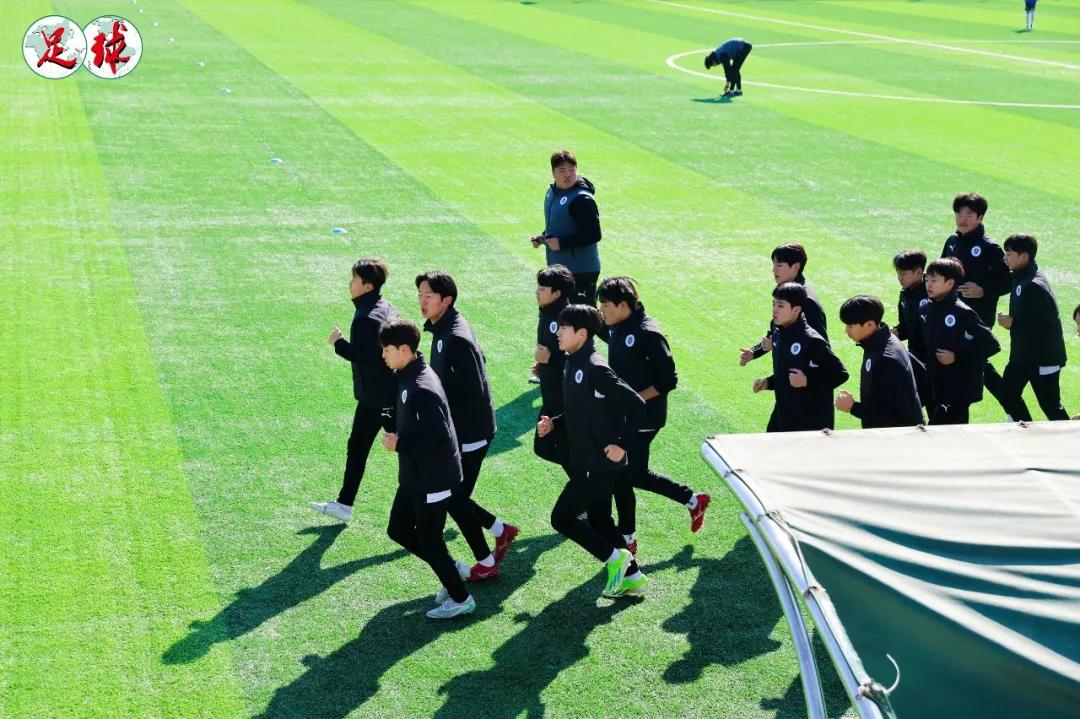
Yongin FC’s daily training includes warm-ups, one-on-one diamond-shaped passing drills, one-on-one sprint shuttle duels, and 6v7 five-a-side small-sided games simulating match scenarios. The entire session lasts about an hour. The high-intensity one-on-one sprint shuttle involves two players sprinting back and forth between cones placed 10 meters vertically and 30 meters horizontally, racing to win the ball and score in a makeshift goal marked by cones. In the 6v7 game, the team with seven has a “free player,” and after scoring, roles switch continuously.

Despite being South Korea’s football pride for 20 years, Yongin City has sold the football center land to SK Hynix for a semiconductor industrial cluster. Since 2022, Yongin squads have had to relocate to the nearby Yangji-eup training center. Sometimes they rent other football fields in Yongin, including the mostly unused Yongin “Dragon” Stadium. The planned new training center in nearby Unhak-dong will have only one full-size pitch and a small field, with offices and dormitories accommodating just 120 people, far smaller than the original football center. Even after completion, Yongin FC’s youth teams will need additional training venues, greatly affecting the stability and quality of youth training.
As Gyeonggi Province’s second-largest city with 1.5 million people, Yongin has long hoped to have a professional club based at the 37,000-capacity Yongin “Dragon” Stadium. However, Yongin Citizen FC (K3 League) founded in 2007 and Yongin City FC (second-tier league) founded in 2010 were dissolved in 2010 and 2016 due to the city government’s financial crisis. Only in 2024, when Suwon Samsung, Gwangju FC, and the Korean national team played at Yongin “Dragon” Stadium, was local enthusiasm for a professional club reignited.
In August 2025, the K League Professional Federation approved Yongin FC, founded that year, to join the K2 League. With the K2 League expanding to 17 teams in 2026, the Federation conducted 41 evaluations across six categories for applicant clubs; newly formed Yongin FC passed. The city has 1.5 million residents, the club has a sufficient budget (300 million KRW, about 1.4 million RMB), a large-capacity home stadium, other infrastructure, and a well-planned, feasible operational strategy.
Previously, Yongin City Football Center’s U12, U15, and U18 teams focused on improving youth players’ skills due to the absence of a local professional team. Yet most youth players aimed to receive more professional training and become pros. By merging into the newly founded professional club Yongin FC, they officially became part of a professional club’s youth system. For the Yongin City Football Center, funded by the city government for 25 years, this marks the end of an era and the start of a new one.
With Yongin FC’s establishment, youth players in the football center’s squads see greater chances to turn professional. After all, the three age groups now compete in the higher-level K League Youth League starting this year. However, transitioning to a professional club’s youth team also means they must choose between school leagues and the K League Youth League.
Hundreds of kilometers away in Haikou, Yongin FC’s first team, led by Korean football legend Lee Dong-gook as technical director, is conducting the club’s inaugural preseason training. Meanwhile, Yongin’s U15 squad in Dingnan aspires to follow their predecessors training in China and realize their professional football dreams. Ahead of them lie both opportunities and challenges.


Wonderfulshortvideo
The footwork, the finish 🤌


Did you get it? 🤔😅
The Wirtz x Sané link-up 🔗
Haaland’s movement 🥵
Which counterattack is
Griezmann with the cool finish 🥶
“afcon funny moments”
 Links
Links
 Contact
Address:UNIT 1804 SOUTH BANK TOWER, 55 UPPER GROUND,LONDON ENGLAND SE1 9E
Number:+85259695367
E-mali:[email protected]
 App
App


