



Winning fans and official recognition! U23 China finishes as runners-up: Growing through gaps, blooming through perseverance


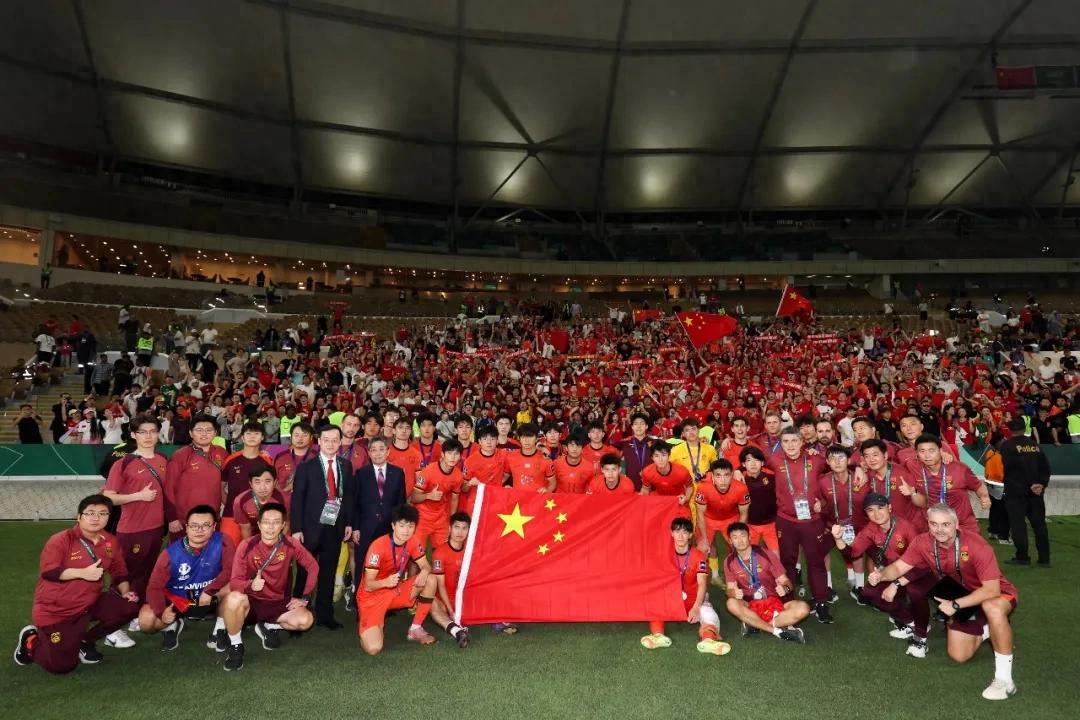
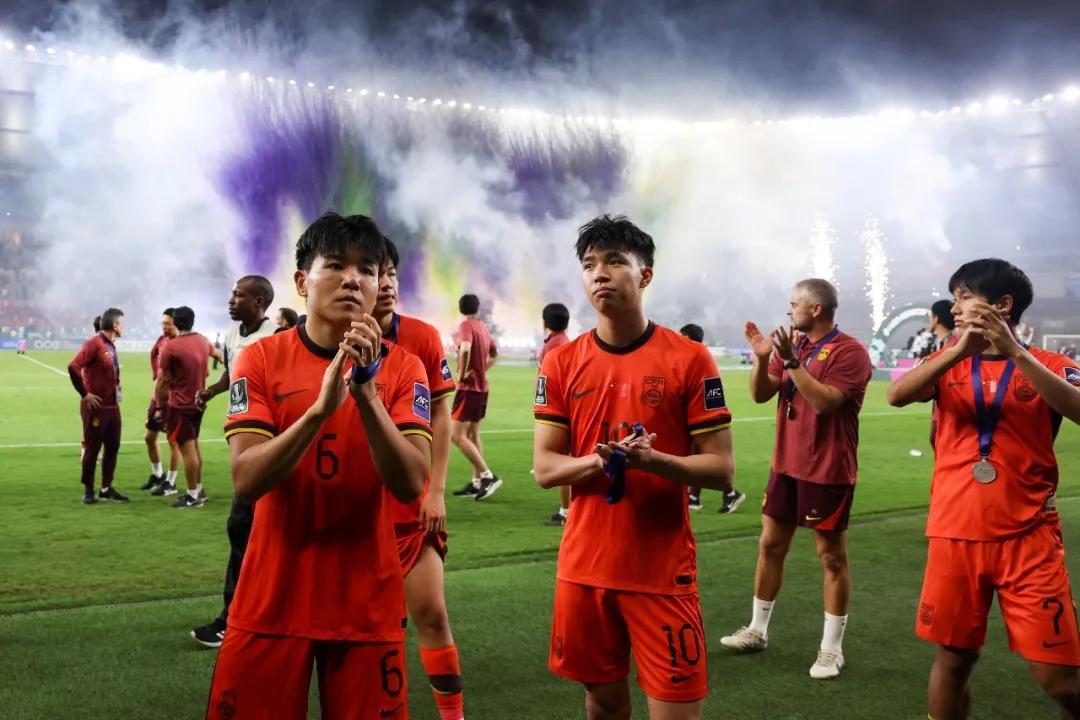
Reporter Lu Mi reports In the early hours of January 25th Beijing time, the 2026 U23 Asian Cup final came to an end. The U23 Chinese squad was defeated 0-4 by a powerful Japanese U23 team, finishing as runners-up. Although the journey and result were filled with disappointment, this is the best record in the U23 team's history since their debut, and also marks the first time in 22 years that any Chinese male national youth team has reached the final of a premier Asian competition.
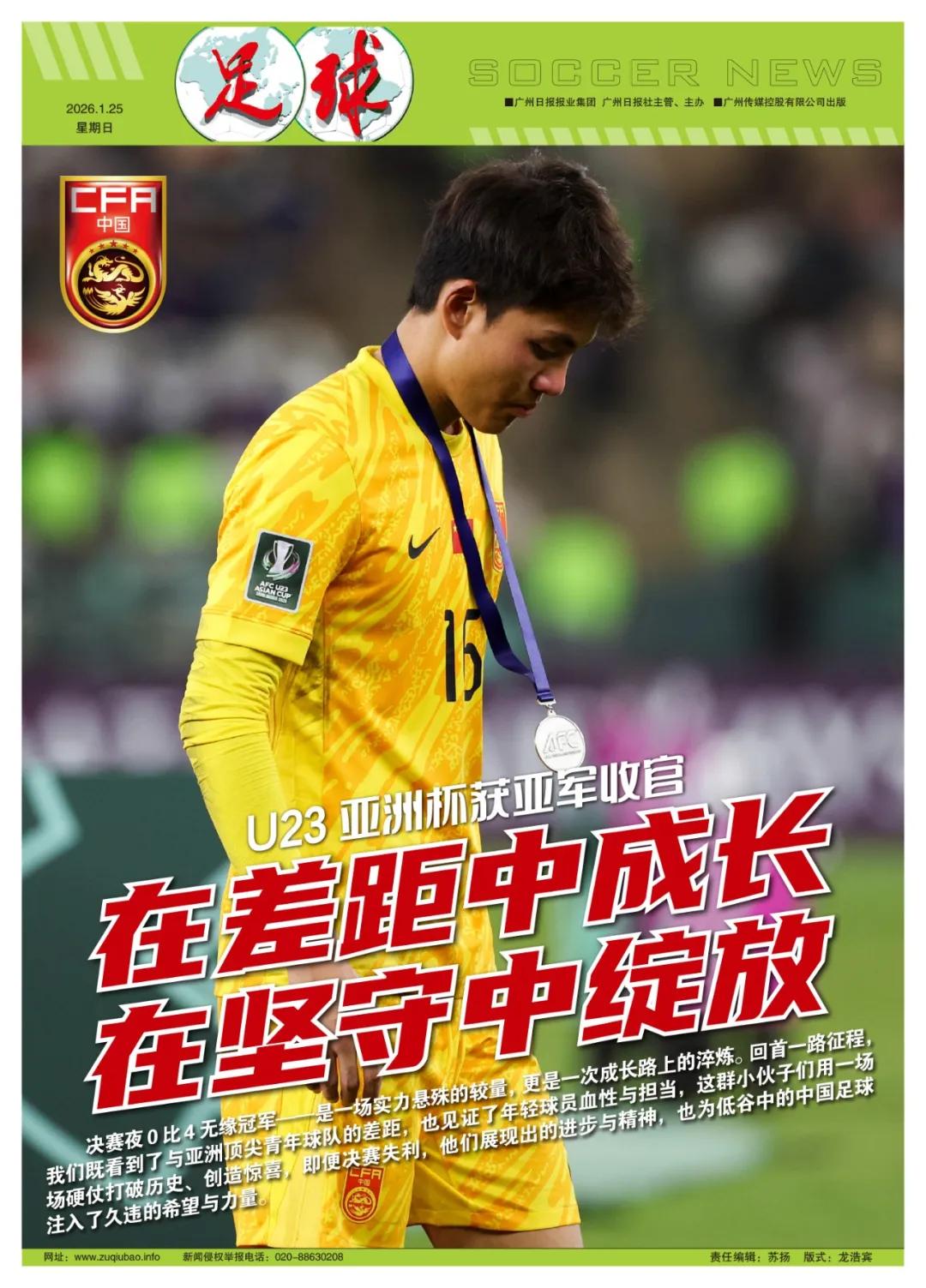
This final was a contest marked by a clear gap in strength and also a trial on the path of growth. We witnessed both the gap between the top youth teams in Asia and the young players’ fierce spirit and determination to never give up. From reaching the knockout stage for the first time to advancing all the way to the final, these young men broke records and created surprises through tough battles. Even though they lost the final, the progress and spirit they showed have injected long-awaited hope and strength into Chinese football during its difficult period.

This final was a direct confrontation showcasing the youth football strength between China and Japan, and also served as a mirror reflecting the gap and guiding future efforts. Unlike the tough battles in prior knockout rounds, the Japanese U23 team in the final was the strongest opponent in this tournament. Although they were underdogs, they demonstrated tactical sophistication and technical skills far beyond their peers. Even without their strongest European-based lineup, their overall strength ranks among Asia’s elite.
The U23 Chinese team advanced relying on ironclad defense and relentless fighting spirit: one win and two draws with zero goals conceded in the group stage to qualify for the knockout round for the first time; eliminating a strong Uzbekistan team in the quarterfinals via penalty shootout; and a 3-0 victory over Vietnam in the semifinals. They kept a clean sheet through the regular time of the first five matches, showing strong discipline and team cohesion. However, their offensive shortcomings and lack of tactical flexibility were fully exposed by the opponent in the final.
The biggest change in the starting lineup was the inclusion of Xiang Yuwang, with Bai Helamu coming off the bench. "Bai Helamu had a fever for two days, with a temperature reaching 38 to 39 degrees. It’s impossible for a sick player to play the full 90 minutes," Antonio explained after the match. Bai Helamu still appeared on the field in the 78th minute, but two minutes earlier, the U23 Chinese team had already conceded their fourth goal.

In this match, the team’s tactical system faced unprecedented challenges. Japan quickly took control after kickoff, using refined ball skills, smooth passing combinations, and precise positioning to constantly pressure China’s defense. They maintained superior possession and a much higher passing accuracy. Every attack was threatening, while China was stuck in passive defense, struggling to organize effective counterattacks. Even occasional set-piece chances failed to turn into goals.
The 0-4 scoreline reflects multiple aspects of the gap and offers valuable lessons for the U23 Chinese team. First, the technical gap: Japanese players have more delicate individual ball control and high stability while holding the ball, even under intense pressure, managing to control and distribute calmly with minimal errors. Chinese players made frequent mistakes under high pressing, struggling to break through defense or organize attacks with continuous passing. For example, at the 20th minute, Wang Yudong lost possession while controlling a ball in the backfield, leading to a long-range shot goal that widened the score gap—an obvious sign of the technical difference.
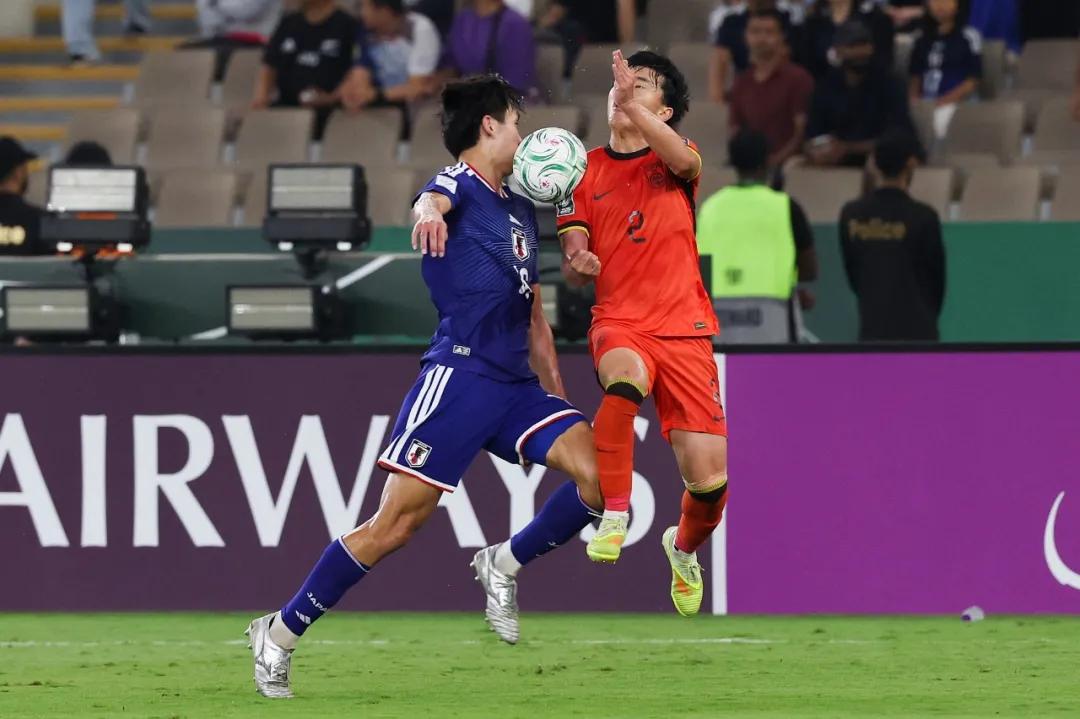
Secondly, the difference in tactical awareness: Japan executed their tactics with great decisiveness, strictly following pre-match plans in positioning and passing. Their offense advanced layer by layer with multiple scoring threats, while their defense was compact with all players retreating to form a tight system. Their transitions between attack and defense were smooth and natural, with almost no obvious gaps. Although the U23 Chinese team showed strong tactical discipline, they lacked flexibility, over-relying on wing crosses and individual breakthroughs on offense, and struggled to form effective coordinated defense against Japan’s quick passing and movement. Japan’s goals from corner rebounds, long-range shots deflecting off players, and penalties vividly illustrate this tactical gap.
However, this loss is not meaningless. On the contrary, it clearly showed the U23 Chinese team the gap between themselves and Asia’s elite, as well as the direction for future efforts. Progress in football is never instantaneous; it requires both holding on to one’s strengths and facing shortcomings honestly to achieve greater breakthroughs in upcoming matches.
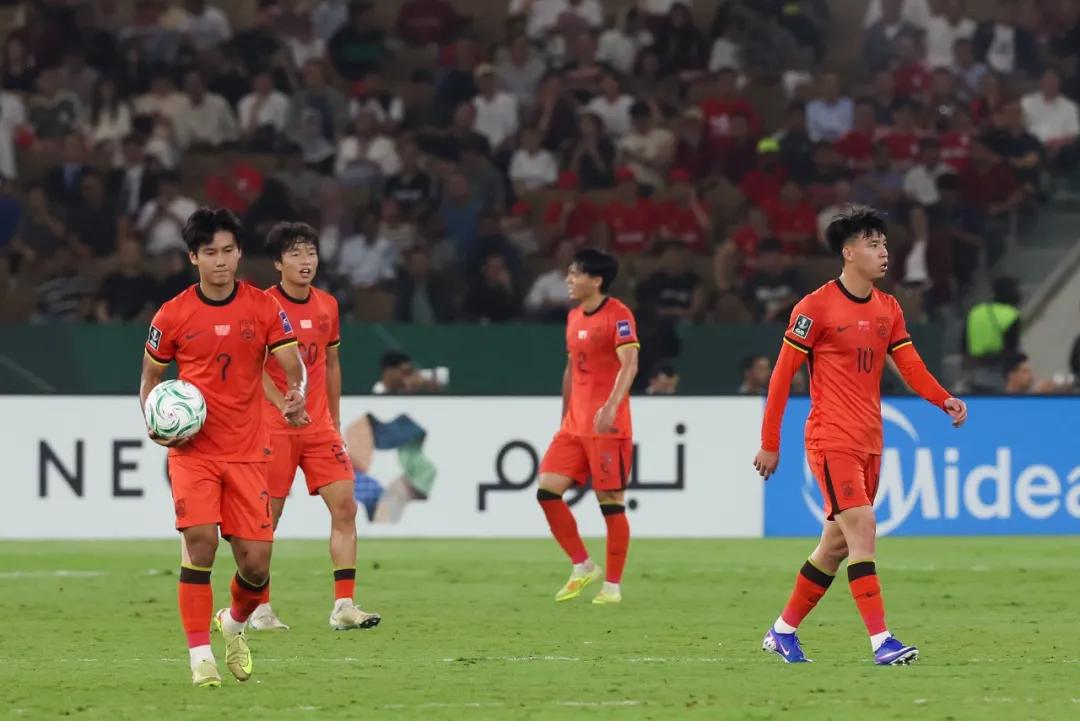

“First, congratulations to Japan for winning this Asian Cup. Secondly, I think the score difference today was too large for us—really too large. But that’s football. The opponent has excellent players and a strong team, which made it very difficult for us. I’m unhappy today because losing the final can never bring joy. But most importantly, I am extremely proud of this team and my players,” Antonio said after the match.
Despite the strength gap and falling behind early, the Chinese players never gave up fighting. Down by two goals within 20 minutes and facing a very unfavorable situation, they did not lose heart or retreat. In the latter part of the first half, China gradually found their rhythm and created a set-piece chance. Peng Xiao’s header at the far post narrowly missed, missing the best chance to reduce the deficit. However, this did not shake the players’ confidence; they continued running hard and fighting actively on the field. Every tackle, interception, and attack embodied their sweat and persistence.
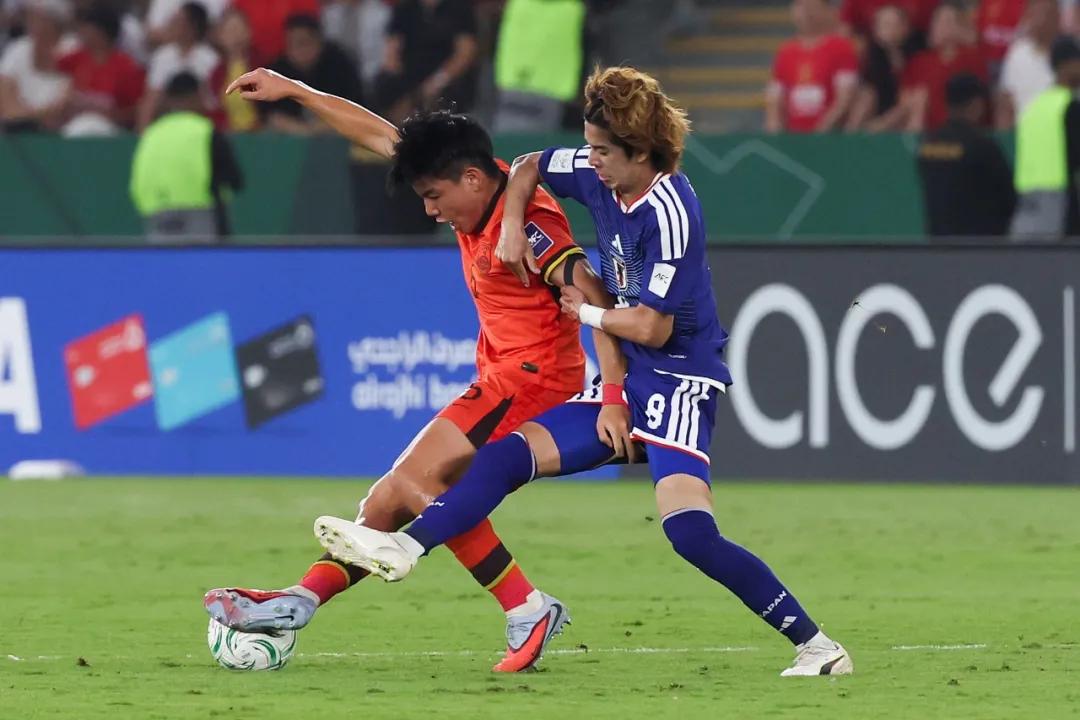
With a large score gap, the outcome seemed decided. But the U23 Chinese team’s fight never ceased. Coach Antonio made timely adjustments, bringing on Chen Zeshi, Bao Shengxin, and Wang Bohao to strengthen midfield transitions and launch full attacks on the opponent’s defense. Even if there was only a slim chance, they refused to give up. Yang Xi’s rebound goal was disallowed due to offside. Although their efforts could not change the result, their willingness to give their all for dreams and honor deserves respect and applause from everyone.
“I won’t be happy when losing, nor is it possible. But we must stay rational. We need to understand the gap between Chinese and Japanese football. For me, the first and second goals hit us hard. The score was indeed too high. On the other hand, some key moments in the match—like the penalty at the start of the second half—are crucial in a final. My players wanted to win and fought with all their might. But the difference between losing by four goals and keeping a clean sheet—that’s football,” Antonio’s disappointment over the “four-goal defeat versus clean sheet” gap was clear. Yet most Chinese fans have long understood this gap through years of Chinese football’s struggles, and they applauded the team after the match.
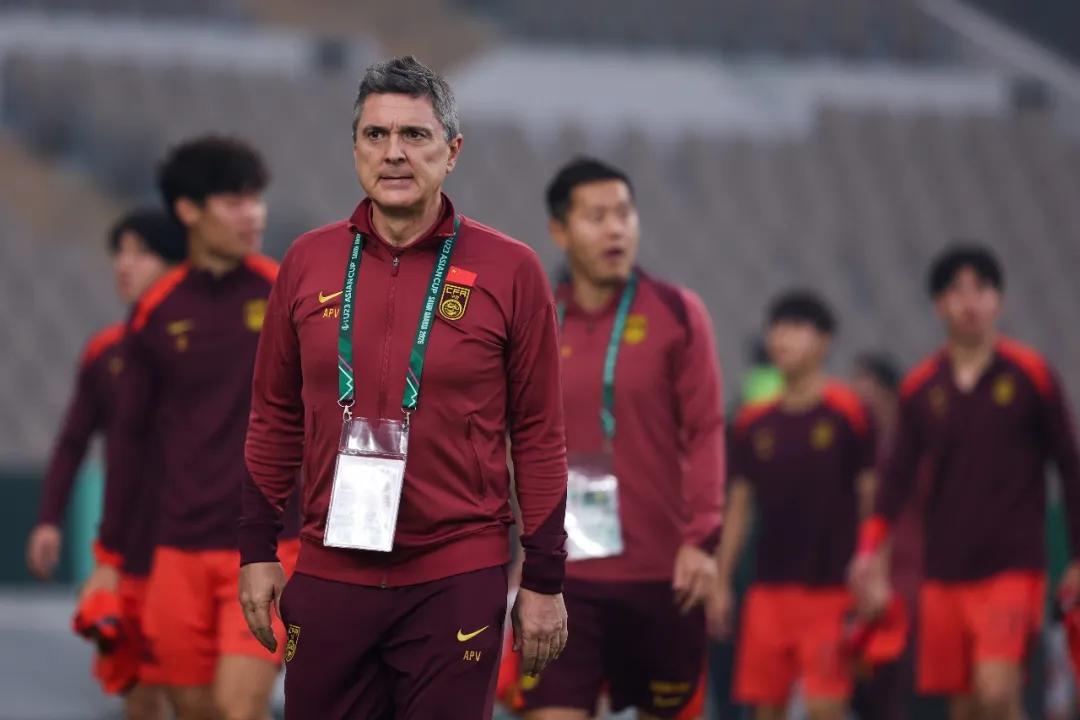

Looking back at this U23 Asian Cup journey, reaching the final and winning the runner-up prize was already a remarkable achievement for the U23 Chinese team. This result carries many breakthroughs and surprises, embodies much sweat and effort, and holds milestone significance. Before this, the U23 team had participated five times without ever reaching the knockout stage, with only two wins in 15 games, always lingering in the lows. In this tournament, these young men shattered all doubts and biases, creating history step by step through tough battles. They proudly entered the final, becoming the first Chinese male national youth team in 22 years to stand on an intercontinental final stage, just one step away from the championship.
Notably, this U23 team includes some accelerated players born in 2005-2006, such as Wang Yudong and Kuai Jiwen, many of whom have limited continental competition experience but showed maturity and resilience beyond their age during the tournament. This loss is not the end but an important milestone in the U23 team’s growth journey. As Hu Hetao said after the match: “I believe our next results will be better! Each generation will improve! Some of the next U23 players are already in our team, and I hope they can carry forward the experience from this tournament and help them.”
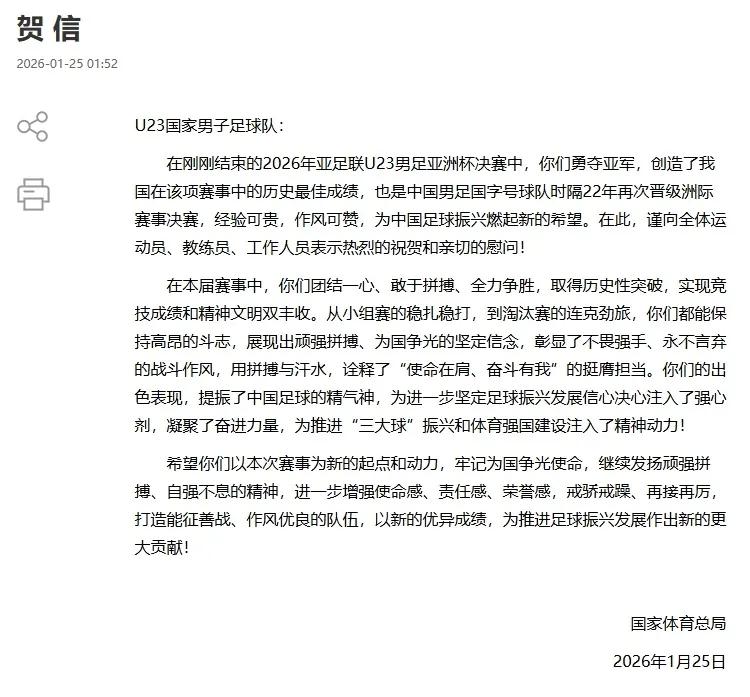
Immediately after the match, the Chinese Football Association and the General Administration of Sport sent congratulatory letters. The letter from the General Administration stated: In this tournament, you united as one, dared to fight, and strived for victory, achieving a historic breakthrough and excelling both in competition and sportsmanship. From steady group stage performances to defeating strong teams in knockouts, you maintained high morale, demonstrated tenacity and patriotism, showing a fighting spirit that fears no strong opponent and never gives up. Through your efforts and sweat, you embodied the responsibility and commitment of “bearing the mission, striving with me.” Your outstanding performance uplifted the spirit of Chinese football, injected confidence and determination into the football revitalization effort, gathered momentum for advancing the “three major balls” revival and building a strong sports nation! We hope you take this tournament as a new starting point and motivation, remember your mission to bring glory to the country, continue to promote the spirit of perseverance and self-improvement, further strengthen your sense of mission, responsibility, and honor, remain humble and diligent, and build a team capable of fighting and with excellent style, making new and greater contributions to football development.
Taking this tournament as a new starting point and motivation to continue moving forward courageously is also the hope of all Chinese fans!


Wonderfulshortvideo
The footwork, the finish 🤌


Did you get it? 🤔😅
The Wirtz x Sané link-up 🔗
Haaland’s movement 🥵
Which counterattack is
“afcon funny moments”
🤤🤤
 Links
Links
 Contact
Address:UNIT 1804 SOUTH BANK TOWER, 55 UPPER GROUND,LONDON ENGLAND SE1 9E
Number:+85259695367
E-mali:[email protected]
 App
App


