



European media stunned by referee's decision as Real Madrid eliminated from Champions League by Bayern Munich



The Champions League quarter-final between Real Madrid and Bayern Munich at the Allianz Arena concluded with one of the season's most dramatic scripts, but what stirred European public opinion was not just the score, but precisely the referee's controversial decision at the pivotal moment.
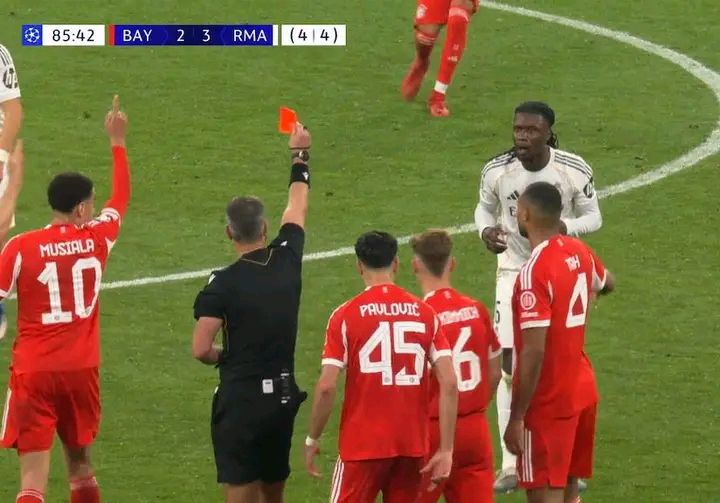
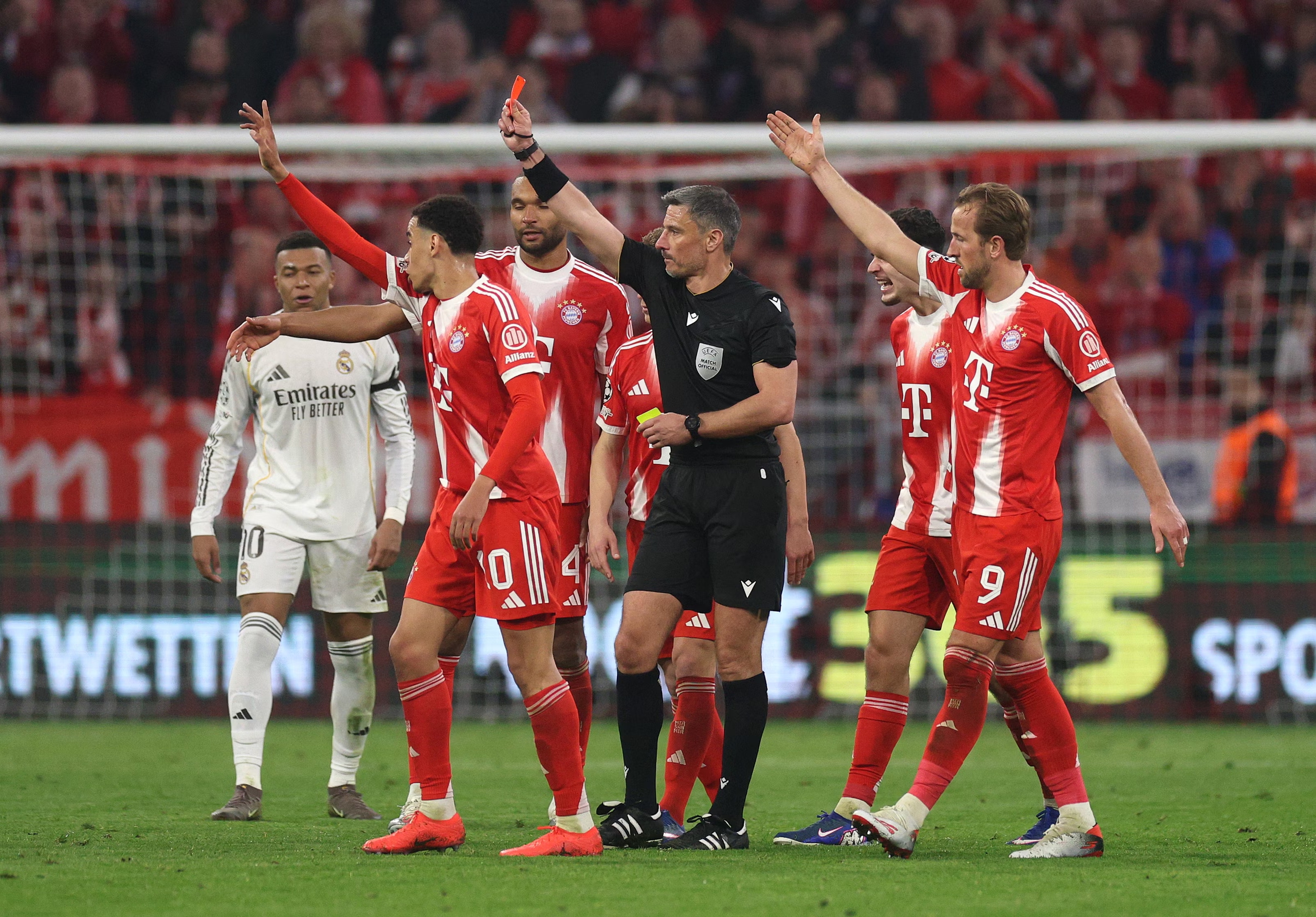
The red card issued to Eduardo Camavinga became the focal point, causing media across the continent to unanimously express "astonishment" and raise major questions about the match officiating.
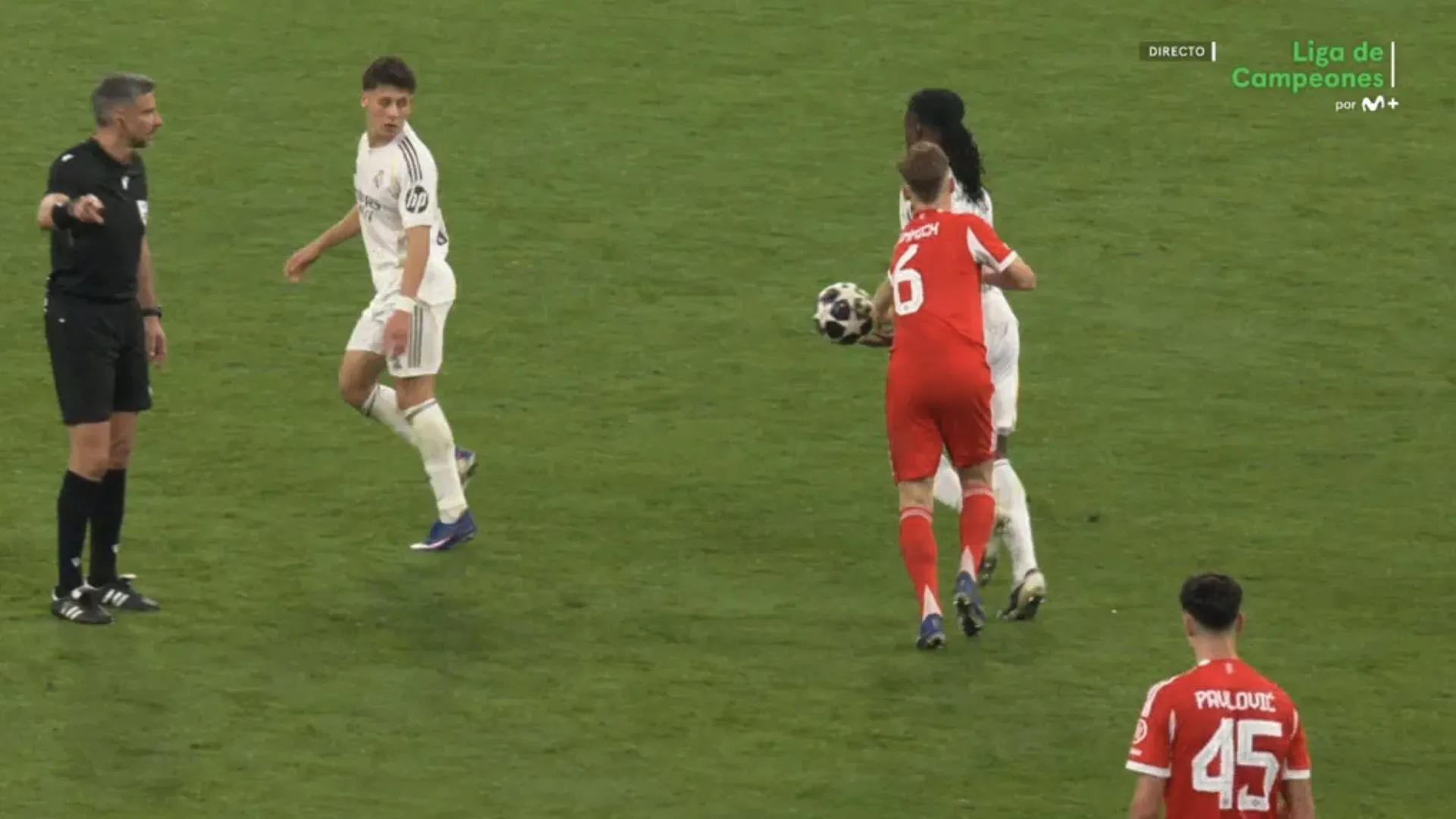
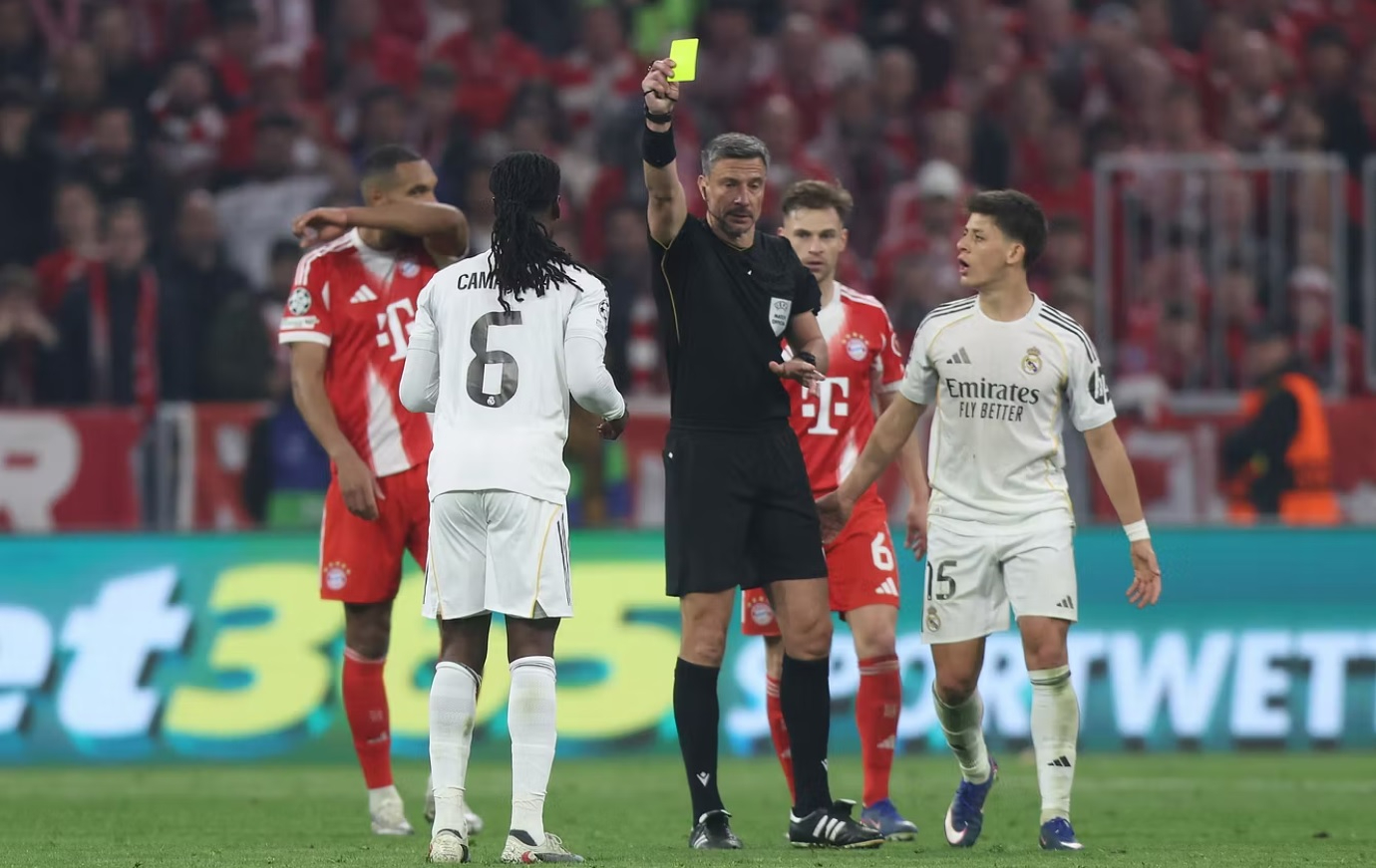
In the 86th minute, with the score at 3-2 favoring Real Madrid and the aggregate situation still balanced, Slovenian referee Slavko Vincic issued a second yellow card, equivalent to a red card, to Camavinga after a situation deemed as "time-wasting" by holding the ball for a few seconds. This decision immediately altered the entire complexion of the match. Just minutes later, Bayern scored an equalizer, thereby securing their passage to the next round, while Real Madrid bitterly halted their journey.
Notably, the reaction from international media was almost unanimous: surprise, confusion, and largely viewing the punishment as overly severe. The German newspaper Bild raised doubts that the referee seemed unaware Camavinga already had a prior yellow card, leading to the controversial issuance of the red card. Meanwhile, Kicker detailed the situation where Vincic initially issued a yellow card before "realizing" it was the French player's second offense.
In England, The Guardian acknowledged Camavinga acted somewhat unwisely by committing an unnecessary foul, but still emphasized the situation did not warrant such a pivotal decision. Even The Sun described the red card as "absurd".
In France, newspapers such as L'Équipe initially criticized Camavinga himself for his immaturity, receiving two yellow cards within eight minutes. However, this viewpoint was quickly balanced as many experts argued disqualification in such a context was excessively harsh. The outlet RMC Sport also highlighted the "lack of experience" factor of the 23-year-old midfielder, but did not deny the sensitive nature of the decision.
Italian media, notably La Gazzetta dello Sport, offered a more balanced perspective: Camavinga could be seen as "naive", but the penalty was clearly "excessive". This view accurately reflects the general sentiment among professionals: a fault may exist, but the severity of punishment was disproportionate.
Even in Spain, the newspaper AS asserted UEFA does not encourage such decisions in major matches. According to their analysis, both the referee and the player made mistakes, but having an individual decision directly impact the match outcome is something top-level football should avoid.
Not just media, numerous experts and former referees also voiced opinions. Mateu Lahoz stated the referee had "lost focus" and even was unaware it was a second yellow card. Meanwhile, expert Pedro Martín assessed this as one of the red cards "that will enter history" due to its impact level and controversial nature.
Former star Steven Gerrard also had a clear viewpoint: Camavinga's mistake existed, but it was not worthy of costing a red card at such a crucial moment. Conversely, from Bayern's side, representative Luis Díaz argued the referee acted correctly as Camavinga prevented the German team from taking a quick free kick.
Despite differing opinions, most public opinion agreed this was a pivotal and somewhat "overzealous" decision. Coach Álvaro Arbeloa himself could not hide his frustration, stating it was "inexplicable" to disqualify a player in such a situation.


Wonderfulshortvideo
ronaldo messi stats ronaldo vs messi edit ronaldo news today messi news today



My @CLUB needs more fans!
The touch and the pass 😮💨

doku goal today haaland goal today cherki goal today man city 3-0 liverpool premier league news man city news

cherki goal today rayan cherki edit cherki vs liverpool

User esportapi has posted a video.

User esportapi has posted a video.
 Links
Links
 Contact
 App
App


