



Liverpool requires a major overhaul



The loss to PSG in the Champions League quarter-finals not only concluded Liverpool's European aspirations but also revealed a truth: The team from Merseyside is stepping into a period that demands full-scale rebuilding.
Despite moments where Liverpool played with great effort, the quality gap between them and the reigning champions over the two matches is undeniable.
When the quality gap is exposed
The return leg at Anfield was a typical illustration of Liverpool's paradox this season. They launched 21 shots, had 50 touches in the opponent's penalty area, and achieved an expected goals (xG) value close to 2. However, the scoreboard did not reflect that as Liverpool suffered another 2-0 defeat, concluding the two matches with a 0-4 aggregate score.
The cause lies in a lack of sharpness in finishing. The opportunities created were not converted into goals, while the defense failed to maintain the necessary concentration.
On the other hand, PSG demonstrated the difference in quality. With individuals possessing high disruptive ability like Ousmane Dembele, the French side did not need many chances to seal the match.
Dembele's two goals came from quick transition situations, fully exploiting mistakes in Liverpool's defense. This is precisely what the English team lacks: efficiency and composure in decisive moments.
This gap is not evident only in one match but is a trend throughout the season. Liverpool can perform well in phases but rarely maintain stability over the full 90 minutes. This is why they continuously dropped points and suffered up to 17 defeats across all competitions this season.
The personnel factor in this story cannot be overlooked. Major signings like Florian Wirtz have not met expectations, especially in top-level matches. Against PSG, Wirtz left almost no significant mark and was completely overshadowed by the stars on the other side.
Meanwhile, key players show signs of decline. Mohamed Salah remains energetic but lacks effectiveness, and Alexis Mac Allister has not maintained the stable form of last season. When both new and old elements fail to meet requirements, Liverpool's struggles are understandable.
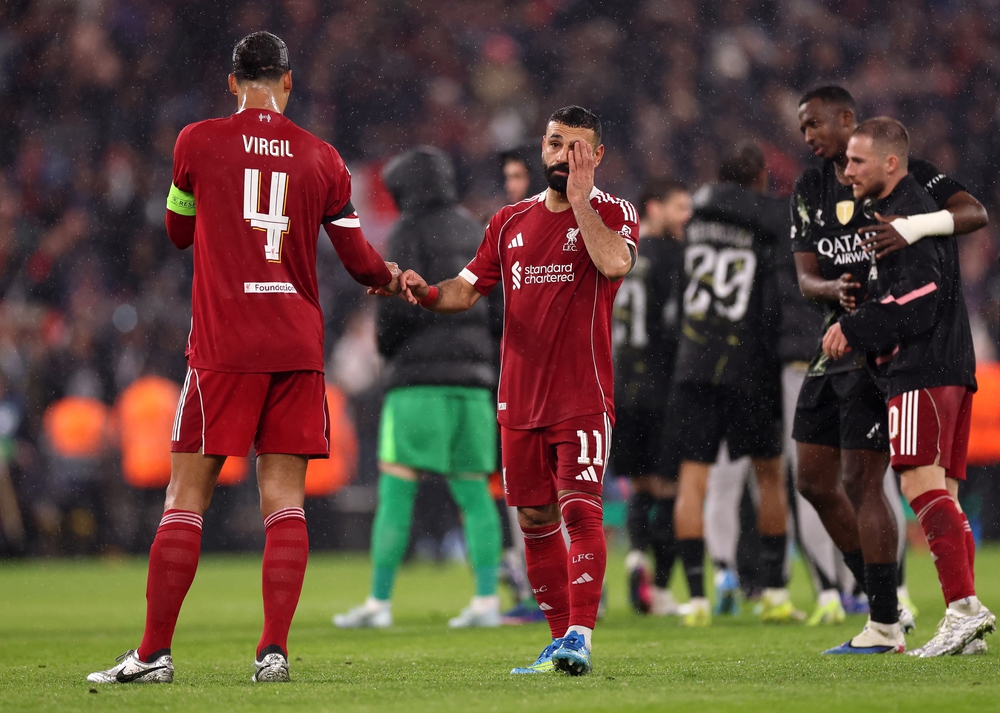
Liverpool is far behind in quality compared to top teams like PSG
A major overhaul is needed
Liverpool faces a significant personnel turning point. The current squad no longer maintains the necessary balance, while recent changes have not yielded the expected results.
Hugo Ekitike's injury further complicates the situation. Losing a striker who scored 17 goals since the start of the season makes the already unstable attack even more troubled, especially when the expensive signing Alexander Isak is not at his best fitness. The decision to start Isak in such a crucial match shows the coaching staff's gamble but also reflects the reality that Liverpool lacks many quality alternatives.
Additionally, the club will face a wave of departures this summer. Mohamed Salah and Andy Robertson are likely to leave upon contract expiration. Others like Federico Chiesa also face potential exits, while Ibrahima Konate's future remains unclear.
In this context, Fenway Sports Group's role becomes particularly crucial. The leadership must clearly define the development strategy for the next phase, from retaining necessary pillars to filling key positions. More importantly, they must accurately assess Arne Slot's role in this process: whether he is the right person to lead Liverpool into a new cycle.
Another key factor is qualification for next season's Champions League. This is not only a performance goal but also directly affects the club's financial capability and appeal in the transfer market. Without participation in this competition, Liverpool will face difficulties attracting high-quality players.
Nevertheless, there is basis to believe Liverpool has not completely lost its identity. The match against PSG showed they can still compete evenly with top teams when performing well. The issue lies in stability and squad depth, factors that can only be improved through a systematic rebuilding process.
The remainder of the season will play a decisive role. Matches against direct rivals like Everton, Chelsea, or Manchester United not only affect league position but also serve as a measure of the team's resilience. If they cannot maintain the spirit and intensity shown before PSG, Liverpool will struggle to achieve minimum objectives.
In summary, Liverpool faces the requirement for comprehensive change. This is no longer about minor adjustments but a true major overhaul, encompassing personnel, tactics, and club operations.


Wonderfulshortvideo
ronaldo messi stats ronaldo vs messi edit ronaldo news today messi news today



My @CLUB needs more fans!
The touch and the pass 😮💨
doku goal today haaland goal today cherki goal today man city 3-0 liverpool premier league news man city news
cherki goal today rayan cherki edit cherki vs liverpool

User esportapi has posted a video.

User esportapi has posted a video.
 Links
Links
 Contact
 App
App


