



Reflections on the U17 Asian Cup: After Overcoming Every Obstacle, the Journey Ahead Is No Longer Barren



Reporter Chen Yong reports Often we find ourselves saying "if"—if the national youth team's match against Indonesia had been approached like the games against Saudi Arabia and Australia, if the first half against Japan had mirrored the second half, maybe the outcome would have changed. Yet, hindsight is simple, but the stress and unknowns encountered along the way do not always allow for ideal decisions.
Behind the match against Indonesia lay the heavy burden of China's 21-year absence from the U17 World Cup; the game against Qatar was a desperate fight for survival; the contests with Saudi Arabia and Australia showed fearless determination after securing a World Cup berth; the first half against Japan reflected the pressure of a final and championship aspirations; the second half against Japan was again a do-or-die effort. Of course, during preparation, there were objective factors such as player losses, as well as subjective aspects that need review.
The U17 Asian Cup journey of the 2009-born national youth team was a bumpy road, but in the end, we paved a path to the World Cup that had been desolate for 21 years—and, more importantly, we gained confidence.


When reviewing the 2009 team's Asian Cup campaign, an unavoidable question is: Was this the strongest possible squad? The answer is no. This involves two reasons: first, some key players were left out due to disciplinary violations; second, the head coach made choices based on his own tactical preferences.
The first reason is a matter of necessity. Chinese football currently places great emphasis on discipline and conduct, with national teams stressing rules, teamwork, and fighting spirit. Because of players' disciplinary infractions, several starters and rotation players were dropped from the squad. As a result, their positions suffered during the U17 Asian Cup. However, when it comes to discipline and attitude, there is no room for compromise.
As for the second reason, it's a perennial topic in world football—coaches' selection criteria often draw criticism from media or fans. Take the 2003 age-group national youth team as an example: at that time, Antonio chose to omit several players widely considered "starters" by the media and fans, sparking controversy and even a comprehensive review by the Chinese Football Association. The CFA ultimately supported Antonio, which led to the 2003 team reaching the quarterfinals and later the 2003 Asian Games team finishing as runners-up in the U23 Asian Cup.
Of course, this does not mean that Ukishima's choices were necessarily correct, but when we appoint a head coach, we must fully respect his decisions. Otherwise, the outcome can be disastrous—some past national team coaches, especially local ones, have compromised under public pressure, and those results are still fresh in our memory.


The opening match against Indonesia was widely seen as a must-win, as the team had beaten them 7-0 in the first friendly and 10-2 on aggregate across two warm-ups. But in the official game, the 2009 team lost. They had 61% possession, 12 shots with 3 on target—decent statistics—but what frustrated fans was their impatience, poor technique under pressure, and confusion in the final stages. This was a stark contrast to their later performances, showing that the immense pressure gradually destabilized them.
In the subsequent match against Japan, the 2009 team indeed fought hard, but the pressure remained and the gap in quality was evident, ultimately losing 1-2. After two consecutive losses, the team was pushed to the brink. Fortunately, Qatar beat Indonesia 2-0, keeping hope alive. In the final group-stage match against Qatar, the team fought with their backs against the wall, while Qatar also didn't go all out.
The matches where the team truly shone were the 3-1 quarterfinal victory over Saudi Arabia and the 2-0 semifinal win against Australia. These games showcased their real strength, largely because after securing a U17 World Cup spot, the players shed all pressure and showed their true selves.
However, when the final arrived and the title was within reach, the players' mentality shifted again. A positive takeaway from the loss was that after adjusting in the second half, the team scored twice and regained confidence.


During the U17 Asian Cup, Ukishima's tactical arrangements, squad rotations, and in-game management did show some issues from a review perspective. Evaluating him is a task for the Chinese Football Association going forward. But considering the coaching changes in national youth teams over the past two years and the fact that the team finished as runners-up, it is highly likely that Ukishima will lead the squad to the U17 World Cup. Of course, both the CFA and Ukishima need to thoroughly reflect on this tournament—what lessons to learn and what experiences to retain.
From a broader perspective, the 2009 team's achievement of qualifying for the World Cup after 21 years and eventually winning silver has great significance for Chinese football: this breakthrough demonstrates a rebound, gives Chinese football more confidence, and, crucially, relieves future national youth teams from excessive psychological pressure, allowing them to perform at their normal level.
Participating in the U17 World Cup will also allow these young players to experience the current level of youth football on the global stage, which is immensely valuable for their growth.


Looking back at the 2009 team's journey, it was a path no one had walked in 21 years. Ukishima sometimes did not fully grasp the difficulty of this road, lacking sufficient foresight into the challenges. Our young players could only explore and advance step by step.
When they encountered a pit, they might hesitate; at a crossroads, they might pause; when a cow ran out from the roadside, they might be scared; if passersby told them they were wrong, they might feel lost; but as the road grew tougher, they finally summoned courage and confidence, and everything turned out bright.
Precisely because this path had been untrodden for 21 years, reopening it was bound to be bumpy. So when we look back, we must summarize each lesson, but this journey has no room for "ifs." The word "if" only describes an imagined smooth road, yet how could a road barren for 21 years be smooth everywhere?
Since this road has now been opened, the 2009 youngsters must keep moving forward, carving new paths on the world stage. And for future teams from 2010, 2011 and beyond, when they set foot on the road to the World Cup, it will no longer be desolate.



Wonderfulshortvideo

Lashed home by Kieffer Moore ☄️



The saxophones are getting louder for Preston here…
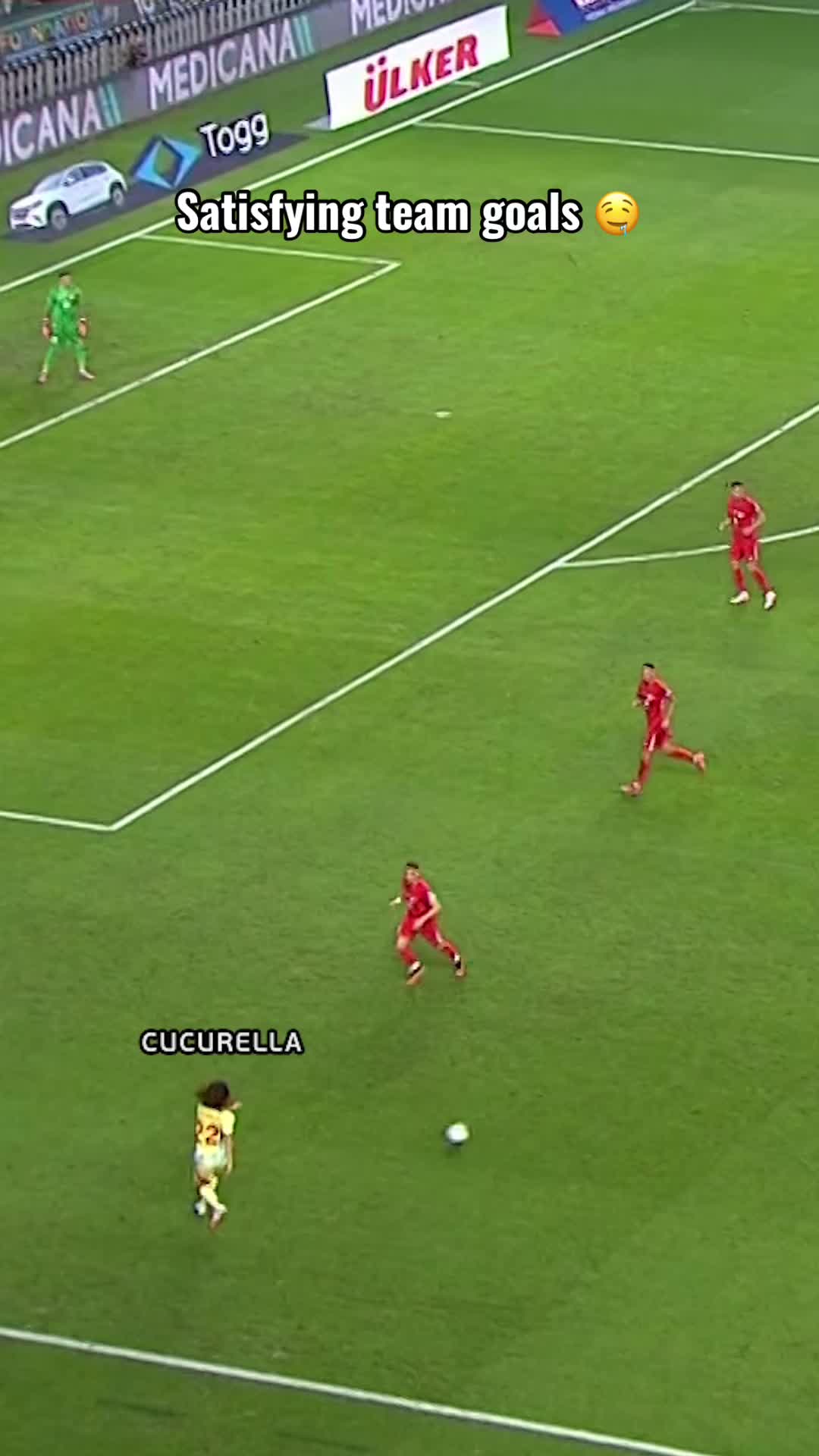
When football is simple but beautiful 😍

Cristiano Ronaldo is back on the quest for 1,000 goals, and these are his 977th and 978th goals.

messi argentina retirement messi retiring messi edit

The Swans go TOP of the Championship 🦢

Sheffield United’s Romelle Donovan with an added time WINNER that sent Bramall Lane wild 🔥
 Links
Links
 Contact
 App
App


