



PSG vs Arsenal: Enrique's team holds a key advantage ahead of the Champions League final



The prolonged and exhausting season is now coming to an end for both Arsenal and PSG. But before the Champions League final in Budapest, one of the two sides clearly possesses a notable edge in fitness levels.
PSG vs Arsenal: The advantage of the defending champions
By the time the season ends, PSG will have played 62 matches since early June last year. That is an exceptionally grueling campaign, as their FIFA Club World Cup run took place under intense heat in the USA and ended only four weeks before the start of the 2025-26 Ligue 1 season. Nevertheless, the French side managed to navigate the congested schedule with careful planning, while making the most of every opportunity to lighten the load on their squad.
During the Champions League knockout stages, PSG had their domestic league matches postponed ahead of major clashes with Liverpool and Chelsea. Before the final, they also enjoyed a full 13 days of rest and preparation, whereas Arsenal had only 6 days.
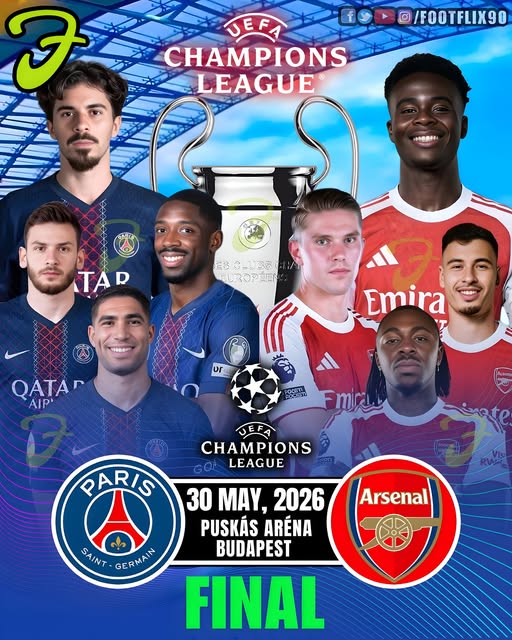
The Champions League final between Arsenal and PSG is the centerpiece of European football this weekend.
However, PSG's advantage is not limited to the fixture schedule. More notable is how Luis Enrique's team managed their workload almost perfectly throughout the season. Thanks to this strategy, their key stars avoided overexertion and the risk of injury.
Marquinhos is a prime example. The Brazilian center-back continues to display his class at an experienced age, especially with an outstanding performance in the second leg of the semifinal against Bayern Munich, where PSG's defense showed grit matching their attacking prowess in the first leg. Yet, Marquinhos has started only 11 Ligue 1 matches this season. Ousmane Dembele has a similar number of appearances.
This is not limited to older players or those with injury histories. Young talents like Joao Neves (20) and Nuno Mendes (23) have also started only 13 Ligue 1 matches. It is clear that Enrique deliberately saved his most important players for the European stage.
That reality also reflects the balance of power in French football. PSG are so dominant over the rest that they can still compete for domestic titles despite constant squad rotation. Although they had to wait until the final round to clinch Ligue 1, the capital club achieved their goal without wearing down their key players.
On the other hand, Mikel Arteta did not have the same flexibility. Arsenal had to rely on their core lineup much more frequently.
As many as five Arsenal players have logged over 4,000 minutes this season. Meanwhile, only Warren Zaire-Emery of PSG surpassed that mark. Center-back William Saliba has played a total of 4,134 minutes, nearly double that of Marquinhos. In attack, Bukayo Saka has played almost 1,000 more minutes than Desire Doue, even though both missed several games due to injury. In midfield, Martin Zubimendi has reached 4,269 minutes, while Joao Neves has only 2,581.

On May 30, Budapest will become the focal point of European football as the Hungarian capital hosts the 2026 Champions League final between Arsenal and PSG.
The final in Budapest will be Arsenal's 63rd match of the season. At one point in April, right after the international break, a packed schedule left the London club facing the risk of burnout.
However, their first domestic league title in 22 years provided a huge mental boost. The pressure was lifted, and Arsenal enter the final in a highly positive state. Although PSG statistically have fresher legs, Arsenal hold the advantage in match rhythm, a crucial factor in a high-stakes game.
Kitman Labs CEO and founder Stephen Smith commented: "Controlling workload definitely gives PSG more recovery time, and scientific research fully supports that. The most consistent finding in elite football is that a congested fixture schedule increases the risk of muscle injuries. If you play fewer domestic league matches, your total workload is lower, meaning risk also decreases."
However, Smith also cautioned against assuming PSG will be fresher on match day: "Match rhythm is a completely different variable. If players don't regularly play competitive matches, they sometimes lack match sharpness. The issue is not about having more rest, but which team finds the best balance between recovery and maintaining intensity."
While Arsenal prepared for a formality match against Crystal Palace and then celebrated their title in the final round, PSG had their own plans.
After a loss to local rivals Paris FC on May 17, Luis Enrique organized an internal match last weekend. The training session was described as a "large-scale dress rehearsal" for the clash with Arsenal, with two squads playing for over an hour at very high intensity.
Of course, practice cannot fully replicate the atmosphere of real competition. For Arsenal, although Arteta made up to nine changes for the match against Crystal Palace at Selhurst Park, most players still got game time and had one final test before the final.
Stephen Smith concluded: "Luis Enrique organizing an internal match suggests he probably wanted his players to have a bit more competitive action. Arsenal didn't need that because their schedule already provided it. They will enter this weekend in sharp form thanks to continuous high-stakes matches recently. PSG, on the other hand, felt they needed an extra push to ensure the whole team hits peak form at the right moment."
Ultimately, the final in Budapest could become an intriguing contest between two contrasting preparation philosophies: on one side, PSG with meticulous planning to keep their legs freshest; on the other, Arsenal with continuous match rhythm to maintain peak ball feel. And in a high-stakes game like a Champions League final, sometimes the difference between glory and regret lies in which team finds the better balance at the decisive moment.


Wonderfulshortvideo
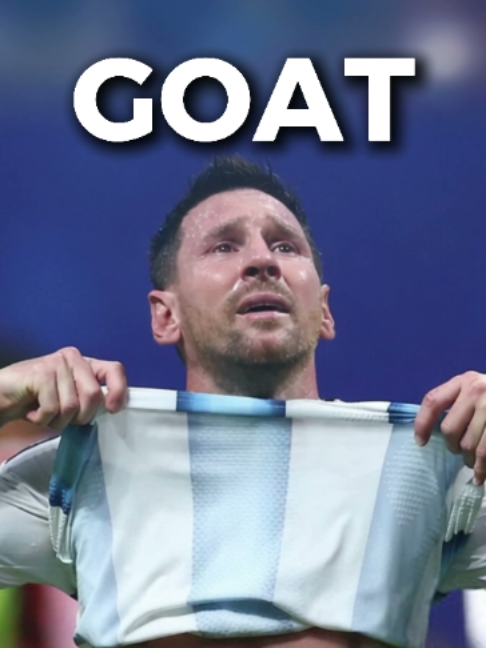
messi goal today messi assist today messi highlights vs egypt enzo fernandez goal today romero goal today argentina goals today argentina 3-2 egypt



“Wonderful player, fantastic player, could not run” 😅
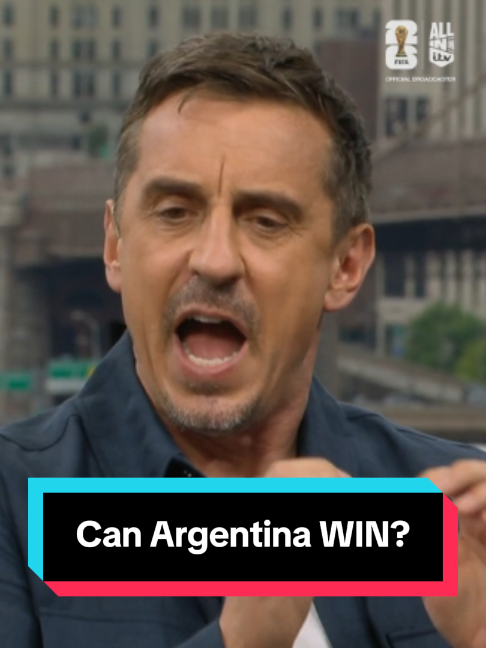
Neville, Keane and Wright DO NOT agree on the future of Argentina in the World Cup 👀
“It gave you everything” 👀
Clutch Merino 😮💨
merino goal today portugal 0-1 spain ronaldo interview today ronaldo retirement retiring
kane goal today kane highlights today england 2-1 congo
 Links
Links
 Contact
 App
App


