



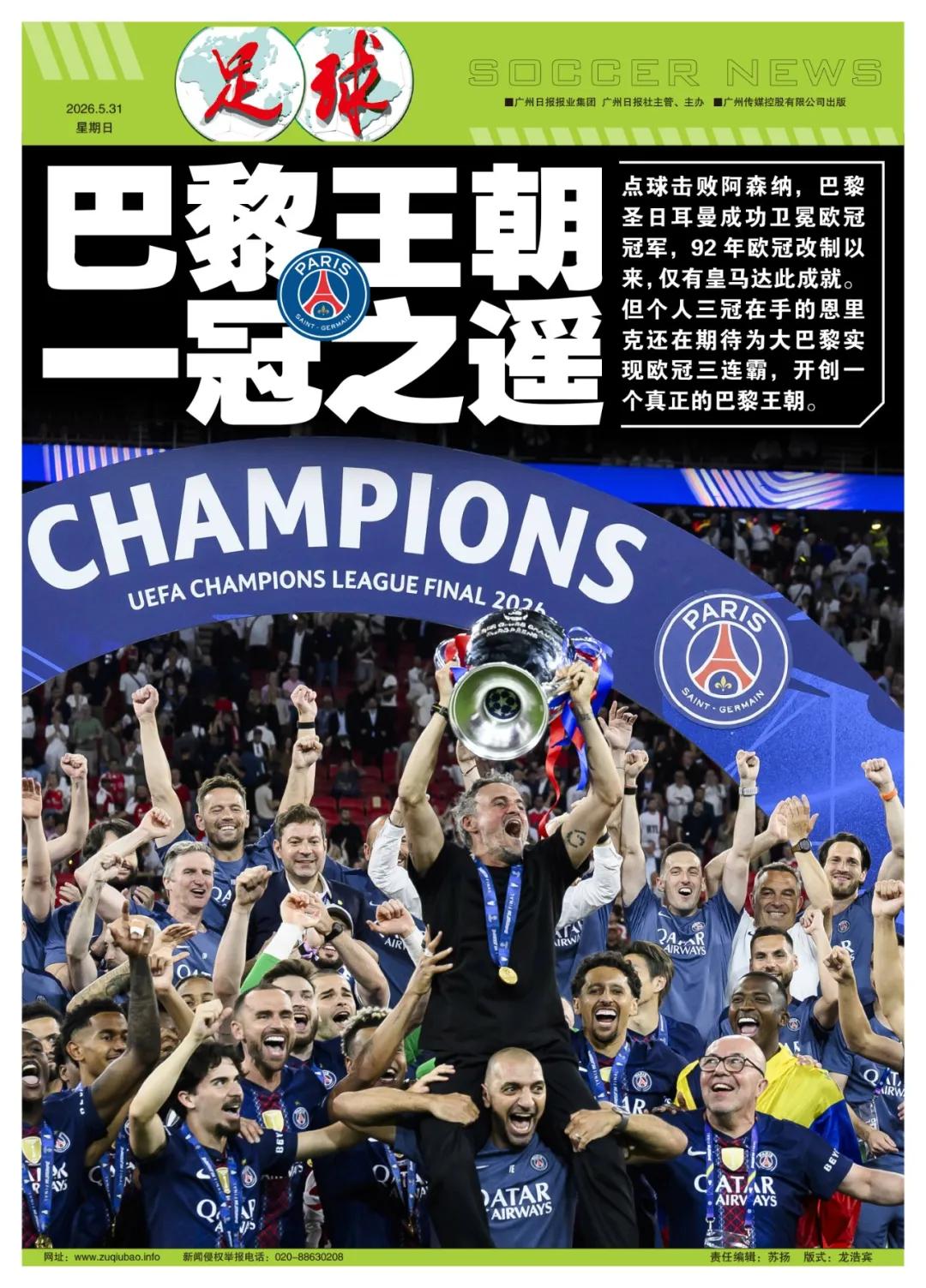
Enrique hailed as 'world's best coach'! Paris dynasty, just one title away!



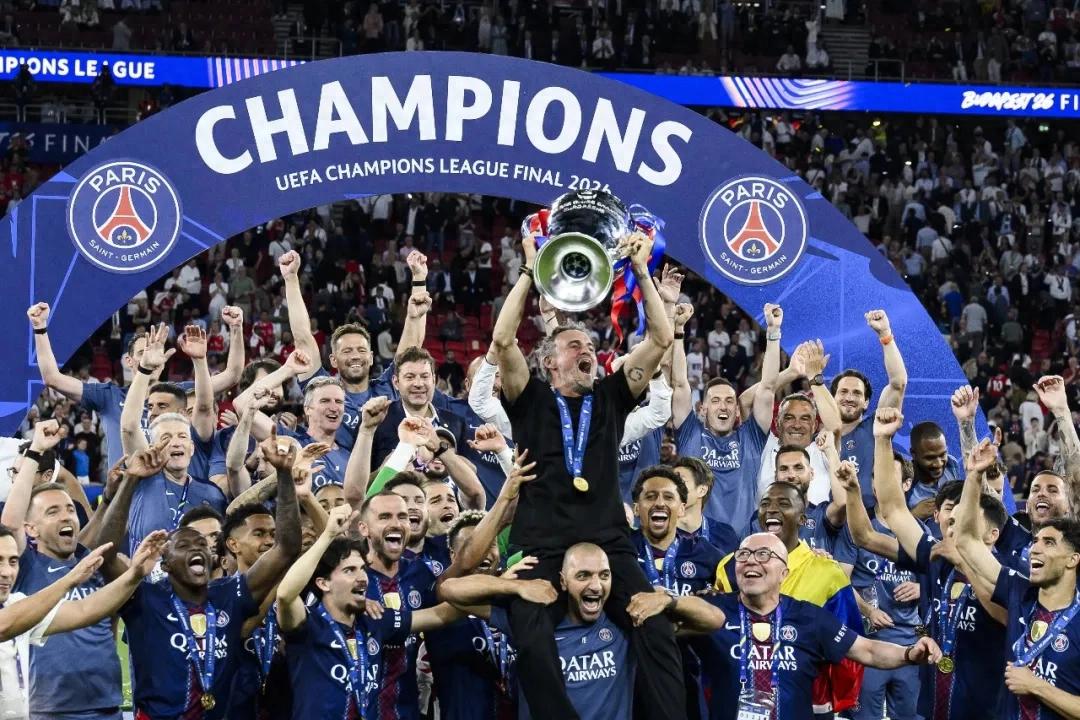
Written by Han Bing Twenty years ago in the Champions League final, Arsenal took the lead in Paris but lost the trophy; two decades on, the heartbreak for Arsenal fans was relived in Budapest, as they scored sooner and stood nearer to glory, yet ended up as the foil for a Paris-based team's successful defense. After a 1-1 draw over 120 minutes and a 3-4 loss on penalties, Arteta failed to fulfill his bold claim of adding the European crown to Arsenal's Premier League title party the previous Saturday. Enrique, meanwhile, is already eyeing a three-peat in the Champions League—this club's greatest-ever coach, already with three personal titles, aims to usher in a new Parisian dynasty in Europe.

Wenger was again present in the stands to witness Arsenal's long-awaited Champions League final after two decades. Arteta seemed luckier than the Gunners' former boss: Raya, who had just surpassed Lehmann (35 appearances) to become Arsenal's most-capped goalkeeper in the Champions League, did not repeat his predecessor's misfortune; Havertz, a player born for Champions League finals, struck in the sixth minute—half an hour earlier than Campbell's header had done in the past.
Marquinhos' error allowed Havertz to become the third player in history, after Ronaldo and Mandžukić, to score for different clubs in Champions League finals. Paris Saint-Germain continued their embarrassing record this season of most shots faced and goals conceded from errors. Then Arsenal showcased their rock-solid defense: Arteta paired Skelly with Rice in midfield, adding physical toughness. The Gunners' backline, which had conceded only six goals in 14 previous Champions League matches, trapped Kvaratskhelia in a tight web and left Dembélé lost and confused.
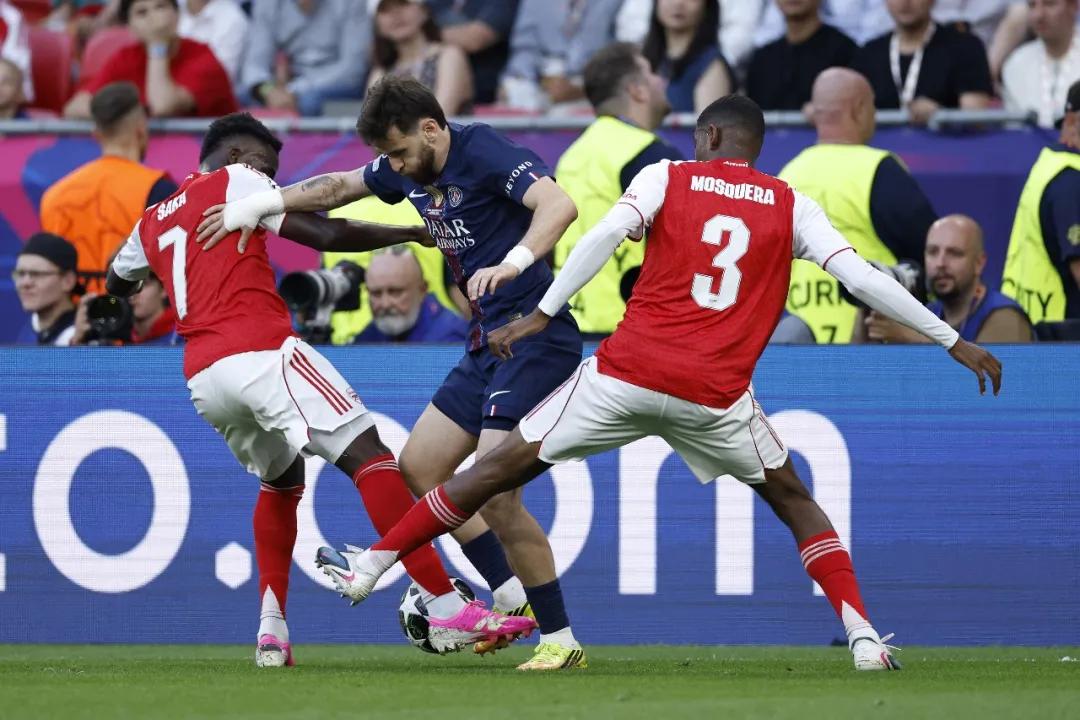
Gunners fans saw hope for a double triumph. Arsenal had lost only one of their previous 115 matches when leading at halftime; moreover, the team scoring first in a Champions League final had won 11 consecutive times, with the last exception being Atlético Madrid in 2014.
Paris Saint-Germain's overwhelming 74% possession, along with lopsided stats in shots (17-6) and corners (11-3), clearly depicted the different roles each side played. This was not due to a disparity in squad strength but resulted from the match dynamics and the active choices of both coaches. After the final, the celebrations among Arsenal's London rivals, to some extent, proved the difficulty of the path Arteta had chosen—defense wins titles, which is beyond reproach, but only if you actually win them.
Under their one-sided dominance in possession, Paris finally got their reward. In the 65th minute, Kvaratskhelia was brought down by Mosquera in the box, and Dembélé converted the penalty to level the score. Arteta later complained that in the 102nd minute of extra time, the referee ignored a penalty claim when Madueke was tripped by Mendes in the area, but if not for the post denying K77's shot, Arsenal might not have even made it to extra time before losing.
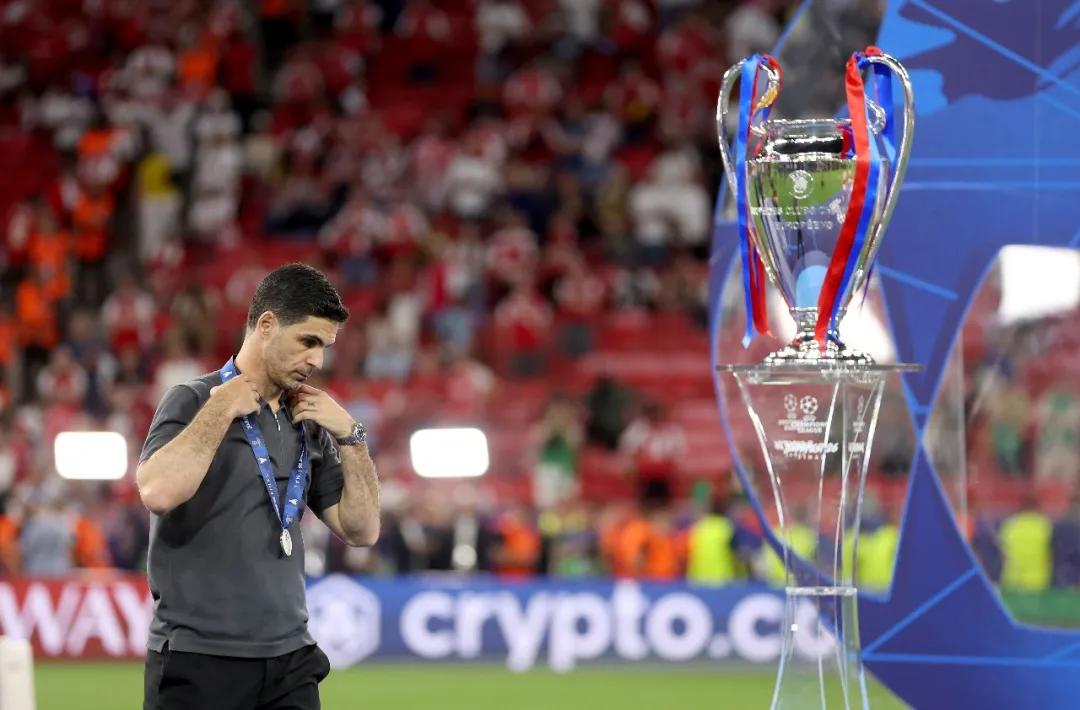
But facing the reigning European champions and currently the strongest football club in the world, how many mistakes did Arteta really make? Perhaps he could have been bolder in extra time, but simply forcing the match to penalties was a resilience that even Arsenal fans hadn't dared to hope for before the game. With Achraf returning from injury, Paris' starting eleven for the final differed from last year's only in goalkeeper, Safonov. As for Arsenal, among the two players who had experienced a Champions League final before, Havertz had already scored, and 'Kepa' is indeed a penalty-saving specialist, though Raya's performance was already outstanding.
Perhaps Arteta's bigger mistake was trusting the player who volunteered to take the fifth penalty. It was Gabriel's shot that sailed into the stands, 'igniting' the fireworks of Paris fans celebrating their successful title defense. England has seen seven clubs win the Champions League, yet the trophy cabinet at the Emirates Stadium still lacks that most important piece of silverware.
France in the Champions League seems like an insurmountable destiny for English teams. Four years ago, Liverpool also lost to Real Madrid in Paris; further back, in 1975, Leeds United lost to Bayern Munich at the Parc des Princes, Paris Saint-Germain's home ground. The only exception was Liverpool in 1981, who beat Real Madrid at the Parc des Princes to claim their third European Cup.
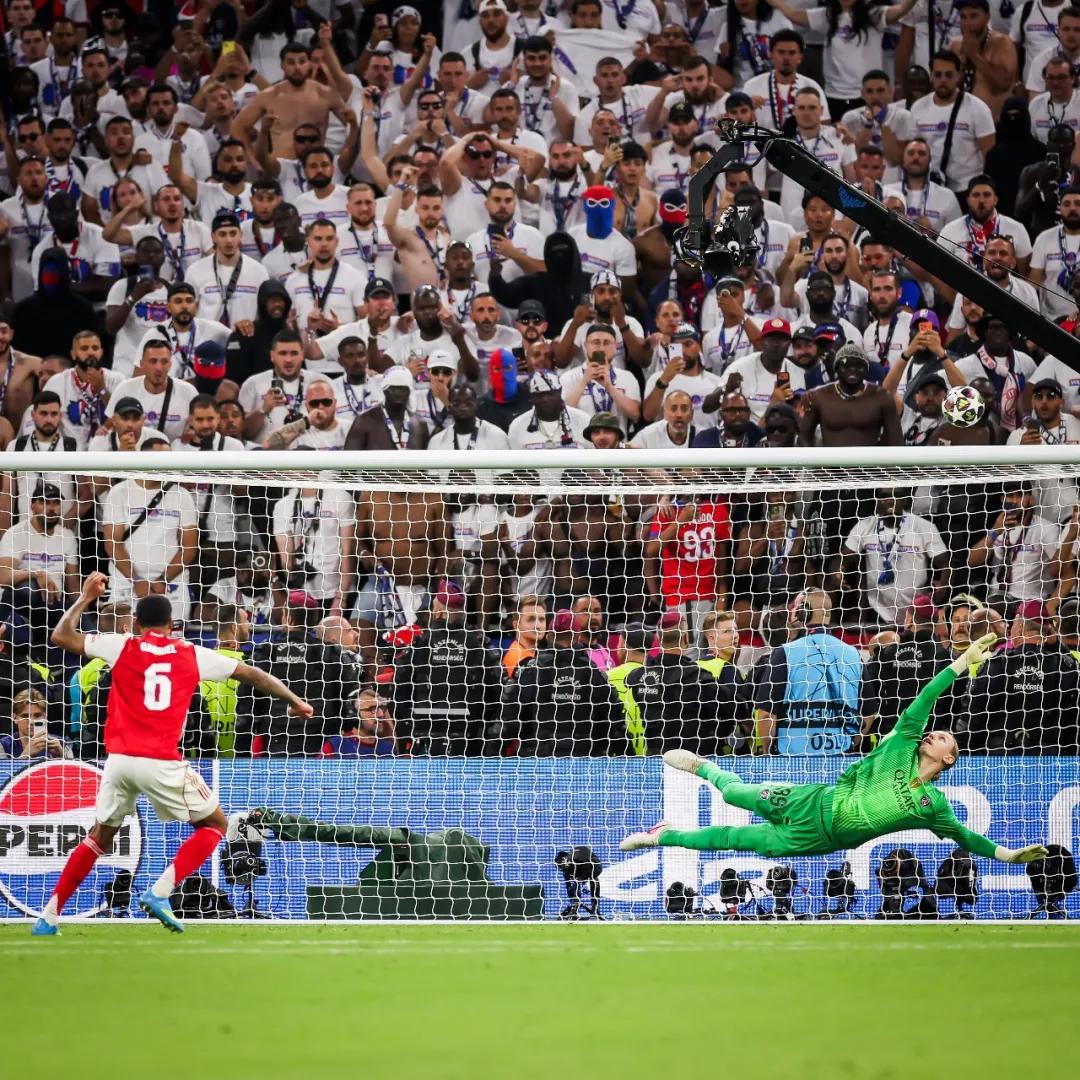

Paris Saint-Germain became the ninth club in Champions League history to successfully defend the title, with the last being Real Madrid in the 2017/18 season. Since Liverpool beat Roma on penalties in the 1983/84 final, this was the 12th time the Champions League final was decided by a penalty shootout. The previous shootout in a final occurred in the 2015/16 season, when Real Madrid beat Atlético Madrid on penalties. English clubs had won all four previous penalty shootouts they participated in, including the famous Moscow rainy night in the 2007/08 season.
The only previous loser among English teams was Chelsea in 2008, who later won on penalties in Munich against host club Bayern four years later. After this shootout defeat, Arsenal have now lost both of their two Champions League final appearances, separated by 20 years. This consecutive finals without a win ties with Benfica, trailing only Barcelona (25 years) and Atlético Madrid (30 years) for the longest such drought.
Although they only beat Arsenal on penalties, Paris Saint-Germain's title was well deserved. They were the dominant side throughout the match, having beaten Arsenal three times in just over a year. The trophy was a fitting reward for that superiority. Even the English media had to admit: Paris were more deserving of the title than Arsenal. Even a reluctant Arteta conceded after the match that Paris are the best team in the world and that the Champions League trophy was the best reward for the side that performed better.
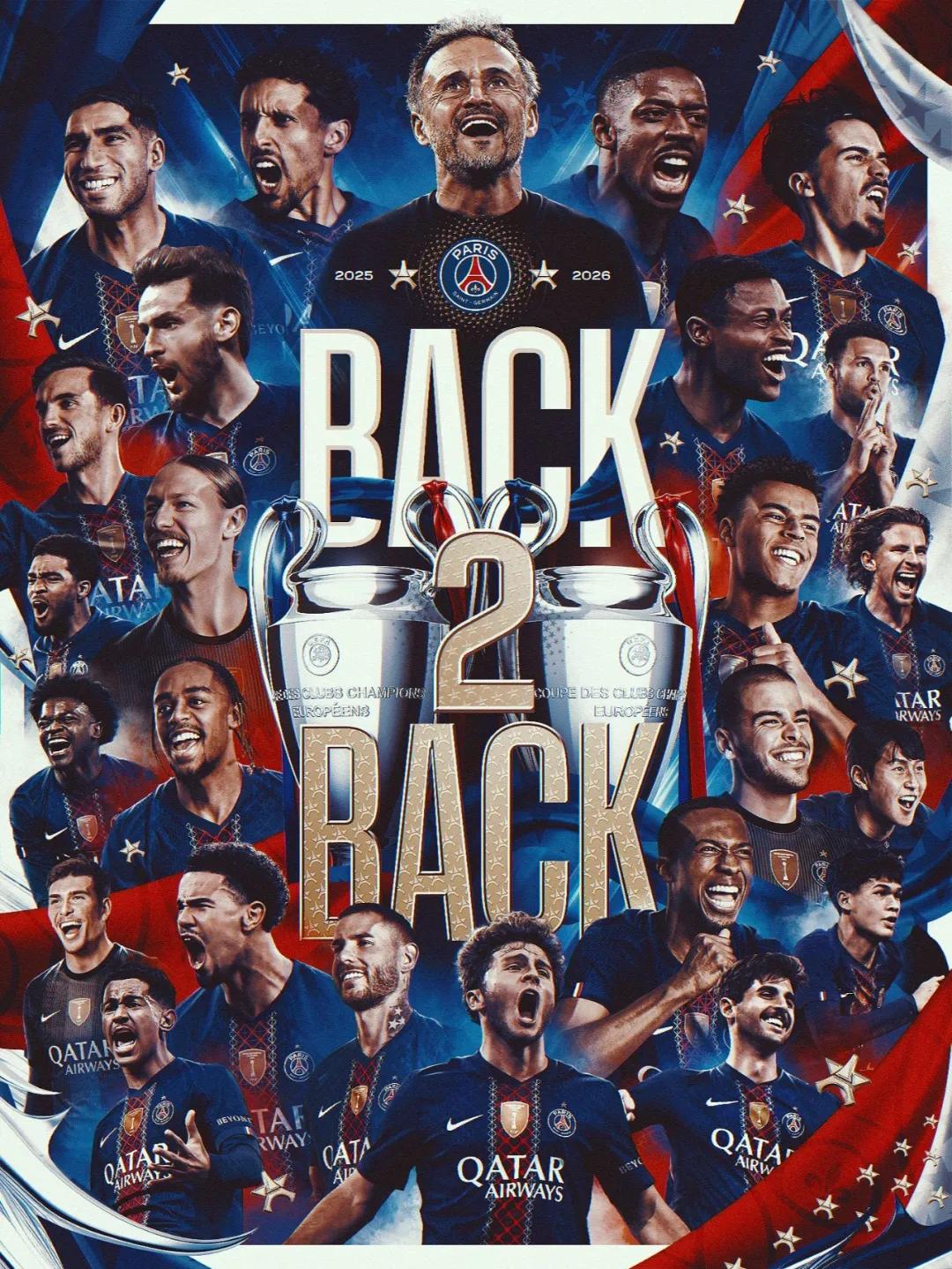
With Achraf returning, Paris became the second team after Real Madrid to field the same ten outfield starters in two consecutive finals. Both Enrique and Zinedine Zidane ultimately reaped the best returns for their faith in their key players. Enrique, lifting the Champions League trophy for the third time in his career, received praise from Paris president Nasser Al-Khelaifi as 'the world's best coach': "He is outstanding both as a coach and as a person. He is the best coach in the world, leading this young squad to extraordinary achievements."
All of Paris celebrated the Champions League trophy, with the ongoing French Open even pausing for the occasion. Both Paris Saint-Germain and Arsenal held victory parades, but the massive celebration in front of 100,000 fans at the Champ-de-Mars was for the highest honor of conquering Europe. The club fulfilled its promise of a €1 million championship bonus and also pledged to compensate the city of Paris for any damage to public property during the parade.
After winning the title, Paris quickly released a special Champions League commemorative jersey featuring two gold stars. Malian rapper Aya Nakamura, who was holding a concert in Paris, immediately showcased the two-star Paris shirt on stage after the club's victory.
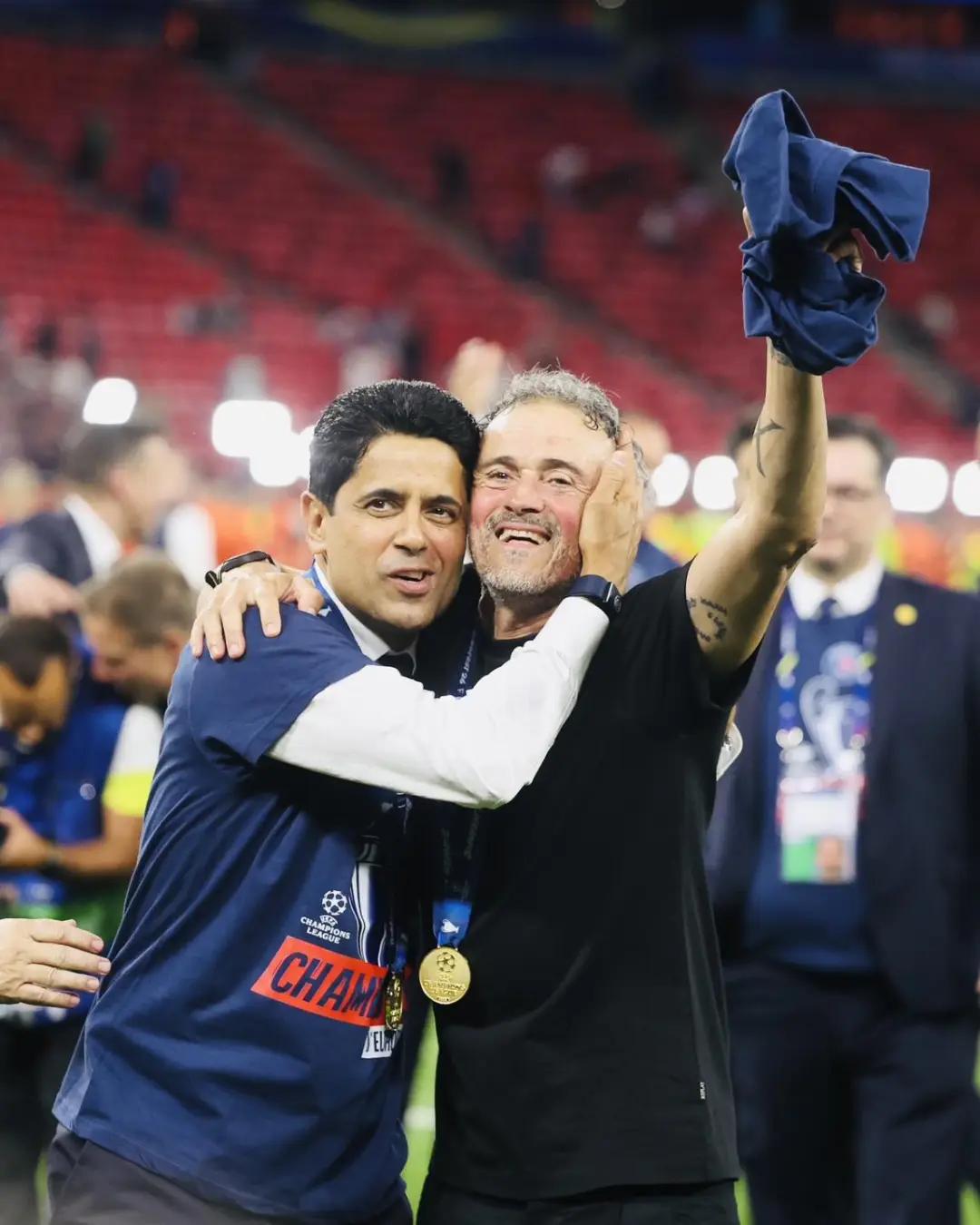
A year ago, the image of Paris fans unfurling a touching tifo for Enrique's late daughter was still vivid. After a decade of waiting, Enrique vindicated himself with a resounding victory, and Al-Khelaifi savored the sweet taste of transitioning from an oil-rich upstart to a true heavyweight. Following this hard-fought final, they rewarded the warmth and patience of Paris fans with the honor of being European champions for the second time.
After the match, when asked by Richards about the possibility of a three-peat in the Champions League, Enrique laughed easily and freely. Meanwhile, Al-Khelaifi began dreaming of becoming the fourth club, after Real Madrid, Ajax, and Bayern Munich, to win three consecutive Champions League titles. Now, they are just 'one title away' from ushering in a new Parisian dynasty.


Wonderfulshortvideo
cristiano Ronaldo training


Cristiano Ronaldo 966 & 967 GOAL
Cristiano Ronaldo and Portugal in World Cup 2026
Rashford ⚽️
Cristiano Ronaldo 6x World Cup
My POV of THAT Raphinha goal
Jermaine Defoe is the new Woking manager
 Links
Links
 Contact
 App
App


