



Vietnamese football looks back on the old days...


It would be no surprise if Becamex TP.HCM were relegated. Even though this would definitely be shocking news for domestic football enthusiasts, as for almost ten years they have been the sole team maintaining a competitive balance for southern football against the wave of northern club domination. But Becamex's issue is not about actual capability, and they are not the only ones in this dead-end predicament.
Looking at the list of teams that could be relegated this season, we see HAGL, SLNA, Becamex, and Da Nang. Their common trait is that they are all former champions. Another shared point: they are the group of clubs that defined the first golden decade of the V-League, the period from 2003 to 2013.
If Becamex are relegated this year, it will be exactly a decade since their last title (2015). A very harsh fall. However, if asked what other peak moments the capital team had in the ten years since that championship, no one could answer. That is the real problem.
This has already happened to Dong Tam Long An, a team that won back-to-back titles in 2004 and 2005. Just about ten years after their last championship, they were relegated and never managed to return. Similarly, SHB Da Nang, after their last title in 2012, have only been on a downward trajectory, now merely a group struggling to avoid relegation. Quang Nam was even worse—they vanished in less than a decade.
Though they still exist, what difference is there for HAGL or SLNA? For HAGL, there have been only two moments of notable revival: finishing third in 2013 and the canceled 2021 season due to COVID. The rest of the time has been just prolonging memories of the past, even during the peak era of Cong Phuong, Tuan Anh, and others. As for SLNA, they have been teetering on the brink of relegation for the entire decade.
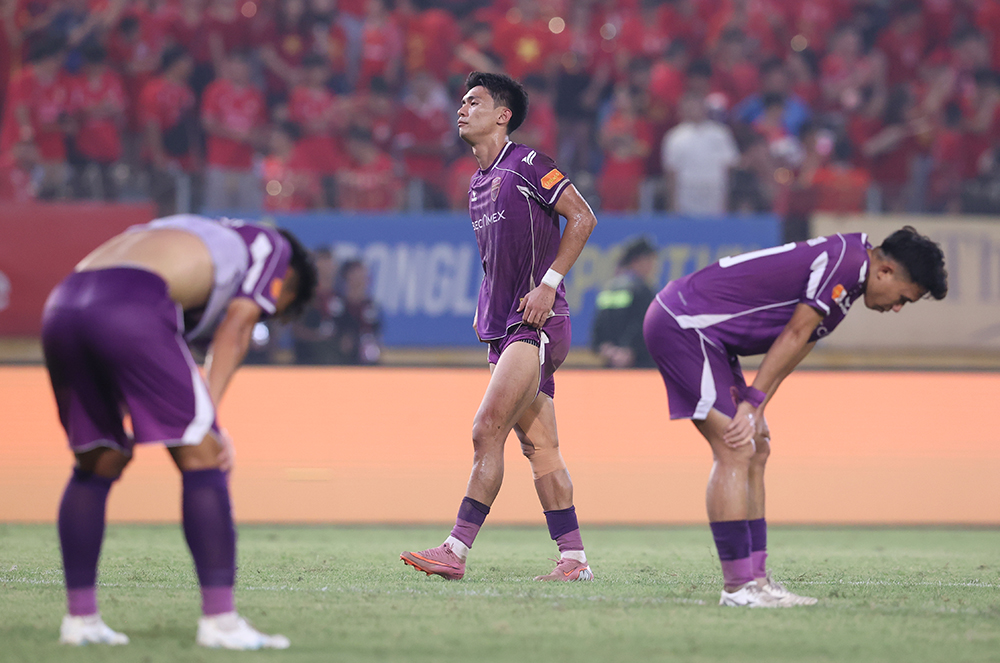
Despite being the second most decorated club in V-League history, Becamex TP.HCM now faces the risk of relegation. Photo: Hoang Linh
In other words, almost all former V-League champions lose their ability to return to the top within a decade of their last triumph. The only exception is Becamex, who won four titles across two separate periods from 2006 to 2015. But even they cannot escape this pattern now.
One or two cases might be overlooked, but when six or seven former champions follow the same path of self-destruction, it becomes a different story—one that requires Vietnamese football administrators to examine more thoroughly, as it is tied to our professional football operating model.
It is hard to believe that since the V-League's inception in 2002, through 25 seasons, there have been as many as 10 different champions. Optimists would say this shows the league's competitiveness, but from a macro perspective, could it be a sign of instability and lack of sustainability?
As mentioned above, within less than a decade, former champions are no longer the same teams. More importantly, there is no sign of a comeback; it is as if their continued existence in the current V-League is merely surviving without purpose.
Thus, the V-League championship resembles an exchange. One team wins, then another, and once the goal is achieved, everything becomes meaningless. No legacy, no prestige, and even the tradition may disappear.
So far, only Ha Noi FC is the exception, even though they themselves are facing a historic milestone—dropping out of the top three for the first time since 2009. However, despite not reclaiming the title for five years, we can still see their efforts to reinvent themselves as a six-time V-League champion.
The question arises: Why can't other former champions do the same? Is it because they cannot, or because they no longer have the motivation to renew themselves? Answering this question is essential before thinking about elevating the V-League. Otherwise, there will be more downward spirals to come.


Wonderfulshortvideo
messi goal today messi assist today messi highlights vs egypt enzo fernandez goal today romero goal today argentina goals today argentina 3-2 egypt



“Wonderful player, fantastic player, could not run” 😅
Neville, Keane and Wright DO NOT agree on the future of Argentina in the World Cup 👀
“It gave you everything” 👀
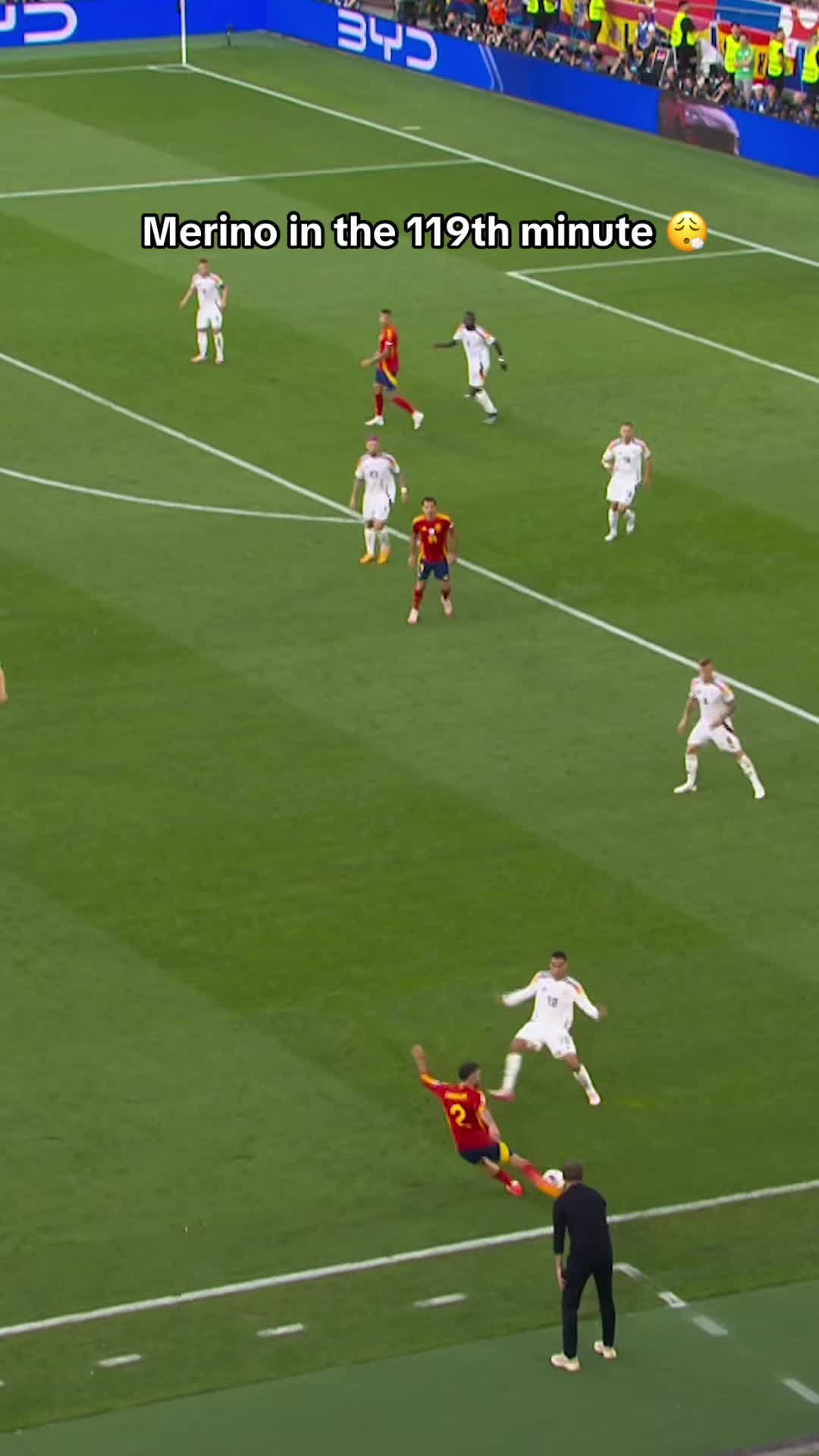
Clutch Merino 😮💨
merino goal today portugal 0-1 spain ronaldo interview today ronaldo retirement retiring
kane goal today kane highlights today england 2-1 congo
 Links
Links
 Contact
 App
App


