



The largest World Cup ever, the most "global" tournament.



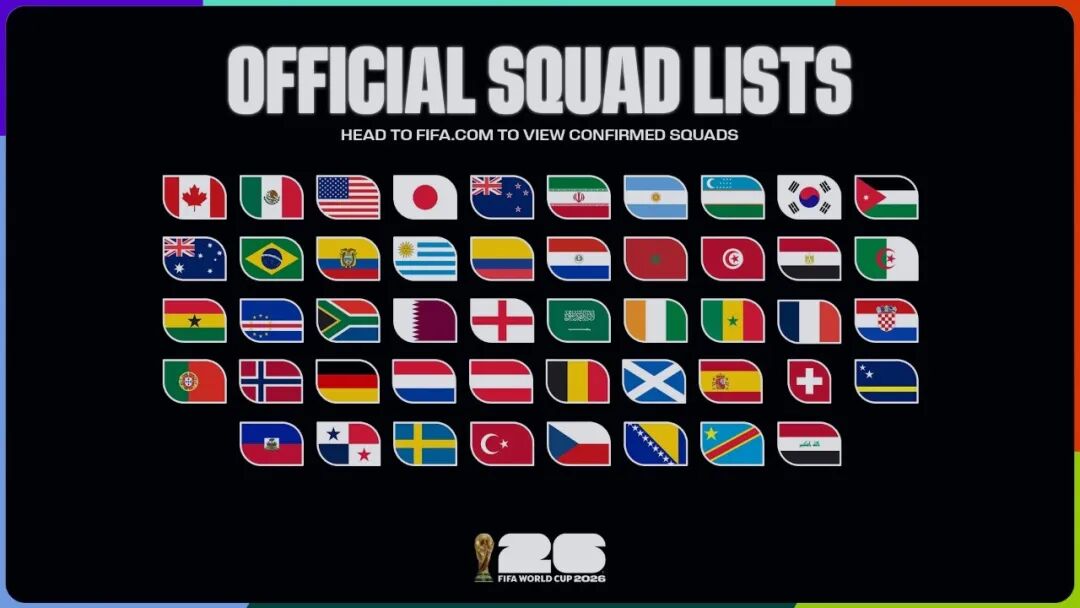
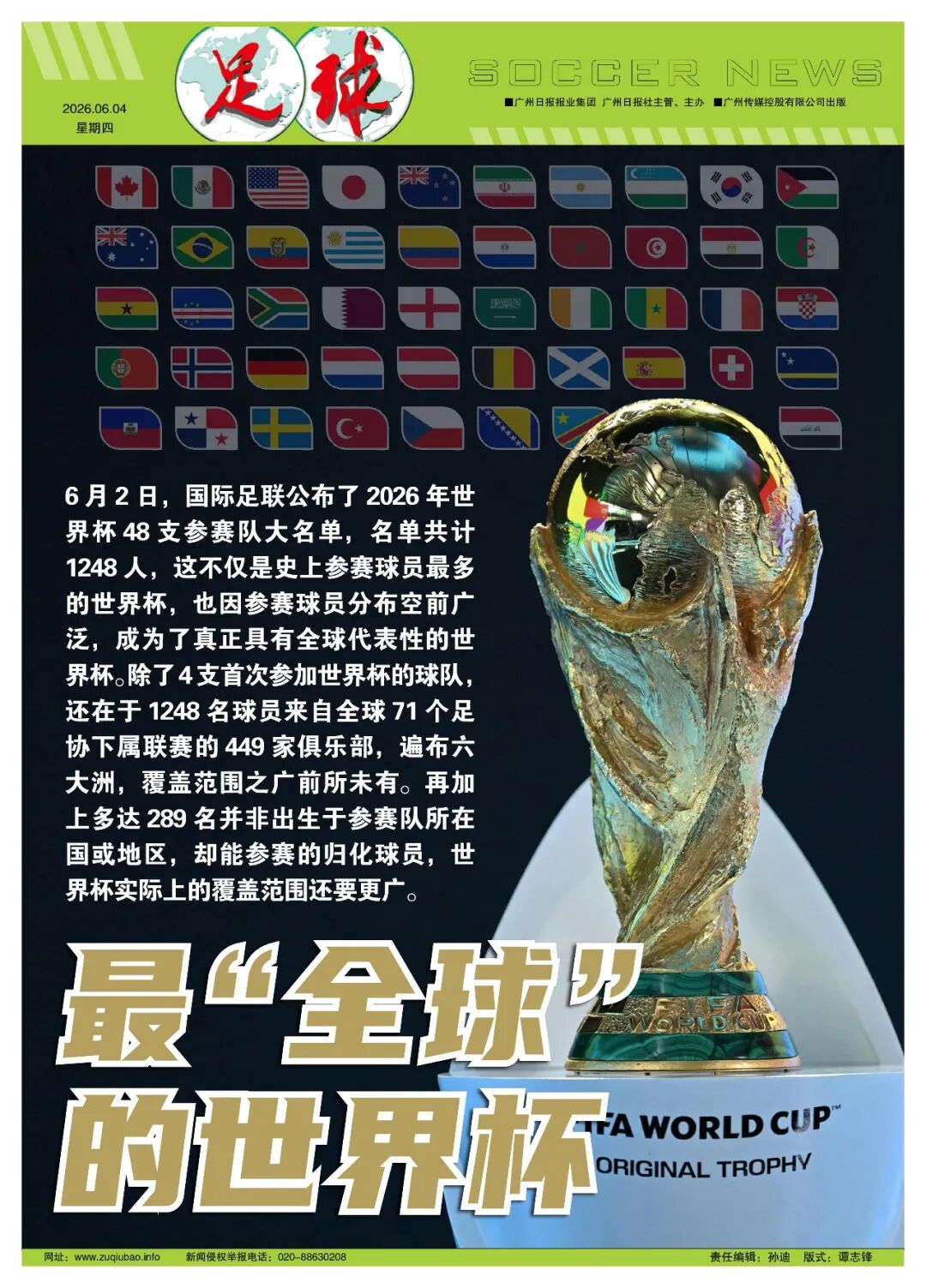
Written by Han Bing On June 2, FIFA revealed the 48-team rosters for the 2026 World Cup, comprising 1,248 players. This is the largest World Cup ever, and its global reach is unparalleled. Apart from four debutant teams, the players come from 449 clubs across 71 national associations on six continents, covering an unprecedented range. Furthermore, 289 naturalized players—who were not born in the country they represent—also expand the tournament's actual coverage.

Four years ago, the 2022 World Cup had 831 players from 42 associations. The number of leagues represented has increased by 62% compared to the previous edition, outpacing the growth in teams. Clubs from New Zealand in Oceania also contributed players, completing coverage across all six continents. Leagues from non-participating countries indirectly participated in the World Cup by providing players.
UEFA-affiliated leagues contributed 855 World Cup players, accounting for 68.7% of the total, highlighting European football's influence. Four years ago, this proportion was even higher (72.56%), and the decline is due to the expansion, which added more players from leagues outside Europe.

Among European leagues, the English league provided the most players with 205, followed by the German league (108), French league, and Spanish league (86). Although Italy did not qualify, its league still contributed 71 players, ranking fifth.
Non-participating leagues that supplied World Cup players include Armenia and Azerbaijan in the Caucasus, Cyprus and Israel in the Mediterranean, Venezuela in South America, Kazakhstan (barely visible at UEFA’s eastern edge), and even Russia, which was banned by FIFA for four years. Excluding the leagues from participating countries due to expansion, the scope is still unprecedented.
In Asia, aside from the leagues of the nine participating teams, the UAE contributed the most players (15), followed by Malaysia (3). China, Indonesia, and Thailand each had one foreign player in the World Cup. Asian leagues provided 187 players, second only to Europe (855) and surpassing North and Central America (80) and South America (63). It is surprising that South American leagues fell to fourth place.
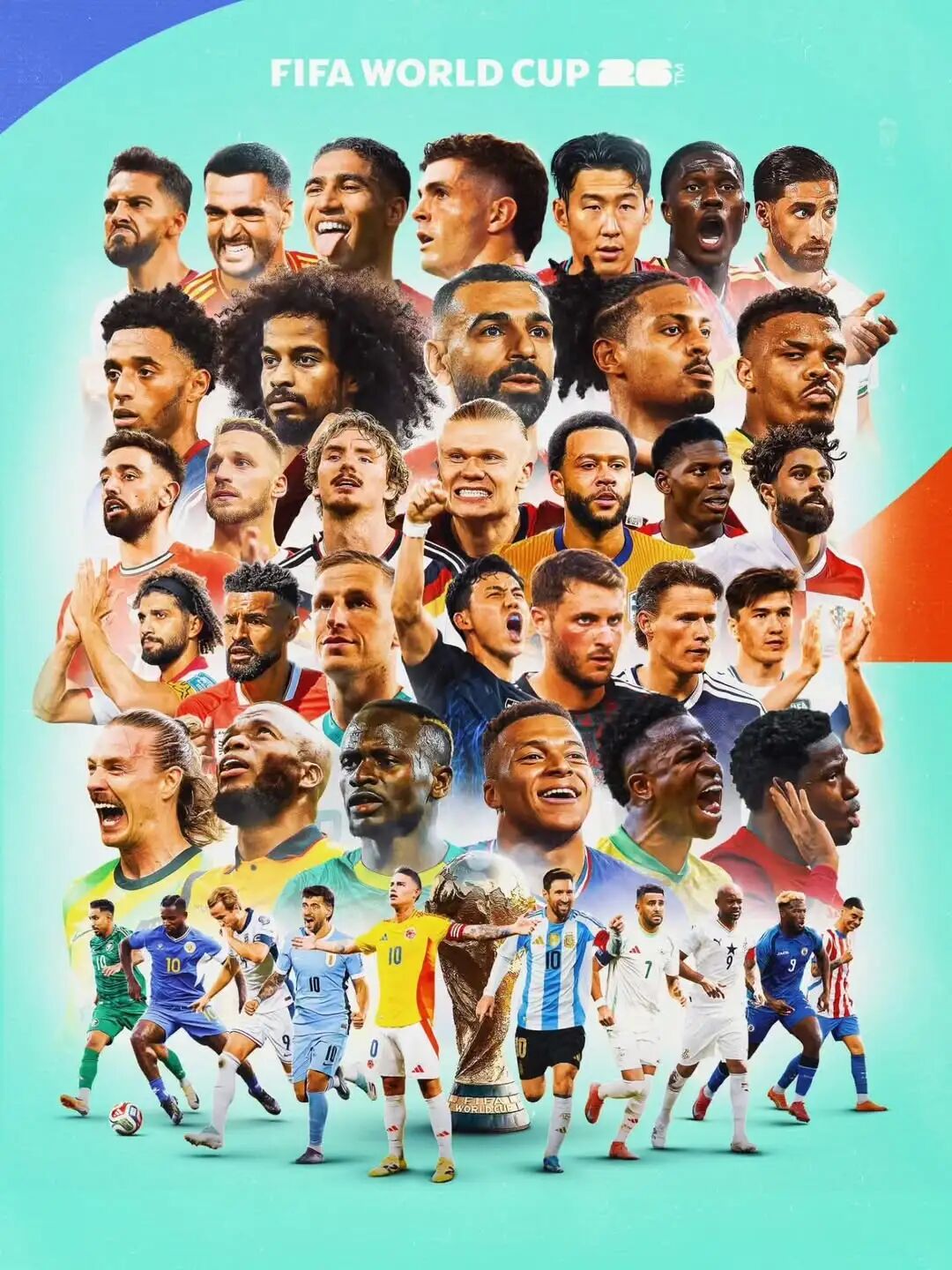
In terms of clubs, Manchester City topped the list with 19 players, followed by Bayern Munich (18). Champions League finalists PSG and Arsenal (16), Barcelona (15), Crystal Palace, Manchester United, Atlético Madrid, and Al-Hilal (12), along with Liverpool, Borussia Dortmund, and Galatasaray (11), also featured prominently. Among the top five leagues, English Premier League clubs dominated. Four years ago, only four Premier League clubs were among the 14 clubs with over 10 World Cup players. AC Milan was the top Italian club with 10 players, tied for 13th place.

This is also the World Cup with the most naturalized players ever. Among the 48 teams, 40 have players born outside their country or region, totaling 289 players representing a place not their birthplace, accounting for 23.15% of all players. This does not count players born in their country but raised elsewhere. Four years ago, only 137 players were naturalized (16.49%). While the total number of players increased by 50% due to expansion, naturalized players surged by 111%, reflecting a growing trend.
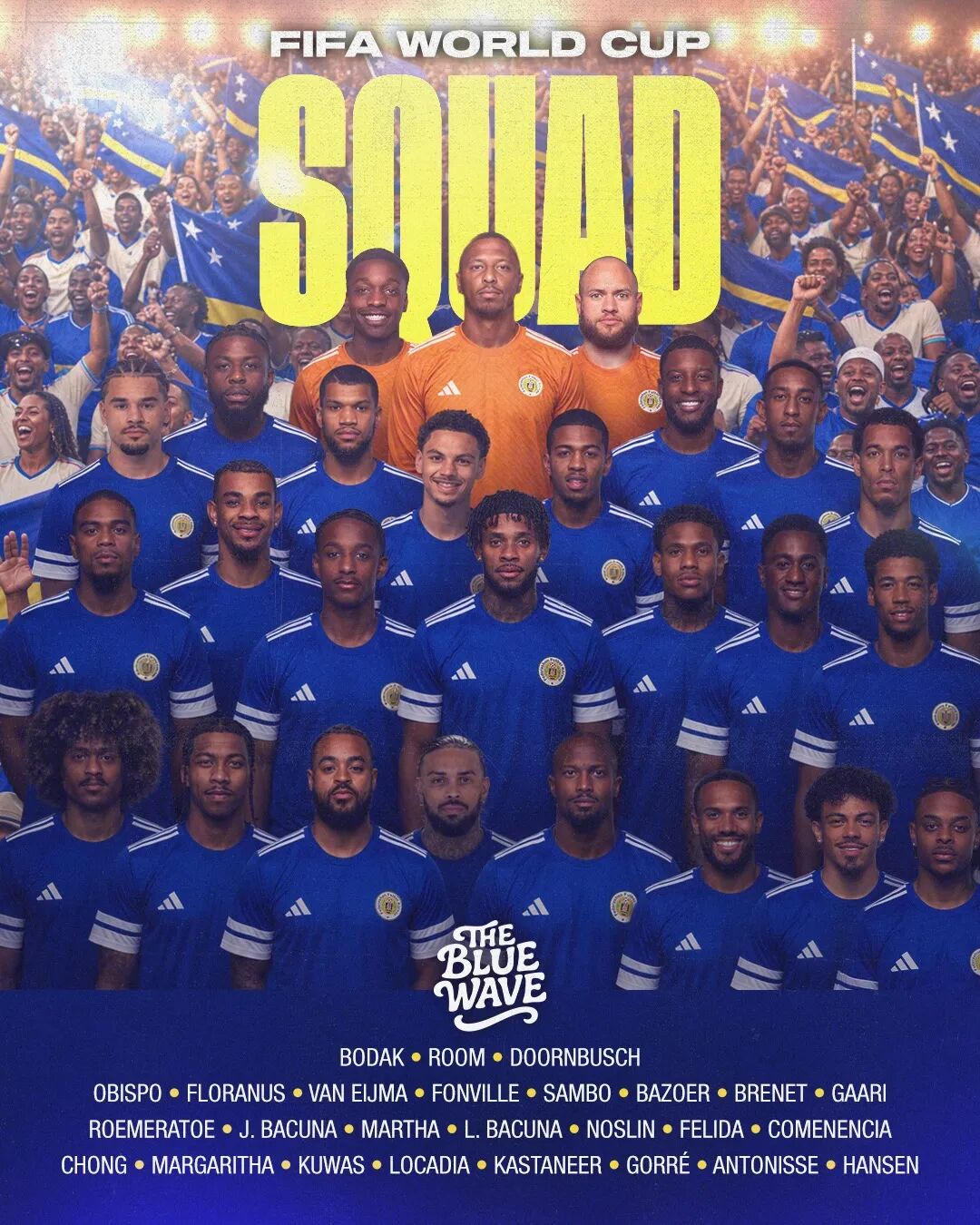
In Curaçao's 26-man squad, 25 players were not born locally.
Four years ago, Morocco (14), Tunisia and Senegal (12) had the most foreign-born players, with only Morocco having more than half. This time, nine out of 48 teams have over half of their players born abroad. Curaçao (25) and DR Congo (20) each exceeded 20, followed by Morocco (19), Bosnia (17), Algeria and Haiti (16), Tunisia (15), Cape Verde and Qatar (14).
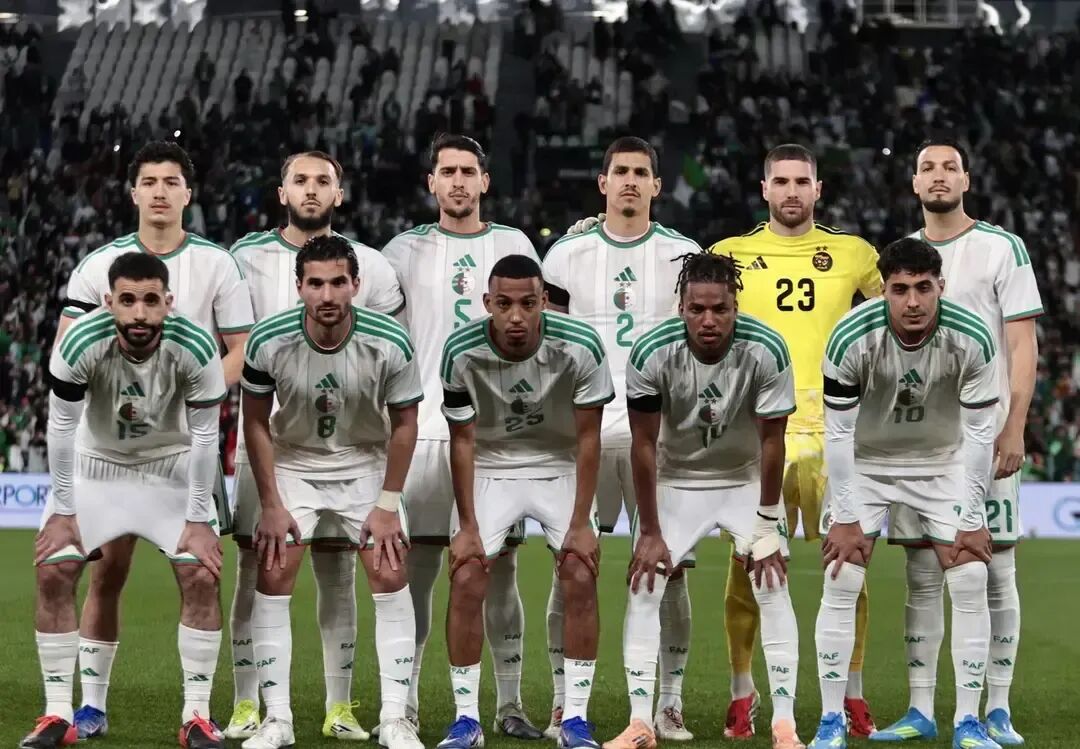
Algeria defeated the Netherlands 1-0 in a friendly match that ended early this morning.
France "exported" the most World Cup players (76), spread across 12 teams including Algeria (13), Haiti (12), DR Congo (11), Senegal (10), Ivory Coast (8), Tunisia (7), and Morocco (6). The Netherlands ranked second with 40 players, distributed among 9 teams like Curaçao (25), Cape Verde (6), Morocco, and Turkey (3).
In Curaçao's 26-man squad, 25 were not born locally, all in the Netherlands. The only player born in Curaçao was Chinese-descendant midfielder Chen Dayi, who immigrated to the Netherlands as a child, joined Feyenoord's youth academy at age 10, and moved to Manchester United's academy in 2016. Apart from his birthplace, most of his life and career have nothing to do with Curaçao. Before being naturalized by Curaçao last year, Chen represented the Netherlands at U15 through U21 levels across six age-group national teams.
Qatar, with the most diverse naturalized players, has 14 players born in 11 different countries. Bosnia's 17 naturalized players come from 9 countries. Even defending champion Argentina has two foreign-born players: Simeone (Italy) and Paz (Spain). Japan and South Korea, traditionally conservative on naturalization, also have naturalized players born abroad.
These naturalized players come from 50 national associations, 19 of which did not qualify for this World Cup. They include traditional powers like Italy, Denmark, Serbia, Nigeria, and Cameroon, as well as smaller football nations such as Kazakhstan, Malta, Sudan, Somalia, Burkina Faso, Kenya, and Tanzania. This can be seen as another form of World Cup expansion.


Wonderfulshortvideo
cristiano Ronaldo training


Cristiano Ronaldo 966 & 967 GOAL
Cristiano Ronaldo and Portugal in World Cup 2026
Rashford ⚽️
Cristiano Ronaldo 6x World Cup
My POV of THAT Raphinha goal
Jermaine Defoe is the new Woking manager
 Links
Links
 Contact
 App
App


