



How did the World Cup hero of the England national team face and overcome the pain of losing his child?



Terry Butcher is regarded as one of the finest captains in English football history. Yet, behind the facade of a defensive "titan" is the sorrow of losing his son, which the former legend courageously addressed in a documentary recounting his football career and familial tragedy.
Terry Butcher usually just brushes off being called a hero. In his view, that title should be reserved for people like his late son, Chris Butcher.
October 16, 2017, was the moment the former England captain's life changed forever. As usual each morning, he woke early, boiled water, made a cup of tea, and brought it to his son's room. But that time, Chris was not lying in bed as usual. He was on the floor, his body cold and no longer breathing.

Terry Butcher is well-known as one of the most outstanding captains in English football history. However, behind the image of a defensive "giant" is the pain of losing his child, which the ex-star bravely faced in a documentary about his football career and family tragedy.
Butcher desperately performed CPR in hopes of saving his son. Yet all efforts were in vain. Chris, a captain in the Royal Artillery who had served in Afghanistan and Iraq, passed away at the age of 35.
In the documentary titled "Butcher: Invisible Wounds," the former Ipswich Town and Rangers star once again confronts the most painful memories of his life. The film also depicts the silent battle Chris endured with post-traumatic stress disorder (PTSD).
In an exclusive interview with Mirror Football to promote the film, Butcher shared his emotions about having to revisit those painful memories once again.
He said: "We had many moments looking back at the past. Going back to Lark Hill, retrieving Chris's tie, having a meal in the officers' mess where he used to gather, seeing firsthand where he trained in artillery and the military.
"When I step into Chris's bedroom in the house, his presence is everywhere. Sometimes I still wear his clothes or keep items connected to him.
"There are so many phrases, pieces of music, or tiny things that can become triggers for memories. Sometimes I find that wonderful. Sometimes it brings comfort. But there are also times when, faced with a situation that is too painful, those emotions suddenly rush in.
"Whenever those memories appear, sometimes you burst into tears. I don't think crying is a bad thing. On the contrary, it's good. Tears help people release emotions.
"Many people think crying is terrible, but it's not. It helps you let go of some of the emotions bottled up inside. It feels like you're getting rid of something, even if just a little. Of course, you'll never be able to release it completely, because the pain of loss is truly devastating."
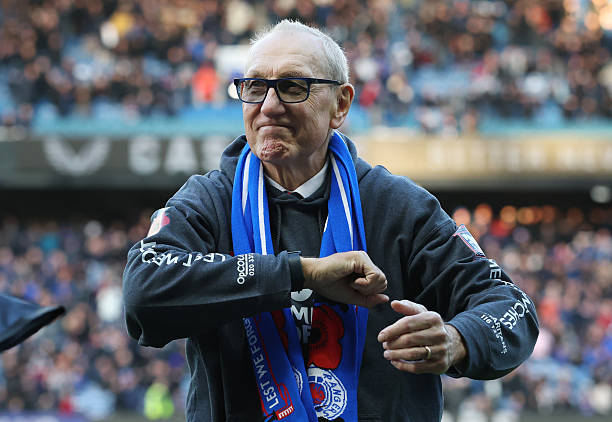
Terry Butcher typically just laughs off being called a hero. To him, that title belongs to people like his late son, Chris Butcher.
Next year marks the 10th anniversary of Chris's death, but the memory of that fateful morning when he discovered his son still haunts Butcher to this day. A forensic investigation conducted in 2018 concluded that Chris died from an abnormally enlarged heart with no clear cause, combined with the effects of medication in the context of his PTSD.
At the inquest that year, Butcher had to hold back tears as he stated that his son's life "spiraled downward as the demons in his mind gradually took control of everything" and that Chris ultimately became "a victim of war."
In the documentary, the former England center-back also recounts the terrifying sounds that haunted Chris's mind. There were the desperate screams of an Iraqi girl and the harsh shouts from military commanders. Those war memories did not disappear when Chris returned home; they continued to follow him within the Butcher family home—where he took his last breath.
Nearly a decade after that tragedy, Terry Butcher is collaborating with Combat2Coffee, a coffee shop and organization supporting veterans and their families who have experienced similar trauma to his own.
In the documentary, Ed, Butcher's other son, remarks that his father and mother Rita belong to the "old school" generation, who tend to hide their emotions rather than share them. However, that seems to have changed. Terry Butcher now regularly participates in Combat2Coffee activities and emphasizes the importance of the program. It helps him, in part, face and overcome the painful memory of that fateful day in 2017.
Reflecting on the biggest event of his life, Butcher choked up as he shared: "It was a terrible experience, the worst of my life. As a father, you never think that will happen to your child, even though we knew Chris was going through an extremely difficult time.
"We thought that terrible thing might happen someday, but no one expected it to occur on that very day. It was truly painful. And the hardest part for me was the moment they took my son's body away. Yes, that was the most painful thing. I can't say anything more about it."


Wonderfulshortvideo
cristiano Ronaldo training


Cristiano Ronaldo 966 & 967 GOAL
Cristiano Ronaldo and Portugal in World Cup 2026
Rashford ⚽️
Cristiano Ronaldo 6x World Cup
My POV of THAT Raphinha goal
Jermaine Defoe is the new Woking manager
 Links
Links
 Contact
 App
App


