



Guangdong's young talents pursue dreams closer to home


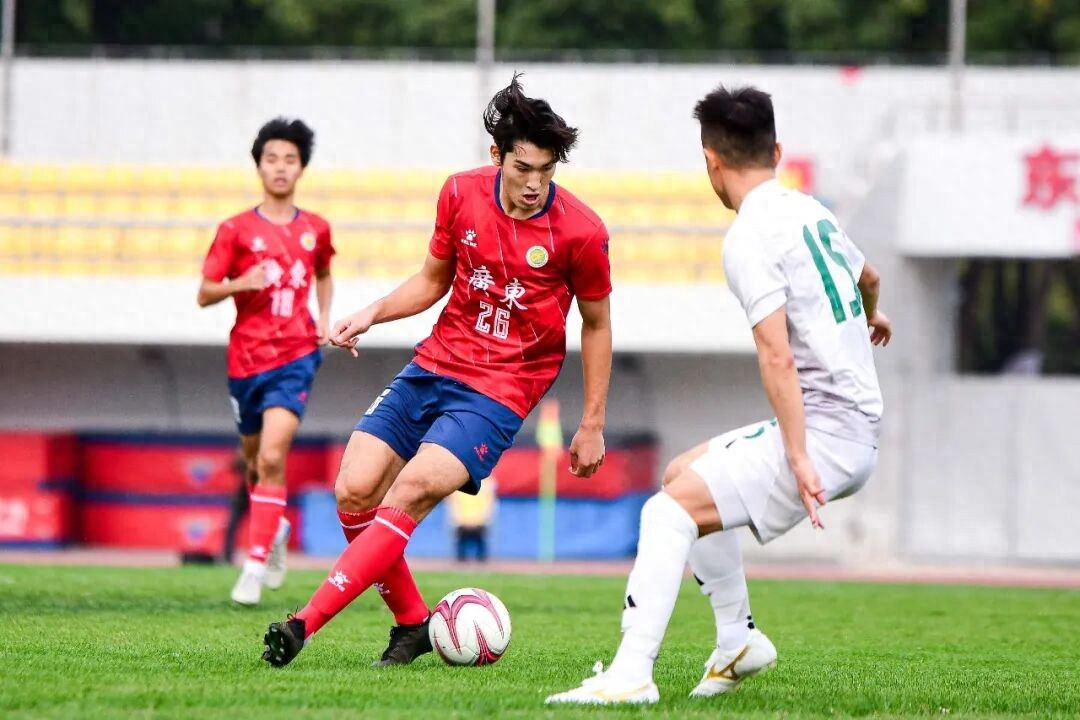
Report by journalist Wang Wei The year 2026 marks a turning point for Guangdong football. As the professional football landscape in the region undergoes a full overhaul, the chronic problems of youth talent drain and local youngsters being unable to find playing time are being addressed. The emerging football structure offers Guangdong's youth a solid foundation to develop at home, pursue their aspirations without leaving, and climb the competitive ladder gradually.

For a long time, Guangdong has been widely recognized as a fertile ground for football youth development in China. Leveraging past training systems and facilities such as Evergrande Football School and R&F's youth academy, Guangdong has consistently produced technically skilled, fundamentally sound young players suited to the southern style of football, supplying a steady stream of reserve talents to the Chinese football scene. However, in recent years, due to a disconnect in Guangdong's professional youth tiers, a shortage of top-tier league teams, scarce second-tier league platforms, and narrowing local professional pathways, the province has faced a situation of high youth output but difficulty retaining its own players.
A large number of outstanding locally trained youth talents, after completing their development in the youth ranks and showing professional potential, lacked adequate local professional stages to gain match experience. With limited opportunities for regular appearances in the Chinese League One or Chinese Super League, these young players, in order to pursue their professional dreams and gain competitive exposure, had to leave their hometowns and join clubs from other provinces. This outflow of quality youth talent not only represents a waste of local training resources but also hinders the overall progress of Guangdong football.
Looking at the talent drain over the past three years, many promising young stars have emerged from Guangdong's youth system. Players like Zhang Zhixiong, Wu Yongqiang, Buning Ming, Yang Zhanpeng, Liu Jiale, Wang Gengrui, Yang Qiandong, and Zhang Hongfu all hail from Guangdong's youth training programs. Constrained by the limited number of top-tier local professional teams, their relatively weaker strength, and blocked promotion pathways, these youngsters were forced to leave Guangdong football and join various clubs across the country to compete in professional leagues.
The same situation applies to women's football. For instance, this year, key players of the Guangdong women's team, such as Chen Qiaozhu, Li Qingtong, and Liu Xuanchi, moved to Beijing Chengjian Women's Football Club, while Chen Xiubing joined Guangxi Pingguo Benong Women's Football Club. Leaving Guangdong was driven partly by the desire for stronger platforms and partly for higher incomes.
The core issue behind talent outflow lies in the imbalance of the professional football landscape. Previously, due to Guangdong's limited number of top-tier league teams and their relatively weaker competitiveness, local youth players lacked nearby platforms to hone their skills. As a result, years of youth development efforts ultimately benefited others.

The 2026 season sees a comprehensive reshaping of Guangdong football's structure. In the Chinese Super League, Shenzhen Xinpengcheng is undergoing coaching changes and player acquisitions to strive for better results. In the Chinese League One, Shenzhen Youth and Guangzhou Leopards have a chance to gain promotion. In the Chinese Champions League, teams like Guangdong Chenxing Chuangert and Guangzhou Zhicheng, built around local youth talents, are making every effort to advance to the Chinese League Two.
Meanwhile, in women's football, Guangzhou Digital Group is investing in and empowering the Guangdong women's team, providing financial support for high-quality development and bringing hope to both the senior team and the youth training pipeline.
With multiple teams working simultaneously at different levels, Guangdong is set to establish a fully integrated league system connecting the Chinese Super League, Chinese League One, Chinese League Two, and the Chinese Champions League.
This structural change is expected to bring a fundamental transformation in the talent ecosystem. If successful, locally trained young players will no longer need to leave their hometowns. They can gain step-by-step competitive experience within Guangdong football, starting from the Chinese Champions League, progressing through the Chinese League Two, aiming for the Chinese League One, and eventually reaching the Chinese Super League. This allows them to advance through local tiers and grow steadily on home soil. Outstanding Guangdong youth talents will have the opportunity to join top local Super League clubs and fulfill their dreams nearby.
A complete professional league layout will foster a virtuous cycle between youth development and professional competition in Guangdong football. The youth system will continuously supply fresh talent, while local professional teams at various levels will absorb these young players, give them ample playing time, and focus on their development. Promising stars will have the chance to shine in Guangdong's professional leagues, putting an end to the massive outflow of quality talents. Sasha Mileyevic, head coach of Guangdong Chenxing Chuangert, said: "Our young players are full of energy. They give their all and fight hard in matches. As they develop healthily, they will become excellent talents for Guangdong football. The football school also has many even younger reserve talents. With professional league outlets and platforms ahead, these kids will keep improving."
As the 2026 season progresses, the dividends of Guangdong football's ecological transformation are being released. After the season ends, a new professional football landscape in Guangdong is expected to take shape. Youth training systems across Guangzhou, Shenzhen, and the entire province will be deeply integrated with local professional leagues, creating a two-way empowerment. Professional teams will provide young trainees with practical platforms and promotion pathways, while the youth system will continuously generate and supply fresh forces to local professional clubs. This forms a positive closed loop of training talent, nurturing them through leagues, and retaining them locally. Hu Xianlong, director of the Chinese Champions League team Guangzhou Zhicheng Football Club, said: "Most of our young players were previously part of Guangzhou's youth training teams. They have excellent individual skills and ball control. Many have been selected for national youth teams. With good professional development platforms and investors, they could become representatives of outstanding players in Guangdong football and even Chinese football in the future."
In the future, relying on a well-structured professional youth system and mature training programs, Guangdong will continue to cultivate top-quality football talents. Through the high-quality development of local football, the province will help elevate the overall level of professional football in China.


Wonderfulshortvideo
cristiano Ronaldo training


Cristiano Ronaldo 966 & 967 GOAL
Cristiano Ronaldo and Portugal in World Cup 2026
Rashford ⚽️
Cristiano Ronaldo 6x World Cup
My POV of THAT Raphinha goal
Jermaine Defoe is the new Woking manager
 Links
Links
 Contact
 App
App


