



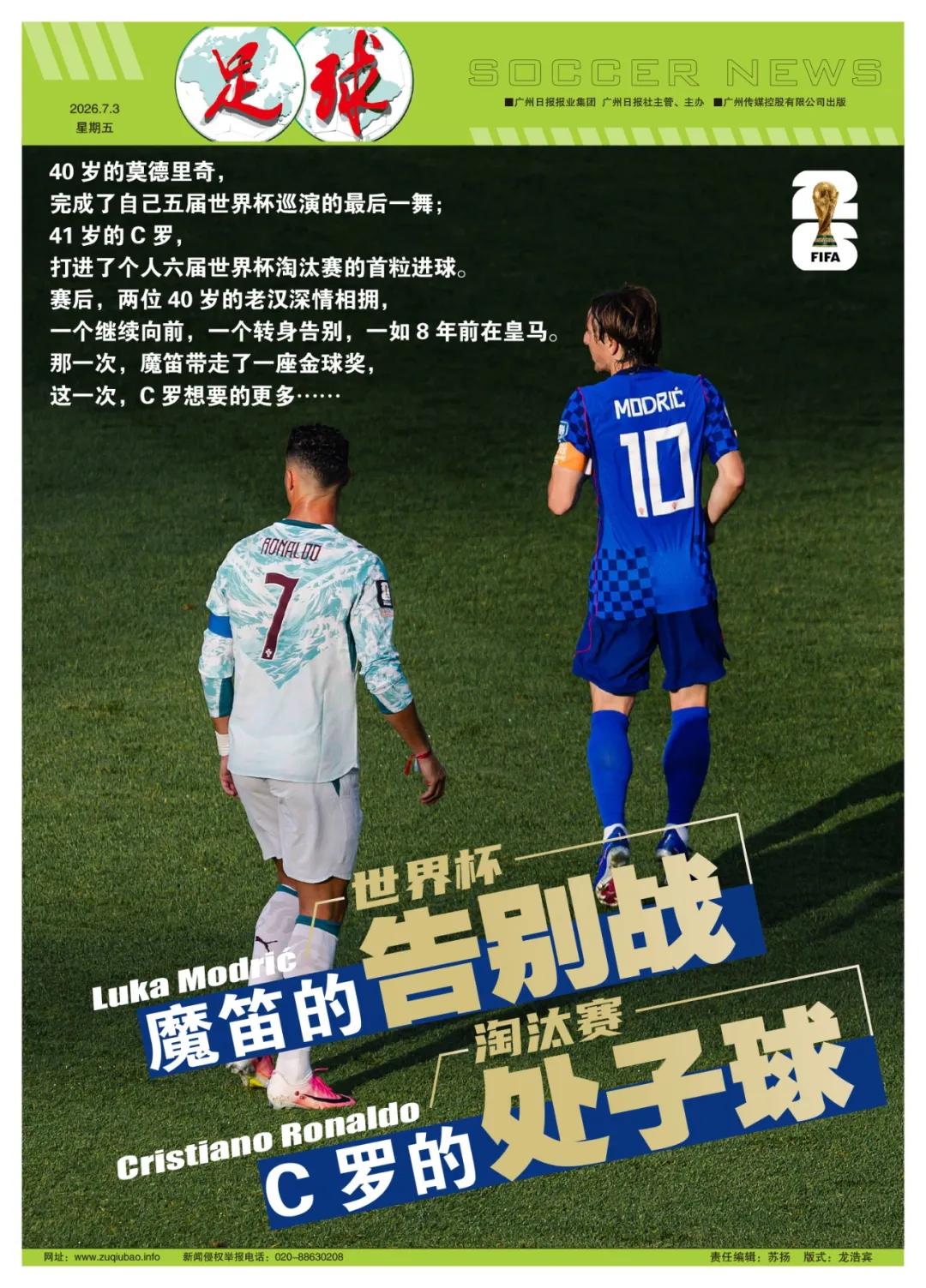
Magic's "farewell match" at 40, Ronaldo's "first goal" at 41


Written by Shen Mo Modric, at 40, finished his fifth and final World Cup campaign. The referee's decision that Matanović had touched the ball, disallowing Gvardiol's goal for offside, left him with only a frustrated wave of his hand. The disappointment of having a 113th-minute equalizer ruled out, ultimately losing 1-2, was naturally less than that of the final night at Luzhniki Stadium—bidding farewell to the World Cup, he leaves with one runner-up and one third-place finish, having inscribed the name of a maestro and the story of a legend.
Ronaldo, at 41, scored his first-ever goal in the knockout stages of a World Cup across six tournaments. This "ordinary" penalty, while hardly spectacular compared to his previous 975 career goals—and certainly far from that "dragon-like" performance at the Fisht Stadium in Sochi—marks a new chapter. Facing Spain again, he is no longer the lone hero; behind the old captain stands a "true golden generation" worth over 600 million euros, and the Nations League final has given them ample confidence.
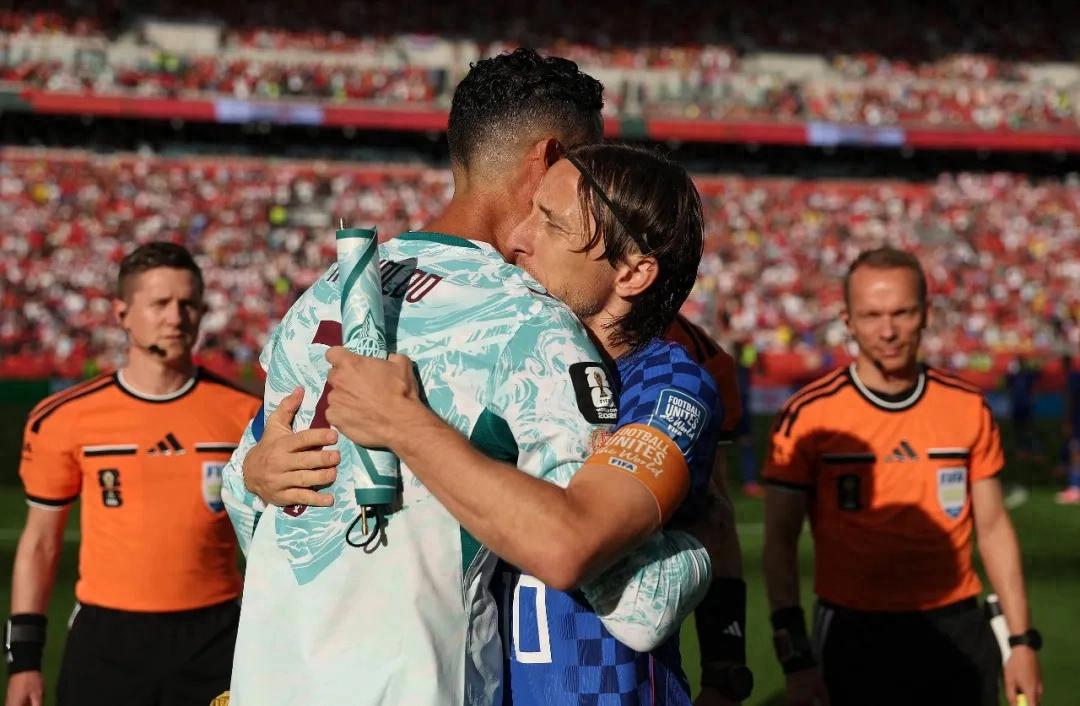
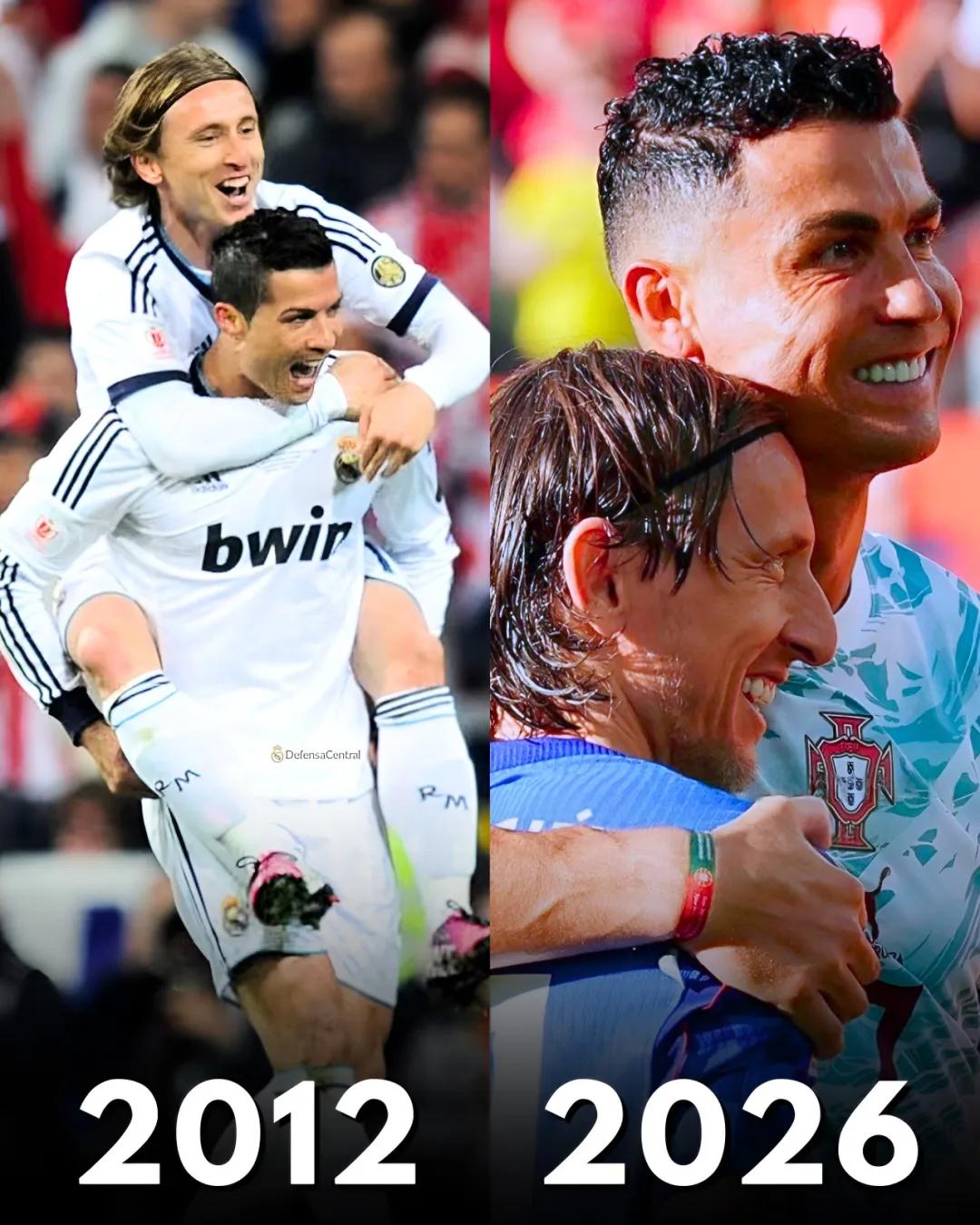
After the match, the two veterans in their 40s shared a heartfelt embrace. One moves forward, the other turns to bid farewell, much like eight years ago at Real Madrid. Back then, Modrić won a Ballon d'Or; this time, Ronaldo wants more...
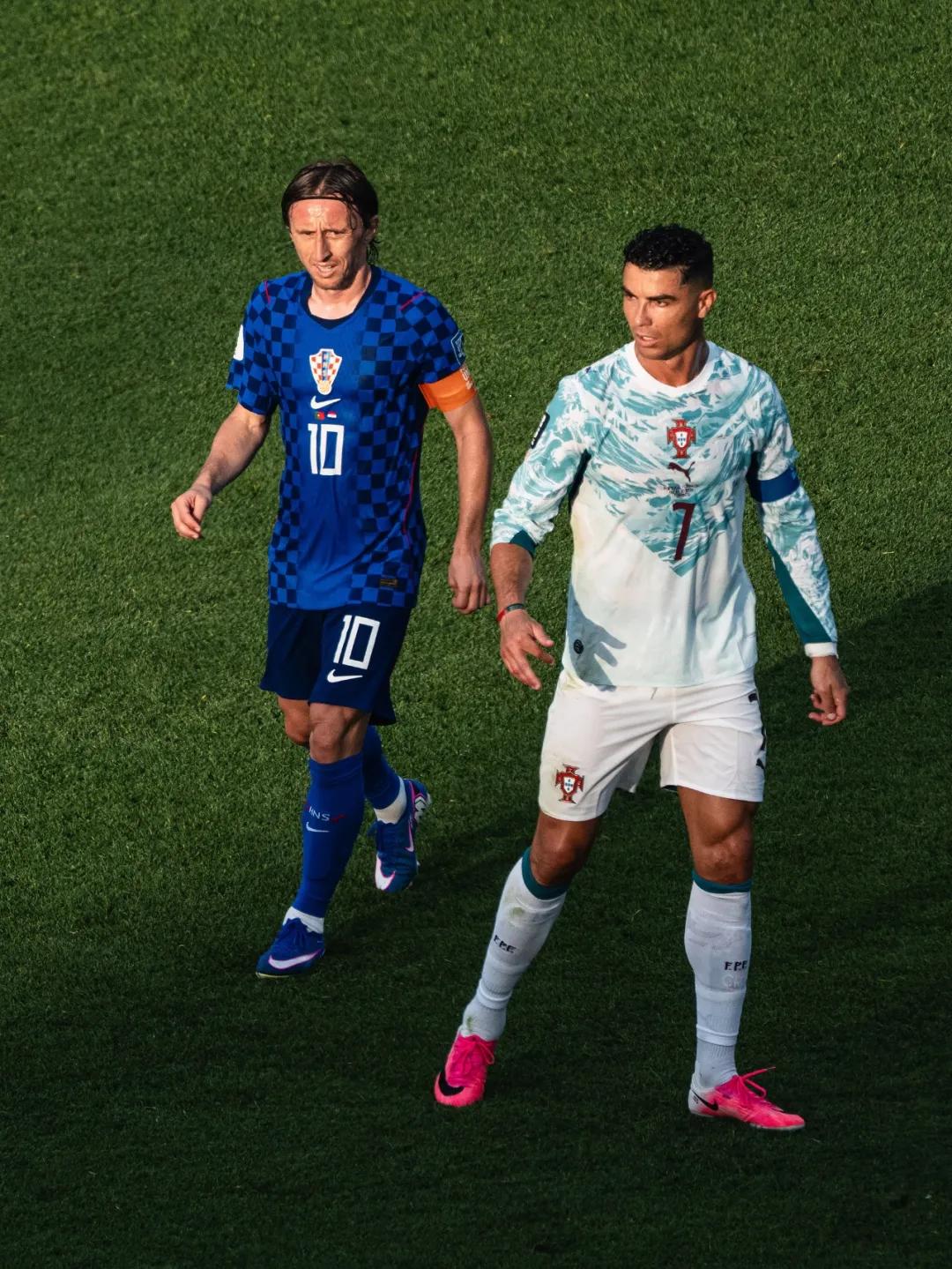

The Round of 16 match between Portugal and Croatia was steeped in an atmosphere of farewell from the start: before the game, Ronaldo's sister Katia claimed he would leave the Portuguese national team after the World Cup, and this would be the final match at the Toronto Stadium in this tournament. Ronaldo and Modrić, facing each other, were destined for one to bid farewell to the World Cup after this game, likely ending his legendary national team journey as well.
After a seemingly uneventful 0-0 first half, the second half was filled with twists and turns. Leão and Kovačić each hit the post once, and each had a goal ruled out by VAR for offside. Goalkeepers Livaković and Costa performed admirably, making several crucial saves. However, the ultimate decider of the two teams' fate was not solely the 22 players on the pitch—VAR and the microchip inside the ball became the protagonists.
In the 13th minute of stoppage time, Gvardiol scored a potential equalizer. The referee spent five minutes reviewing the VAR, utilizing the ball's internal chip and micro-sound wave detection technology to determine if the ball had grazed the hair of Croatian forward Matanović.
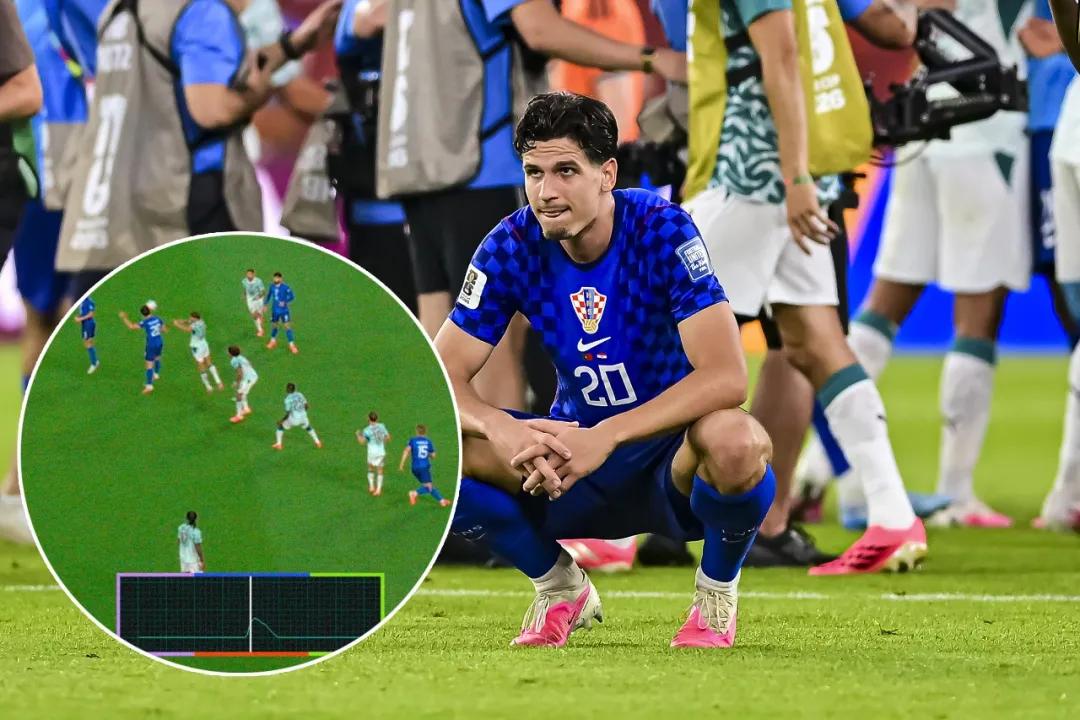
The Croatians insisted that Matanović, who jumped for the header as Mario Pašalić crossed the ball, did not make contact. However, data from the ball's internal sensor chip showed a slight peak on the data chart as the ball passed over Matanović's head. This indicated that the ball had touched his hair, and it was this minute difference that led to Croatia's last-gasp equalizer being ruled out.
Ronaldo encountered a similar "chip ruling" at the 2022 World Cup. He was certain he had scored against Uruguay, but the sensor chip showed no contact, and the goal was credited to Bruno Fernandes. Portugal's penalty from a corner in the 68th minute was also subject to a rigorous VAR check. It was these constant VAR reviews that led to a second-half stoppage time of 18 minutes and 51 seconds, breaking the record set by England vs. Iran in 2022 (14 minutes 3 seconds) and becoming the longest single stoppage time in World Cup history.
Beyond the cruel "farewell match" decided by VAR and the microchip, the mutual respect between the two superstars preserved the most genuine warmth of football.

Both veterans experienced difficult moments in this World Cup. Ronaldo's Portugal were held to a draw by DR Congo in their opening match, putting the pressure of a goal drought and questions about whether he should be a substitute squarely on his shoulders. Modrić also had a disappointing start, fouling Madueke in the opening match against England and conceding a penalty that allowed the Three Lions to take the lead.
Fortunately, both men delivered in their subsequent group stage matches. Ronaldo scored twice against Uzbekistan, achieving the feat of scoring in six different World Cups. Modrić assisted Vlašić for the winning goal, leading Croatia to qualification. When Ronaldo and Modrić stepped onto the pitch at the Toronto Stadium, the two legends made history: it was the first time in a World Cup match that two outfield players over 40 played against each other. The brief chat and embrace during the pre-match handshake said it all.
In this legendary farewell match, both gave their all, but time had left its mark on them. As key players targeted by the opposition, Ronaldo had only 17 touches in the first half, and Modrić just 23. After Perišić broke the deadlock in the 53rd minute, Portugal coach Martínez brought on Bernardo Silva, Conceição, Semedo, and Gonçalo Ramos to bolster the attack, but kept Ronaldo on. Two minutes later, Vega was brought down by Vlašić in the box. The referee reviewed the VAR and awarded a penalty. The Portuguese star converted, scoring his first World Cup knockout stage goal and ending a goal drought in World Cup knockout matches that had spanned six tournaments and eight games.
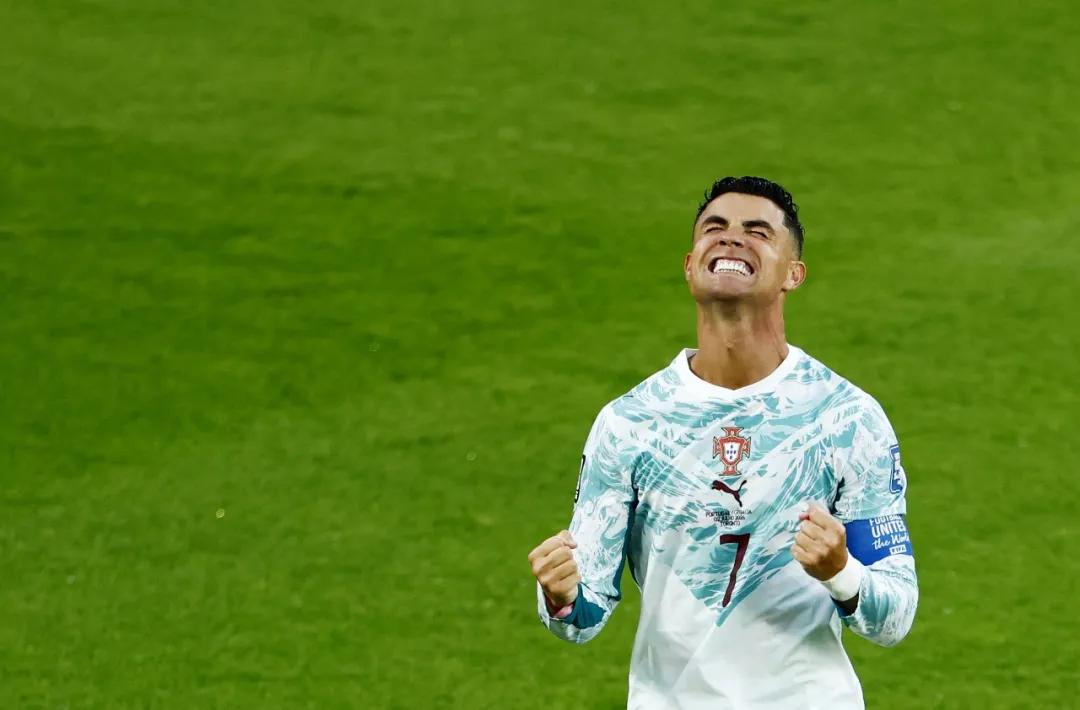
When he was substituted for Rúben Neves in the 81st minute, there was little joy on Ronaldo's face. At that point, he had only touched the ball once in the box, and Portugal needed a more efficient attack. After Leão assisted Gonçalo Ramos to score in the 4th minute of stoppage time, the exhausted Modrić could only throw up his hands in despair. Having played the entire match, he was completely spent, having already received a yellow card for a tackle from behind on Vitinha. He could no longer make a significant contribution to the team.
When referee Espen Eskas announced that the last-gasp equalizer was offside, the look on Modrić's face was more resignation than sadness. "What's done is done. We just have to accept it," he comforted his crying teammates, though there was still a sense of injustice. "We deserved more. Things didn't go our way. If the roles were reversed, that penalty wouldn't have been given," he said, adding that he had disliked VAR from the very first day. "It should only be used for clear and obvious errors, 200% sure."
At the final whistle, the no-longer-young Kovačić and Perišić shed tears. Modrić, after a calm conversation with Ronaldo, gently touched his old teammate's cheek, a quiet farewell to a World Cup journey spanning 20 years.
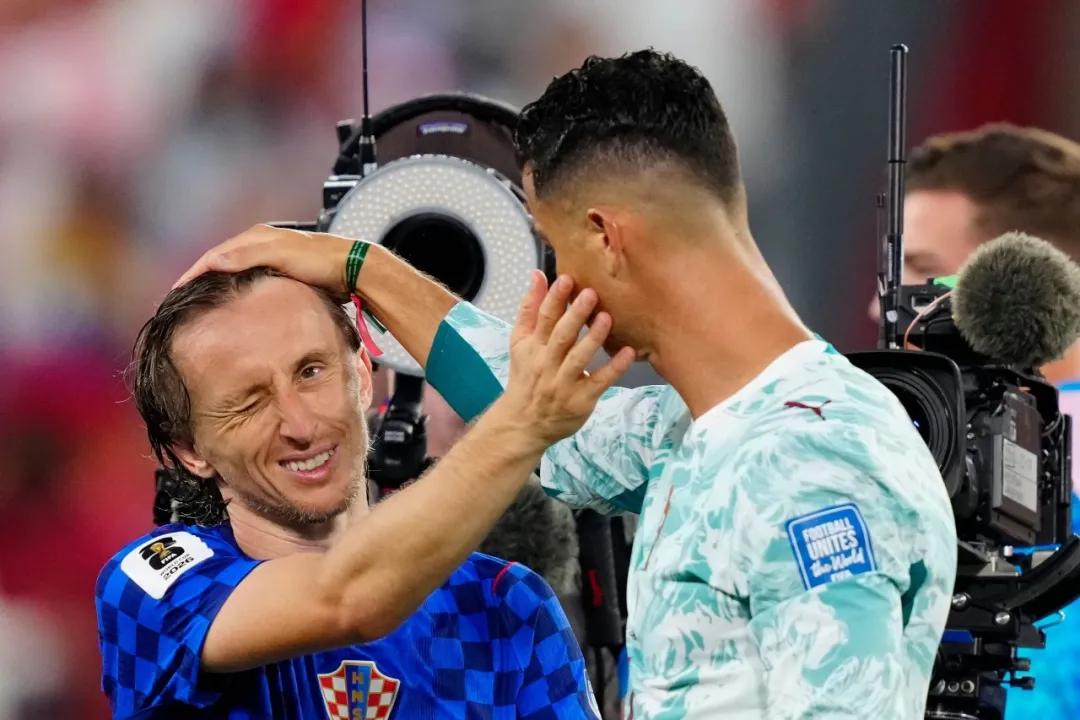

After the match, Ronaldo paid tribute to his long-time club friend Modrić: "We are of a similar age. He is a football legend. I hugged him and said 'Congratulations on everything you've achieved. I hope to see you again. I wish you all the best in your future career.'" Compared to seeing off an old friend, the topic on everyone's mind was, of course, Ronaldo himself.
At 41, Ronaldo is still the ultimate competitor. In fact, before scoring that penalty, one of his brilliant one-on-one chances was also ruled out for the tightest of offsides, and his trademark celebration was cut short. When asked what was more frustrating—having his second-half goal ruled out for offside or being substituted—Ronaldo unhesitatingly said the latter, because he felt he still had the drive to contribute to the team. He then added, "Not starting is even worse."
The debate over whether Ronaldo should continue to start has raged among media and fans since the Qatar World Cup three and a half years ago. In this match, Gonçalo Ramos completed the comeback after coming on for him, reminiscent of the 6-1 thrashing of Switzerland in a knockout match. But against Morocco, the new AC Milan star couldn't replicate that performance, and veteran coach Fernando Santos resigned under a barrage of criticism from the Portuguese media.
Martínez, of course, would not repeat that mistake. After Ronaldo scored the equalizer and fulfilled his wish to break his knockout-stage goal drought, he had to accept being "sacrificed" for the team's defensive adjustments, despite any personal displeasure. On and off the pitch, the Spanish coach showed the Portuguese icon the utmost respect—the very thing this Portugal team needs most: unity. After the internal strife from the opening match against DR Congo, the team urgently needed a force to bind it together.
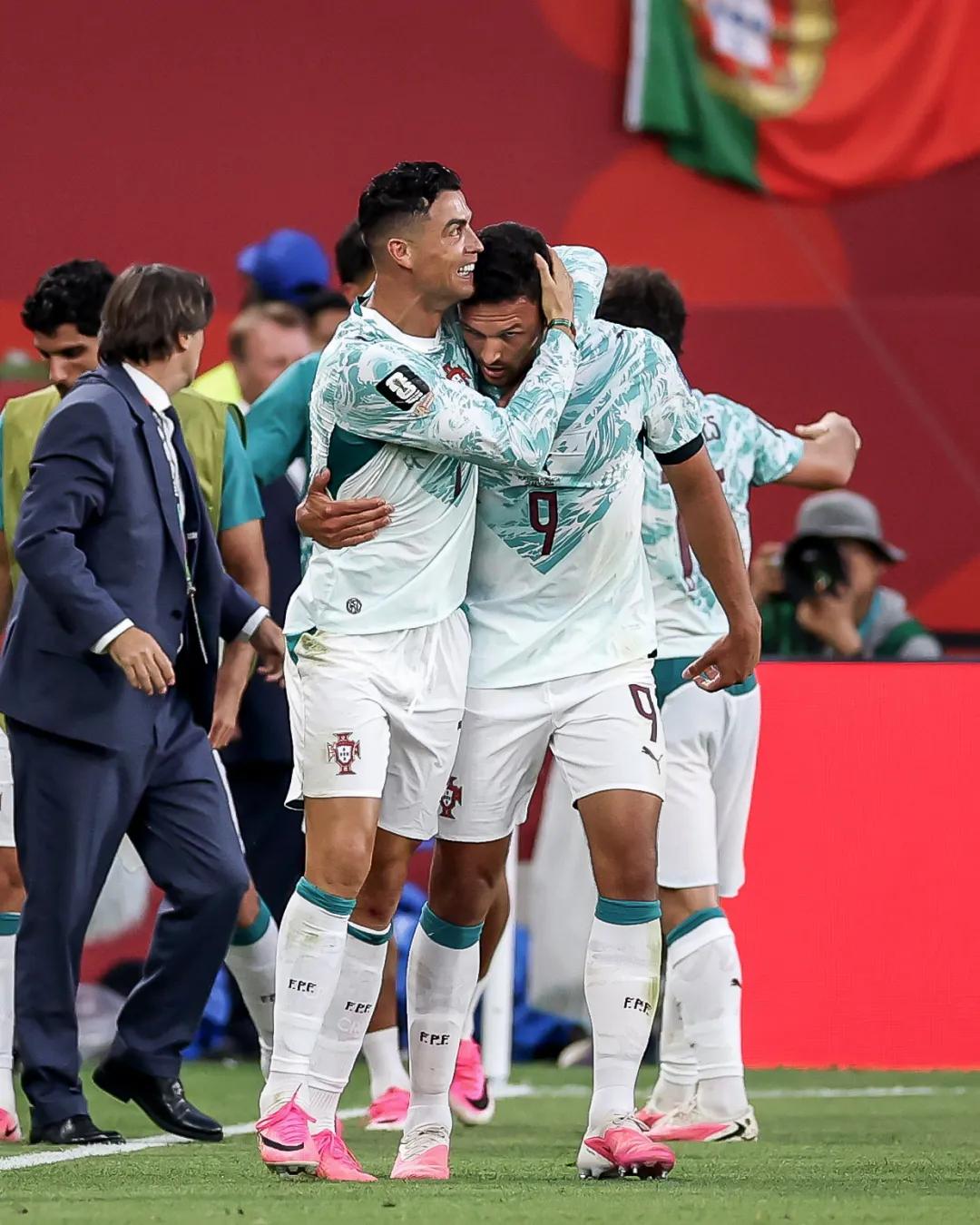
In this match, the Portuguese captain and his teammates demonstrated this perfectly. After Gonçalo Ramos scored, Ronaldo was the first to embrace and congratulate him. After the match, the crowd chanted Ronaldo's name, but he gestured with his hands, signaling for them to cheer for the Portugal team instead.
An even more heartwarming scene was the tribute to an old friend: July 3rd was the first anniversary of Jota's passing. This World Cup, the Portuguese Football Federation announced a 27-man squad that included Jota. At Portugal's request, the stadium screen showed Jota during the national anthems. After the match, Ronaldo donned Jota's number 21 shirt, leading the entire team in thanking the fans and taking a team photo with Jota's jersey.
In a post-match interview, the Portugal captain acknowledged that "we can't control the various opinions off the pitch," but "we will cherish everyone who supports us." Looking ahead to the upcoming Iberian derby, he promised all Portuguese fans that "the whole team is full of passion and has the desire to win the title," and they will "give their all and fight until the very end in every remaining match."
In the upcoming Round of 16 match, it might be difficult to expect the 41-year-old Ronaldo to be the divine hero who turns the tide single-handedly, as he did eight years ago. But this time, the sailors behind the old captain might truly be able to carry him through the wind and waves, sailing towards their destination, perhaps even achieving a "global grand slam" in his football career...


Wonderfulshortvideo
aguero drug trafficking case football news today


This Arda Güler goal on repeat 🔁
BARCELONA REVENUE barcelona news today
Lashed home by Kieffer Moore ☄️
The saxophones are getting louder for Preston here…
When football is simple but beautiful 😍
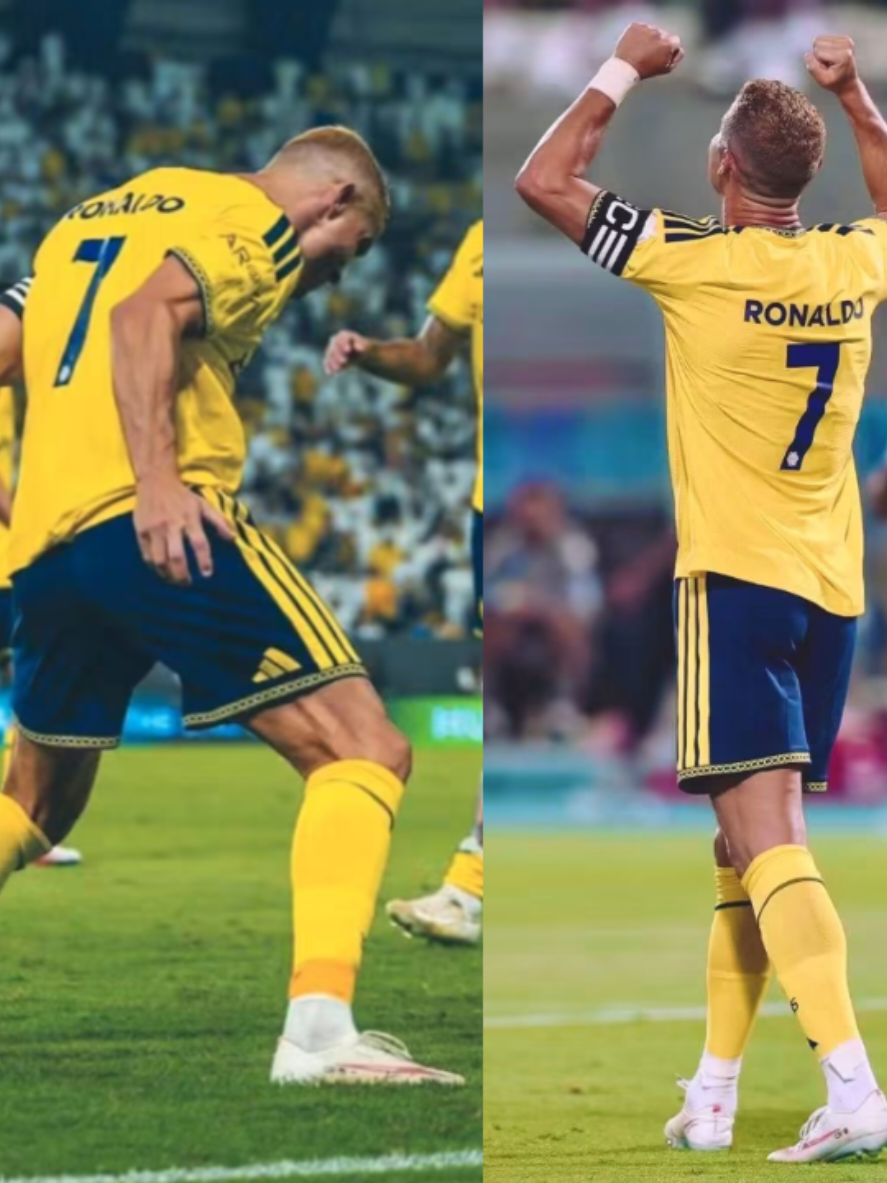
Cristiano Ronaldo is back on the quest for 1,000 goals, and these are his 977th and 978th goals.
 Links
Links
 Contact
 App
App


