



Manchester United will ultimately pay a premium for a defensive midfielder, willing to make an exception for one player! Revealing the reason for giving up the pursuit of M. Fernandes



Manchester United pursued Matheus Fernandes for two months, but he ended up moving to Tottenham for £85 million. Statistics indicate this amount is enough to purchase 48 of the 51 players who once commanded the highest transfer fees in history. Elliott Anderson, whom Manchester City acquired for £116 million, does not feature on that list, as that sum is now insufficient to set a new record.

In the summer of 2017, Paris Saint-Germain paid Neymar a staggering £200 million to buy out his contract with Barcelona and join them. This fundamentally changed the landscape of football transfer fees, opening Pandora's box and causing fees to spiral out of control. Since then, 11 players have been transferred for over £100 million.
In recent years, the price of midfielders—especially defensive midfielders—has steadily risen. In the past, the most expensive players were typically goal-scoring forwards; the first seven players to break the transfer record after 2000 were all strikers except Zidane. Today, although the top four most expensive players are still forwards, four midfielders now appear in the top 11.
Midfielders have always been crucial in football. Many have heard the saying: whoever controls the midfield controls the outcome of the match. The popularity of the 4-2-3-1 formation has further amplified the influence of midfielders.
Declan Rice's move to Arsenal cost £100 million. Adjusted for inflation, that fee would be equivalent to about £120 million today. Yet who can deny that Rice was worth it? Without him, Arteta would certainly not have won Arsenal's first Premier League title in 20 years.
Moises Caicedo has grown into arguably Chelsea's best player, making his £100 million-plus price tag seem well justified—no one disputes it.
Beyond on-field performance, other factors influence the negotiation price for midfielders. Does the player have a long-term contract? Are multiple clubs interested, potentially triggering a bidding war? Is he young? Does he have greater commercial value? And so on.
In the case of M. Fernandes, Tottenham believed he was worth the £85 million gamble because the team narrowly avoided relegation last season and needed not only to strengthen but also to boost morale. What better motivation than snatching a talented player from Manchester United—the Premier League's top club with Champions League qualification—who was determined to sign him?
In contrast, Manchester United is trying to shed the label of "spending big money foolishly" and is unwilling to pay inflated transfer fees. Strictly speaking, M. Fernandes is a Championship player, and Sir Jim Ratcliffe and INEOS felt he did not warrant such a high fee. The previous record for a relegated player was Romeo Lavia's £53 million move from Southampton to Chelsea. Interestingly, Lavia and M. Fernandes were former teammates.

Manchester United also considered Anderson not worth £116 million, but his contract with Nottingham Forest runs until 2029, and both Manchester clubs were keen on him. His status as an English player (homegrown) may have been a major reason for the fee exceeding £100 million.
In negotiations with Anderson, The Athletic revealed that Manchester United once indicated that if he joined them, he could even become the club's captain in the future. United believed Anderson possesses leadership qualities, making him a potential captain like Bruno Fernandes, Rooney, or Roy Keane. However, the club ultimately felt it unnecessary to spend over £100 million on him and decided to look for other targets.
Sandro Tonali's move to Tottenham will also reach £100 million. He still has two years left on his contract, has proven his Premier League ability, and given Newcastle's transfer fee received from Anthony Gordon, they clearly did not need to sell him.
These transfer fees reflect market changes, with Premier League clubs now wealthier than ever before. Football finance expert Kieran Maguire converted some past record fees to today's relative prices. According to his data, Alan Shearer's £15 million move to Newcastle would be equivalent to £236.9 million today. Virgil van Dijk's £75 million transfer to Liverpool would be £112 million in today's terms. By comparison, Anderson and M. Fernandes suddenly do not seem so expensive.
In fact, spending over £80 million on a core player has become common. In the end, if Manchester United wants to acquire the ideal new defensive midfielder, they will inevitably pay a premium. Sir Jim and his management team just need to be confident in the player they pay a high price for, without worrying he will become a flop. For example, Ratcliffe is very fond of Real Madrid's Tchouaméni and is willing to make an exception to pay a high fee for him.
After all, Manchester United has too many cases of high-profile signings underperforming—Sancho, Højlund, Ugarte, to name just a few. This has left the management with psychological scars, and adopting a more cautious approach is entirely understandable.
Just because Tottenham paid a high price and M. Fernandes chose the club that offered him the most money, United should not hold a grudge. The 21-year-old Portuguese midfielder was originally a West Ham player before the transfer; he should be loyal to West Ham rather than cooperating to lower the price to please his new club. Red Devils fans should not forget how they felt when Rashford tried to push for a cheap move to Barcelona. In this transfer competition, everyone merely did what they thought was right—no one violated ethics.
What Manchester United needs to do now is select the right player to bring in. Even if it means paying a premium, it does not matter—as long as the new signing performs well after joining, fans will not care about the price. Signing Cunha for £62.5 million was done by activating a release clause; Mbeumo joined for £71 million despite United initially hoping for £60 million; Sesko's €85 million fee certainly had some inflation. But all three scored double-digit goals last season, so no one discusses their price tags—everyone says they were worth it.

Facts have long proven that as long as the right player is chosen and the new signing fulfills his role, a high price is simply not an issue.


Wonderfulshortvideo
aguero drug trafficking case football news today


This Arda Güler goal on repeat 🔁
BARCELONA REVENUE barcelona news today

Lashed home by Kieffer Moore ☄️
The saxophones are getting louder for Preston here…
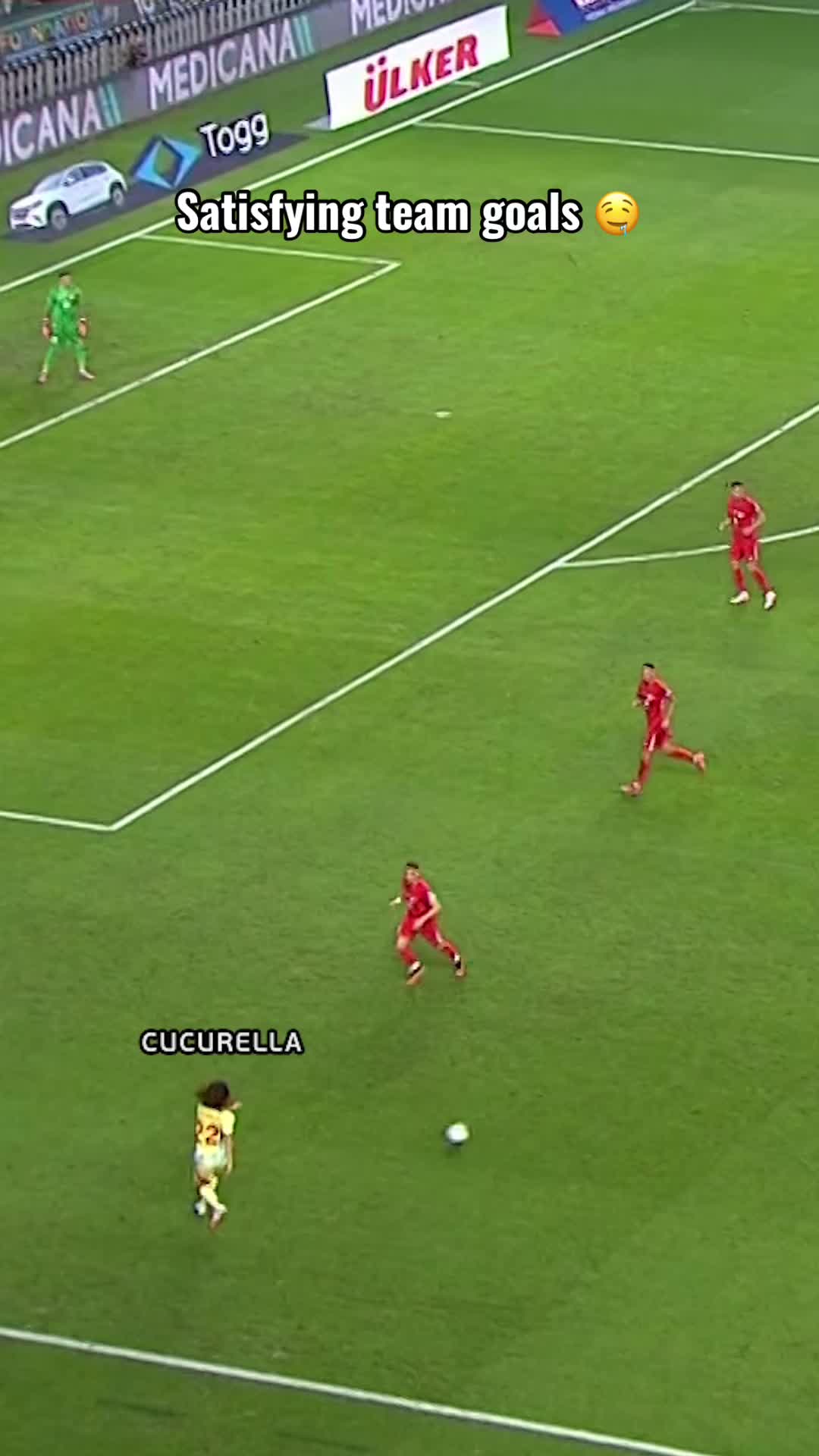
When football is simple but beautiful 😍

Cristiano Ronaldo is back on the quest for 1,000 goals, and these are his 977th and 978th goals.
 Links
Links
 Contact
 App
App


