



World Cup 2026: Brazil and Neymar’s Unfulfilled Dream



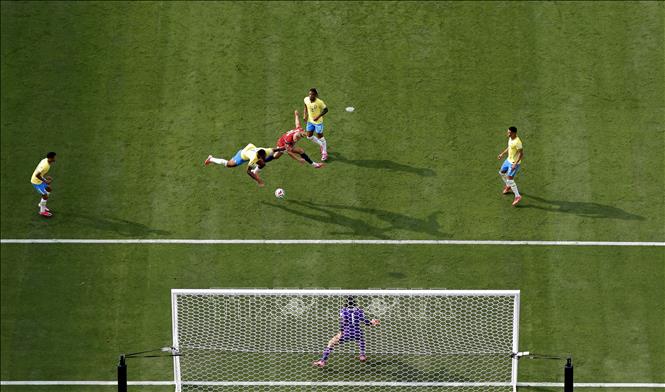
Brazil left the World Cup after a match they have every reason to regret. Against Norway, “Selecao” were not entirely outclassed; in fact, they had a chance to decide the outcome very early. In the 14th minute, Brazil were awarded a penalty after VAR confirmed Matheus Cunha had been fouled in the box. At that crucial moment, Vinicius Junior — Brazil's top scorer in the tournament with four goals — held the ball but then handed it to Bruno Guimaraes. The Newcastle midfielder took a stuttering run-up, but goalkeeper Orjan Nyland made a precise save. That was the biggest turning point of the match.
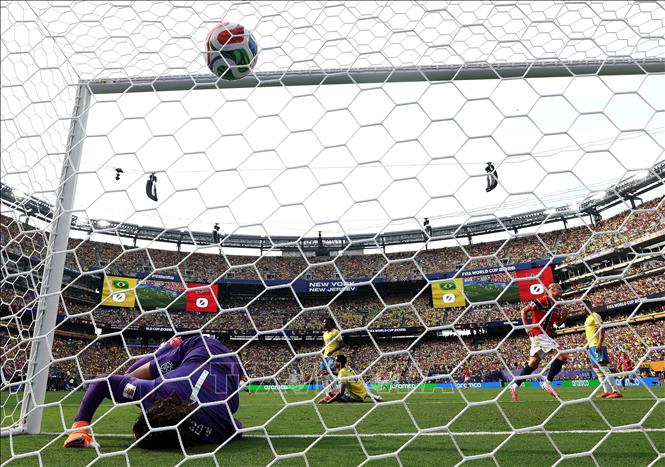
Missing the chance to take the lead caused Brazil to lose their psychological advantage. They continued to create dangerous chances and at times pushed Norway deep, but lacked the sharpness to convert their dominance into goals. Meanwhile, Norway patiently waited, withstood the pressure, and delivered the decisive blow with a brace from Erling Haaland in the second half.
It was not until the final minute of stoppage time that Brazil pulled a goal back from the penalty spot, this time successfully converted by Neymar. But that goal was merely a consolation and could not save “Selecao” from a 1-2 defeat. This loss eliminated Brazil in the Round of 16 — their worst World Cup performance since 1990, when “Selecao” also exited at this stage following a defeat to Diego Maradona's Argentina. For a nation where the World Cup is almost an integral part of its football identity, this was a bitter pill to swallow.
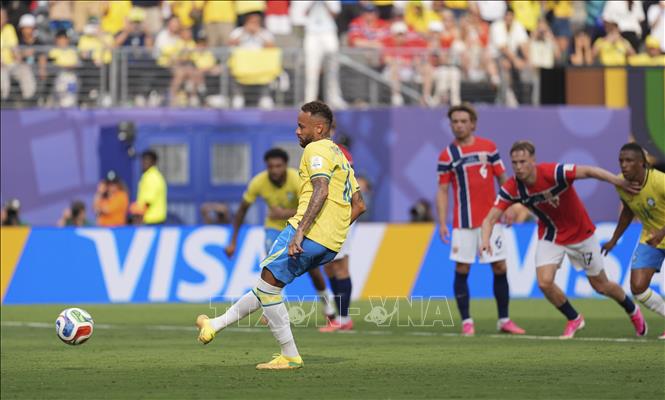
At 34, Neymar was no longer the absolute focal point of Brazil as in previous World Cups. A persistent right calf injury meant he only came off the bench in 2 of Brazil's 5 matches in this tournament. In the game against Norway, he was brought on in the 68th minute in coach Carlo Ancelotti’s final attempt to spark a stagnant attack.
Neymar could not change the fate of the match, but he still left one final mark. From the penalty spot in stoppage time, he calmly beat Nyland to score Brazil's only goal. That strike allowed Neymar to equal Pelé in the rare group of Brazilian players to score in four different World Cups. But the irony was this: instead of being a symbol of a glorious night, the goal became a belated farewell for a generation that failed to fulfill its promise to history.
For Neymar, MetLife is not just where Brazil were eliminated. It is both the starting and ending point of his nearly 16-year international career. On August 10, 2010, he made his debut for Brazil in a friendly against the USA at this very stadium in New Jersey. In the early hours of July 6, 2026, he said goodbye to the “Selecao” jersey in his most bitter moment.
Neymar leaves the national team without the World Cup trophy — the biggest gap in the collection of one of the most talented players of his generation. He leaves behind records, goals, times he carried the team, as well as controversies and tears. But above all, there is a feeling of regret: a major, indeed immense, international career that still lacked that one perfect moment.
After the match, coach Carlo Ancelotti did not shy away from disappointment but did not see it as the end. The Italian manager called the defeat to Norway “fuel for the future” and insisted the 2026 World Cup should be seen as “the start of a new cycle.” Speaking to the press, he stated: “We are very disappointed, of course. But I don’t think this is the end. I think it is the start of a new cycle. Brazil did not have an excellent World Cup, but it was a good World Cup. Even today, I think we deserved to win.”
That message was both reassuring and showed that the 67-year-old coach understood he is facing a task much larger than a single tournament. Appointed just over a year ago with the mission of bringing Brazil their sixth world title, Ancelotti remains under contract until the 2030 World Cup and has no intention of leaving after just one painful early knockout round exit.
However, Ancelotti’s Brazil team has not yet developed a clear enough identity to feel like a genuine championship contender. The squad boasts numerous stars but lacks consistent play and composure in decisive moments. Against Norway, Brazil controlled possession in phases and applied pressure, but lacked the ruthlessness to finish their opponents. They also showed fragility in transitions and in handling pressure when the momentum shifted. These are issues Ancelotti must address if he wants to turn this generation into a squad capable of going all the way.
The Brazilian media reacted strongly to the defeat. O Globo called it “the end of the dream for a sixth gold star,” emphasizing that Brazil left the tournament before even reaching the “quarterfinal ghost” — an image evoking the long-standing nightmare of recent World Cups. Folha de S.Paulo wrote that Brazil had been “left on the beach,” while UOL considered it one of Ancelotti’s heaviest defeats since taking charge. These reactions may be harsh, but they reflect the mood of a football nation weary from waiting. Brazil has not won the World Cup since 2002. Since their triumph in Japan and South Korea, “Selecao” have entered each World Cup as a top contender, only to leave time and again with regret, often painfully.
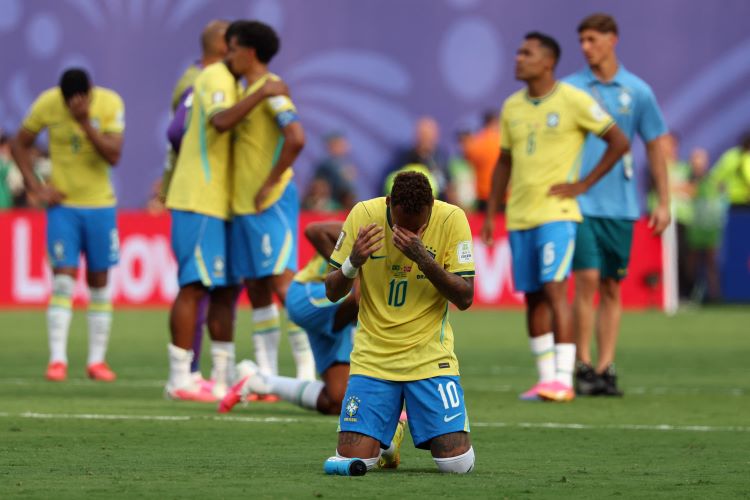
The defeat to Norway, therefore, is not simply a surprising result. It reopens a series of old questions that Brazilian football has yet to answer. Why does a team that always possesses a roster of world-class players often falter against European opponents at crucial moments? Why does “Selecao” increasingly seem to rely on individual moments of brilliance? After Neymar, who will be the figure capable of leading the team in the new journey ahead?
Vinicius Junior is perhaps the most anticipated name. The Real Madrid forward had a decent personal tournament, being Brazil's most dangerous attacker with four goals. However, the loss to Norway also left an unforgettable blemish: at the moment the team needed an opening goal, he did not take responsibility from the penalty spot himself. Handing the ball to Bruno Guimaraes and then watching his teammate miss will surely be recalled many times in the years to come.
Alongside Vinicius, names like Rodrygo, Endrick, Joao Gomes, and Savinho could form the core for the new era. But the distance from a collection of talents to a squad capable of winning the World Cup is very long — and that is precisely the puzzle manager Ancelotti must solve.


Wonderfulshortvideo
aguero drug trafficking case football news today


This Arda Güler goal on repeat 🔁
BARCELONA REVENUE barcelona news today
Lashed home by Kieffer Moore ☄️
The saxophones are getting louder for Preston here…
When football is simple but beautiful 😍
Cristiano Ronaldo is back on the quest for 1,000 goals, and these are his 977th and 978th goals.
 Links
Links
 Contact
 App
App


