



World Cup 2026: From the Pain of 2014 to the Quarterfinal Dream



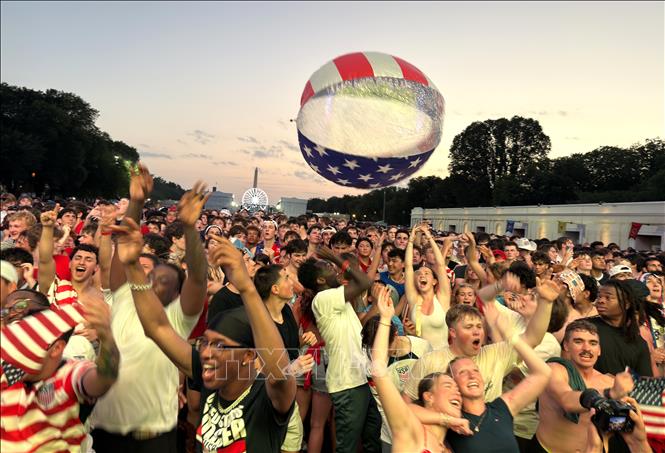
At Lumen Field in Seattle (USA) at 7:00 a.m. on July 7 (Vietnam time), coach Mauricio Pochettino's squad will step into a rematch with the goal not only to avenge the loss in Brazil but also to reach the World Cup quarterfinals—something they have not accomplished since 2002.
The atmosphere ahead of the game is thick with emotion. For many American players, Belgium is not just a strong opponent but a memory tied to one of the most unforgettable matches in team history. In the 2014 Round of 16, the U.S. fell 1-2 after extra time to the "Red Devils," a game where goalkeeper Tim Howard made 16 saves and nearly single-handedly kept hope alive for the white-clad team until the final whistle. Despite the defeat, that performance became a symbol of fighting spirit and the belief that American soccer could stand shoulder to shoulder with Europe's elite.
Speaking before the match, defender Alex Freeman said: "We want to settle that debt. Not just the one from 2014, but also the loss to Belgium a few months ago. This match is not only for us but for the entire country." Freeman belongs to a generation of players who grew up with memories of the defeat in Brazil. He was only nine years old then, and that loss to Belgium planted in him the belief and determination that Americans can compete with the world's best teams. Now, he and his teammates have the chance to turn that memory into motivation to write a new chapter.
The U.S. team enters the July 7 match with a completely different mindset than 12 years ago. They have won three of four games at the 2026 World Cup, including a 2-0 victory over Bosnia and Herzegovina in the Round of 16 to secure their first knockout win since 2002. Under coach Mauricio Pochettino, the "Stars and Stripes" are showing a more modern, energetic, and ambitious identity.
If they beat Belgium, the U.S. will win two consecutive knockout matches at a World Cup for the first time and reach the quarterfinals after 24 years. Further ahead, they could face Spain or Portugal in the quarterfinals, and even France or Morocco in the semifinals—a challenging journey but one that opens historic opportunities for American soccer. Captain Tim Ream said: "We understand how big this opportunity is.
If we have a smooth World Cup and do everything right, American soccer can enter a completely new phase." Tyler Adams—one of the midfield leaders for the U.S. team—also sees the match beyond just the result. In his view, the current generation is not only playing for tournament success but also wants to leave a legacy for American soccer, a sport still seeking its rightful place in the country's sports landscape.
Adams stated: "We want to make an impact, to make soccer in the U.S. bigger than it is now. The deeper we go in the tournament and the more wins we get, the stronger this sport can grow in America."
Christian Pulisic, the top star of the U.S. team, acknowledged that Belgium is a major test but emphasized that the host team is not afraid. In fact, the current U.S. squad is vastly different from its past. Coach Pochettino's lineup features numerous players plying their trade in Europe, such as Christian Pulisic, Folarin Balogun, Tyler Adams, Chris Richards, and Yunus Musah. They have matured in top-tier soccer environments, bringing both technical quality and confidence to big games.
Balogun—who scored in the U.S. win over Bosnia and Herzegovina—will be eligible to play after his red-card suspension was overturned. The striker's return gives coach Pochettino nearly his strongest lineup for the match against Belgium—especially crucial against an experienced opponent with high attacking quality.
If the U.S. enters the game with the feeling of a rising team, Belgium remains a rival carrying the shadow of a "golden generation" that has lasted over a decade. They have topped the FIFA rankings for extended periods, finished third at the 2018 World Cup, and consistently appeared in knockout rounds of major tournaments. Although their current squad has changed significantly, Belgium still boasts seasoned names like Thibaut Courtois, Kevin De Bruyne, Romelu Lukaku, and Axel Witsel—players who were directly involved in the victory over the U.S. in 2014.
Courtois, Belgium's veteran goalkeeper, acknowledged that American soccer has "produced a lot of talent and become a force in world football." Meanwhile, veteran midfielder Witsel also noted that the U.S. is now significantly stronger in terms of technique, intensity, and tactical organization, with the gap between American soccer and European powerhouses gradually narrowing.
However, when it comes to experience in big matches, Belgium still holds the advantage. They recently staged one of the most impressive comebacks in the Round of 32 by overturning a deficit against Senegal. That resilience and composure are qualities the U.S. must be especially wary of.
The U.S. team also has reason for caution when looking at head-to-head statistics. They have not won in 13 consecutive World Cup matches against European representatives, and in March of this year, they lost 2-5 to Belgium in a friendly preparing for the World Cup.
The biggest advantage for the U.S. in this match likely lies in home support. Lumen Field is expected to be packed with over 66,000 spectators, the majority being American fans. Seattle is one of the cities with the strongest soccer culture in the U.S., where Seattle Sounders matches are always played in a fervent atmosphere.
Coach Pochettino (an Argentine) is enjoying a special experience with American soccer, calling the fans the team's "12th man." He fully understands that this is a moment when the U.S. team is playing not just for a spot in the next round but for a turning point in the sport's status in the country.


Wonderfulshortvideo
aguero drug trafficking case football news today


This Arda Güler goal on repeat 🔁
BARCELONA REVENUE barcelona news today
Lashed home by Kieffer Moore ☄️
The saxophones are getting louder for Preston here…
When football is simple but beautiful 😍
Cristiano Ronaldo is back on the quest for 1,000 goals, and these are his 977th and 978th goals.
 Links
Links
 Contact
 App
App


