



What is the American calculation behind playing the World Cup in football stadiums?



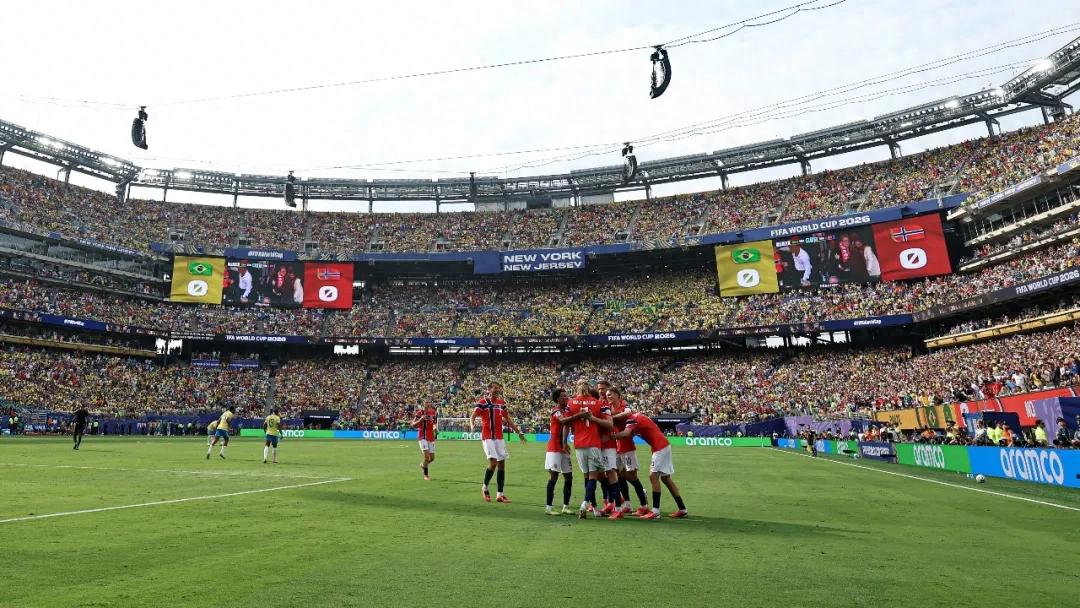
Special contributor / Rong Zhihui These days, American football players are "fuming," launching a torrent of criticism at the NFL and team owners. The reason: World Cup fields feature natural grass, whereas their regular playing surface is artificial turf.
Natural grass provides comfort, while artificial turf is a "knee destroyer," but America's beloved football game can only take place on synthetic grass.
For the US-Canada-Mexico World Cup, the United States has 11 venues, all of which are American football stadiums—simple reason: although MLS has venues like LA's BMO Stadium and Austin's Q2 Stadium, their capacity is generally under 30,000, far too small to meet World Cup demands.
Moreover, this World Cup is the first to expand to 48 teams, meaning more teams and more spectators; more spectators means more luxury suites, and only American football stadiums can accommodate that.
To host the World Cup, FIFA has a strict requirement: natural grass must be used. Team owners, who previously insisted on artificial turf despite player protests, swiftly "bowed their heads," hiring experts and spending heavily to install natural grass overnight.
These capitalists' "generous" moves are puzzling: Doesn't the NFL make enough money to afford natural grass all year round? Why only provide "special treatment" for the World Cup? What wealth secrets lie behind the astronomically priced turf?
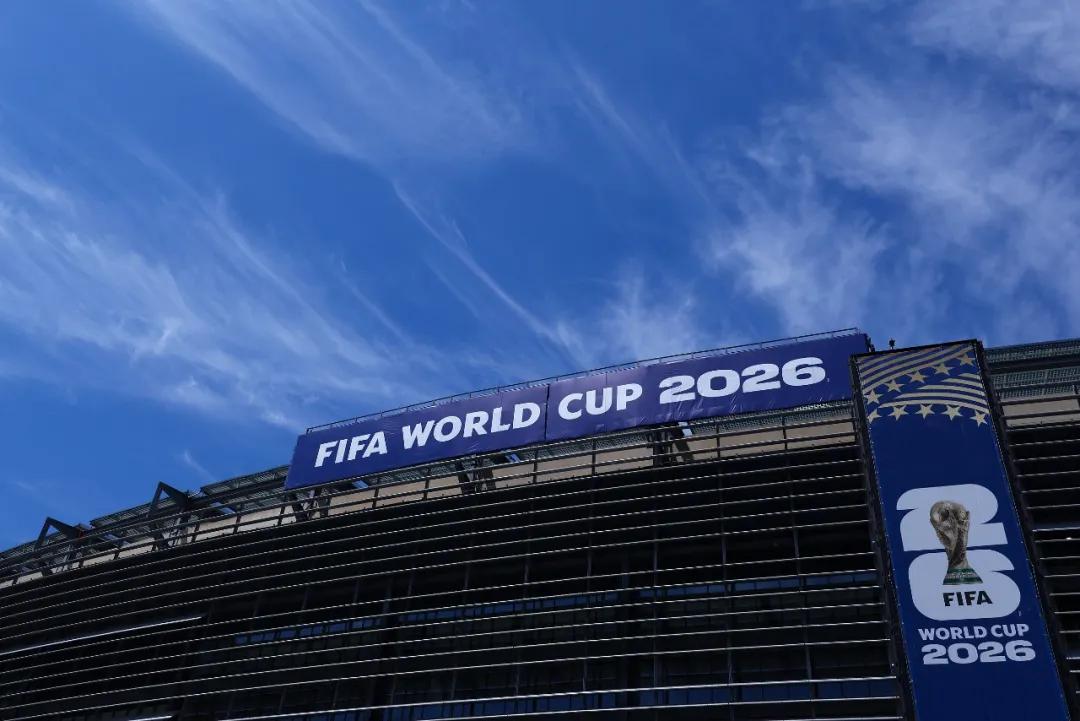
▲Exterior view of MetLife Stadium in New York

The 11 NFL stadiums hosting the World Cup are spread across the US, with 4 originally having natural grass and 7 using artificial turf.
However, even those with natural grass didn't meet FIFA standards and all required renovations. Moreover, all 11 venues must use the same type of grass to ensure "identical ball speed, bounce, and feel."
To achieve this, FIFA enlisted agronomy experts from the University of Tennessee and Michigan State University to guide the renovations of the 11 football stadiums.
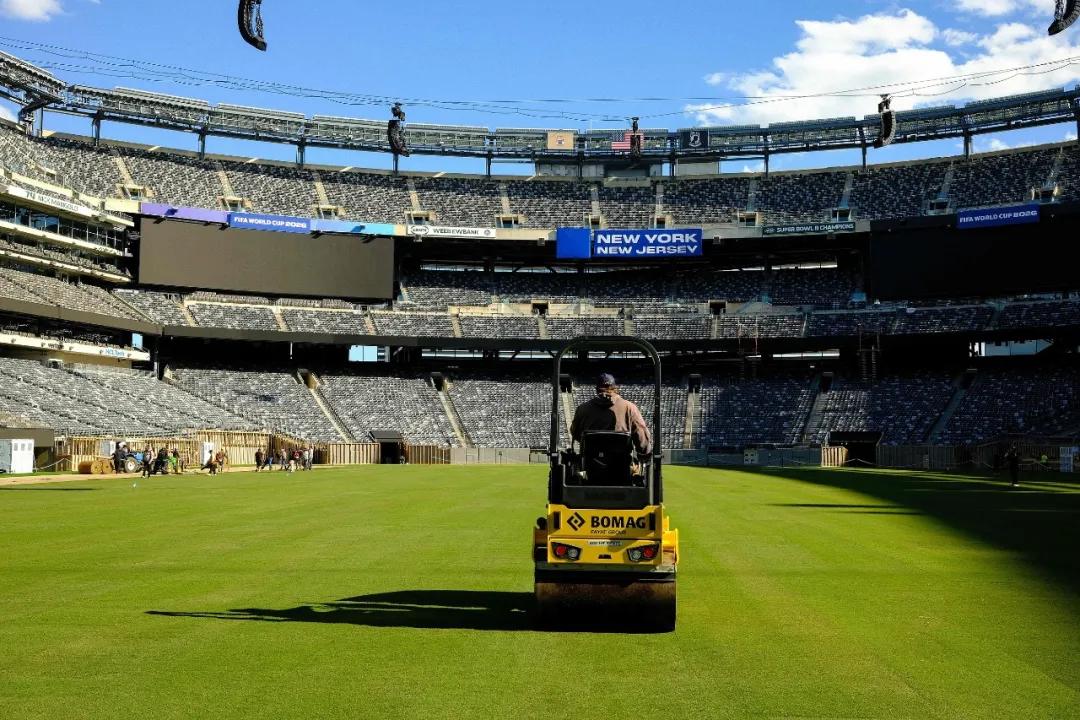
▲Natural grass being laid at MetLife Stadium in New York
In terms of grass type, for stadiums originally with natural grass—like San Francisco's Levi's Stadium—only the top layer needs removal and the underground drainage/irrigation system needs upgrading, a relatively minor project. For artificial turf stadiums—like New York's MetLife Stadium—a "full-depth excavation" is necessary, even breaking up the concrete foundation and laying pipes at the lowest level.
In terms of venue type, outdoor stadiums—such as Philadelphia's Lincoln Financial Field and Miami's Hard Rock Stadium—can rely on natural weather for grass maintenance. For enclosed or semi-enclosed domed venues—like LA's SoFi Stadium, Dallas' AT&T Stadium, and Atlanta's Mercedes-Benz Stadium—natural grass cannot survive indoors, so they must purchase massive mobile UV light arrays to simulate sunlight all day except during games, while also running powerful indoor airflow systems.
Public infrastructure renovation reports indicate that the total cost for the 11 venues ranges from $1.5 billion to $2 billion.
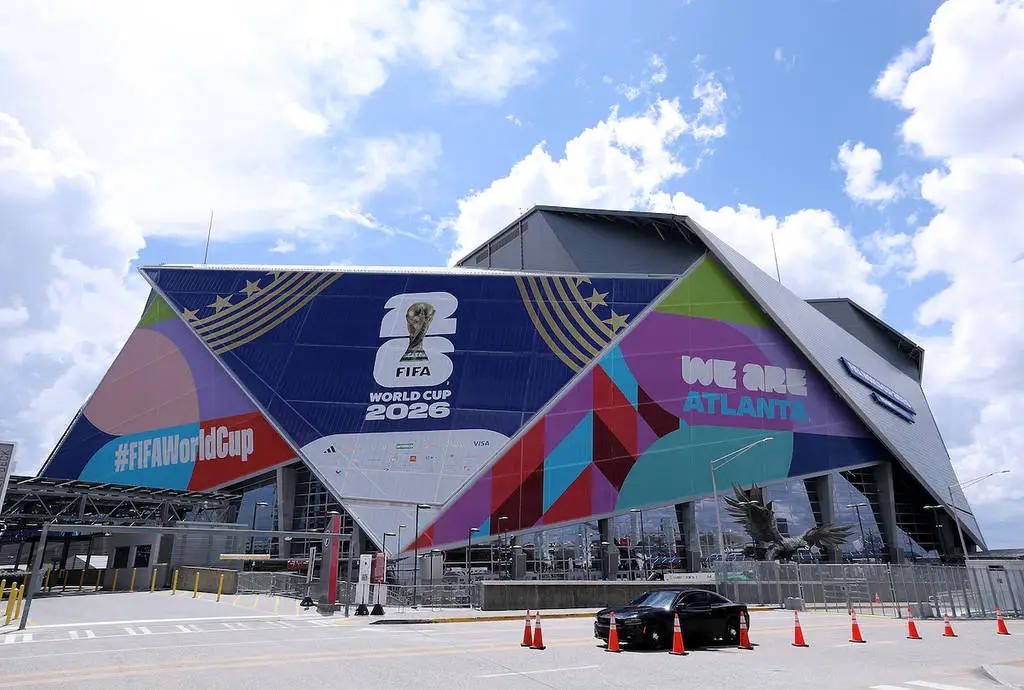
▲Exterior view of Mercedes-Benz Stadium in Atlanta

To host the World Cup, these owners—who control top-tier American football teams and stadium operations—have spent money and endured criticism.
Converting artificial turf to natural grass is quick, but why haven't they done it long ago to protect their own players' health?
Is it a lack of money? The answer is no; these owners are far from short of funds. As the most commercially successful sports league globally, each NFL team generates annual revenue between $600 million and $1.3 billion, with an average of $687 million.
The largest "overhaul"—Dallas' AT&T Stadium costing $295 million—is home to the world's most profitable sports giant, the Dallas Cowboys, with annual revenue of $1.234 billion and net profit of $629 million. The renovation cost accounts for just 23% of one year's revenue. Considering infrastructure lasting many years, it's likely less than 5% of annual revenue when amortized.
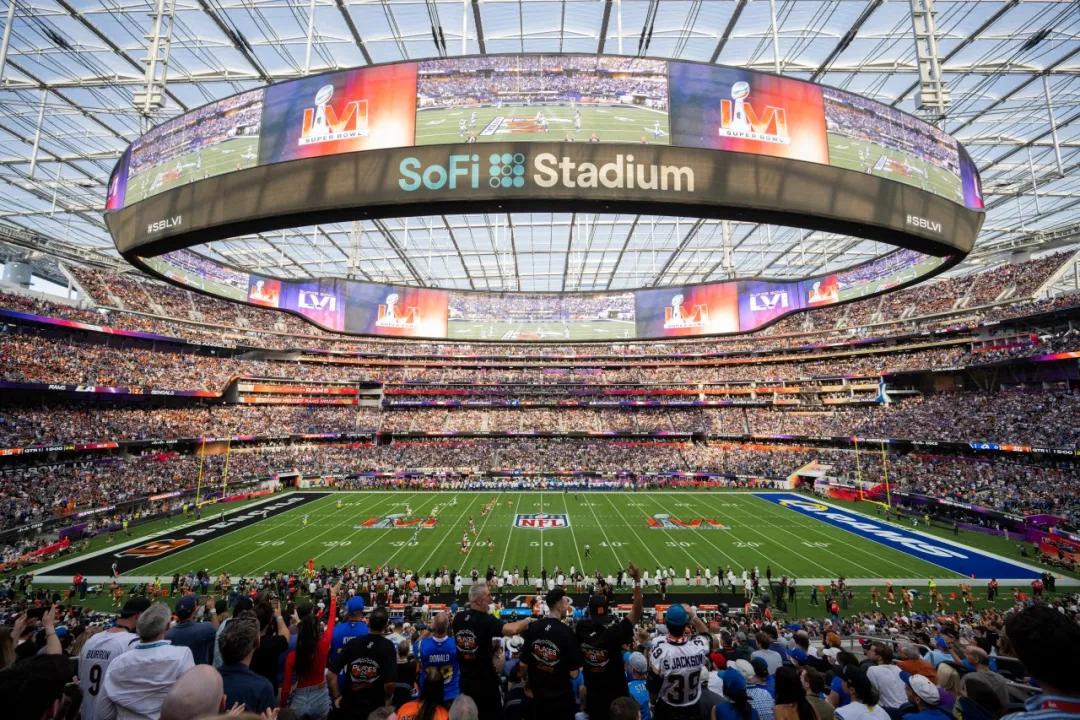
▲Dallas Stadium during an NFL game
The cheapest renovation ($15 million) was at Kansas City's Arrowhead Stadium, which originally had natural grass; the cost is only 2.3% of its host team's (Chiefs) $650 million annual revenue.
Since money isn't the issue, the reluctance to use natural grass must stem from other reasons. Experts point to three main factors: First, natural grass is "fragile." The NFL holds only nine regular-season home games per year. During the long off-season, stadiums host concerts. With artificial turf, heavy trucks can drive directly onto the field to set up stages weighing hundreds of tons, and 80,000 fans can stomp around for three days without issue. But a single Taylor Swift concert could ruin natural grass.
Second, the NFL's unique "revenue-sharing" mechanism means owners don't have to worry about star players. In European football, if a key player suffers a serious injury from poor turf, the team's performance could collapse, commercial value plummet, and the owner would cry for months. But the NFL has a revenue-sharing system that ensures a steady income regardless. Fox, ESPN, and CBS pay $12.4 billion annually in broadcasting rights, split equally among the 32 teams. This means even if all Dallas Cowboys stars broke their legs on artificial turf and the team lost every game, owner Jerry Jones would still secure $430 million in broadcasting dividends.
Third, renovation costs are low, but maintenance is high—no one wants to pour money into a "bottomless pit." Maintaining artificial turf costs $7,000 to $23,000 per year, while natural grass costs $100,000 to $250,000 annually.
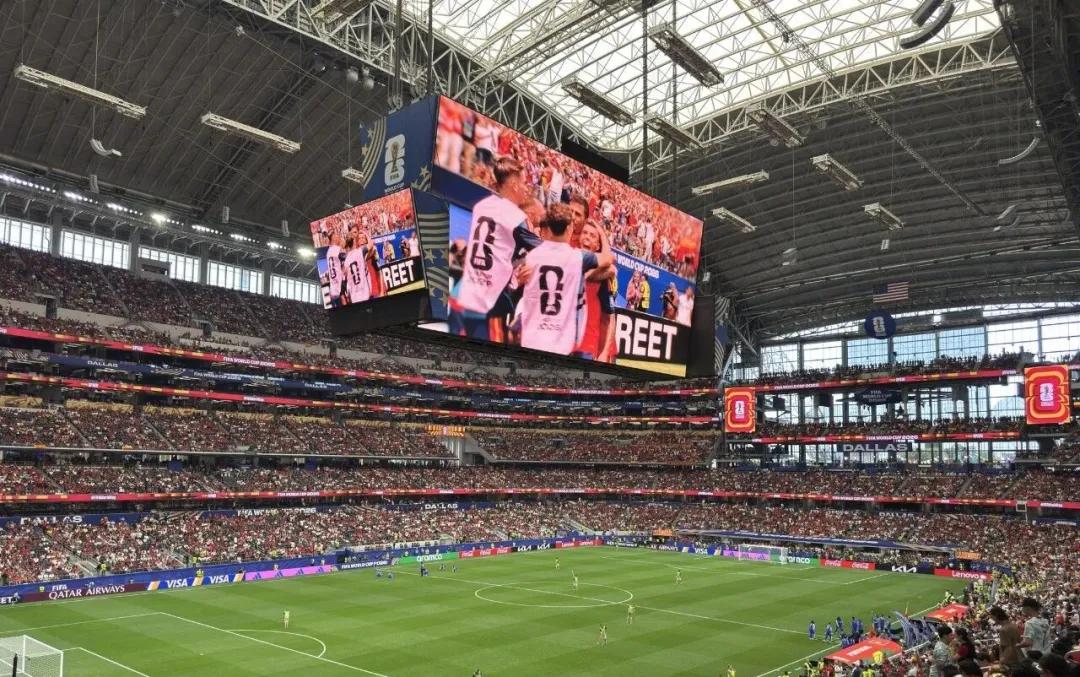
▲Dallas Stadium during the World Cup
So, are these "tightfisted" owners renovating stadiums because hosting the World Cup brings huge benefits?
Quite the opposite—they aren't making much from the World Cup itself. This time, FIFA implemented an unprecedented "all-in" clause—a "franchise model"—bypassing local committees and dealing directly with host cities and venues.
Under these terms, NFL team owners get no share of ticket or suite revenue; sponsorship and naming rights are entirely controlled by FIFA. For example, Pepsi vending machines (an NFL sponsor) are removed and replaced with Coca-Cola (a FIFA sponsor). MetLife Stadium and Levi's Stadium are forced to change names with original signage covered. Even venue rentals are at "friendship prices," and after deducting high security costs and temporary staff wages during the World Cup, the profit margin left for owners is very limited.
So why do these capitalists invest money to cater to the World Cup? They're eyeing future gains.
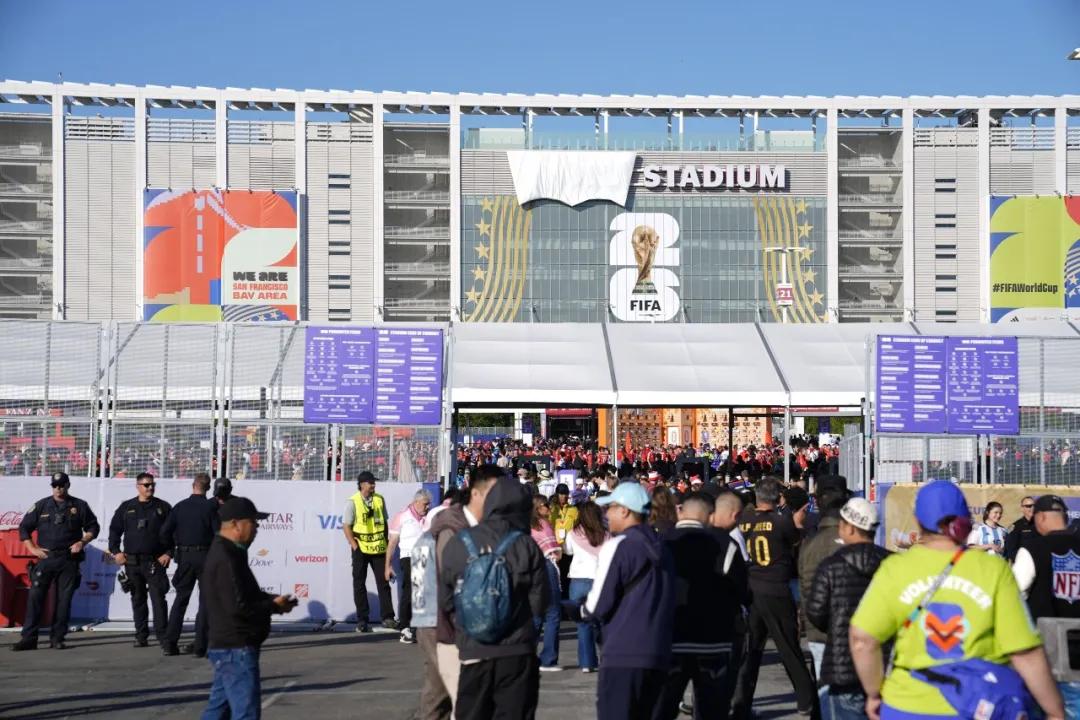
▲Original signage at Levi's Stadium in San Francisco covered
The US government provides no fiscal appropriations for stadium renovations or expansions, and taxpayers strongly oppose using public funds for subsidies. By leveraging the World Cup opportunity, team owners successfully pressured local governments to secure special urban upgrade funds or bonds, often tax-free, achieving stadium upgrades at minimal cost.
Although natural grass will be removed after the World Cup, newly purchased high-definition giant screens, expanded luxury dining areas, and upgraded high-speed networks and broadcast positions will continue generating revenue for owners over the next decades through NFL games and entertainment events.
The NFL's annual championship, the Super Bowl, is the highest-value single-day event in America. When selecting Super Bowl venues, the NFL imposes extremely stringent conditions. Through this World Cup "overhaul," the hardware standards of stadiums like LA's SoFi and Dallas' AT&T have been elevated to the technological ceiling of global stadiums for the next 20 years.
Thus, for NFL team owners, the "renovation" money squeezed from local governments is a "one-time investment, infinite returns" in the long run.
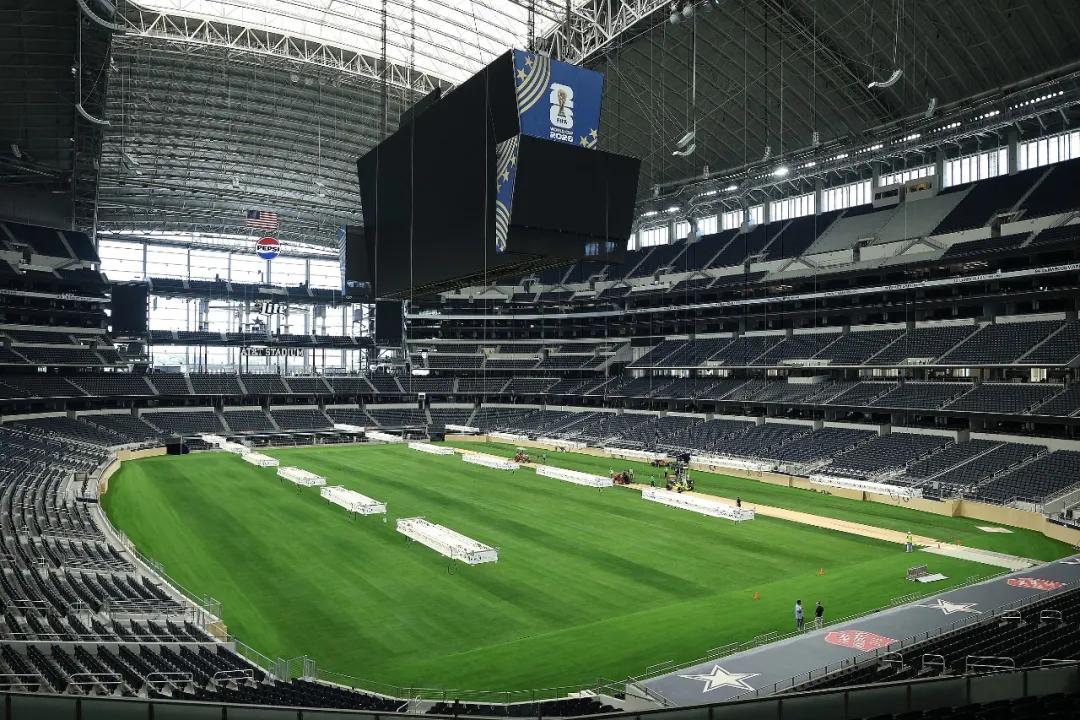
▲Laying turf at AT&T Stadium in Dallas

Not everyone gets a piece of the capital feast. Some rake in huge profits. FIFA, through its "franchise model," is expected to achieve record revenues of $9 billion to $13 billion. Stadium owners are playing the long game, with substantial future earnings ahead.
Others are losing money—the 11 host cities face a combined fiscal deficit of over $250 million and risk of funding chain breaks.
First, costs remain high. FIFA signs contracts directly with host committees, which bear all administrative expenses for security, public transit, fan festival construction, cleaning, and logistics. For example, New Jersey Transit alone faces a $48 million public transport bill to shuttle hundreds of thousands of fans between Manhattan and MetLife Stadium on match days.
Second, unprecedented tax exemptions have created fiscal gaps for local governments. To host the World Cup, several host states—Missouri (Kansas City), Georgia (Atlanta), and Florida (Miami)—were forced to legislate full sales tax exemptions on World Cup ticket sales. Missouri alone loses about $1.9 million in tax revenue per game.
Third, local sponsorships are blocked, causing advertising revenue to plummet. FIFA strictly prohibits host cities from securing local ads that conflict with official sponsors. Philadelphia had negotiated a multi-million-dollar sponsorship with a major US convenience store chain, but FIFA vetoed it because the store sells fast food, citing "conflict with McDonald's rights," resulting in a funding chain break for Philadelphia's host committee.
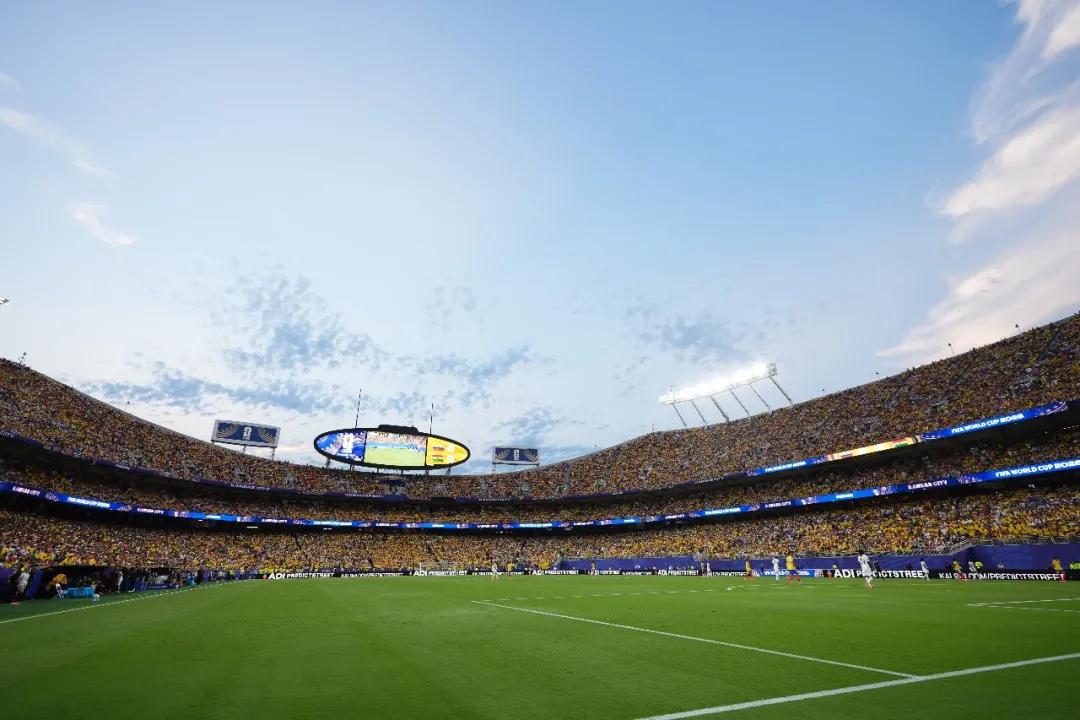
▲Arrowhead Stadium in Kansas City
As the World Cup reaches the quarter-finals, many local officials are "banging their heads against the wall" in their offices.
MetLife Stadium in New Jersey, hosting the final, saw the state try to plug a tens-of-millions-dollar gap in transportation and security costs by pricing a round-trip light rail ticket from Manhattan to the stadium at $150—drawing backlash and boycotts from fans. Some hotels overpriced rooms, leading to lower-than-expected bookings and thus failing to meet hotel tax targets.
Kansas City Mayor Quinton Lucas complained publicly about $200 million in security costs. The US Congress had promised a $625 million federal aid fund, but it hasn't arrived, forcing Kansas City to self-fund and self-advance. Due to surging security pressure, Kansas City hastily built a $25.8 million "World Cup temporary prison," now facing intense public debt accountability.
With Messi's presence and a population over 70% Latino, Miami is a fan hub facing even greater security pressure, often dealing with "mass marches." City officials had threatened before the event that if the federal government and FIFA didn't address the funding gap, the host committee would consider withholding or refusing to issue World Cup-related operating licenses.
Local governments are taking a big hit mainly because FIFA's revenue model has been "reshuffled." The US also hosted the World Cup in 1994, when local organizing committees had the say, controlling ticket sales and local commercial development rights. That World Cup left host cities with substantial profits and a football legacy.
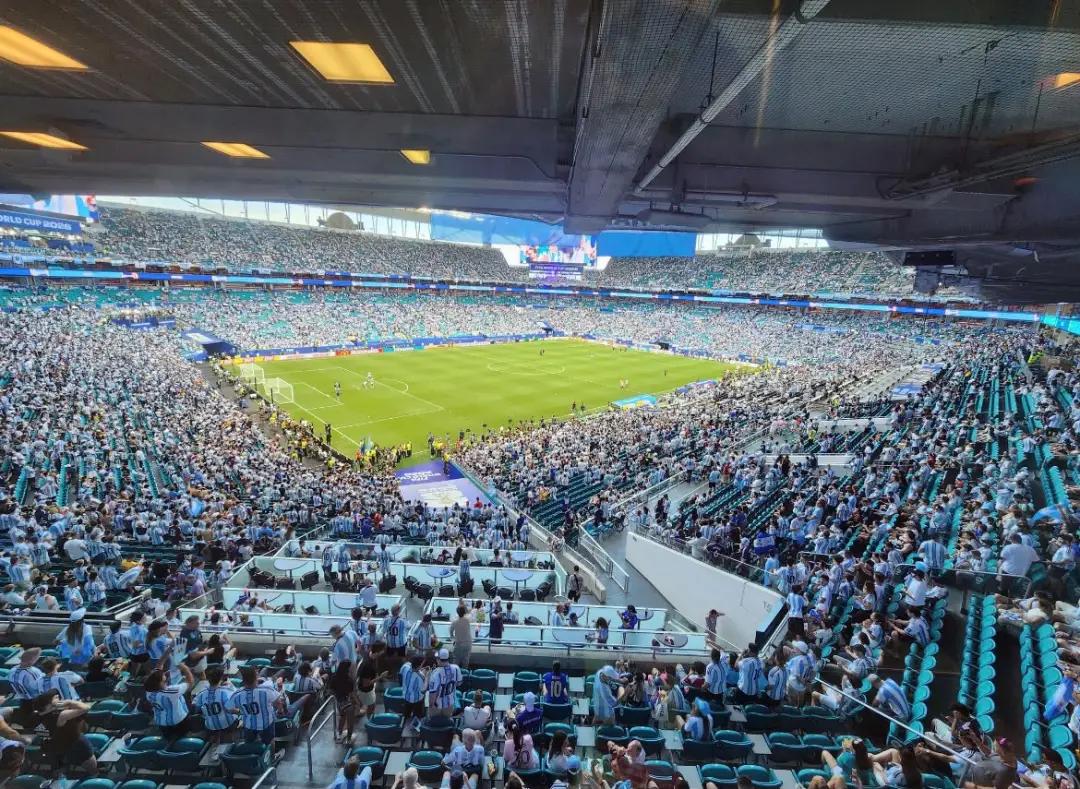
▲Hard Rock Stadium in Miami on an Argentina match day
But under FIFA President Gianni Infantino—who has a poor reputation and set a goal for FIFA to make huge profits (his salary has quadrupled in 10 years, reaching over $6 million last year)—FIFA has embarked on a frenzy of money-making. The "franchise model" for this World Cup has taken this to extremes.
Thus, to capture the World Cup's traffic, host cities must act like franchisees: fund infrastructure upgrades, hire cleaners, security, and volunteers, and coordinate transportation at their own expense. All costs are borne by local governments, while the vast majority of revenue goes into FIFA's pockets.
It can be said that the US-Canada-Mexico World Cup has staged a textbook example of "privatize profits, socialize costs": FIFA has siphoned off most profits, NFL owners have gained appreciated assets, but host cities' books show tens of millions in deficits.
Those piles of top-grade natural grass, paid for by taxpayers, will be thrown into the trash once the World Cup final ends. As for the football players, they can only fume in silence.


Wonderfulshortvideo
BARCELONA REVENUE barcelona news today



Lashed home by Kieffer Moore ☄️
The saxophones are getting louder for Preston here…
When football is simple but beautiful 😍
Cristiano Ronaldo is back on the quest for 1,000 goals, and these are his 977th and 978th goals.
messi argentina retirement messi retiring messi edit
The Swans go TOP of the Championship 🦢
 Links
Links
 Contact
 App
App


