



Top-tier Mbappé, French limited edition



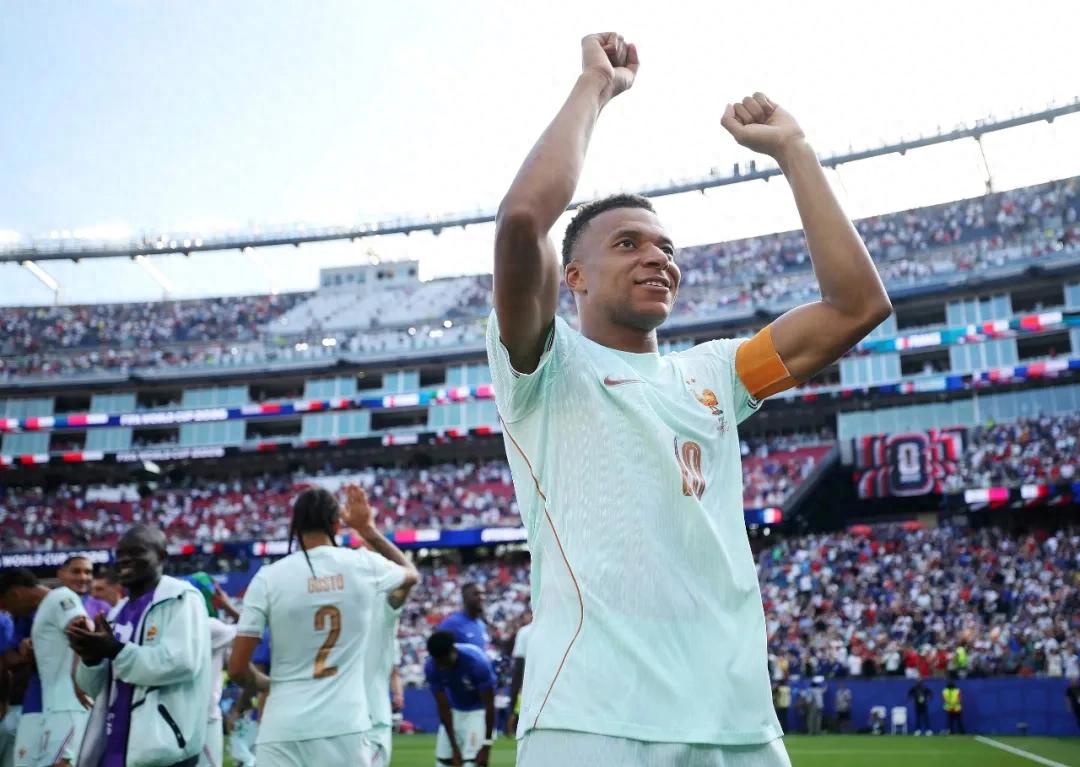
Written by Han Bing Much like the scoreline from the last Qatar World Cup semifinal, France, the first to play in the quarterfinals, defeated "African giants" Morocco 2-0 without much trouble, advancing to the World Cup semifinals for a third straight time. But unlike the close battle three and a half years ago, the 2-0 scoreline hardly captures the lopsided nature of the match—the full-game stats show 22 shots to 5, 8 on target to 1, expected goals 3.04 to 0.14, and big chances 5 to 0. If not for Morocco's goalkeeper Bounou's heroic saves and the woodwork, the game might have been decided by halftime.
This match was another typical "Mbappé show." The French captain created a penalty in the first half but missed it, then delivered a goal and an assist in the second half, contributing to all of his team's goals. With 8 goals and 3 assists, the Real Madrid forward's stats in this World Cup have already surpassed his already impressive numbers from the Qatar World Cup (8 goals, 2 assists), and reaching the semifinals means he still has two more matches to extend this record.
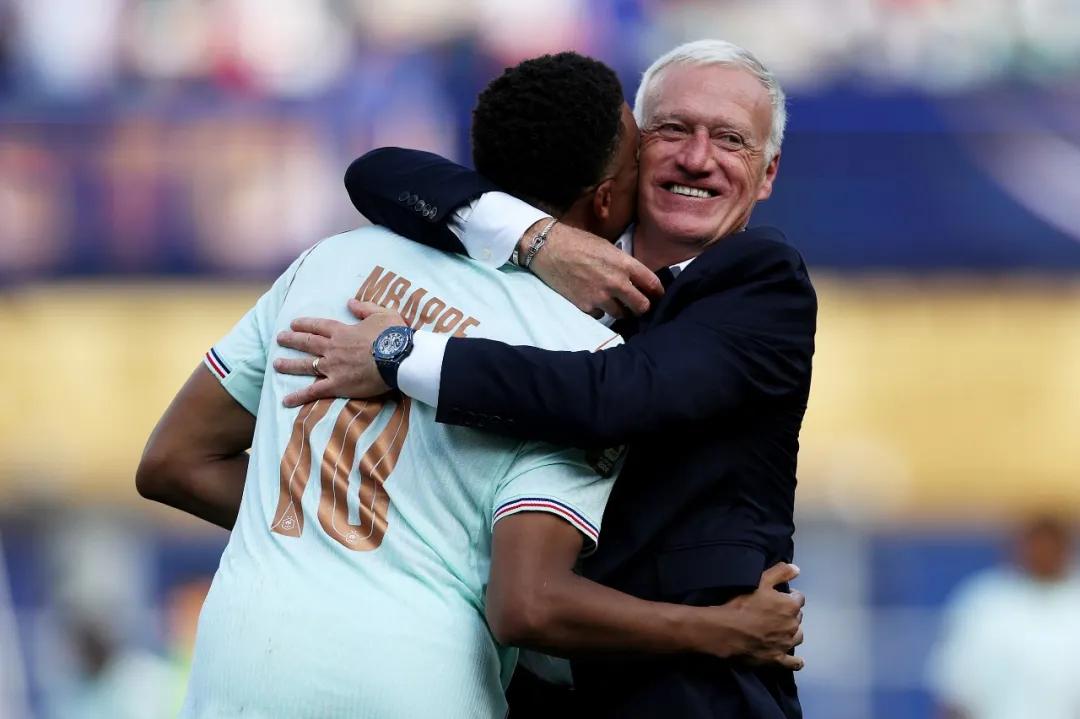
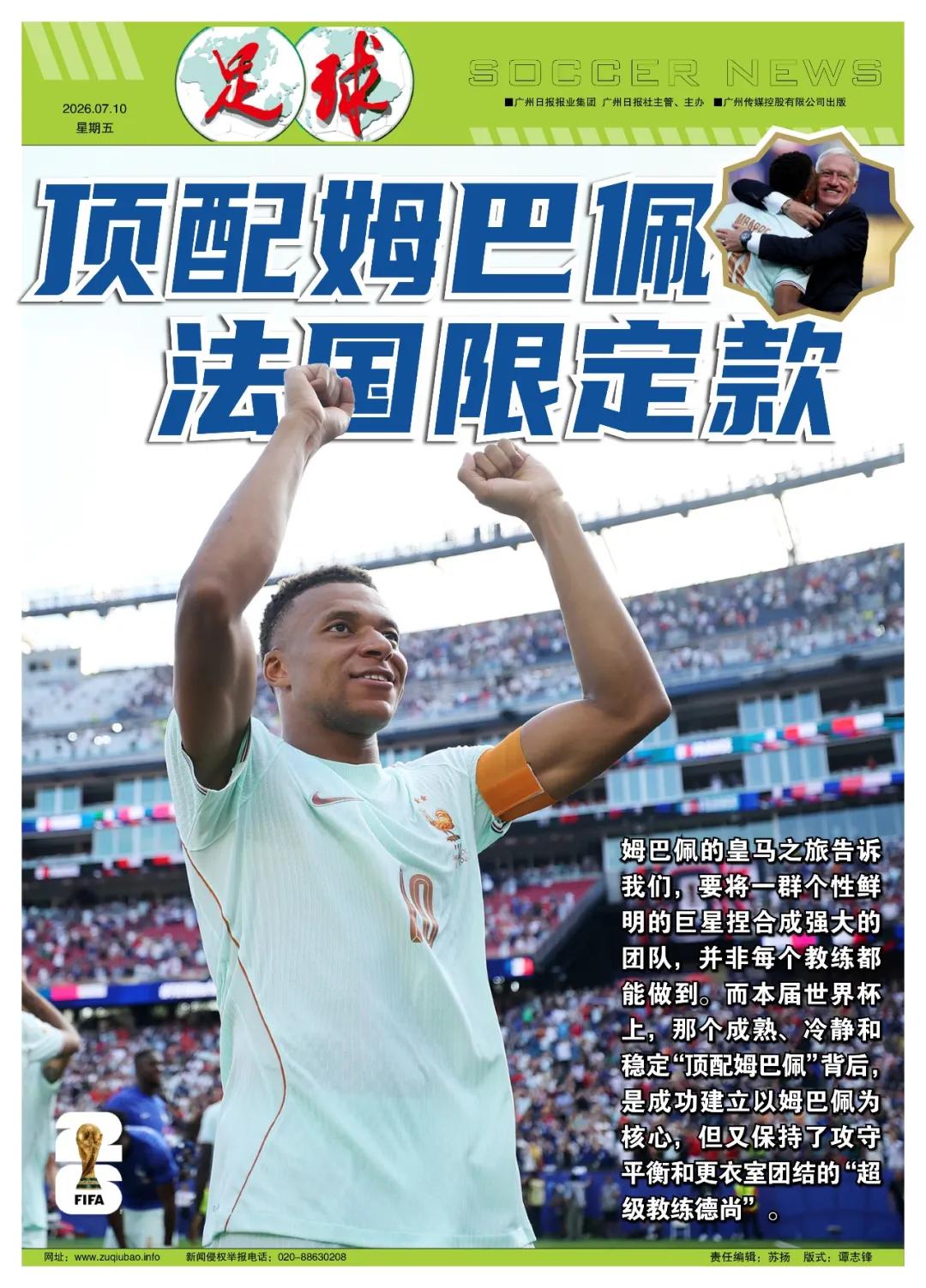
As the BBC put it, "It's hard to argue that France isn't the strongest team in the World Cup," precisely because they have a player like Mbappé. Yet Mbappé's Real Madrid journey shows that not every coach can mold a group of strong-willed superstars into a cohesive unit. In this World Cup, the mature, calm, and consistent "top-tier Mbappé" owes much to "super coach Didier Deschamps," who successfully built the team around Mbappé while maintaining balance in attack and defense as well as harmony in the dressing room.

Against Morocco, Deschamps replaced Tchouaméni with Koné to pair with Rabiot in defensive midfield, limiting Ounahi who had impressed in the previous round, while Doue high-pressed his club teammate Achraf. France had several early scoring chances. In the 5th minute, Bounou denied Mbappé and Upamecano consecutively. In the 25th minute, Mbappé was fouled by Mazraoui, and Argentine referee Tello spent over three minutes checking VAR before a hesitant Mbappé saw his penalty saved by Bounou. Remarkably, this was the first time the "penalty shootout specialist" Bounou had saved a spot-kick in regular time in official matches.
Morocco managed only one shot in the first half, while France created 13 opportunities but failed to score. After the break, Deschamps' tactical tweaks in attack decided the outcome, shifting to a mix of inside cuts and long-range shots, with Olise threading more through balls centrally and Mbappé making more runs to stretch Morocco's defense. The effect was immediate. In the 56th minute, Olise played a through ball to Mbappé, whose shot went high but signaled the start of the offensive. In the 59th minute, France's high press on the left by Rabiot succeeded, Doue created a chance in the half-space, and Mbappé curled a stunning shot into the top corner to break the deadlock. The curving ball traveled at 98 km/h, leaving Bounou helpless.
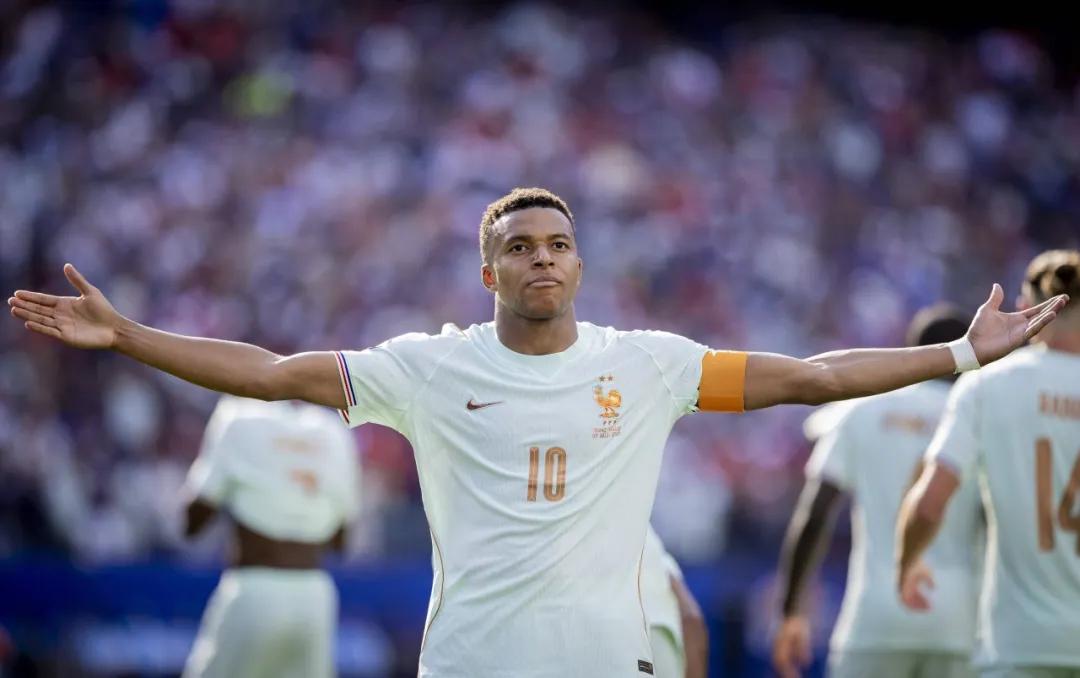
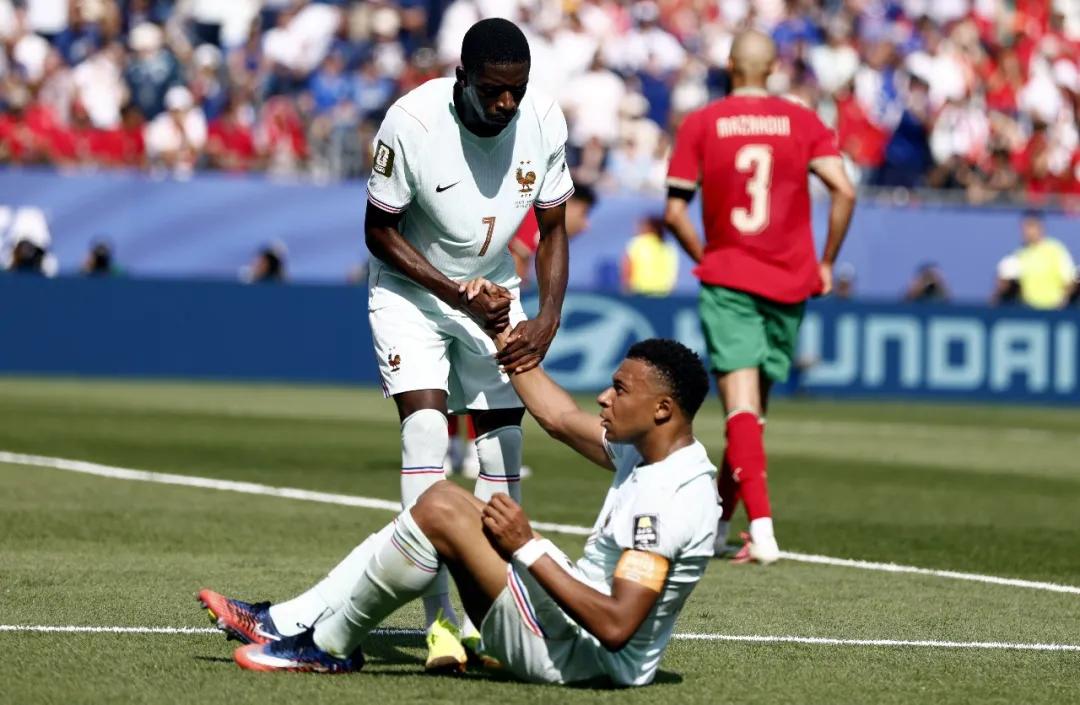
Just six minutes later, France launched a quick counter from the right near the center circle, with Mbappé setting up Dembélé, who drove forward and sealed the win. Mbappé, involved in all three of France's scoring opportunities, was the undisputed man of the match. His goal tally for this World Cup increased to eight, once again level with Messi. With 20 goals in 20 World Cup appearances, he trails Messi by just one goal in all-time World Cup scoring. His goal count for a single tournament matches his previous edition, second only to Just Fontaine's 13 in 1958 in French history.
Mbappé continues to break his own record for World Cup knockout-stage goals (12), and his combined goal involvements for France have reached a milestone of 100 (64 goals, 36 assists). This World Cup he has 8 goals and 3 assists, the most since Gerd Müller's 10 goals and 3 assists for West Germany in 1970. In World Cups and major international tournaments, Mbappé averages 0.72 goals per game, outperforming Cristiano Ronaldo, Messi, and Harry Kane in efficiency.
Le Parisien likens the duel between Mbappé and Messi, who almost decide every match, to that of Pelé and Jairzinho in the 1970 World Cup. Only two Brazilian legends have previously scored or assisted in every match of a single World Cup. L'Équipe's headline reads "Making History Again," while former Manchester United star Roy Keane hailed Mbappé as the true superstar of this championship-level French team: "Great players decide games. Mbappé has proven his super ability."

Deploying Mbappé as the number 9 while keeping the team functioning at a high level is Deschamps' biggest challenge. At Paris Saint-Germain and Real Madrid, coaches like Emery, Pochettino, Galtier, Ancelotti, and Alonso all failed; Tuchel came close but ultimately fell short. The only one who can maximize the "French Turtle's" potential is still France's own sprint coach—Didier Deschamps.
Mbappé had just endured a disastrous club season at Real Madrid, but his peak form in this World Cup stems from the tactical system Deschamps had been refining since last year's qualifiers. Back then, Ekitike played on the left, Mbappé led the line, the number 10 Dembélé drifted forward to assist him, and Olise supported the captain from the right flank.
In the World Cup, Deschamps didn't fully replicate the successful qualifying system—partly due to Ekitike's injury absence. On the left, Doue and Barcola competed for the starting spot. In France's 4-2-3-1 or 4-4-2, Olise and Dembélé would swap positions when attacking and defending became unbalanced. Olise moving from the wing to the center better supported Mbappé, while Dembélé established a solid attacking and high-pressing zone on the right—Deschamps constantly adjusted tactics and personnel, but the overarching priority was to maximize Mbappé's offensive output.
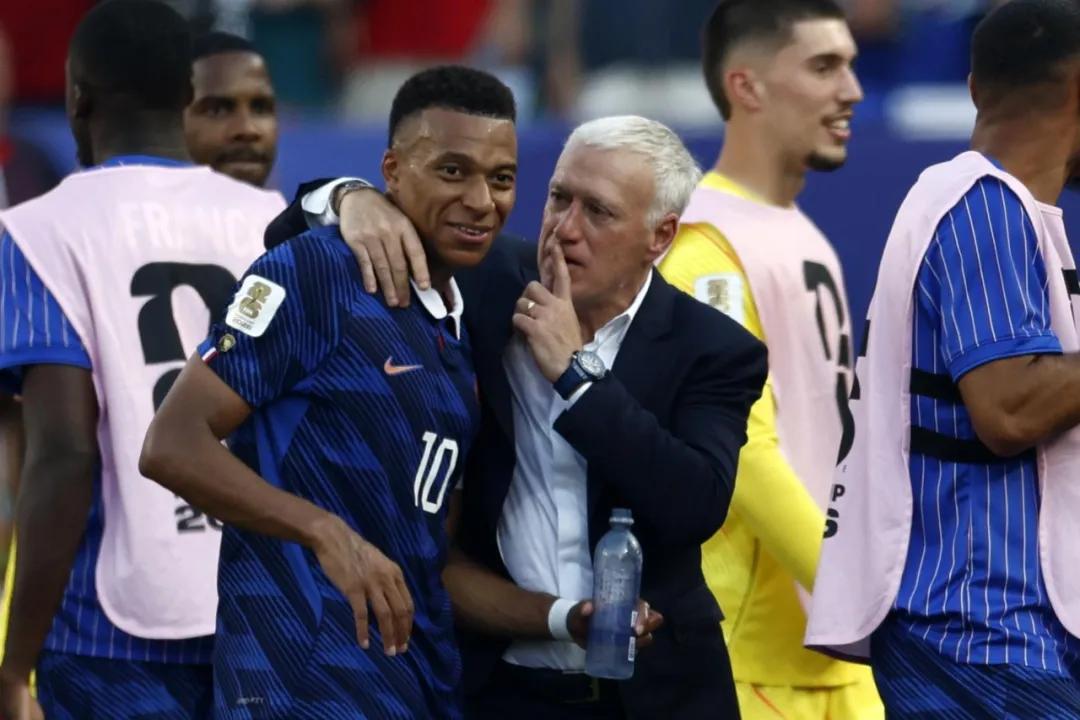
Tactically and in terms of team "order," Deschamps firmly established Mbappé as the core. As Le Parisien noted, the French now truly embody "All for One, One for All"—the musketeers' motto from Dumas' The Three Musketeers, which Deschamps repeatedly emphasizes as the team's philosophy. Everyone does their job while helping teammates; the attack fully supports Mbappé, who then repays them with goals that secure victories.
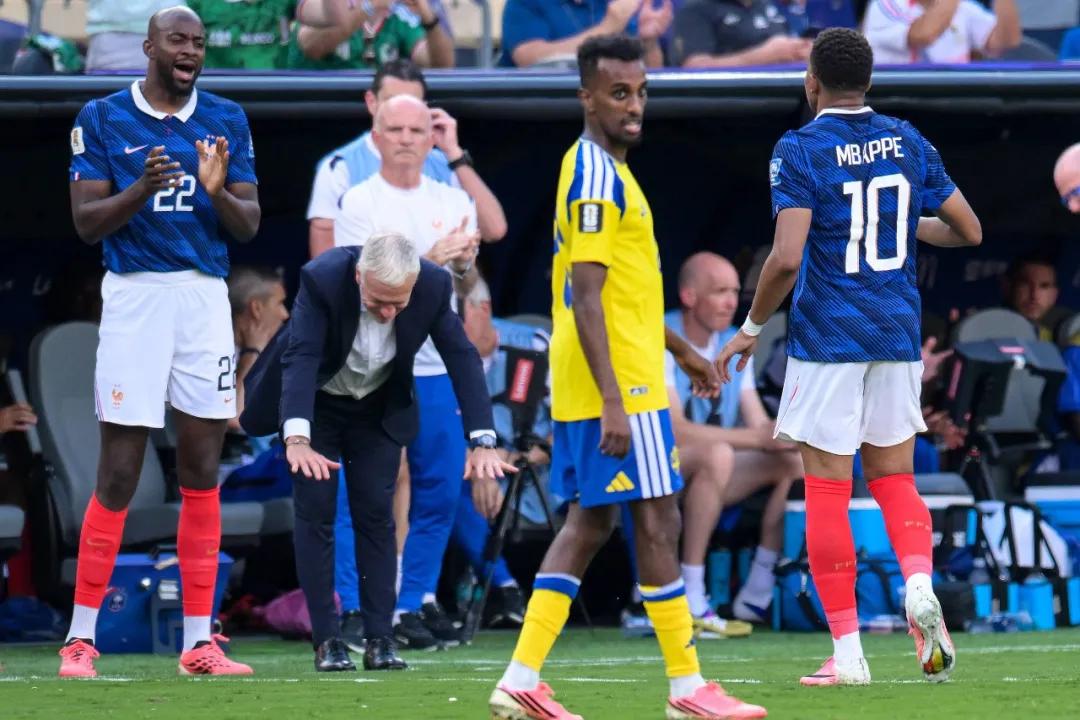
Deschamps has been helping Mbappé mature mentally and emotionally into a true leader who can drive the whole team. Whether in private or in public, in the dressing room or at press conferences, Deschamps constantly praises Mbappé, highlighting his ability and leadership. After scoring twice in the opening match against Senegal, Mbappé surpassed Giroud's 57 goals to top the all-time scoring list, and Deschamps personally gave him a commemorative jersey with "58" printed on it before the team meal. In the knockout round opener against Sweden, Mbappé again bagged a brace, and when substituted in the 85th minute, Deschamps even bowed in a gesture of reverence on the sideline.
In the post-match press conference after this game, Deschamps continued to single out Mbappé for praise: "We missed a penalty, but the players didn't doubt themselves, and Mbappé didn't either." He emphasized team spirit and refuted the misconception that Mbappé is a "ball hog": "Many think he's selfish, but he's a role model on the pitch. He loves scoring, but he's even happier contributing to the team. When Dembélé scored a hat-trick against Norway, Mbappé was as delighted as if he'd scored himself. France is a collective; I don't differentiate between attacking and defending players."

Meanwhile, Mbappé has not let down Deschamps' expectations or his teammates' support. "We've only reached the semifinals. We've won the title and been runners-up before, but right now we have nothing. Still, this French team has the most potential. I've always believed the best team is the one that wins." After the match, the French captain again focused on team spirit rather than his own contribution.
When he received the "All-Time Top Scorer Commemorative Shirt" after the first game, he didn't talk about personal achievements but instead centered his speech on the championship drive, fully displaying leadership qualities. In the final group match, when Deschamps left the squad due to a family emergency, Mbappé repeatedly emphasized "playing for the coach" in the dressing room. In the round-of-16 match, facing constant provocations from Paraguayan players, racist comments from a Paraguayan female parliamentarian back home, and even his first missed penalty for France after 15 consecutive successful spot-kicks, Mbappé remained unshaken psychologically and emotionally. The entire French team maintained a unified stance externally, and the parliamentarian's outrageous remarks actually further united the squad.
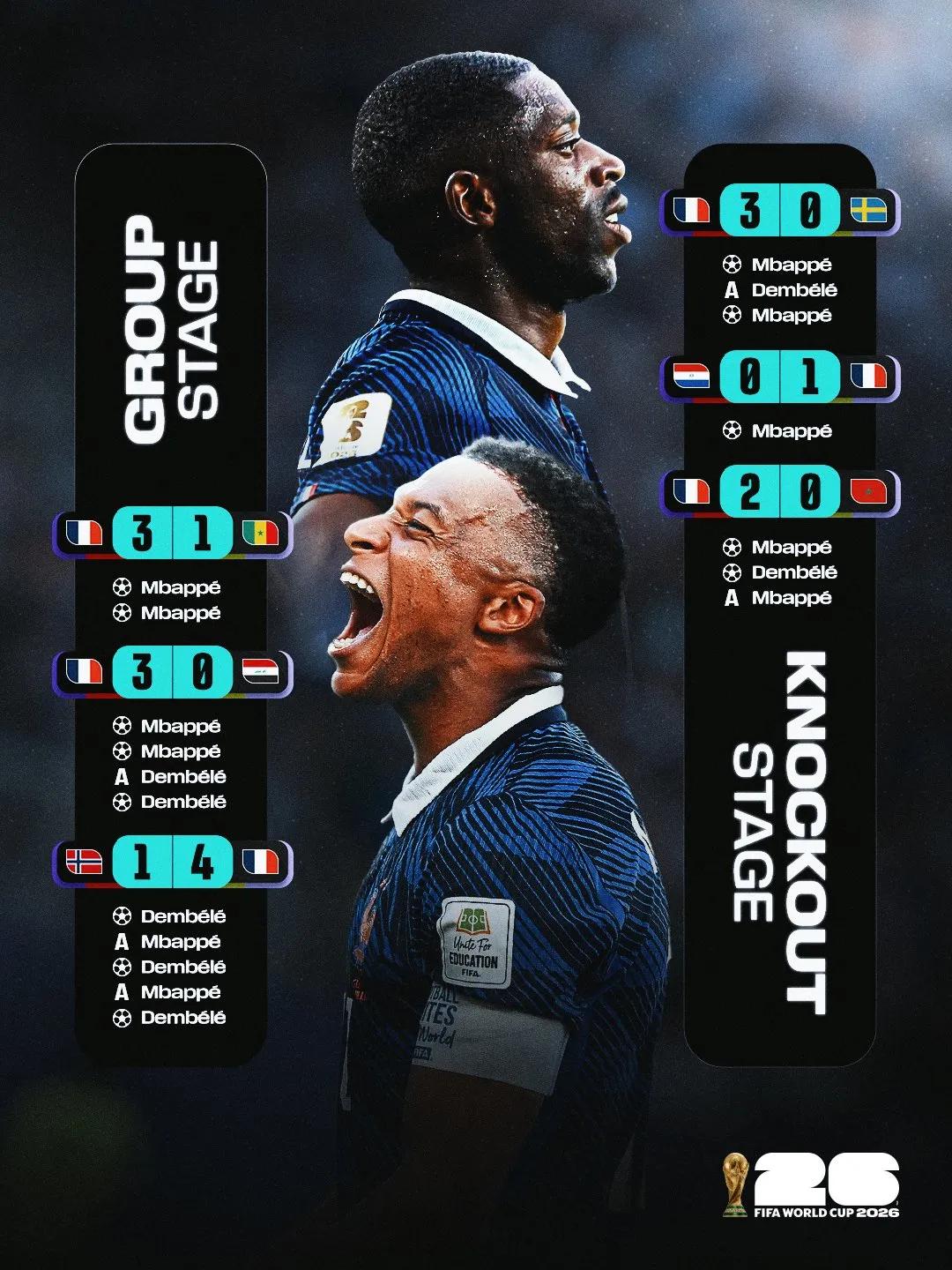
Although before the World Cup, pundits joked that Mbappé's standout performances would only help Dembélé win a second Ballon d'Or, Mbappé's three assists in this tournament have all gone to the "former Ballon d'Or winner." After the match, Dembélé revealed that his goal came from Mbappé's guidance: "He told me two or three minutes earlier to stay in the middle, and as soon as we had a chance, we'd counter. And that's exactly what happened." Their combined tally of 8 goals and 5 assists equals the terrifying attacking duo of Ronaldo and Rivaldo in the 2002 World Cup.
As for the semifinal opponent—Spain or Belgium—French media and fans don't really care. Because this French team, with stars in nearly every position, is a successful unit built around Mbappé as the core, rather than 11 players featuring just one superstar. As England legend Ian Wright put it, this French side is the "most championship-caliber World Cup favorite" he has ever seen.


Wonderfulshortvideo
BARCELONA REVENUE barcelona news today


Lashed home by Kieffer Moore ☄️
The saxophones are getting louder for Preston here…
When football is simple but beautiful 😍
Cristiano Ronaldo is back on the quest for 1,000 goals, and these are his 977th and 978th goals.
messi argentina retirement messi retiring messi edit
The Swans go TOP of the Championship 🦢
 Links
Links
 Contact
 App
App


