



History of England vs Argentina Rivalry: Classic Matches Before the 2026 World Cup Semifinal



According to Al Jazeera, the upcoming semifinal in Atlanta will mark the first meeting between England and Argentina in 21 years.
The last time the two sides met was a friendly in Geneva in 2005. At that time, Lionel Messi was only 18 and unable to play due to a suspension. England came from behind to win 3-2 after trailing 1-2. Returning after 21 years, the spotlight will be on Lionel Messi – the top scorer in World Cup history – as he attempts to lead the defending champions back to the final.
The connection between English and Argentine football dates back very early. The first recorded match on Argentine soil took place in 1867 between English railway workers. Many famous clubs like Newell's Old Boys and Rosario Central were founded by the English community, while the names of River Plate and Boca Juniors also bear English influence.
Argentina was the second team, after Scotland, to play England in an official international match at Wembley in 1951. The hosts won 2-1. However, the initial friendly relationship gradually gave way to fierce competition that has persisted across generations. At this year's World Cup, Argentine fans have continuously sung songs targeting England from the stands.
Below are the most memorable milestones in the history of this rivalry.
World Cup 1966: England 1-0 Argentina
The first World Cup meeting between England and Argentina actually occurred in 1962, not 1966.
In the group stage of the 1962 World Cup in Chile, England defeated Argentina 3-1 in Rancagua, thus advancing to the quarterfinals by virtue of a better goal difference. The Three Lions then fell to Brazil 1-3.
If the 1962 encounter was relatively tame, the 1966 World Cup quarterfinal at Wembley became one of the most controversial matches in tournament history.
The 1966 World Cup quarterfinal at Wembley quickly became one of the most controversial clashes in tournament history. England's 1-0 win, with Argentina playing over a half with ten men, was labeled "The Robbery of the Century" (El Robo del Siglo) by the Argentine press. From then on, many believed South American teams were not treated fairly in the tournament.
West German referee Rudolf Kreitlein repeatedly blew his whistle for fouls from both sides. The atmosphere became tense after about half an hour of play.
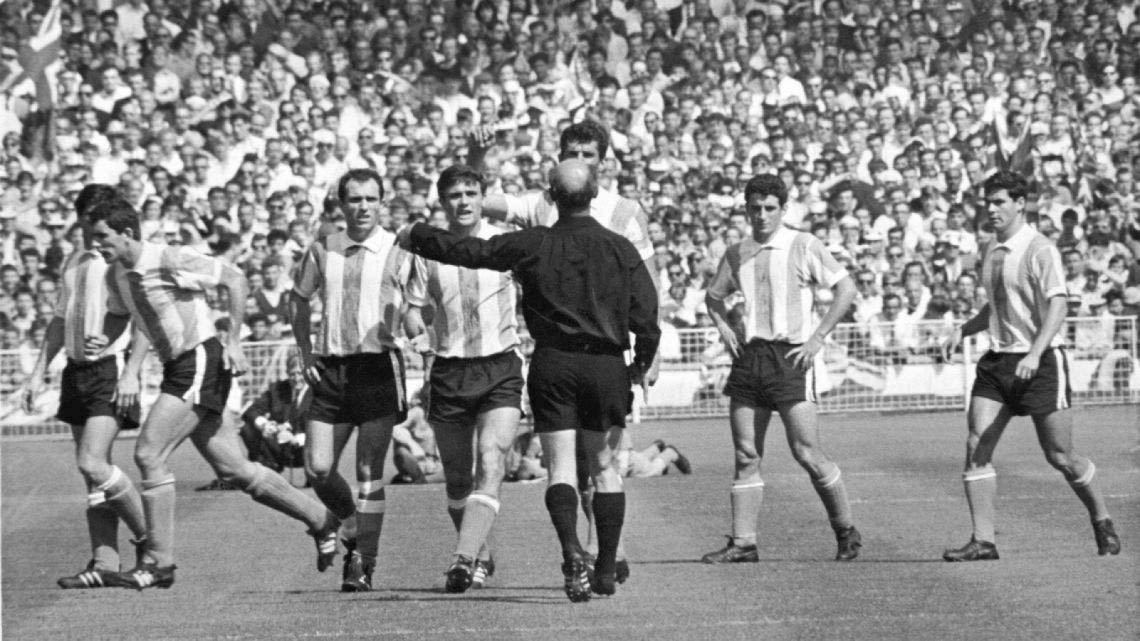
Argentina captain Antonio Rattin was cautioned for a foul on Bobby Charlton, then further reacted to the referee's decision just minutes later. Argentina claimed the disagreements stemmed from language barriers, and Rattin requested an interpreter before leaving the field.
The incident caused an eight-minute delay. FIFA's referee representative at the time, Ken Aston, was also present to assist in handling the situation. After the tournament, Aston proposed the introduction of yellow and red cards at the 1970 World Cup instead of only verbal warnings.
After being escorted off the field by security, Rattin made gestures of protest, further inflaming the atmosphere in the stands.
Notably, news of former Argentina captain Antonio Rattin's death at age 89 was announced just hours before this year's World Cup quarterfinal between Argentina and Switzerland. Argentine players wore black armbands in his memory.
England was also not free from controversy, committing up to 30 fouls. Geoff Hurst was not booked after a robust tackle, before scoring the only goal with a header from Martin Peters' cross. Argentina argued that Hurst was offside.
After the match, defender Roberto Ferreiro reacted aggressively toward the referee, forcing security to escort the official off the pitch. Ferreiro was suspended for three matches for pulling the referee's shirt, and Ermindo Onega also received a penalty for unsportsmanlike conduct.
England manager Alf Ramsay ran onto the field to prevent players from swapping shirts with opponents as was customary. In the post-match press conference, he also used harsh words to criticize the Argentine team.
World Cup 1986: England 1-2 Argentina
After two friendly draws in 1974 and 1977, England beat Argentina 3-1 at Wembley in 1980. That was also the first time Diego Maradona faced the English team.
Six years later, the two sides met again in the 1986 World Cup quarterfinal at the Azteca Stadium in Mexico, amid lingering tensions from the Falkland/Malvinas conflict between the two nations.
Argentina won through a match that went down in World Cup history.
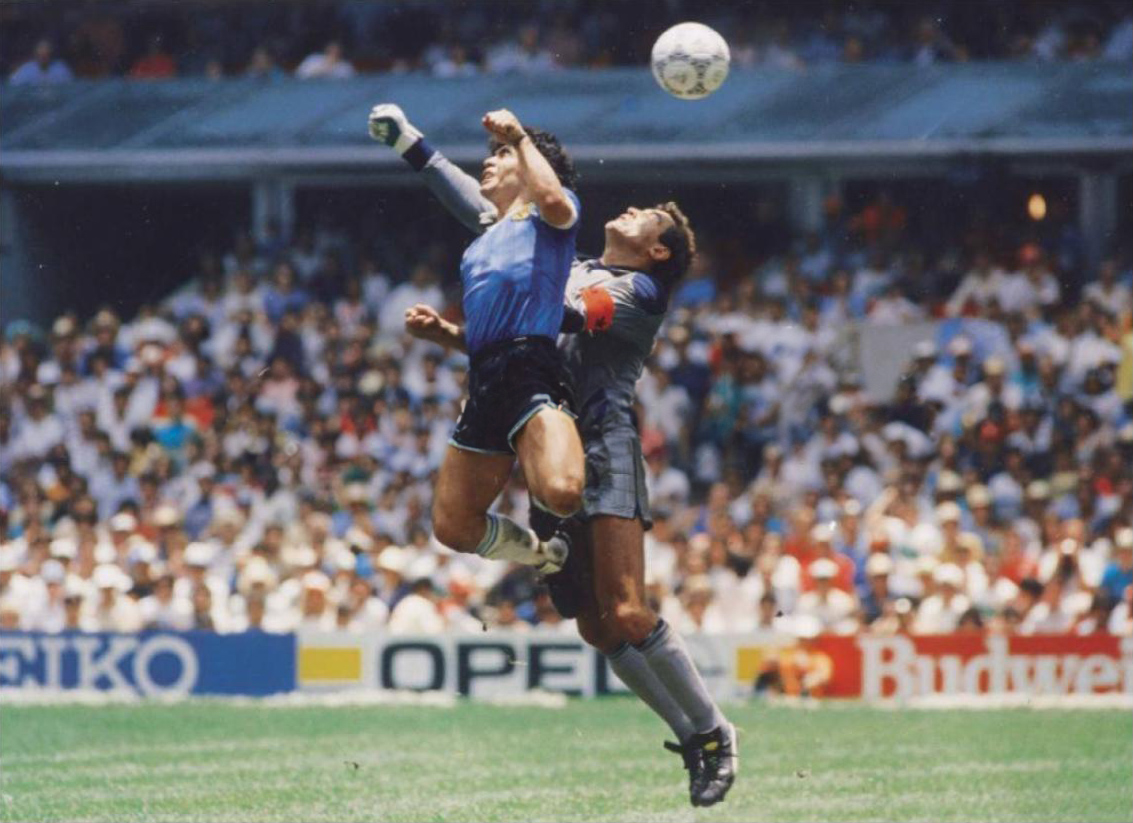
Early in the second half, with the score still 0-0, Maradona rushed into the box to meet a high ball and used his hand to punch it over goalkeeper Peter Shilton. Despite protests from English players, the referee awarded the goal. Maradona later famously described it as scored "a little with the head of Maradona and a little with the hand of God" (Hand of God).
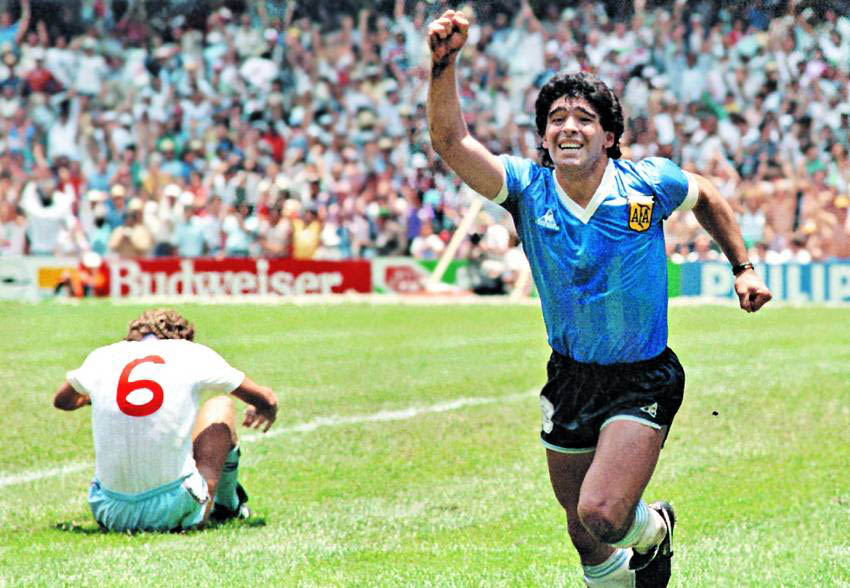
Four minutes after the opener, Maradona produced one of the most famous goals in World Cup history. Receiving the ball in his own half, he dribbled past several English players before beating Peter Shilton. In just 11 seconds, Maradona touched the ball 11 times and bypassed five English players before scoring.
Gary Lineker pulled one back to make it 1-2 late in the match, but it wasn't enough for England to turn the tide. Argentina then went on to win their second World Cup title.
World Cup 1998: England 2-2 Argentina (Argentina won 4-3 on penalties)
In 1991, Argentina returned to England after 11 years and held the hosts to a 2-2 draw despite having trailed by two goals.
The next reunion came in the round of 16 of the 1998 World Cup at Saint-Étienne, France, in a match widely regarded as the most thrilling between the two sides.
Gabriel Batistuta opened the scoring from a penalty in the 7th minute. Just four minutes later, Michael Owen won a penalty that Alan Shearer converted to equalize.
In the 17th minute, Owen made his mark with a run from midfield before finishing brilliantly. However, just before halftime, Javier Zanetti restored parity with a cleverly worked free-kick routine.
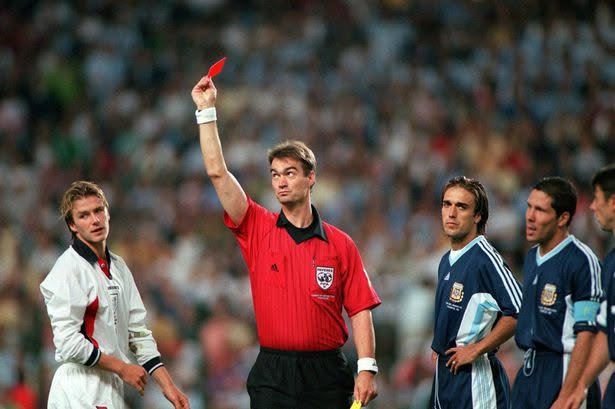
Early in the second half, Diego Simeone fouled David Beckham in midfield. As Beckham lay on the ground, Simeone made contact from behind. The English midfielder retaliated with a light kick at the opponent's leg. Simeone fell, and referee Kim Milton-Nielsen immediately showed a red card. After the match, Beckham became the target of criticism from the English media.
Despite being reduced to ten men, England fought resiliently and even put the ball in the net late in the match through a Sol Campbell header. However, the goal was disallowed because Alan Shearer was judged to have fouled goalkeeper Carlos Roa in the buildup.
In the penalty shootout, Argentina won 4-3 after Carlos Roa saved efforts from Paul Ince and David Batty, thus advancing to the quarterfinals.
World Cup 2002: Argentina 0-1 England
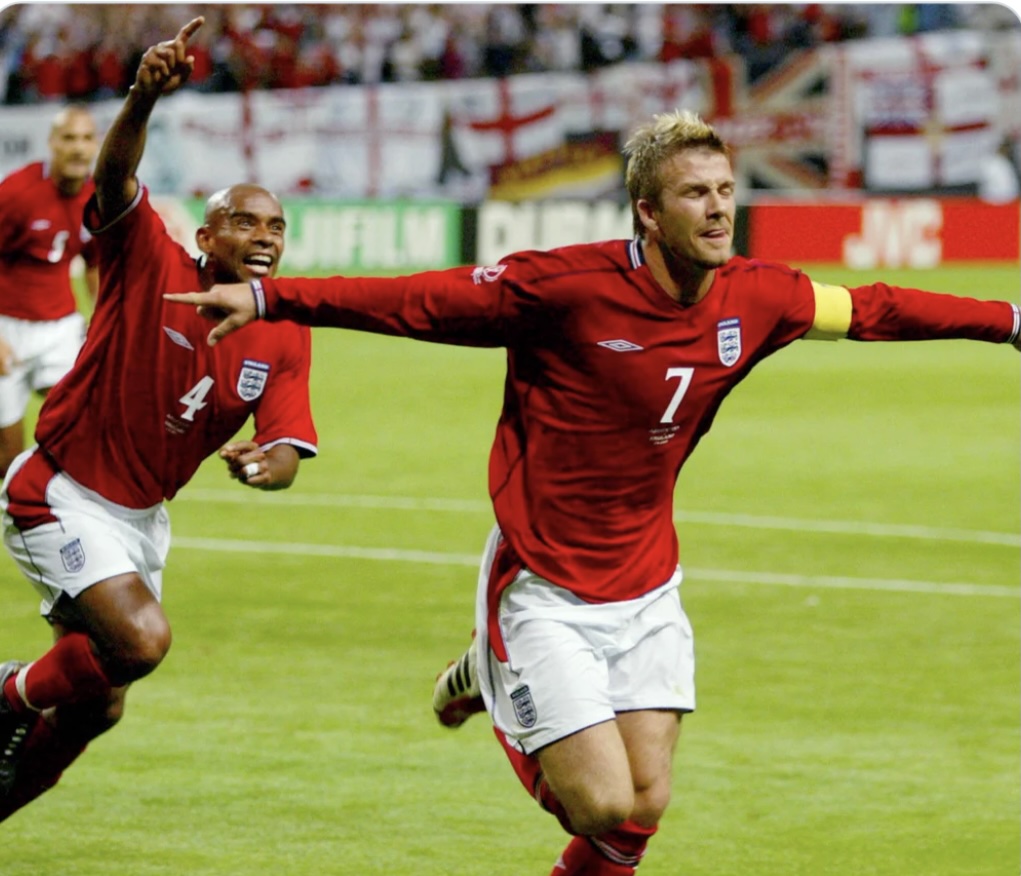
After a 0-0 friendly draw at Wembley in 2000, England and David Beckham had a chance to settle the score with Argentina at the 2002 World Cup.
The group match in Sapporo was of particular importance as England had drawn with Sweden in their opener and needed a win to boost their chances of advancing.
Just before halftime, Michael Owen was fouled by Mauricio Pochettino inside the box. Beckham calmly converted the penalty, scoring the only goal of the match.
This time, both Beckham and Simeone played the full 90 minutes, even shaking hands during the game, somewhat easing the previous tensions.
Despite late pressure, England held on to secure the victory and qualify for the knockout stage. Meanwhile, Argentina were eliminated in the group stage for the first time since the 1962 World Cup.


Wonderfulshortvideo
BARCELONA REVENUE barcelona news today


Lashed home by Kieffer Moore ☄️
The saxophones are getting louder for Preston here…
When football is simple but beautiful 😍
Cristiano Ronaldo is back on the quest for 1,000 goals, and these are his 977th and 978th goals.
messi argentina retirement messi retiring messi edit
The Swans go TOP of the Championship 🦢
 Links
Links
 Contact
 App
App


