



World Cup on Home Soil: VAR and Human Judgment



As the 2026 World Cup quarterfinals wrapped up, what viewers discussed most wasn't Messi, Mbappe, or Haaland, but the referees' rulings. In England's 2-1 win over Norway, two decisions sparked debate: one Norway goal was ruled out for a preceding foul, while another England goal stood despite the ball touching a cable hanging above the pitch.
In the Argentina-Switzerland match, drama ended almost as soon as the referee showed a second yellow card to send off Breel Embolo. All three incidents involved technology: the sensor inside the ball for England's goal, and VAR for the other two calls.
The irony is that these tools were designed to eliminate controversy, yet at this World Cup, they are generating even more. Technology records events with great precision. But the interpretation, the final verdict, and even the potential for exploitation still rest with humans.
VAR was introduced from a reasonable premise: football, a sport over 160 years old, cannot afford clear mistakes ruining matches. Technology answers factual questions well: whether the ball crossed the line, who touched it last. However, most controversial calls—fouls, penalties, handballs—involve judgment and rule application, areas where even top experts can disagree.
FIFA's head of refereeing, Pierluigi Collina, once acknowledged that VAR must adapt to how the match is officiated on the field: if the main referee tends to downplay disputes or fouls, VAR should follow that same standard. Finding a balance for consistency has never been easy. In other words, having more visual evidence does not guarantee more agreement. The more data available, the more human decisions are scrutinized—not eliminated.
A Serie A match in February between Juventus and Inter Milan illustrates the issue. A Juventus player lightly touched an opponent, who then feigned injury. The referee issued a yellow card—a second yellow—and the Juventus player was sent off early. Ideally, VAR could have corrected this, but at the time the rules prevented VAR from reviewing a second yellow card. Later, when the rule was changed, not everyone was satisfied: Serie A's head of refereeing, Gianluca Rocchi, warned against overusing technology, adding that such incidents would be rarer if players focused on the sport and played fairly instead of trying to deceive officials.
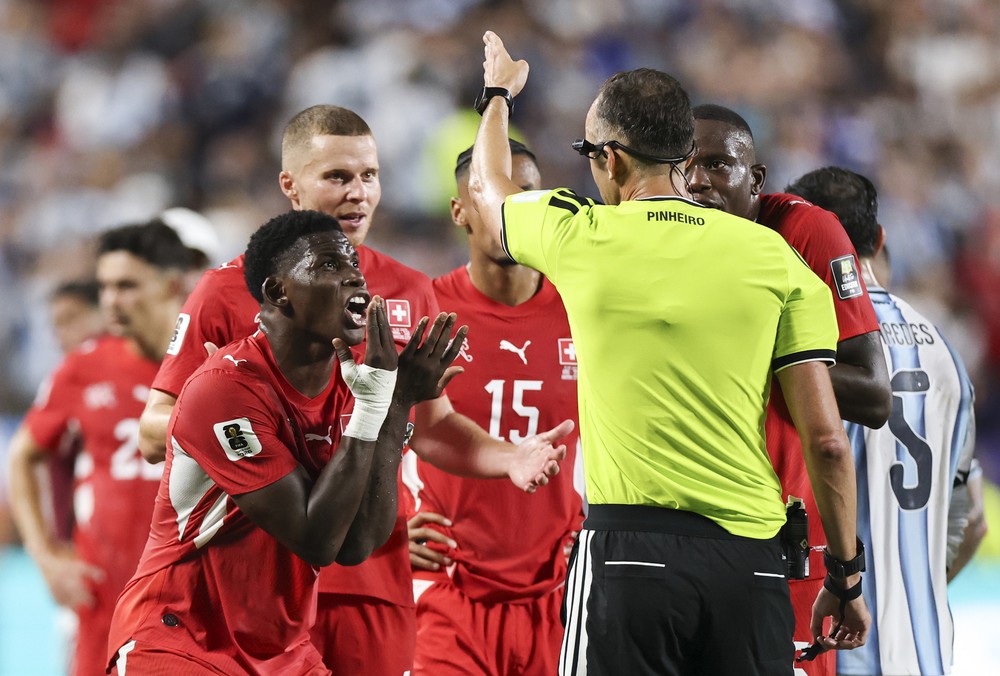
Breel Embolo (left) was sent off by the referee in the Argentina-Switzerland quarterfinal after VAR consultation. Photo: Xinhua/TTXVN
That provides an important lesson for any football nation: adjusting rules or adding technology only addresses the surface. The root lies in players' on-field conduct—whether they dive, respect opponents and referees—and in the referee's composure and consistency. Moreover, even when the system works correctly, it can erode trust without transparency, as seen in the Qatar-Switzerland match, where FIFA later confirmed VAR followed proper procedure, but the display screen malfunctioned.
Looking more broadly, referee controversies have never been exclusive to the VAR era. The "Hand of God" in 1986, Frank Lampard's ghost goal in 2010, and referee Byron Moreno's questionable decisions against Italy in 2002 all occurred without technological assistance. This shows the core issue is not whether VAR exists, but the professional ability, courage, and integrity of the officials, combined with the players' respect for the rules—and even that of those outside the pitch.
This is the bottleneck that many aspiring football nations—including Vietnam—must confront directly. It is easy to fall into the illusion that simply investing in technology, installing cameras, and purchasing VAR systems will instantly upgrade refereeing quality and the entire football ecosystem. But technology does not create the courage to make calls under crowd pressure, does not foster players' respect for the rules, and may not even guarantee trust from the stands.
Improving referee competence and building a culture of respect for the rules in football does not have to wait until enough money is available for technology. It can start immediately—through training, transparent evaluation mechanisms, and strict penalties for unsportsmanlike behavior from both players and coaching staff. In other words, before "upgrading" player quality, why not "upgrade" referee standards and attitudes on the pitch?
The 2026 World Cup shows that controversies or errors do not disappear even at the highest level. Yet, on the field, we still see acceptance from those involved in the game. That may be the product of a mature football culture: knowing how to accept mistakes, learning to adapt, and not blaming the machine for everything.


Wonderfulshortvideo
BARCELONA REVENUE barcelona news today



Lashed home by Kieffer Moore ☄️
The saxophones are getting louder for Preston here…
When football is simple but beautiful 😍
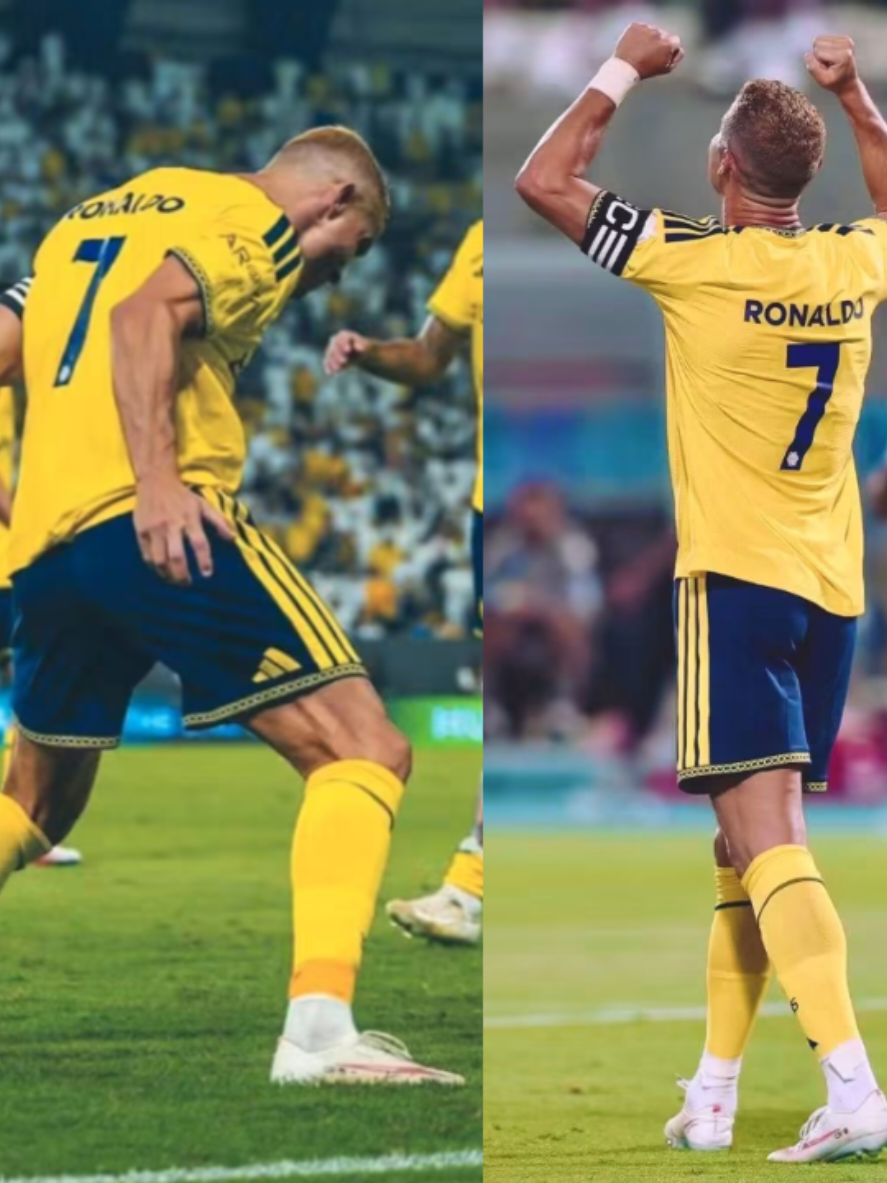
Cristiano Ronaldo is back on the quest for 1,000 goals, and these are his 977th and 978th goals.
messi argentina retirement messi retiring messi edit
The Swans go TOP of the Championship 🦢
 Links
Links
 Contact
 App
App


