



A destined showdown, from a first meeting in a bathtub to a reunion in the final, 19 years in the making



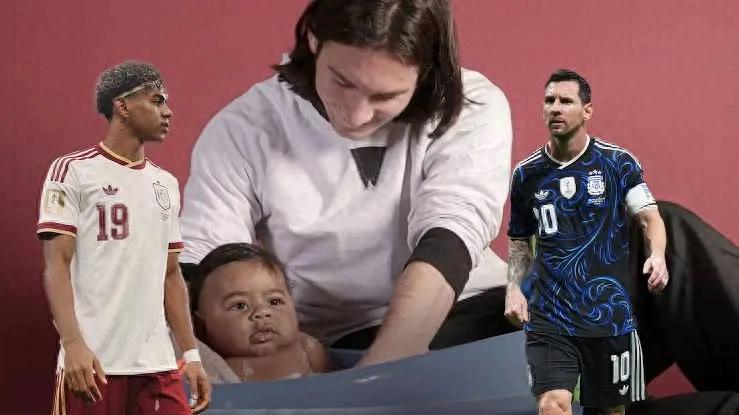
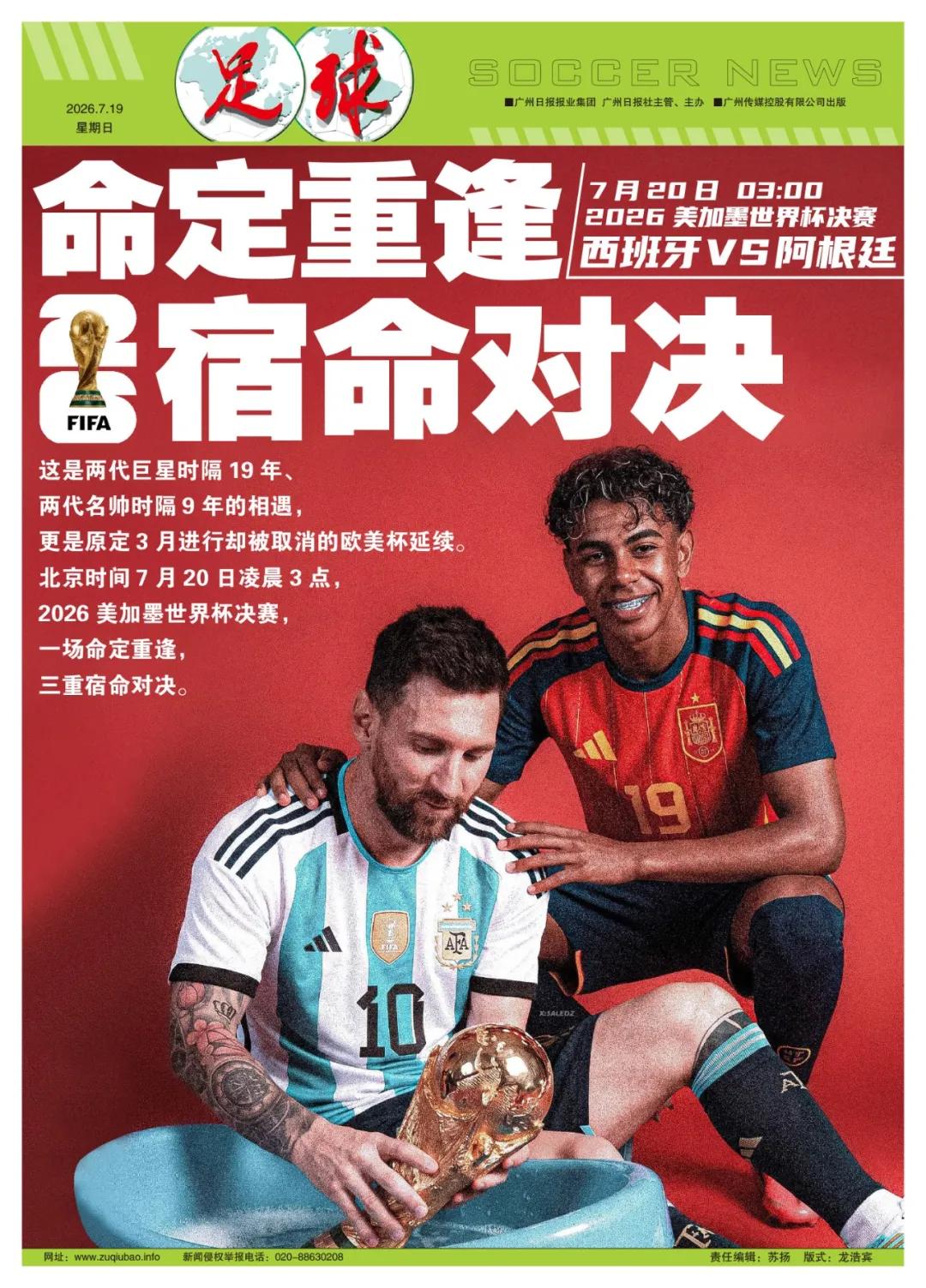
Written by Han Bing In 2007, Messi, while shooting a New Year charity calendar, held the infant who would become Spain's sensational young talent, Yamal, now his opponent at MetLife Stadium. And Scaloni, aiming to lead Argentina to a consecutive World Cup triumph, will face his former teacher from the UEFA A-level coaching course, De la Fuente, in the final. This marks a reunion of two generations of superstars after 19 years, and two generations of top coaches after 9 years. It is also the continuation of the postponed Euro–America Cup, originally scheduled for March but canceled. At 3:00 AM Beijing time on July 20, 2026, the 2026 World Cup final in the United States, Canada, and Mexico—a destined reunion, a triple fateful confrontation.

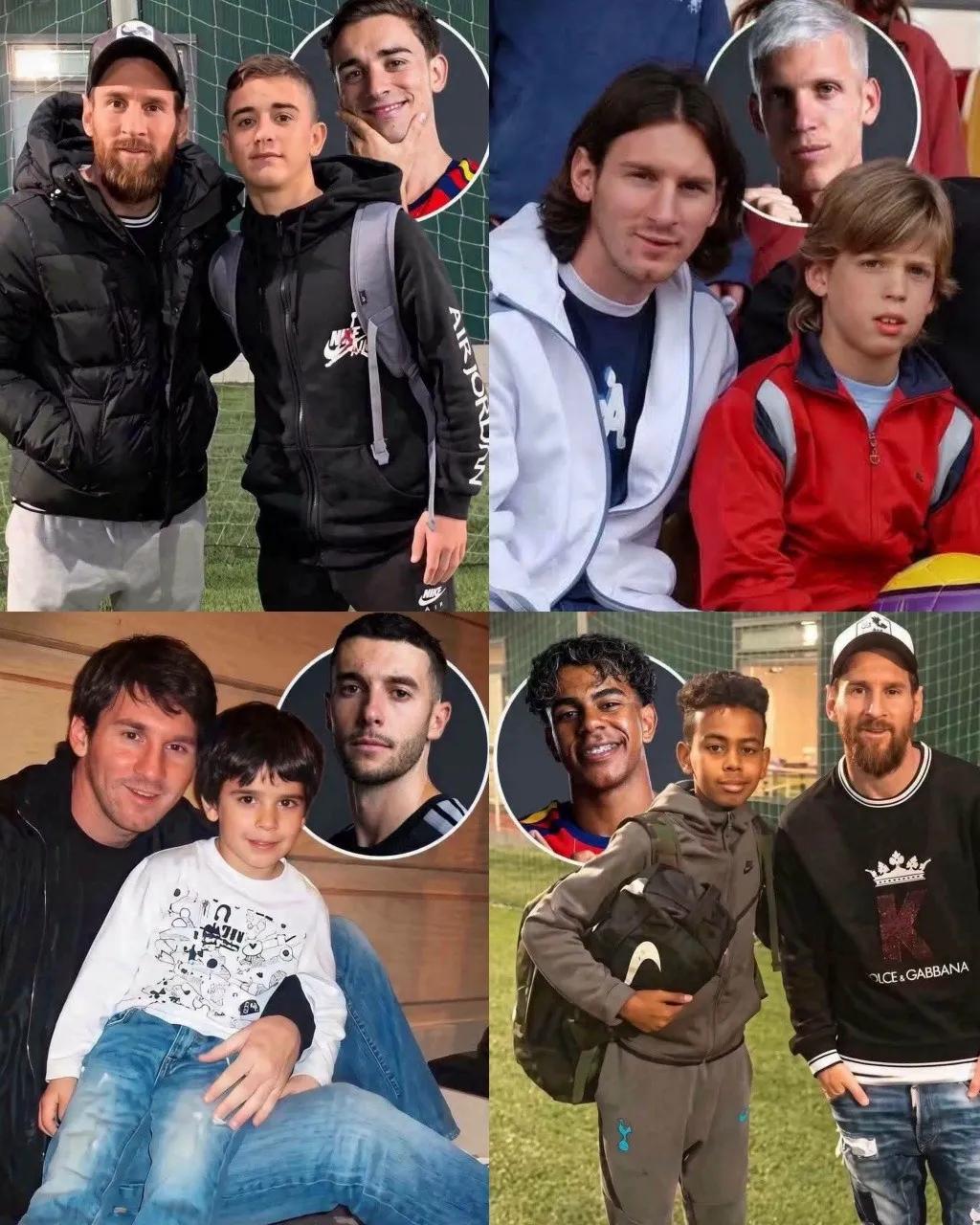
“Who would have thought that I took a photo with him when he was just a baby, and now we are facing each other in a World Cup final? It’s really crazy.” Before the final, Messi spoke about the now-famous “bathtub derby” that fans are buzzing about.
The creator of that iconic image—Catalan photographer Monfort—also marvels at fate’s strange arrangement. He was representing *Diario Sport* to shoot a charity calendar for UNICEF, Barcelona’s long-term charity partner. Initially, he thought the lucky child paired with Messi would be around his daughter’s age. But the chosen couple, Munir and Sheila, brought a baby only a few months old. Having never photographed an infant, Monfort recalled his daily interactions with his own daughter and came up with the idea of a bathtub and rubber ducks. “The next day, I brought all those props to the locker room at Camp Nou.” And thus, the first frame of two generations of superstars was captured.
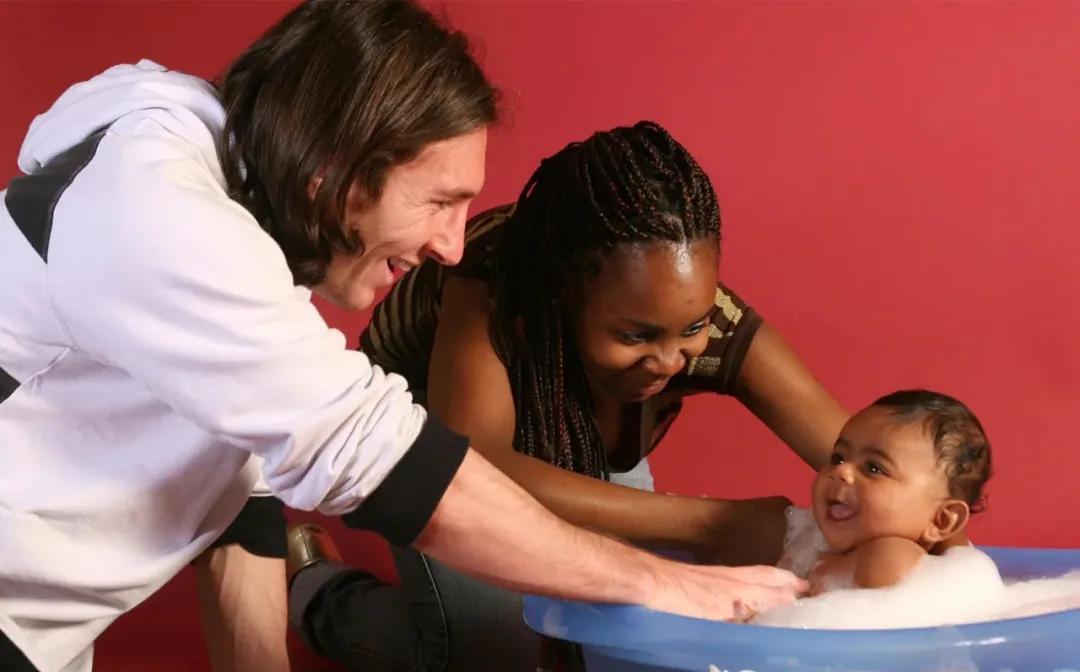
“Leo was shyer back then than he is now,” Monfort recalled. It was Yamal’s mother, Sheila, who stepped in to help the 20-year-old Messi relax. Until the last European Championship, Yamal’s father, Munir, posted the photo with the caption “The beginning of two legends,” and the world marveled at fate’s magic. Yamal’s national teammate, Merino, also called the coincidence “unbelievable,” saying, “The first time I saw it, I thought it was AI-generated.”
Even more coincidentally, the 18-year-old Yamal scored his first World Cup goal while wearing the No. 19 jersey—just like Messi 20 years ago, matching both age and number. Spain’s coach, De la Fuente, has compared Yamal to Michelangelo or Dalí. At just 19, Yamal has already made 151 appearances for Barcelona, won three La Liga titles, and claimed the European Championship at 17. Even Messi, at the age of 19, had only made 34 appearances for Barcelona and scored 9 goals. Yamal’s career has been a winning start, which Barcelona fans see as a kind of legacy.
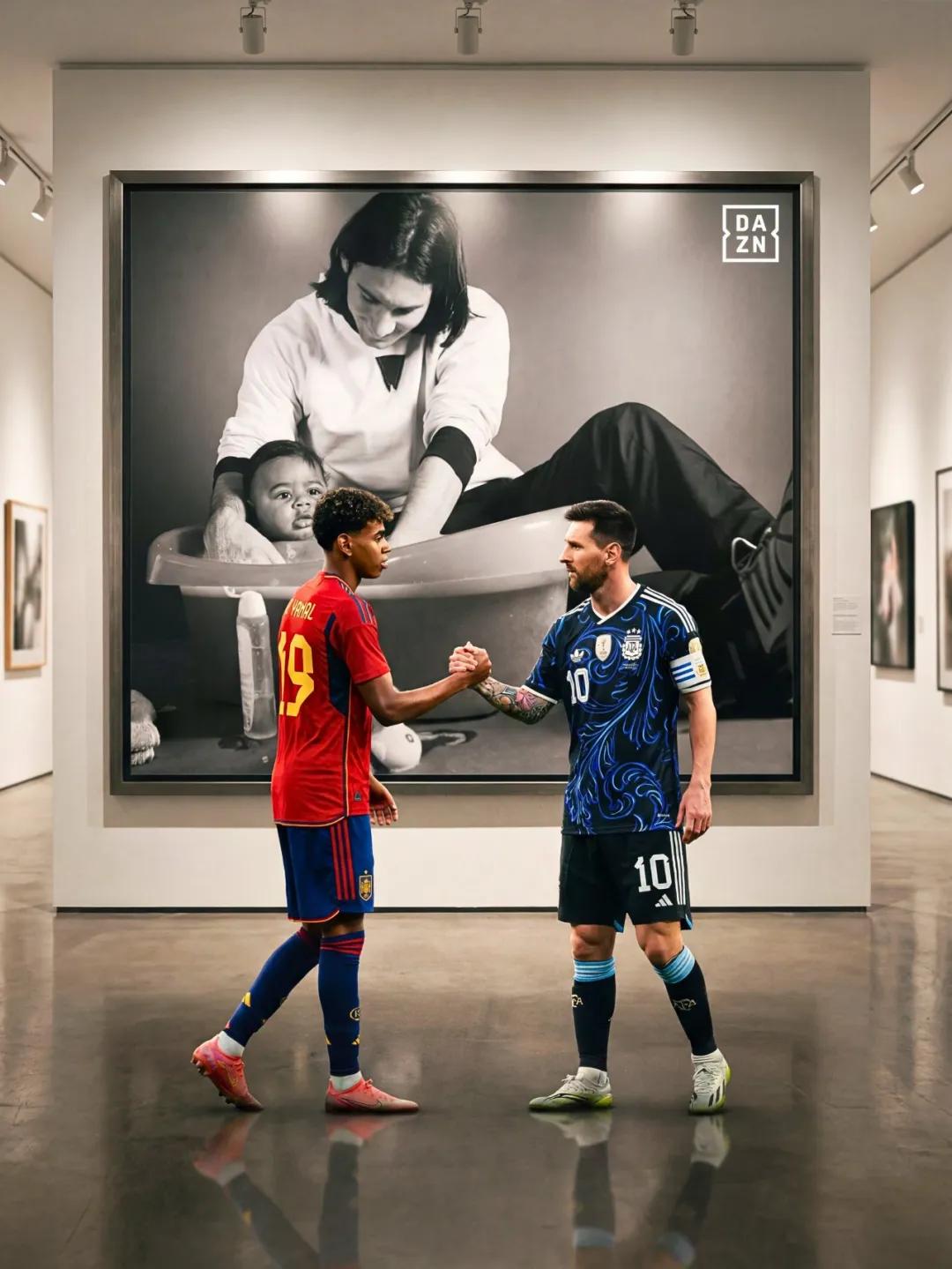
Messi himself gave high praise to the younger player: “I’ve been following him because he plays for the club I love. He’s already one of the leading figures in world football. He’s only 19, his career is just beginning, and he has a bright future. He has a great chance to make history—but of course, we will do everything to stop him from winning this time.”
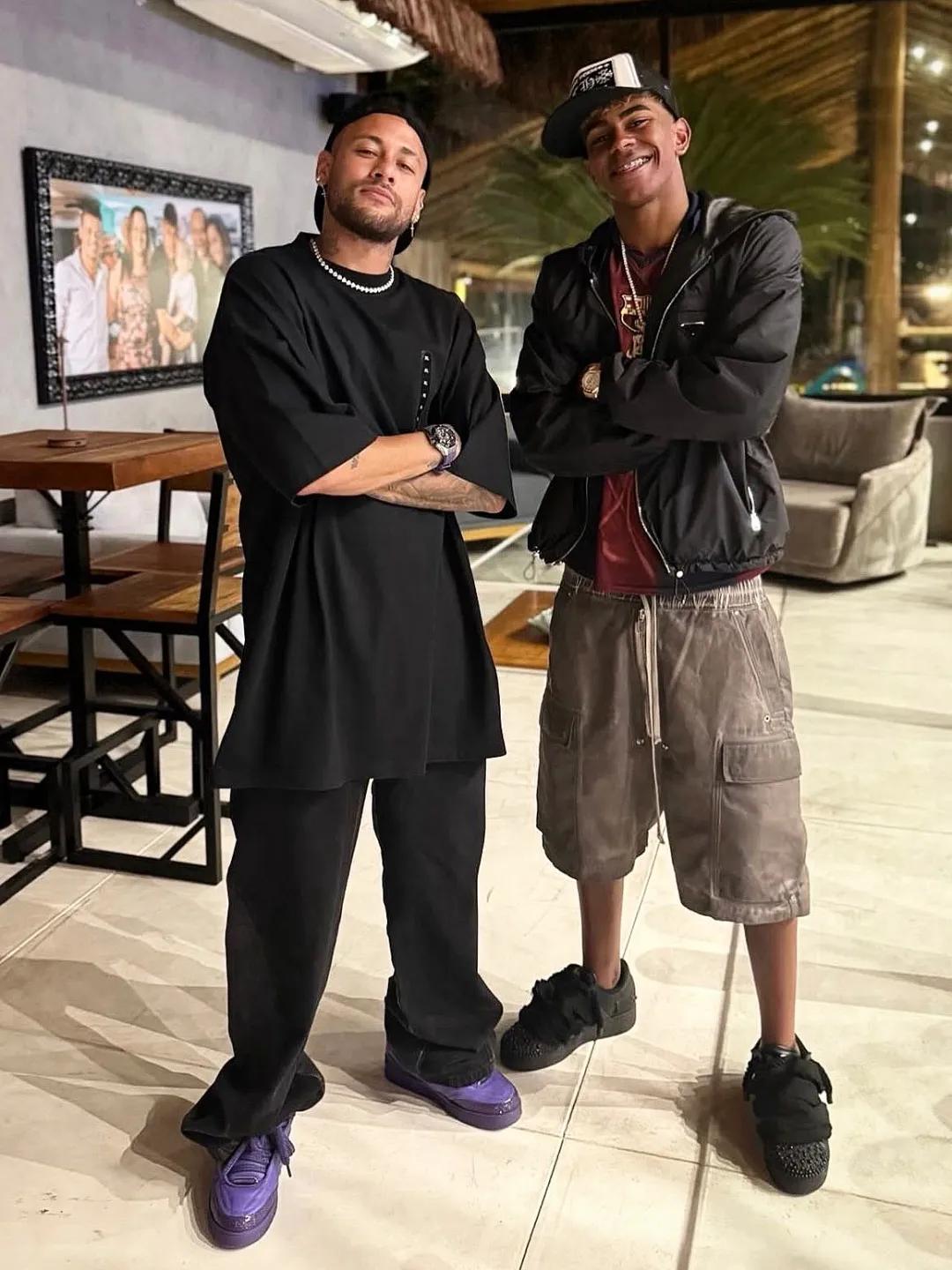
Although Yamal has repeatedly said “Messi is the GOAT,” he doesn’t hide his preference for Neymar. From watching Neymar’s dribbling skills at Santos on TV when he was five or six, to seeing the Brazilian’s dazzling performances live at Camp Nou for the first time at age seven, Yamal has been learning and imitating Neymar’s style, even obsessing over the “rainbow flick.” Last summer, he visited his idol, and during this World Cup, he expressed several times his wish to meet his idol in the final. Although Brazil was eliminated early, he still received a birthday gift from Neymar.

The matchup is not just about the reunion of the two team stars; the two coaches also share a deep connection.
Nine years ago, the training course Scaloni took to obtain his UEFA A-level coaching license was taught by De la Fuente. Scaloni was De la Fuente’s student. The Spanish veteran coach recalled that Scaloni “always sat in the front row, curious, asking questions, debating—very active.” At the graduation ceremony in January 2018, Scaloni even put his arm around his teacher for a photo. Scaloni became Argentina’s new coach at the end of 2018, while De la Fuente didn’t take over Spain until 2022.
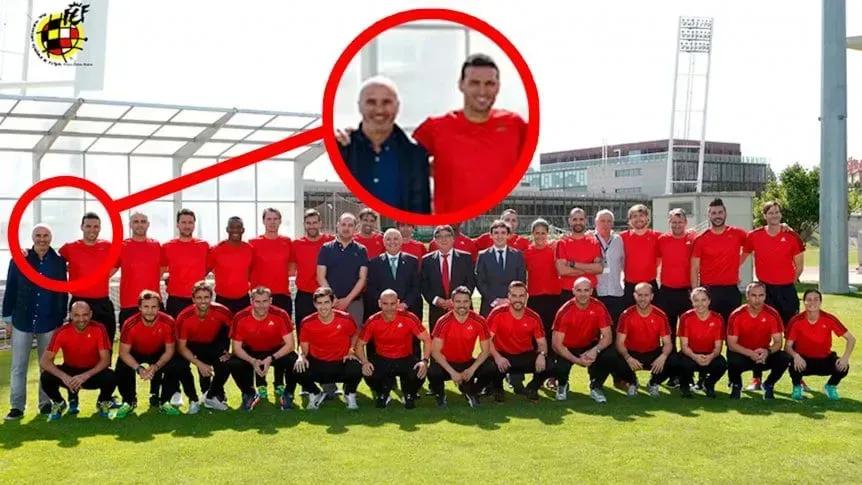
This World Cup final is a cross-generational clash between two superstars, a battle between teacher and student, and a showdown between the champions of Europe and the Americas for the title of “king of kings.” The match was originally supposed to take place four months earlier in Doha—but that Euro–America Cup was postponed due to the situation in Iran, and UEFA eventually canceled it. The World Cup final has become a “continuation” of the Euro–America Cup in New Jersey—isn’t that another twist of fate?
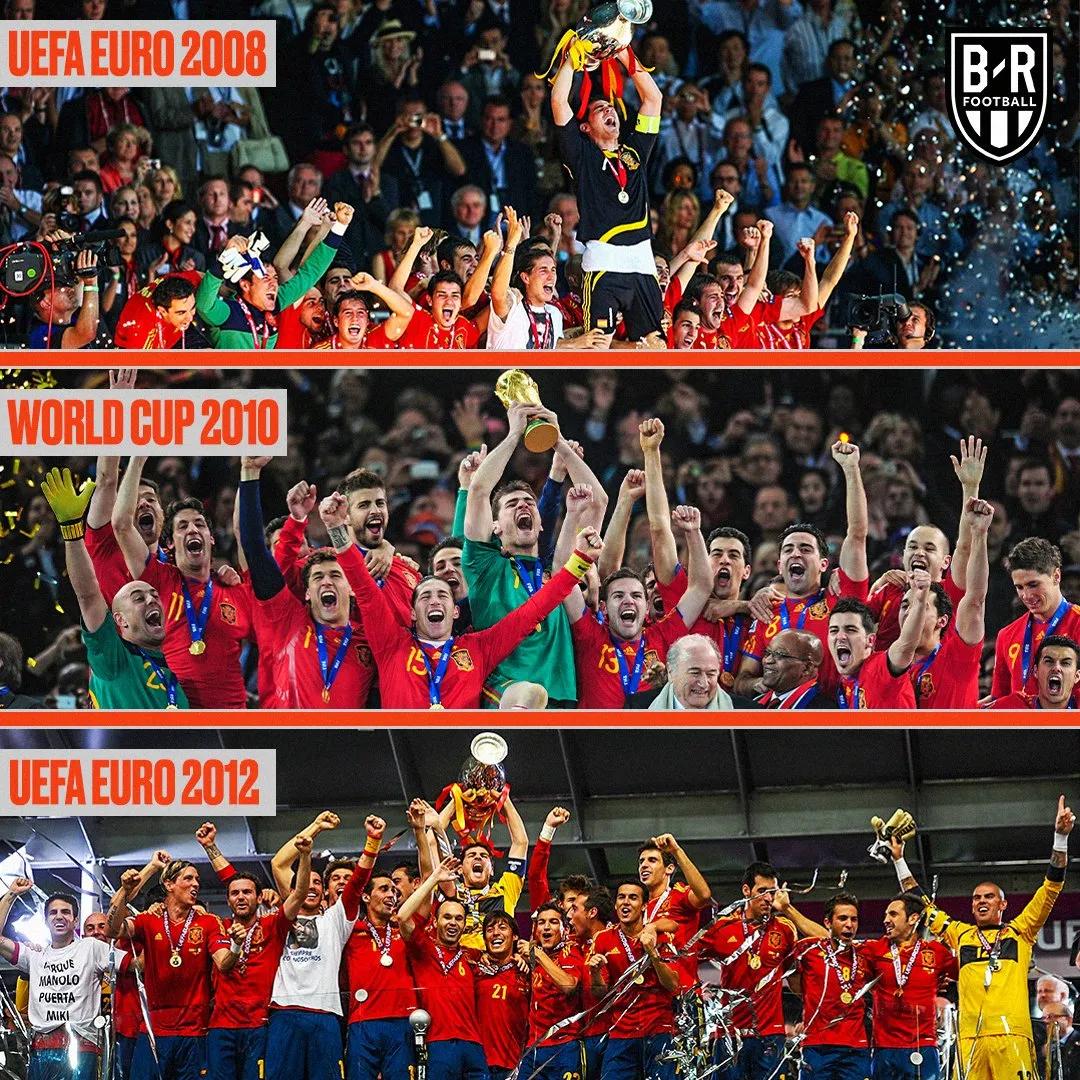
Only five times in history has a European champion reached the subsequent World Cup final: Italy in 1970, West Germany in 1974 and 1982, and Spain in 2010 and 2026. Of those four previous European champions, two won and two lost. West Germany in 1974 and Spain in 2010 won both the European Championship and World Cup consecutively, while the other two fell in the final.
The Copa América champion has also reached the following World Cup final five times: Argentina in 1930, Brazil in 1950, 1958, and 1998, and again Argentina in 2026. Only Brazil in 1958 managed to win both major titles consecutively. This time, the European and Copa América champions each enter the World Cup final for the fifth time—but it is the first time they meet in the final. It is also the first time since the inaugural 1930 World Cup final between Uruguay and Argentina that both finalists share the same official language.
The calendar featuring Messi bathing baby Yamal captured the start of Spain’s “golden era,” when they won the European Championship for the first time in 44 years and began a run of three consecutive major titles. Now, Spain has won the European Championship again after 12 years, and they hope to define a new “golden generation”—Yamal, Pedri, Rodri, Oyarzabal, Olmo, and others—with the World Cup trophy, just like Iniesta, Xavi, Busquets, and Piqué did back then. This is also a celebration for Barcelona fans, as the final features nine La Masia graduates—matching the number from Spain’s 2010 title-winning squad—eight from Spain and one from Argentina: Messi.

Spain’s training on the morning of the 18th was canceled due to a thunderstorm warning, forcing the players to train in the gym. Meanwhile, 10 kilometers away, Argentina’s training was also delayed, and a lightning rod on the training field even “absorbed” a bolt of lightning. The final on the 19th could be postponed due to thunderstorms, tornadoes, and smoke from Canadian forest fires. As for the halftime show, which was shortened from 30 minutes to 17, its impact on the finalists is almost negligible.
The final referee is Slovenian Vincic. At the 2022 World Cup, he officiated Argentina’s shocking 1–2 loss to Saudi Arabia in their opening match. In his five World Cup matches, three South American teams failed to win under his watch. In contrast, Spain has played five matches under his officiation, with three wins and two draws, remaining unbeaten. Those matches include a 2–2 friendly draw with Colombia in June 2017 (when Colombia was coached by Argentine legend Pekerman), three matches at the 2021 and 2024 European Championships (Spain 2–1 Italy in the group stage, 2–1 France in the semifinal), and most recently the 2023 Nations League semifinal, where Spain beat Italy 2–1.
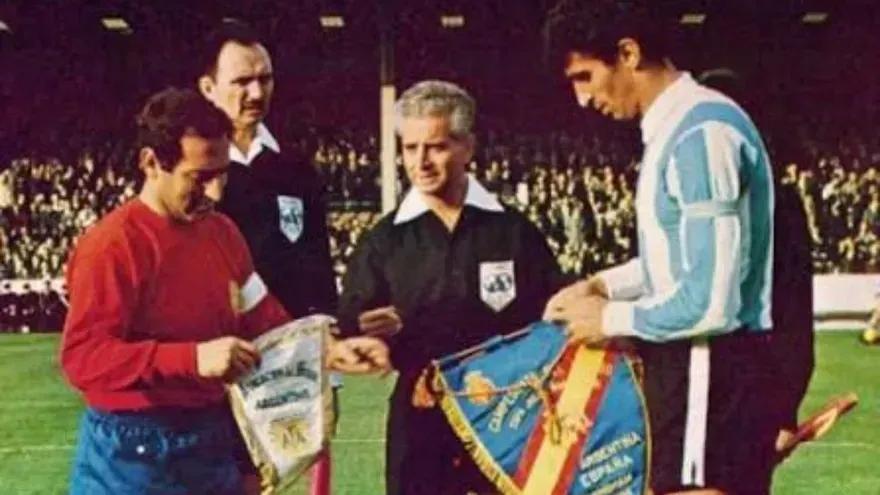
Spain has conceded only one goal in seven matches during this tournament. If they keep a clean sheet against Argentina in the final, they will set a new record for the best defensive performance in a World Cup. Previously, the Netherlands in 1974 and Germany in 2002 each conceded only one goal, but Spain has played one more game, making it more difficult. The two teams have only met once in a World Cup—in 1966, when Argentina beat Spain 2–1 at Villa Park. The other 13 matches have been friendlies, with each team winning six and drawing two, a balanced record. Although the most recent meeting was in 2018, a 6–1 thrashing by Spain, times have changed.
Although neither team has serious injuries, Scaloni admitted that some players are not at 100% fitness, including goalkeeper Dibu Martínez, who revealed at the pre-match press conference that his hand has been hurting. Argentina also need not worry about suspensions for Lo Celso and Lisandro Martínez. After winning the 2024 European Championship, Spain’s Morata and Rodri were banned for one match by UEFA for singing “Gibraltar is Spanish” during the victory parade, but FIFA has no precedent for suspending players over such incidents. FIFA is evaluating the match report, but the expected penalty is at most a fine of $30,000.
Scaloni may adjust the starting lineup: Molina could be replaced by River Plate right-back Montiel, Julián Álvarez is likely to start again, and De Paul will have to compete for his spot. On Spain’s side, De la Fuente will largely keep the same lineup from the semifinal, with one possible change: Nico Williams starting in place of Baena.


Wonderfulshortvideo
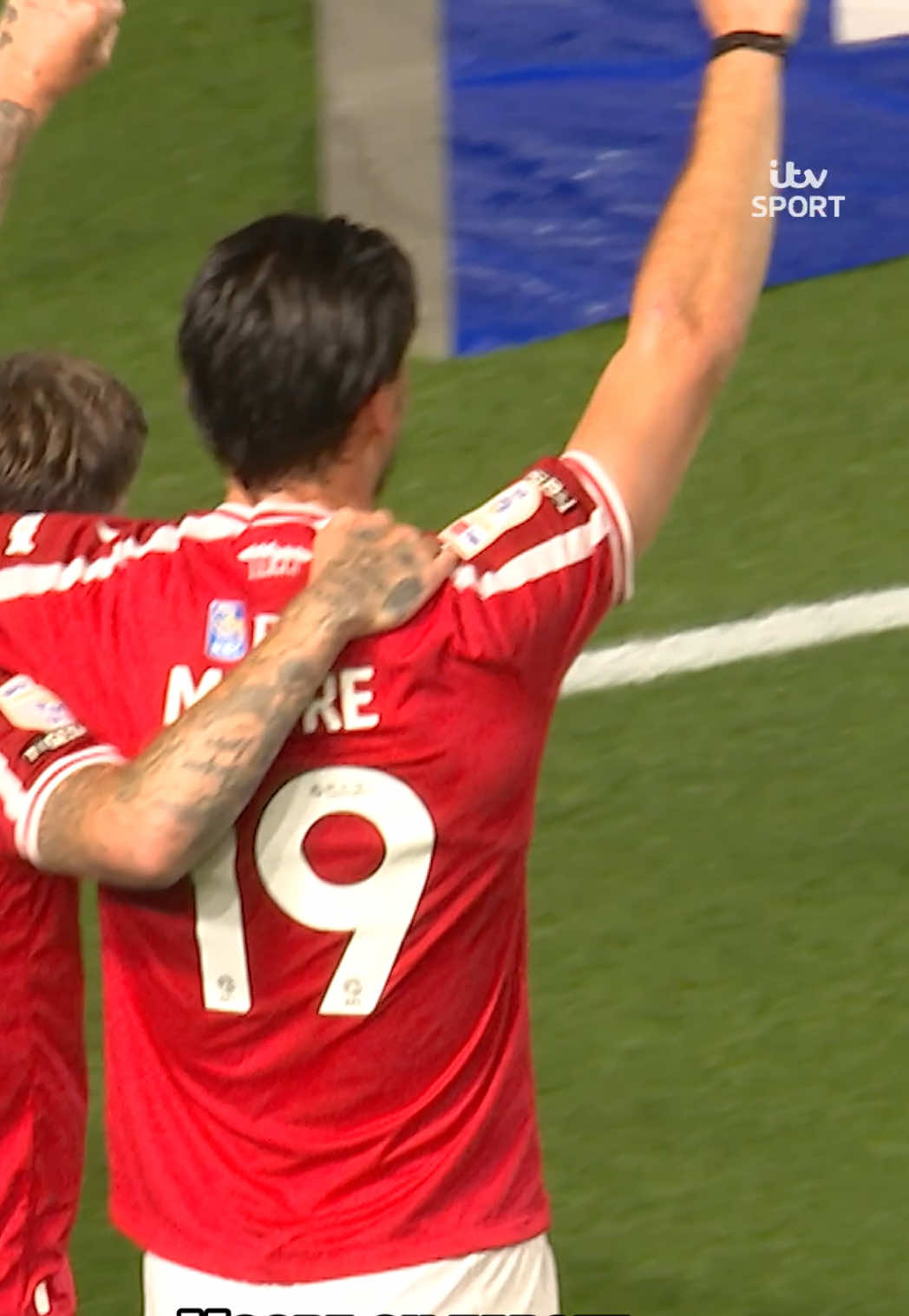
Lashed home by Kieffer Moore ☄️


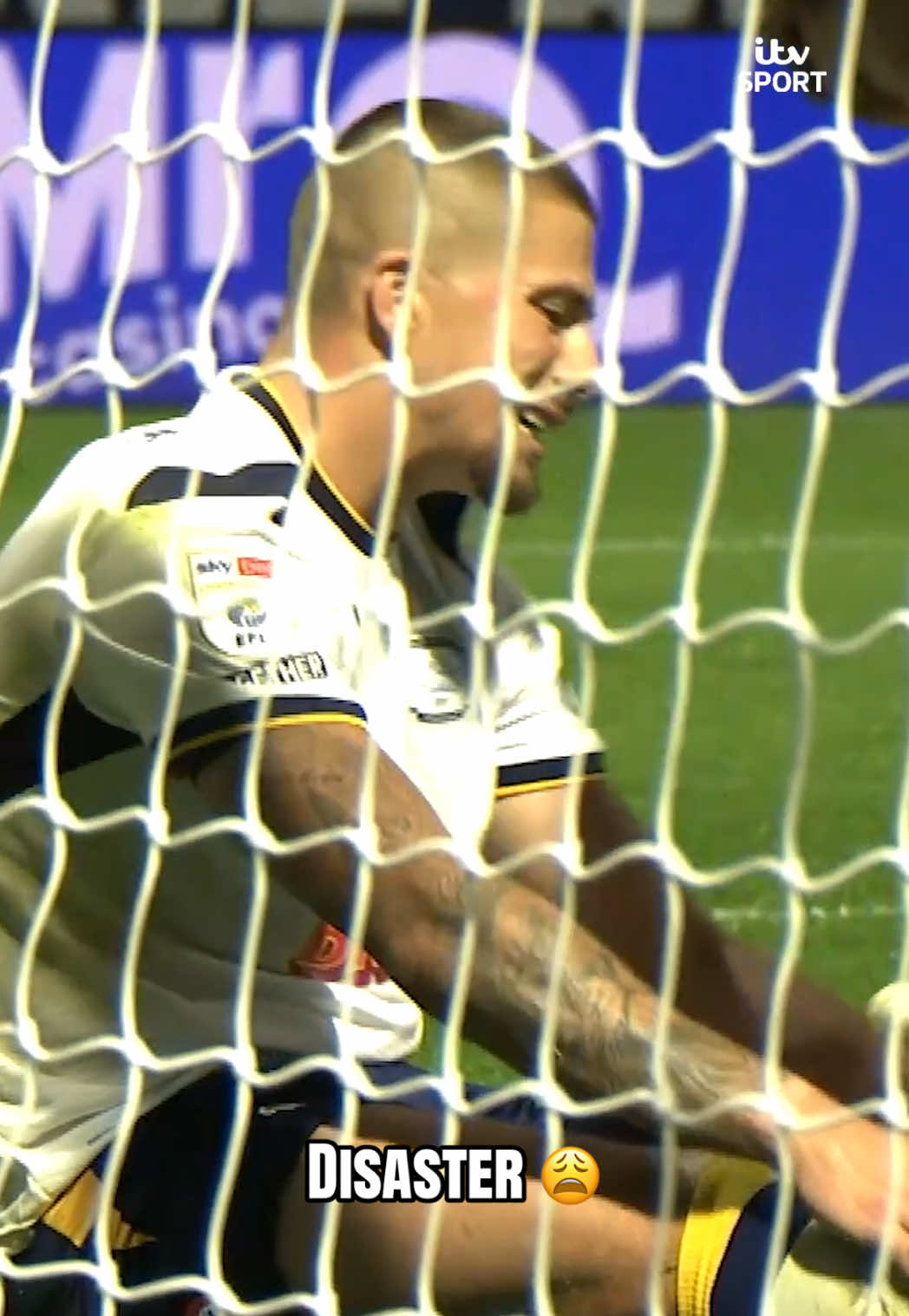
The saxophones are getting louder for Preston here…
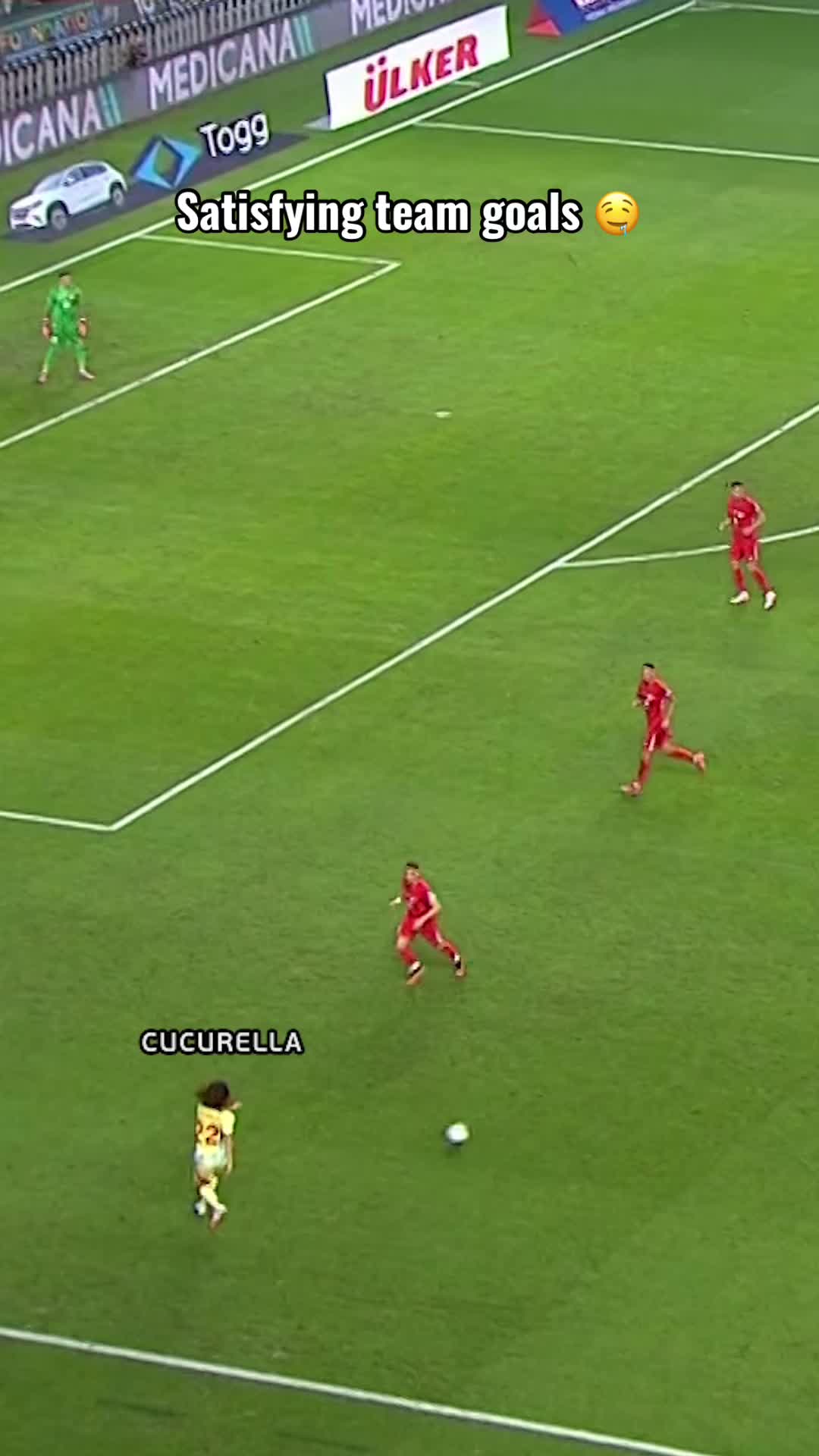
When football is simple but beautiful 😍
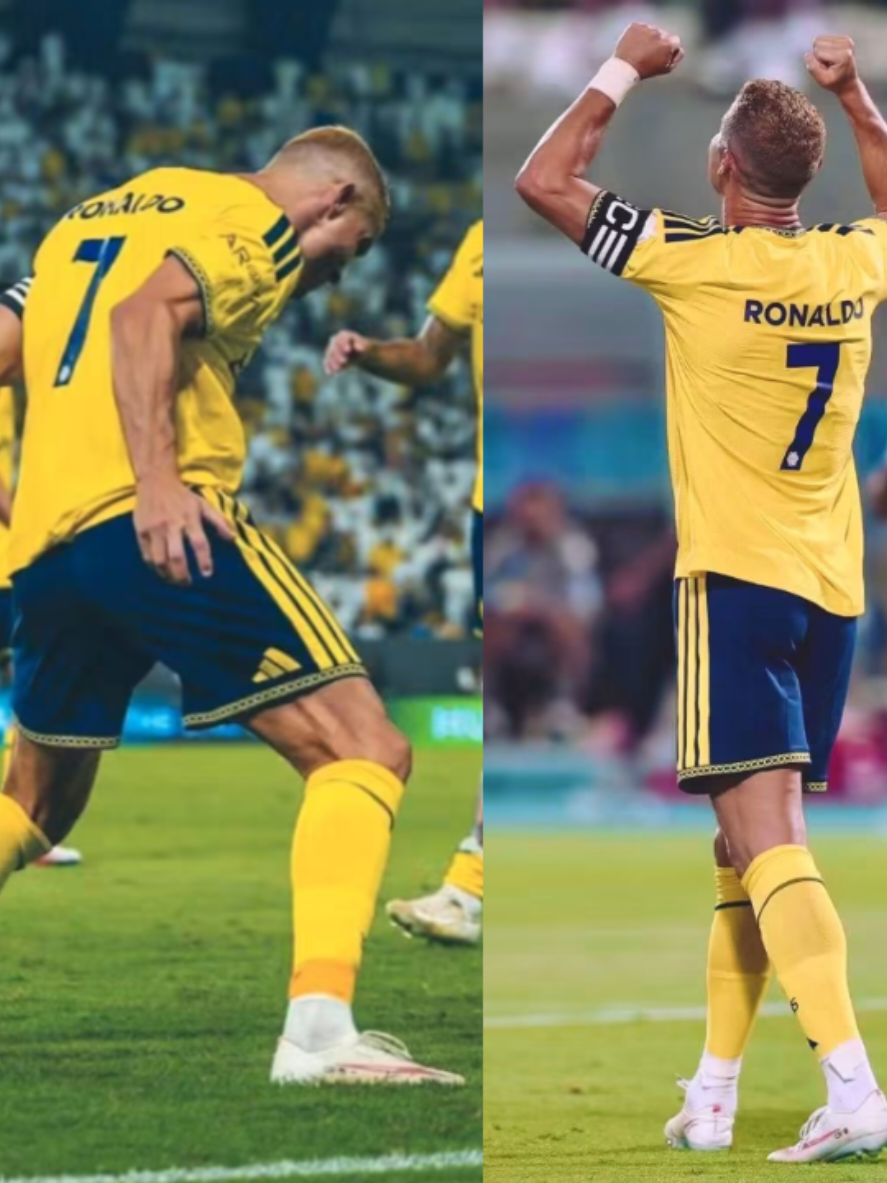
Cristiano Ronaldo is back on the quest for 1,000 goals, and these are his 977th and 978th goals.
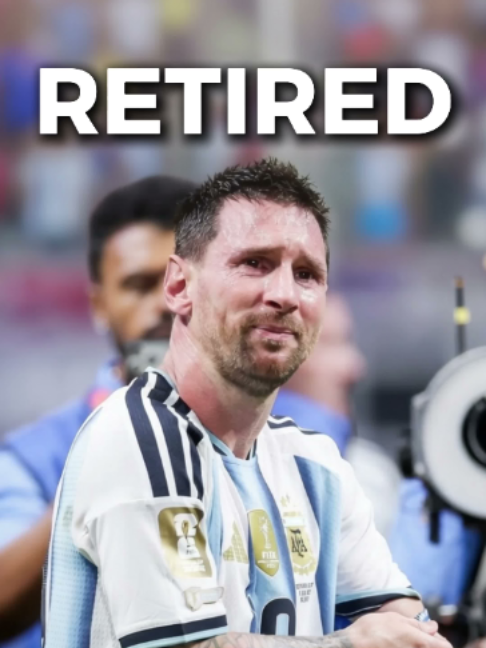
messi argentina retirement messi retiring messi edit
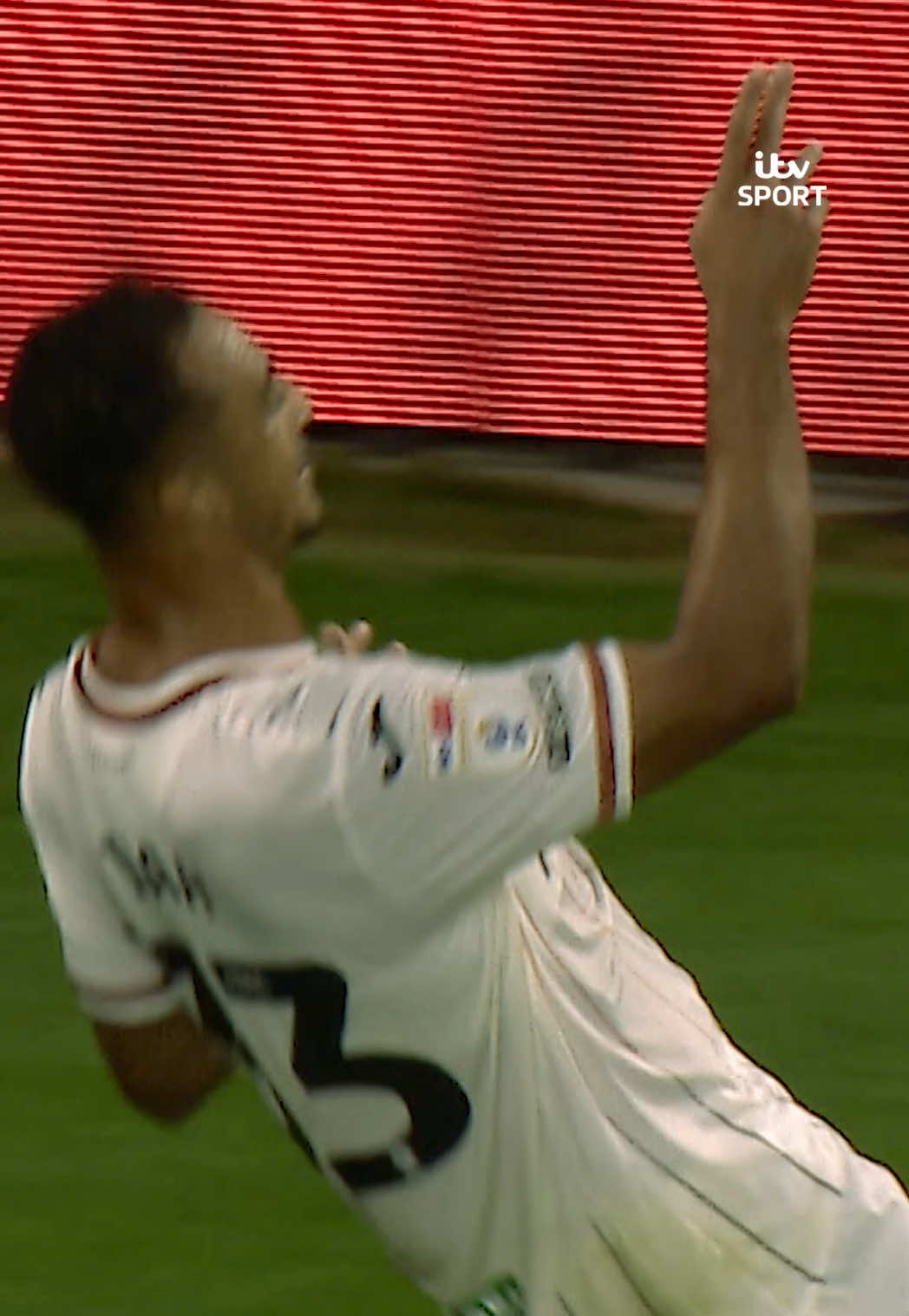
The Swans go TOP of the Championship 🦢
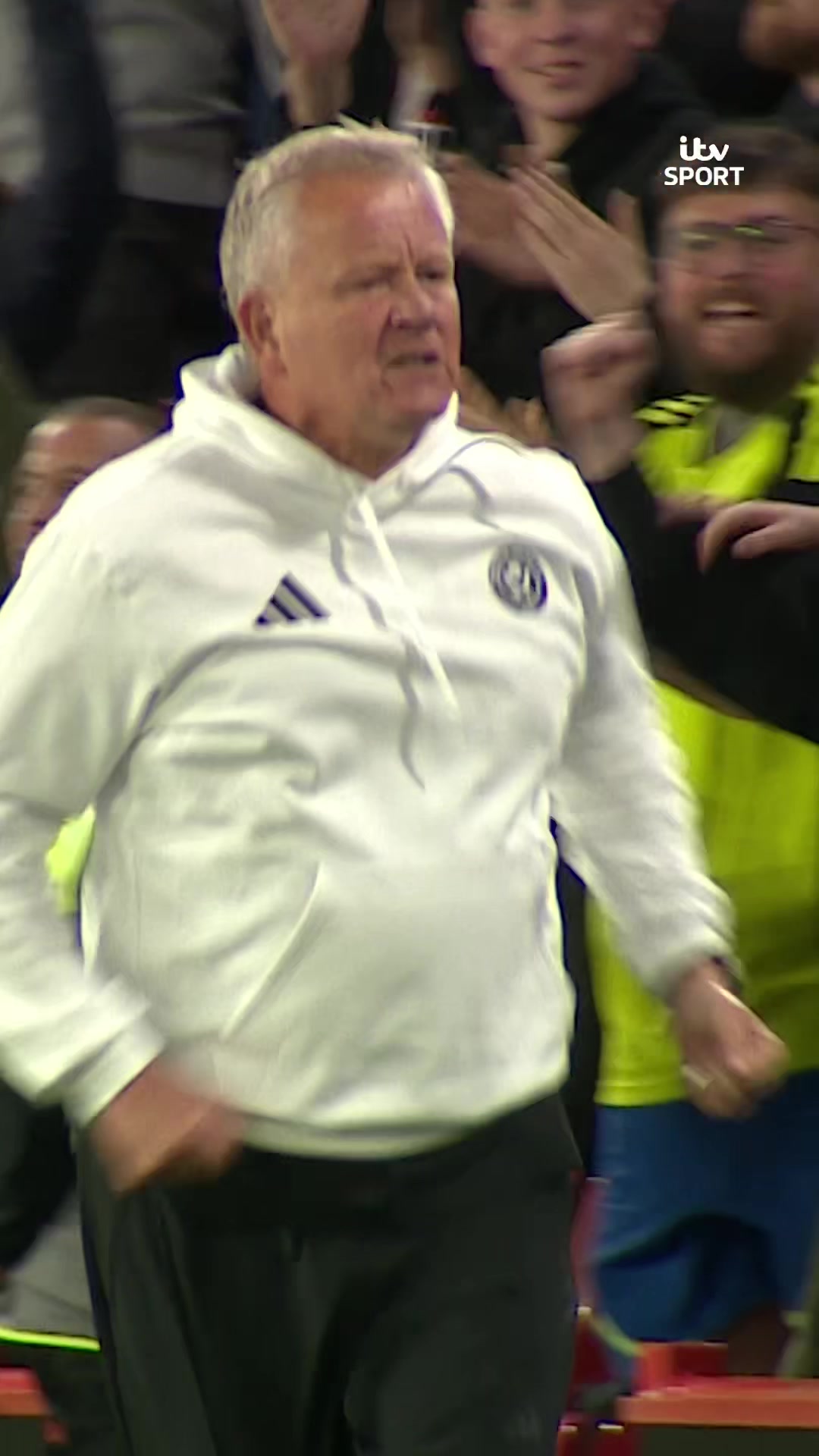
Sheffield United’s Romelle Donovan with an added time WINNER that sent Bramall Lane wild 🔥
 Links
Links
 Contact
 App
App


