



The 48-team World Cup has concluded, revealing the logic behind expansion and the limits of profiteering



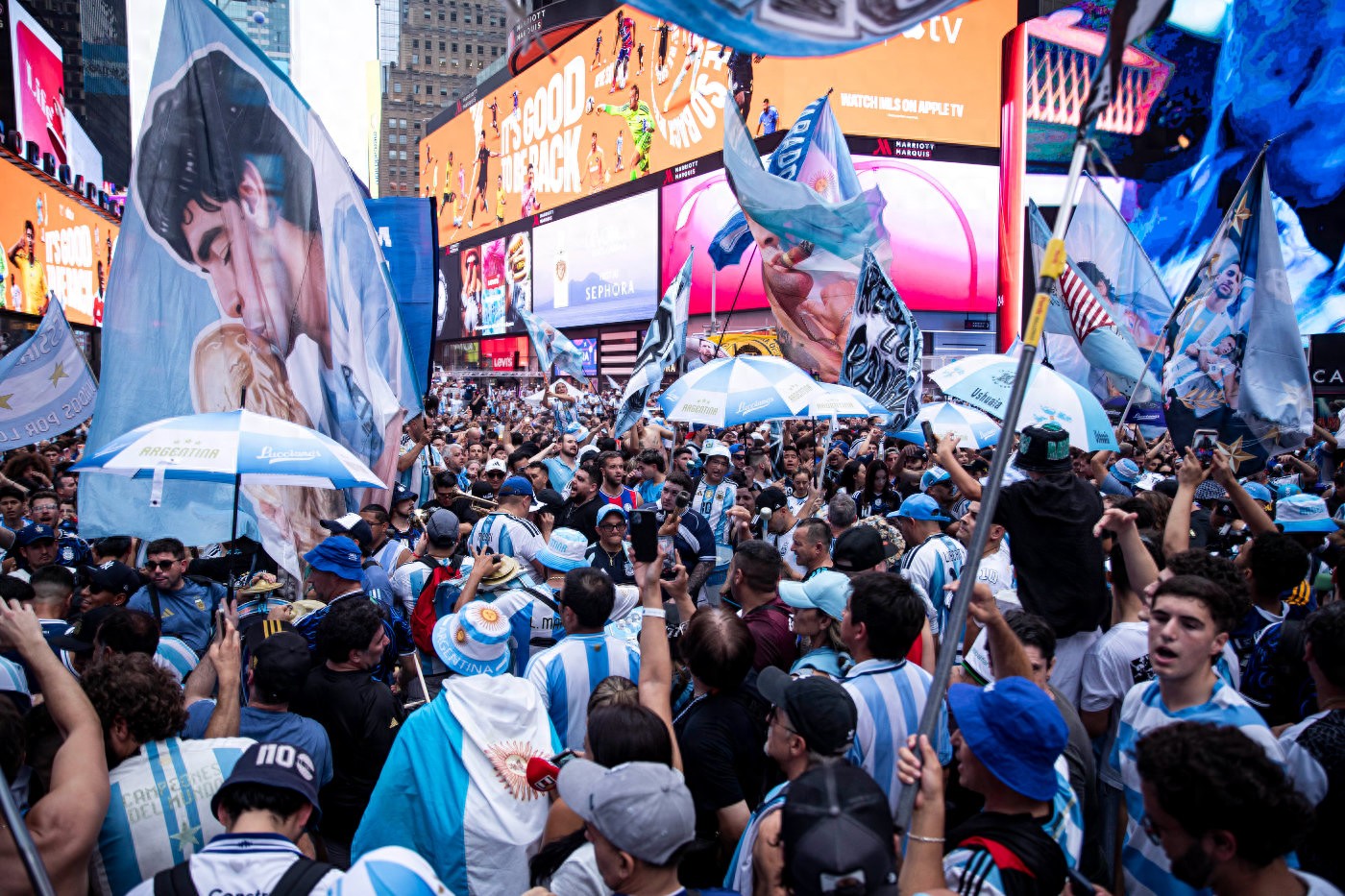
Written by Han Bing Was the first expanded 48-team World Cup in the United States, Canada, and Mexico a success? Shortly after the semifinals, FIFA President Gianni Infantino was quick to "pop the champagne early," announcing the tournament as a huge success. He cited the smooth completion of matches without major safety issues, record-breaking total audience numbers and attendance rates, and new revenue highs for FIFA and the hosts. However, what’s the real story?
In reality, the tournament has drawn more attention to the increasing number of naturalized players due to expansion and the growing imbalance in football development across continents. Also, there’s the issue of the "scorched-earth" approach in North America, which pushed World Cup profitability to its limits, raising questions about how such an unprecedented scale of hosting and revenue generation can be sustained. Moreover, blinded by greed, Infantino, riding on the massive profits of the North American World Cup, immediately initiated discussions on further expanding the tournament to 64 teams...
When the commercial value of the World Cup takes precedence over its competitive value, and expansion continues despite the economic disparities between continents, as criticized by The Guardian: Are we attending a football World Cup, or a 39-day, all-encompassing commercial marketing campaign?
More teams, bigger gaps
The original intention of World Cup expansion was to allow more teams to participate in the world's premier football event, gain valuable experience, and narrow the gap between continents. FIFA significantly increased quotas for Asia, Africa, and Oceania, doubling the spots for Asia and Africa, while North America effectively doubled its slots due to the three host nations. Unfortunately, more teams did not provide Asia, Africa, North America, or Oceania with opportunities to close the gap with Europe and South America.
Among the nine Asian teams, as many as seven were eliminated in the group stage, with Japan and Australia advancing only to the round of 32. Although nine of the ten African teams reached the round of 32, only Morocco and Egypt made it to the round of 16, with Morocco eventually stopping at the quarterfinals. Three qualifying teams from North America and the sole qualifier from Oceania, New Zealand, all exited in the group stage.
Only one team in the quarterfinals came from outside Europe and South America, and the semifinals were entirely dominated by these two continents. While expansion created some upsets in the group stage and early knockout rounds—especially Cape Verde's impressive draws against three world champions—the overall gap between traditionally weaker continents and Europe/South America has not narrowed, and may even be widening. In the 2022 World Cup, which was not expanded, Asia had three teams in the round of 16, Africa had two, and Morocco reached the semifinals, giving hope that African football could break the European-South American monopoly.
But this time, Asia and Africa combined for 19 teams, yet only two advanced to the round of 16, with Morocco's quarterfinal finish being the best. Fans and media can attribute this to significant refereeing controversies, which often disadvantaged weaker continents, but overall, the widening gap between Asian/African teams and European/South American teams is undeniable.
Of the 13 teams ranked outside the top 48 in the FIFA rankings before the tournament, only five reached the round of 32, highlighting the real gap in strength. Six of the eight quarterfinalists were ranked in the top 10, with only Norway and Switzerland outside that group. For the first time, the top four teams in the world rankings occupied the semifinals, further reinforcing the dominance of Europe and South America. Infantino has consistently argued that World Cup expansion brings greater inclusivity to weaker football continents, but in reality, inclusivity amounts to little more than "participation for the sake of participation."
Larger scale, tougher World Cup to host
The North American World Cup was the first to be co-hosted by three countries, with 16 cities hosting matches. This unprecedented scale raised the hosting bar to an entirely new level. Even though the United States had many ready-to-use stadiums and infrastructure investment was far lower than in Qatar four years ago, handling a 48-team tournament still stretched resources. Fortunately, no major public safety incidents occurred—aside from a few thunderstorms causing match delays—and the 48-team event proceeded smoothly. However, we must acknowledge that due to the vast territories of the three host nations spanning multiple time zones, teams faced much longer travel times than in previous World Cups, significantly increasing transportation and financial costs.
More importantly, the expansion has effectively made it impossible for a single country like Qatar, South Africa, Italy, or Mexico to host the World Cup alone. Even Spain and Portugal, co-hosting with relatively abundant stadium infrastructure, needed six venues from Morocco to meet the requirements for a 48-team tournament. This means that unless a country like Saudi Arabia can invest without limit in stadiums, future World Cups will be difficult for smaller economies to host. Multi-country co-hosting is not only a trend but also a necessity. After all, Infantino has tasted the doubled revenue from the 48-team expansion and is actively pushing for further expansion to 64 teams, hoping to bring in as many major economies as possible to boost FIFA's income by another order of magnitude.
However, the massive costs of the North American World Cup and the difficult negotiations with local governments have already made some potential bidders hesitant. The current 64-team expansion plan is a "custom solution" proposed by CONMEBOL for the centenary World Cup, aiming to allow three South American nations—each originally hosting only one match—to host three to four group stage matches and even some knockout games, increasing the economic impact for their countries. But under FIFA's franchise model, which began with the 2006 South Africa World Cup, such economic benefits are unlikely to bring significant returns to the local hosts.
The North American World Cup has set an unprecedented hosting scale and bar, directly leading to only one bidder (the United States) for the 2038 World Cup so far. France is considering a bid for 2038 but faces similar issues with stadium capacity and fan accommodation, and may consider a joint bid with Germany.
Unsustainable profit-seeking, impossible to replicate
If only one word could define this North American World Cup, even American media would agree: Money. To some extent, this is a "profiteering" World Cup where FIFA and the United States used every possible means to maximize returns—from dynamic ticket pricing to soaring accommodation, food, public transport, and parking fees, and even water breaks seemingly designed for advertisements rather than player welfare. FIFA has never been this greedy without limits, while setting an unattainable profitability benchmark for future host nations.
The Guardian reports that FIFA will announce a staggering $15 billion in World Cup revenue, far exceeding the pre-tournament estimate of $11 billion and double the $7.6 billion from the Qatar World Cup four years ago. Soaring accommodation and ticket prices, especially high-priced resale tickets on the secondary market, drove revenue surges. FIFA charges a 15% commission from both buyers and sellers in secondary market transactions. Infantino's greed even extended to the final, where he copied North American professional sports by introducing championship rings and selling 1,996 limited-edition rings at high prices... For Infantino, the North American World Cup was first and foremost a money-making machine to squeeze every dollar from fans and tourists.
In the North American World Cup, FIFA signed franchise agreements directly with host cities, taking the vast majority of revenue, while host cities bore most of the hosting costs and ended up with insufficient income, leading to deficits. The New York City government calculated that even if the projected 1.2 million tourists arrived, the additional tax revenue for the city would not exceed $55 million, while the city's new expenses for increased police presence and emergency management exceeded $70 million.
Such high attendance costs make it impossible for future World Cup host nations to achieve significant revenue. Even in North America, most host cities did not benefit as expected. FIFA estimated the World Cup would add about $41 billion to the global economy, with $17 billion boosting the U.S. economy alone, creating 185,000 jobs—mostly in hotels and accommodation. However, compared to the same period last year, total tourist numbers in host cities actually declined, as more visitors avoided the high costs of accommodation, food, and transport during the World Cup. Industry reports from hotels indicate that bookings in host cities this year were lower than last year.
The North American World Cup set an excessively high commercial revenue and profitability bar, making it difficult for future host nations to surpass. This unsustainable extreme greed will harm the globalization of the World Cup over the next two cycles. The six host nations for 2030 cannot achieve such high profits. It is easy to imagine that the three South American countries on the brink of economic crisis, along with Spain, Portugal, and Morocco—where average spending power is far lower than in the U.S.—cannot provide FIFA with the same staggering commissions from secondary markets as North America did.
This is also the underlying logic behind Infantino's enthusiasm for further expansion to 64 teams: more teams, more matches, more spectators and tourists, and thus more revenue. But how much can such an unrestrained expansion sustain the World Cup's top-tier IP value and commercial influence? The international sports economics community is not optimistic. The North American World Cup's ruthless pursuit of profit is essentially overdrawing the World Cup's commercial value and monetization capacity. Once future revenues fail to meet expectations, the damage to the World Cup's reputation and the economic impact on FIFA's member associations could be severe, even directly affecting global football. Of course, by then, it will no longer matter to Infantino himself.


Wonderfulshortvideo
messi goal today messi assist today messi highlights vs egypt enzo fernandez goal today romero goal today argentina goals today argentina 3-2 egypt



“Wonderful player, fantastic player, could not run” 😅

Neville, Keane and Wright DO NOT agree on the future of Argentina in the World Cup 👀

“It gave you everything” 👀

Clutch Merino 😮💨
merino goal today portugal 0-1 spain ronaldo interview today ronaldo retirement retiring

kane goal today kane highlights today england 2-1 congo
 Links
Links
 Contact
 App
App


