



From the "Kingdom of Football" to a "Parts Factory," it's not just samba football that has disappeared.



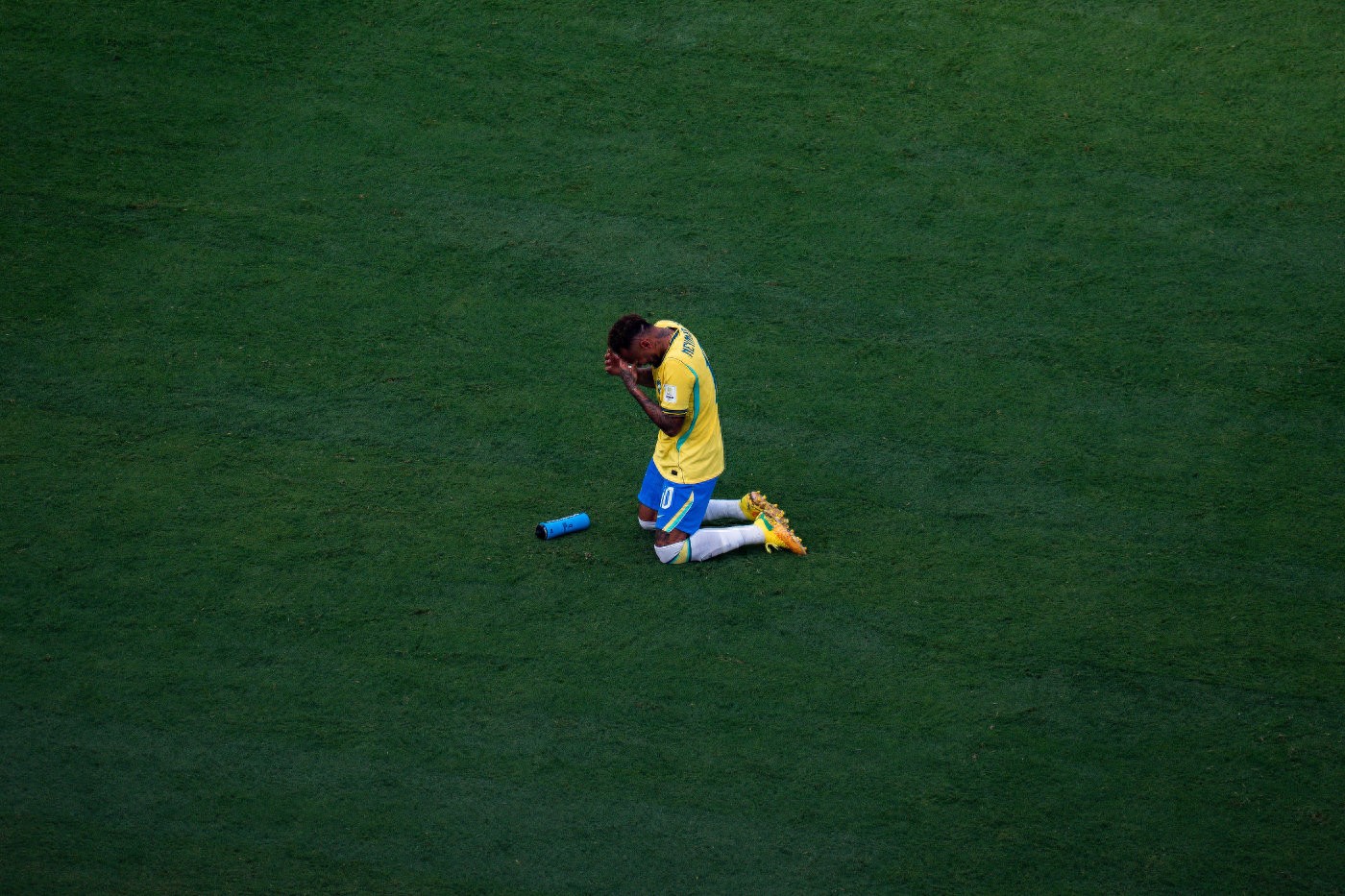
Written by Nan Nan After Norway's win over Brazil, the photographers on the field naturally divided into two groups. One group went after Haaland, since his two goals eliminated the five-time champions from the World Cup quarterfinals for the first time since 1990. The other group surrounded Neymar, Brazil's last No. 10, who scored his final World Cup goal, then knelt on the pitch, crying as he said goodbye to the stage and the Brazilian national team.
Neymar was crying, and Brazilian football was crying too, but for different reasons. Neymar felt regret and tragedy, while Brazilian football cried in despair, because they had lost the last truly samba-style star. After Neymar announced his retirement from the national team, Brazilians could not find a single genuine samba dancer.
The Decline of South American Football
In the last match of the 2026 World Cup round of 16, Switzerland kept a clean sheet against Colombia and sent James and his teammates home via penalties. The eight quarterfinalists were all decided: six European teams, one African team, one South American team. Even though Spain and Portugal were held to draws by Cape Verde and DR Congo, Europeans still held the numerical advantage in the final stages. The other two teams? Morocco is almost a replica of a European team, the distance between them and Spain is negligible. As for Argentina, they are the least South American team. Since the Menotti era, Argentina has stood on the opposite side of traditional South American football. Brazilians dance samba, Argentines dance tango. Where did tango come from? It was a Spanish import brought to Argentina in the 19th century. So, deep down, Argentine football is engraved with European blood.
Brazil's football logic is clearly different. Romário once said: "My footwork was honed on the dirt and walls of the favelas." When Romário was young, whether in Rio de Janeiro or Brasília, there were concrete pitches everywhere and barefoot football kids. Back then, street football was a major symbol of Brazil. Now? The number of concrete pitches in Rio de Janeiro has decreased by 62% over the past 20 years, replaced by various academies. Kids there are no longer keen on doing step-overs like Robinho, but spend a lot of time on crossing and pressing drills, just like kids in European academies.
Why practice crossing and pressing? To survive. In 2023, 18 out of 20 Brazilian clubs listed academy income as one of their main revenue sources. This trend was spurred by transfers like those of Vinícius Jr., Rodrygo, and Endrick. Flamengo, which has a long-term partnership with Real Madrid, sold Vinícius Jr. to Real Madrid for €45 million when he was just 16, setting a record as the youngest debutant in the Brazilian league. This operation seemed to enlighten Brazilian clubs. So, a few years later, the transfer fee for the 16-year-old Endrick soared to €72 million. Estevão was also snapped up by Chelsea at just under 18, with a transfer fee of £62 million.
Suddenly, a group of talented kids, without having fully experienced professional football, were bought by European giants at high prices and placed into the standardized production line of European football. In fact, not every South American player in this production line can succeed in Europe. According to Brazilian media, the proportion of Brazilian U17 players pre-booked by European clubs has risen from 31% in 2010 to 79% in 2023, and nearly 60% of them have almost no experience playing in the Brazilian professional league. Among these, very few can consistently make it into the Brazilian national team. Vinícius Jr. is more like a classic case of "one general's success comes at the cost of thousands of bones."
But Brazilians cannot afford to care about all that. A child who has not yet been fully shaped can bring in over €40 million in huge revenue, an allure that Brazilian clubs simply cannot refuse. Therefore, the goal of Brazilian youth development is no longer to produce players like Neymar, but to cultivate potential stars favored by European giants. So, in recent years, the only attacking players Brazil has produced that are worth mentioning come from two positions: wingers and false nines. Vinícius Jr., Martinelli, and Raphinha are almost cut from the same mold: fast, quick in direction change, and strong in tactical execution. The traditional Brazilian technical players are almost nowhere to be seen. So, since Kaká, Brazil has not had a Ballon d'Or winner. But even Kaká, strong as he was, was full of European football traits.
In 2010, Brazil already had no center forwards of their own style; after 2026, they don't even have Neymar. European football's demand for South American players is for "tactical parts" with South American characteristics. Football geniuses like Djalminha have no place in modern football. As the Brazilian league increasingly caters to the tastes of European scouts, its football status has plummeted, eventually becoming worthless. The reason is simple: Brazilian football has lost its own system for defining its value. So, when Brazil in 2026 plays more and more like a European team, how can they compete with those native Europeans?
As Brazilian football voluntarily bows its head, other South American countries are even less able to resist the tide of European football assimilation. So, the decline of South American football seems like an inevitable outcome.
The Rise and Controversy Behind Naturalization
South American football is declining, while North Africa is rising in another way. Of course, their rise still cannot escape the shadow of European football.
According to FIFA data, at the 2026 World Cup, 289 of the 1248 players were not born in the country they represented, accounting for 23.15%. In the 2022 World Cup, this figure was 16.5%. Morocco is the most typical example of this phenomenon. In their 1-1 draw with Brazil, the new African champions made history in 25 minutes: none of the 11 players on the pitch were born in Morocco, a fully naturalized squad, the first time in 92 years of World Cup history. If Morocco is a major naturalization country, then France and the Netherlands are the major exporters. This World Cup featured up to 99 players with French nationality, of whom 76 played for 12 countries other than France. M'baye, born in France, represented Senegal and scored against his birth country, France. Meanwhile, nearly 40 players with Dutch nationality played for other countries in the World Cup.
The wave of naturalized players has further intensified the "European center" convergence effect in world football. In fact, these statistics do not include descendants of immigrants born in other countries, otherwise the proportion of broad naturalization would be even higher. It is precisely these descendants of overseas immigrants who end up being poached by their ancestral countries' football associations, becoming naturalized players for those countries. Yamal, born in Spain, with a father from Morocco and a mother from Equatorial Guinea, ultimately chose to represent Spain. The Williams brothers, born in Spain to Ghanaian immigrant parents, had Iñaki Williams choose to play for Ghana, while Nico Williams chose Spain. Such sibling rivalry is becoming increasingly common in the era of naturalization.
The naturalization trend became one of the biggest focuses of the 2026 World Cup, also bringing considerable controversy. Former Spanish Prime Minister Rajoy attacked the French team for having only three French players, sparking debates on racial discrimination and national identity. Although the incident ended with Rajoy apologizing, the controversy continues. Fans often have completely different attitudes toward naturalized players depending on the team's performance. Opposing fans may also increase racist remarks, bringing more controversy to the World Cup.
All Teams Are European in Style
Of course, besides controversy, naturalized players have also brought about a certain degree of football style unification, i.e., the naturalization of football styles, which is precisely the greatest harm to world football.
In Germany's match against Paraguay, they had over 75% possession and 21 shots, but only scored one goal, eventually losing in a penalty shootout and being eliminated. Turkey, in their first two group matches, averaged 70% possession and a total of 62 shots, but scored zero goals, being eliminated after two matches. This is not a failure of the Germans or Turks, but a symbolic failure. Germans and Turks play the same style of football, and neither has a backup plan. The same goes for Uruguay: Bielsa's high-press system completely failed. Abandoning the talent of South American football and rigidly demanding team coordination, this Uruguay team would probably not even recognize themselves.
Whether it's Nagelsmann or Bielsa, this is not a problem of a single team, but a situation where national team coaches, under immense pressure for results, can only make minor adjustments based on club tactics. In the last 10 years, almost all European giants have used the same tactics: high pressing and quick transitions. Therefore, more and more national team coaches dare not take risks in the center, instead relying on sharp wingers. The consequence is that the gap between strong and weak teams is narrowing, but not because the weaker teams have found their own development path, but because everyone has taken the same road through naturalization and mature European club tactical models.
The decline of South American football, the rise of naturalized players, and the globalization of European style all point to one phenomenon: the world of football, once full of distinctive styles, has disappeared. Now, there is only one correct answer in the football world: the European style. Why? Because European football is issuing passports and the same basic tactical manuals to the whole world.
It's not just South American football that has disappeared...


Wonderfulshortvideo
messi goal today messi assist today messi highlights vs egypt enzo fernandez goal today romero goal today argentina goals today argentina 3-2 egypt



“Wonderful player, fantastic player, could not run” 😅
Neville, Keane and Wright DO NOT agree on the future of Argentina in the World Cup 👀
“It gave you everything” 👀
Clutch Merino 😮💨
merino goal today portugal 0-1 spain ronaldo interview today ronaldo retirement retiring
kane goal today kane highlights today england 2-1 congo
 Links
Links
 Contact
 App
App


