



After breakthroughs in China's youth training, youth academies also receive honors.


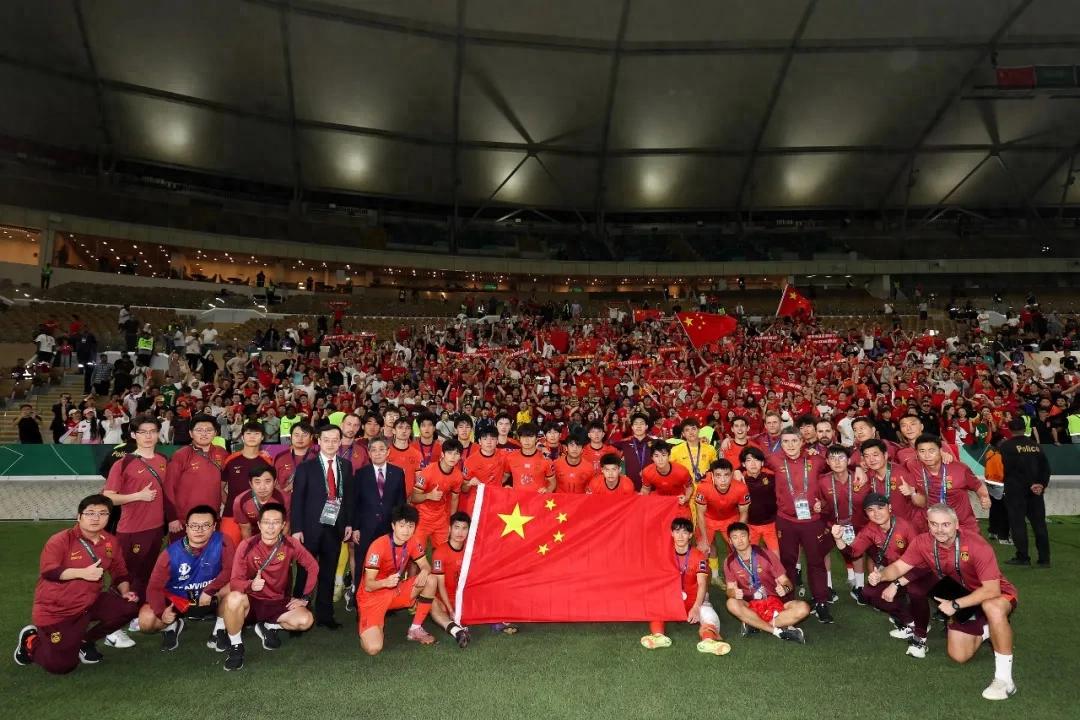
Reported by our newspaper team. Reported by our newspaper team: In November 2019, Shandong Luneng Taishan Football School was awarded the title of "AFC Youth Academy of the Year" for 2019. At that time, it was the only football youth academy in China to receive this honor since the award's establishment. The award required meeting the "AFC One-Star Youth Academy" standard. Subsequently, Shandong Luneng Taishan Football School applied to the AFC for "AFC Three-Star Youth Academy" status.
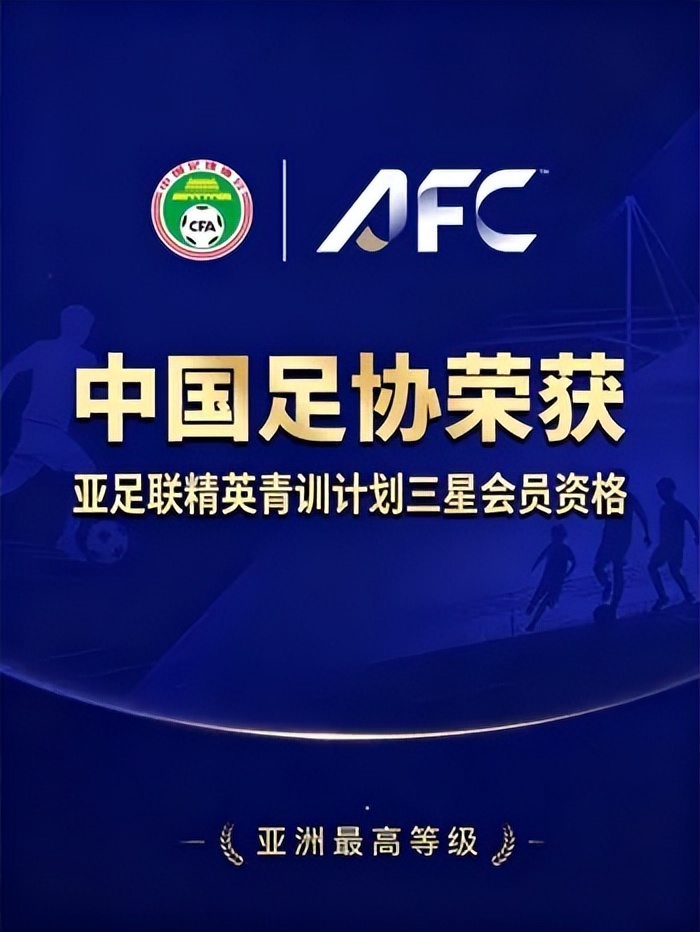
Seven years later, on July 15, 2026, the AFC officially announced that it had granted the Chinese Football Association the "AFC Elite Youth Development Plan Three-Star Member" qualification. Meanwhile, Shandong Luneng Taishan Football School, together with Shanghai Shenhua Football Club and Zhejiang Professional Football Club (Zhejiang FC), was awarded the "AFC Three-Star Youth Academy (Three-Star Youth Center)" designation.
In fact, Shandong Luneng Taishan Football School had already met the AFC Three-Star Youth Academy standards back then. So why did it take until now to finally receive this honor? The reason is simple: Many years ago, the U-00 national youth team, U-02 national youth team, and U-01 national youth team consecutively failed to qualify for the Asian Cup finals, leading to widespread criticism of Chinese football youth training. However, over the years, China's youth training has continued to make breakthroughs. The U-04, U-06, and U-08 national youth teams have successively returned to the Asian Cup finals. The U-03 and U-05 national youth teams not only returned to the Asian Cup finals but also advanced to the quarterfinals. This year, the U-03 Asian Games team and the U-09 national youth team both won the Asian Cup runner-up. Outstanding results are the foundation for receiving such awards.
But what we need to understand is that youth training has a lag of 10 to 20 years relative to national team performance. The reason for today's national team talent shortage and forced overall rejuvenation can be traced back to the decline of the post-90s generation of players 20 years ago. The significant breakthroughs of today's U-17 and U-23 national teams also owe something to the rare positive legacy of the golden-era football — the emphasis placed on youth training at that time.
Therefore, today's honor is indeed a recognition of the past efforts and persistence of the three professional clubs' youth academies, but it should also serve as a spur for the future development and breakthroughs of Chinese football youth training. Only by continuing to work hard, only by having more youth academies meet the "AFC Three-Star Youth Academy" standard, and only by turning a single flower in bloom into a garden full of spring can Chinese football achieve true revitalization and development.

Reported by journalist Chen Yong. In the latest national team training camp list for June, Wei Shihao, Liu Yang, and Xie Wenneng came from Taishan youth training, while Baihelamu briefly entered Taishan youth training. The U-23 national team won the Asian Cup runner-up; Peng Xiao, Chen Zeshi, and Baihelamu represented the country. Peng Xiao, as a center-back, was the top scorer of the U-23 national team and was hailed as the "key player." The U-17 national team also won the Asian Cup runner-up; among the 23-man squad, as many as five were products of Taishan youth training, with four of them being absolute starters or rotational starters. In last year's U-20 Asian Cup, the five absolute starters from the U-05 national youth team, including the goalkeeper, center-back, and defensive midfielder positions, all came from Taishan youth training.
While other youth academies measure their contribution to national teams by the number of call-ups, Taishan youth training has for many years measured it by the number of players. This is the confidence and strength of Taishan youth training. In addition, Taishan youth training has currently supplied 388 players to professional leagues. According to statistics from Luneng Football School, in the 2026 Chinese Super League season, players produced by Luneng Football School accounted for more than 14% of all domestic players. As Taishan youth training states: "Twenty-seven years of adherence to the original aspiration of youth training, building a solid foundation for Chinese football talent."
Shandong Luneng Taishan Football School was founded in 1999. Over the past 26 years, it has been the youth academy that has contributed the most national team players and won the most domestic championships. Taking the past four editions of the China Youth Football League as an example, across four age groups, Luneng Taishan Football School won 9 out of a total of 16 championships, including all the titles in the U15 and U19 groups, and also won the U13 group once. In addition, Shandong Taishan B team became the first Chinese Super League B team to enter the China League Two in the 2024 season. In the four group events of the "Three Major Ball Games" and the National Games from 2024 to 2025, the Shandong team, mainly composed of players from Luneng Taishan Football School, achieved first, second, third, and fourth places.
Once, two batches of Taishan youth training players had the note "Won all U-series league championships" on their personal accounts. This is an honor for Luneng Football School, but also a sorrow for Chinese football youth training: a single dominant flower means a lack of competition and a lack of upward stepping stones. During the golden era of football, competition in youth training intensified, with high-level teams once reaching 8 to 10, but the collapse of the golden era led to the bankruptcy of some youth academies. Fortunately, over the past five years, with unprecedented national emphasis on the revitalization of football, Chinese football, including the youth training system, is entering a new phase of comprehensive development and multi-faceted efforts. This is the best period for Chinese football youth training. The high-level competitive situation is both the biggest challenge and the best opportunity for Taishan youth training.

Special contribution by Gan Hui. Being awarded the "AFC Three-Star Youth Academy" certification is an important milestone for Shenhua's youth training.
As early as January this year, with the recommendation of the Chinese Football Association, Shenhua began preparing the application materials for the AFC Three-Star Youth Academy certification. After passing the preliminary review, the club hosted an on-site evaluation by the AFC in early June. After half a year, the certification was officially approved in early July.
It is understood that the entire evaluation involves 20 assessment dimensions, mainly evaluating the comprehensive strength of the applicant club's youth training, including organizational governance, long-term planning, coaching team, selection mechanism, venue facilities, sports science, medical rehabilitation, psychological counseling, academic education, competition system, talent output results, etc. It represents the highest standard of club youth training in Asia.
Specifically, the AFC requires that a Three-Star Youth Academy must establish an independent technical committee, appoint a full-time youth technical director, and have a long-term financial commitment from the board with annual increases in funding. As an AFC Three-Star Youth Academy, it must also build a complete age-group ladder system, covering all U-series age groups. Daily training, annual competitions, and overseas exchanges must be regularized. Moreover, players in the academy must have clear promotion pathways, and outstanding players can regularly train with the first team.
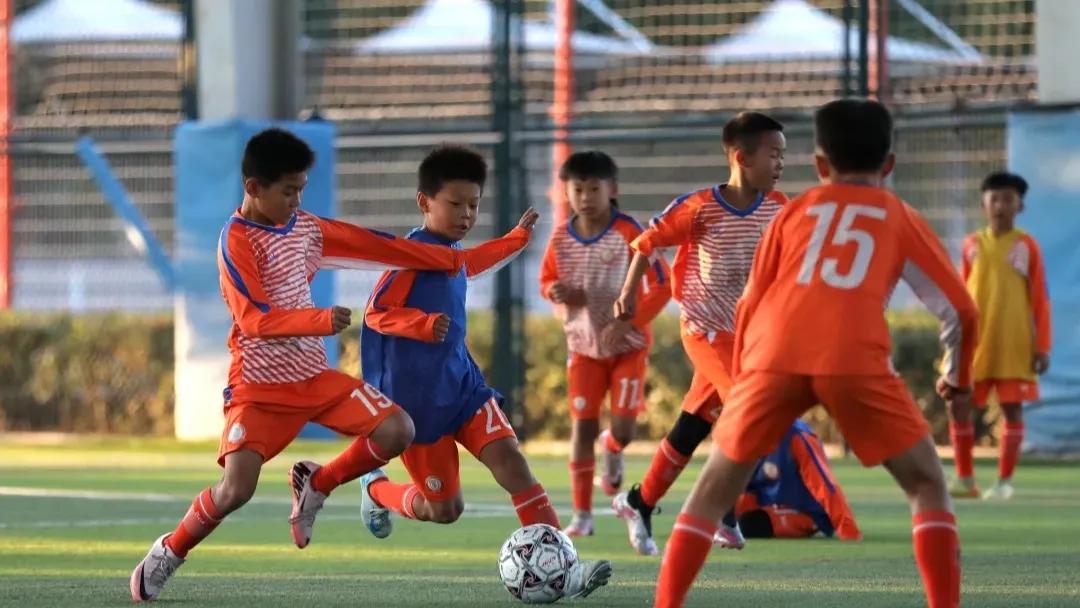
Currently, Shenhua Club's youth training builds teams from U11 to U20, with a total of 8 teams consisting of more than 200 players, forming a complete youth training system. In the past two years, the young players promoted by Slutsky, including Liu Chengyu, Yang Haoyu, and Wu Qipeng, all came from Shenhua's youth training.
In terms of hardware, the AFC also has corresponding requirements for Three-Star Youth Academies: sufficient natural grass and artificial turf standard football pitches, equipped with covered observation stands and lighted night training fields; also required are a dedicated fitness center, sports science laboratory, rehabilitation and physiotherapy center, player dormitories, teaching buildings, and canteens. Additionally, a training monitoring system must be established, including GPS motion tracking, big data analysis of training, and injury warning systems. The training fields at the Jiushi Kangqiao Sports Base, the comprehensive air-dome training hall for youth teams, and the rehabilitation therapy room provide the best hardware support for Shenhua's youth training.
Successfully obtaining the "AFC Three-Star Youth Academy" certification will bring significant advantages to Shenhua's youth training work and its talent selection, development, and transfer mechanisms. Youth players will have easier access to transfer and trial opportunities within Asia, and can prioritize participation in various international youth tournaments and coach training programs organized by the AFC. In addition, cooperation with overseas clubs in the future will also gain higher recognition.
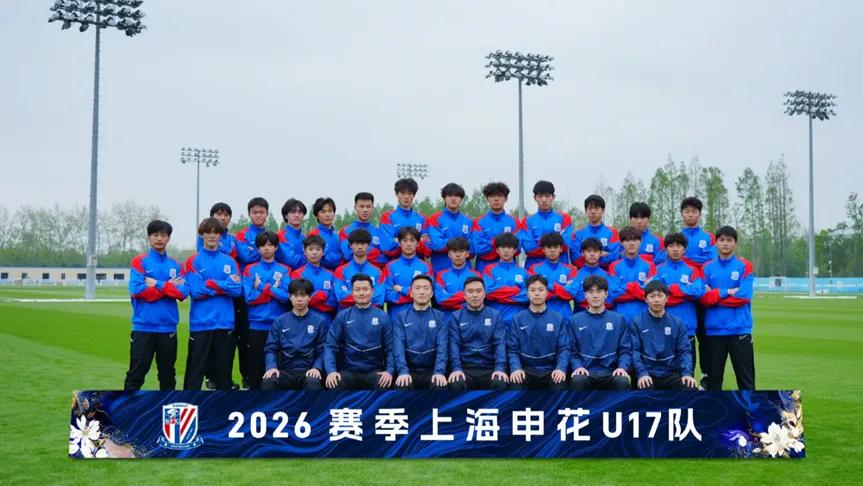

Written by Zuo Rui: The "AFC Three-Star Youth Academy" is the highest honor obtained by Zhejiang FC after more than 20 years of dedication to youth training. Since its founding in 1998, the club has established the original aspiration of "building a century-old club with youth training as the cornerstone." After the equity reform in 2024, youth training was written into the company's articles of association and strategic plan, establishing the core positioning of "youth training as the root, education as the foundation."
The "Youth Training Outline," independently compiled over four years, has unified the football style across all teams. The core philosophy of Zhejiang FC's youth training is "consistent guidance," which does not rely on the imprint of a particular team or the style of a specific coach, but instead establishes a top-down, unified youth training philosophy.
In terms of the growth system, the club has laid out a coherent and predictable path for players from U9 to U20. Regarding scouting coverage, it has built a scouting network covering all 11 cities in Zhejiang Province and 15 key cities nationwide, and has signed cooperative agreements with 12 top youth training partner bases, forming a talent extension space of "scouts + partner bases + cross-regional training." During the training process, it adheres to the coaching philosophy of "player first," employing principle-based guidance, encouraging guidance, and guiding guidance to cultivate independent players. In terms of cross-national cooperation, Zhejiang FC's attitude is "use what serves me." Since launching the Sino-Japanese youth training cooperation in 2014, it has always regarded Japanese football as its primary reference, thereby broadening its international perspective.
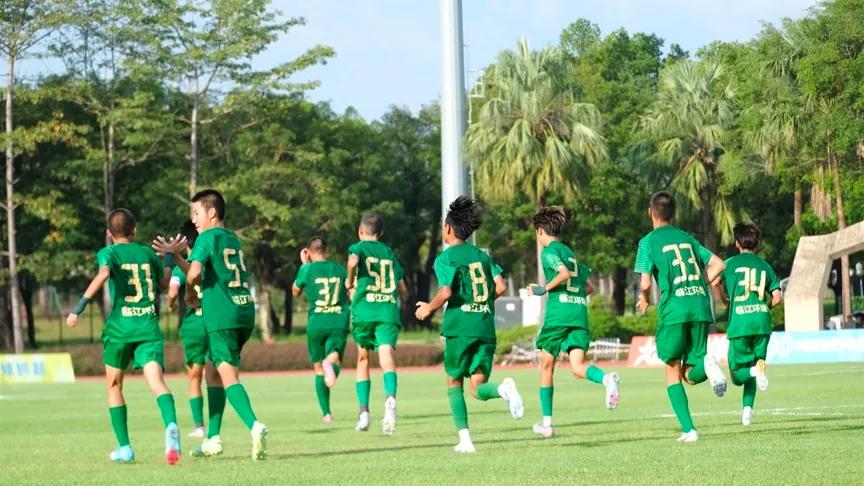
The club's affiliated Zhejiang Greentown Football School has adopted the motto "Be a good person, study well, play good football" since its establishment in 2004. It offers full-time schooling with closed management. To date, more than 460 graduates have been admitted to prestigious universities such as Beijing Sport University, Tongji University, and Zhejiang University. Among the four teams jointly built with Quzhou City, all players from other cities attend public schools. Behind these explorations of integrating sports and education lies the club's simple belief in "cultivating a complete person," rather than just "training a player."
Currently, Zhejiang FC has supplied over 180 players to national teams at various levels and trained more than 200 professional players. The proportion of self-trained players in the club's first team exceeds 41%. Among the Chinese team that reached the final of this year's U-23 Asian Cup, five players came from Zhejiang FC. Meanwhile, current national team players such as Zhang Yuning, Wang Yudong, Cheng Jin, and Liu Haofan all came from Zhejiang FC's youth training.
In the club's view, the greater significance of obtaining the "AFC Three-Star Youth Academy" certification is that "youth training has ushered in an opportunity for upgrading and iteration." Going forward, they will benchmark against excellent Asian counterparts, and many things that need to be done have become clearer.


Wonderfulshortvideo

messi goal today messi assist today messi highlights vs egypt enzo fernandez goal today romero goal today argentina goals today argentina 3-2 egypt



“Wonderful player, fantastic player, could not run” 😅

Neville, Keane and Wright DO NOT agree on the future of Argentina in the World Cup 👀

“It gave you everything” 👀
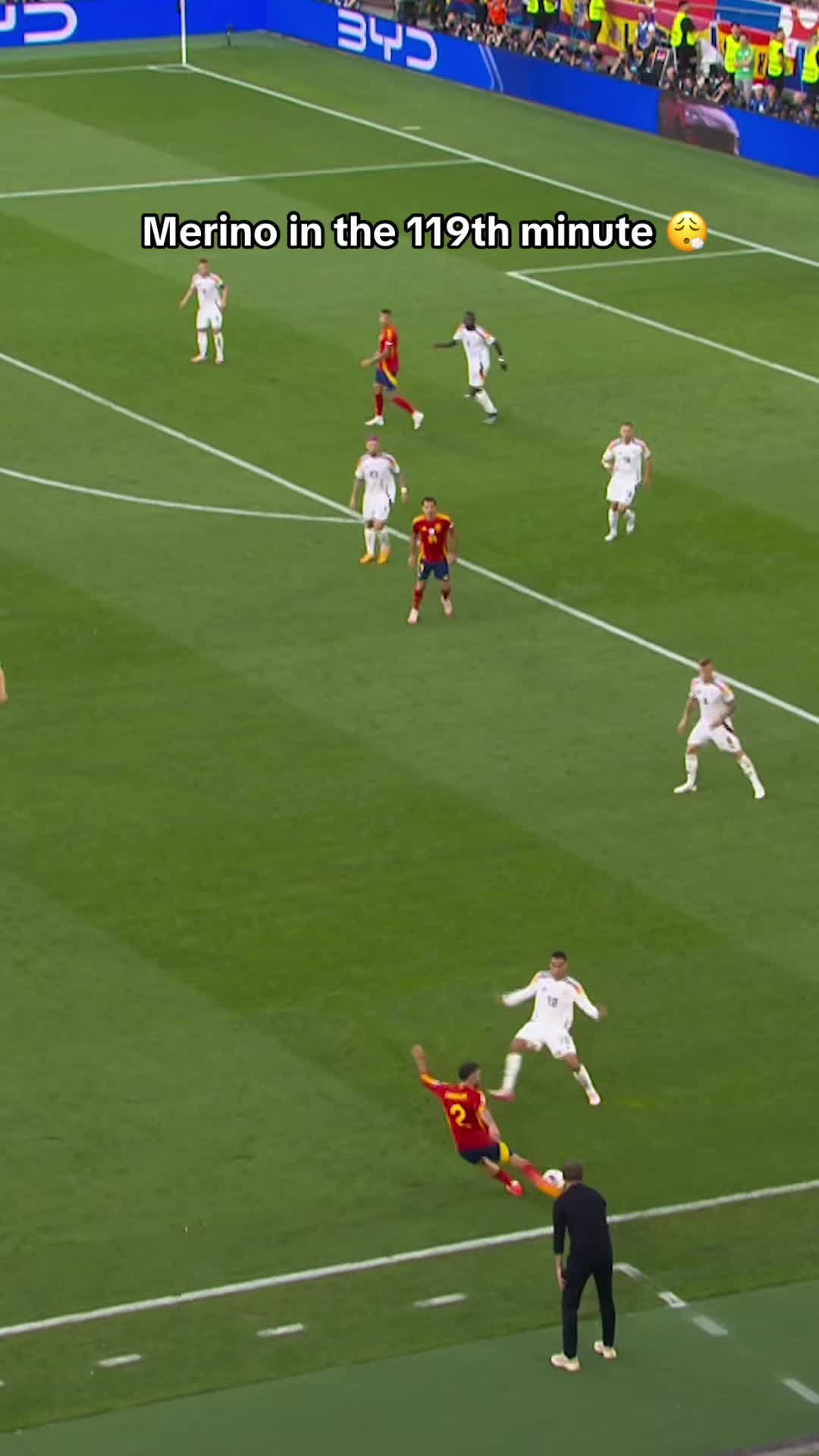
Clutch Merino 😮💨
merino goal today portugal 0-1 spain ronaldo interview today ronaldo retirement retiring

kane goal today kane highlights today england 2-1 congo
 Links
Links
 Contact
 App
App


