



Spanish Football: The Secret to Global Dominance, Both Men's and Women's


Beating Argentina 1-0 in the 2026 World Cup Final enabled Spain to achieve a historic first, becoming the only nation to simultaneously possess the World Cup titles in both men's and women's football.
After the women's team triumphed at the 2023 World Cup in Australia and New Zealand, the men's team followed suit by reaching the pinnacle in North America. For the first time, a single country holds the world championship in both categories at the same time.
An Iconic Encounter
Right after the final whistle at MetLife Stadium, one of the most talked-about moments was not the players' celebration but a conversation between Rodri and Aitana Bonmati.
Bonmati, who has won the Women's Ballon d'Or three times in a row and is the top star of the Spanish women's team, congratulated Rodri after the Manchester City midfielder received the 2026 World Cup Golden Ball.
She praised his outstanding performances, especially in the final two matches of the tournament. In response, Rodri expressed admiration for Bonmati, stating that he still has a long way to go to match what his female counterpart has achieved.
It was a rare image in modern football: two of the world's best players from the same country standing at the summit, representing two teams holding the World Cup titles.
Success Is No Accident
Looking at the development path of Spanish football over the past two decades, the current success is no surprise.
The men's team won the World Cup in 2010, then went through a transitional period before returning strongly by winning EURO 2024 and then the 2026 World Cup.
Meanwhile, the women's team has steadily improved. After years of investment, they won the 2023 World Cup, reached the EURO final, and are still considered the strongest team in the world.
The common thread for both teams is the pursuit of a unified football philosophy: ball possession, quick circulation, emphasis on technique, ability to handle tight spaces, and modern tactical thinking.
Not only the national teams, but Spain's youth development system also operates under the same model. From the U15, U17, and U19 levels to the senior national team, players are trained in a consistent style, making the transition to higher levels seamless.
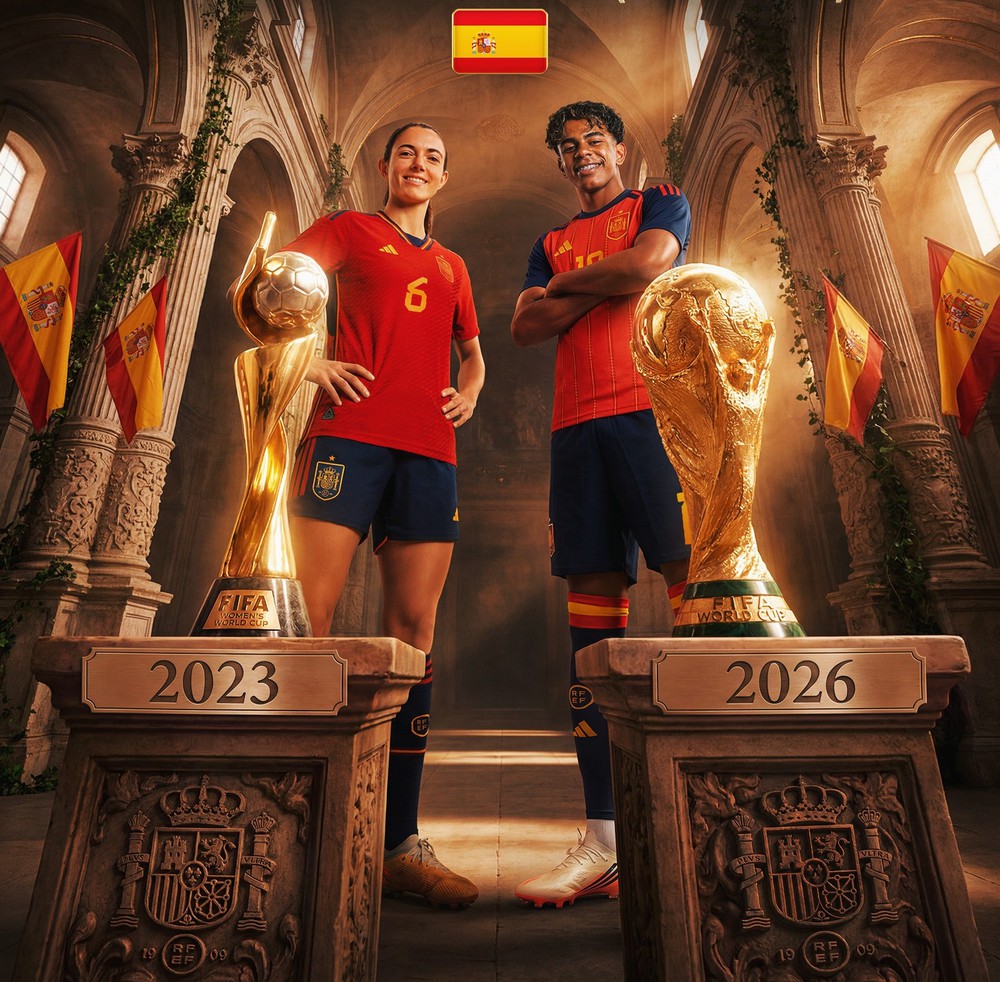
For the first time, a nation holds the World Cup titles in both categories simultaneously. Image created by AI
The Foundation from Youth Training
One of the key factors behind Spain's dominance is the quality of youth development.
In women's football, Spain has consistently appeared at the U17 World Cup and has won it twice. Many current stars like Salma Paralluelo, Cata Coll, Claudia Pina, and Vicky Lopez emerged from these successful youth teams.
Paralluelo even became the first Spanish female player to win the World Cup at three levels: U17, U20, and the senior team.
Alongside the youth team system, famous academies like Barcelona's La Masia continue to play a crucial role in supplying quality players for both men's and women's football. They not only teach technical skills but also build tactical awareness and playing identity from a very young age.
Notably, the journey to success for the Spanish women's team was not smooth.
Before the 2023 World Cup, 15 players refused to play for the national team to protest the management of the Spanish Football Federation and demand reforms in the governance system.
Right after the historic championship, Spanish women's football faced another crisis when then-Federation President Luis Rubiales forcibly kissed striker Jenni Hermoso during the medal ceremony.
The incident shocked the world, sparked strong protests, and became a turning point that forced the Spanish Football Federation to change.
Rubiales later resigned, and Spanish women's football entered a new development phase with a more professional and stable environment.
Overcoming these off-field challenges made the women's team's success even more valuable and laid the foundation for them to aim for defending the world title in 2027.
Strength from Diversity
Another notable aspect of Spanish football's development is its ability to tap into diverse talent sources.
More and more players carry mixed heritage but have grown up within the Spanish training system.
Lamine Yamal has a Moroccan father and a mother from Equatorial Guinea. Nico Williams is the son of Ghanaian immigrants. Vicky Lopez has a Nigerian mother. Salma Paralluelo has a mother of Guinea-Bissau descent.
This diversity not only expands the player pool but also brings different qualities in speed, physicality, and creativity, making Spanish football more complete.
More importantly, all are developed within the same tactical system, creating a cohesive team with a strong identity rather than relying on individual stars.
Spain Sets a New Standard in Football
For decades, countries like Brazil, Germany, Argentina, France, and the USA were considered football powerhouses based on their success in either men's or women's football.
However, Spain's achievements are setting a new benchmark. A truly strong football nation is not only judged by its men's team but also by its women's team, youth development system, and ability to sustain success over the long term.
The fact that Rodri and Aitana Bonmati are simultaneously the best players in the world, along with both national teams holding the World Cup titles, reflects the special status Spain currently enjoys.
The biggest challenge for La Roja in the coming years is no longer reaching the top but maintaining that position against increasingly fierce competition from England, France, Germany, the USA, and other nations investing heavily in football.
Nevertheless, with a foundation built over many years, a unified development philosophy, and a continuous influx of talent, Spain has all the conditions to usher in a new era of global football dominance. The 2026 World Cup trophy is not only a reward for an outstanding generation but also a statement that Spain is now the most comprehensive model of modern football, in both the men's and women's games.
Ballon d'Or Within Reach for Spaniards
The 2026 World Cup victory has opened the door wide for the Ballon d'Or for the two brightest stars of La Roja—Rodri and Lamine Yamal.
Rodri continues to prove his class as a complete midfielder. After winning the Ballon d'Or in 2024 thanks to his outstanding performance at EURO, the Man City star elevated his status further by being named the Best Player of the 2026 World Cup.
Rodri's World Cup performance was nearly flawless. He achieved impressive statistics in touches, successful passes, and actions in the opponent's half and the final third.
If Rodri represents stability and composure, Lamine Yamal embodies youth and explosiveness.
The Barcelona prodigy had a stellar season, scoring 24 goals, providing 18 assists, and playing a key role in helping his club win La Liga and the Spanish Super Cup. At the 2026 World Cup, Yamal continued to prove his worth with fast and creative displays.
He scored the opening goal for Spain in the group stage opener and led the tournament in successful dribbles with 45, nearly double the number of the second-placed player,Lionel Messi. In the semi-final against France, Yamal won the penalty that set up La Roja's victory. The Ballon d'Or race this year still features formidable opponents like Harry Kane, Kylian Mbappe, Michael Olise, Ousmane Dembele, and Lionel Messi. However, history shows that the World Cup always carries special weight in the Ballon d'Or race.Lionel Messi. In the semi-final against France, Yamal won the penalty that set up La Roja's victory. The Ballon d'Or race this year still features strong contenders like Harry Kane, Kylian Mbappe, Michael Olise, Ousmane Dembele, and Lionel Messi. However, history shows that the World Cup always carries special weight in the Ballon d'Or race.


Wonderfulshortvideo
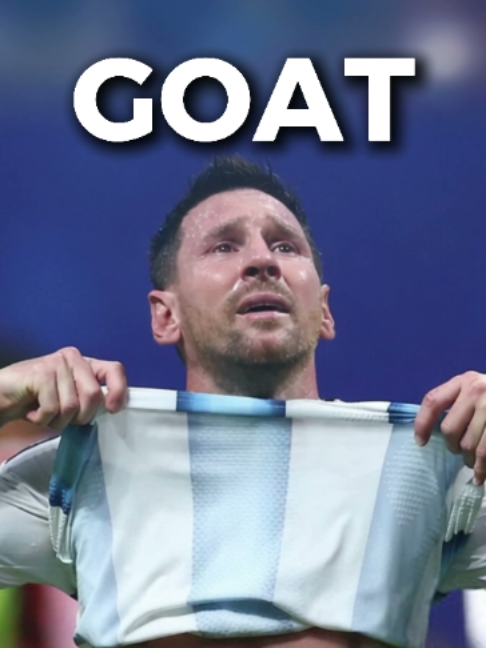
messi goal today messi assist today messi highlights vs egypt enzo fernandez goal today romero goal today argentina goals today argentina 3-2 egypt


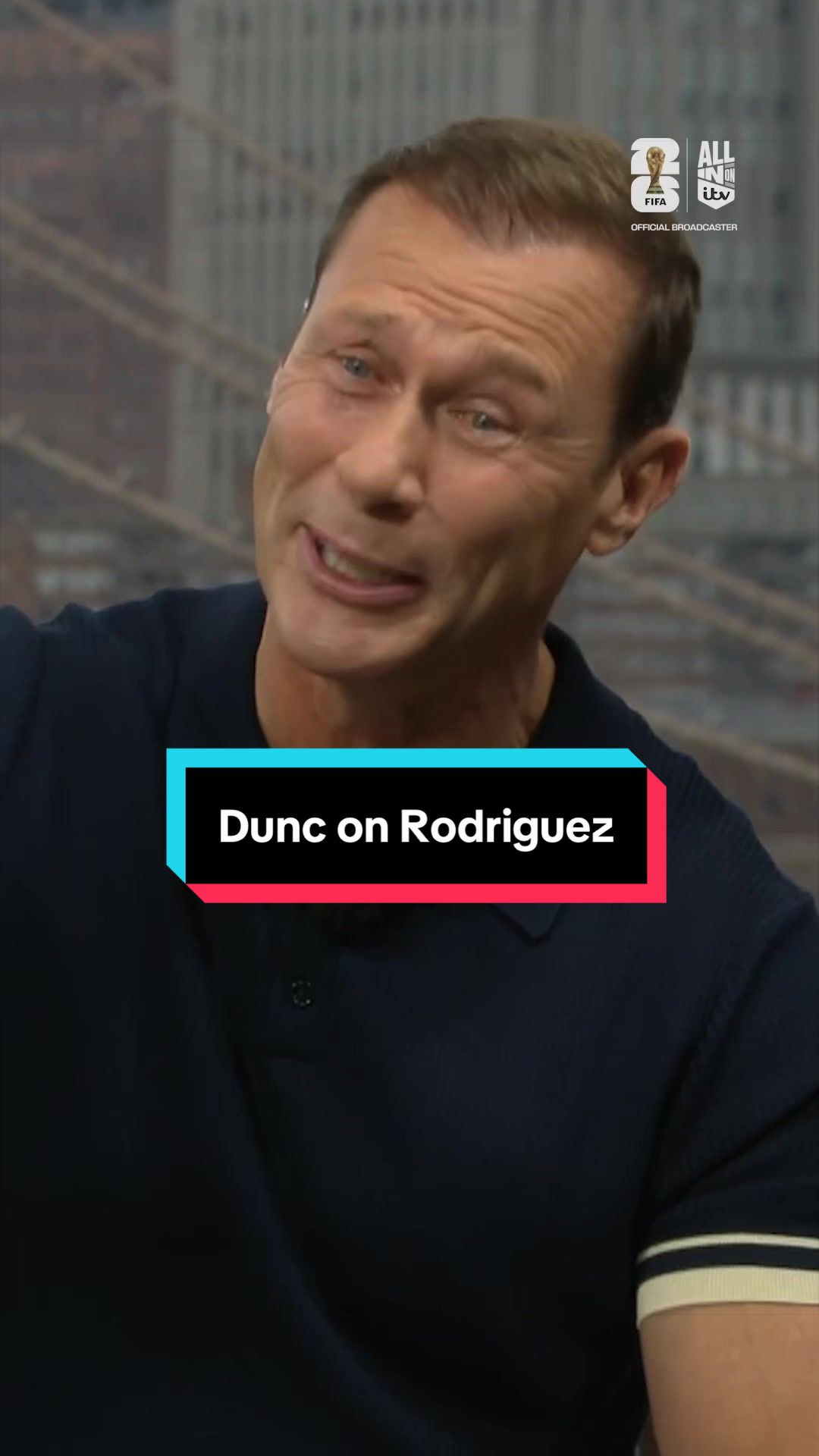
“Wonderful player, fantastic player, could not run” 😅
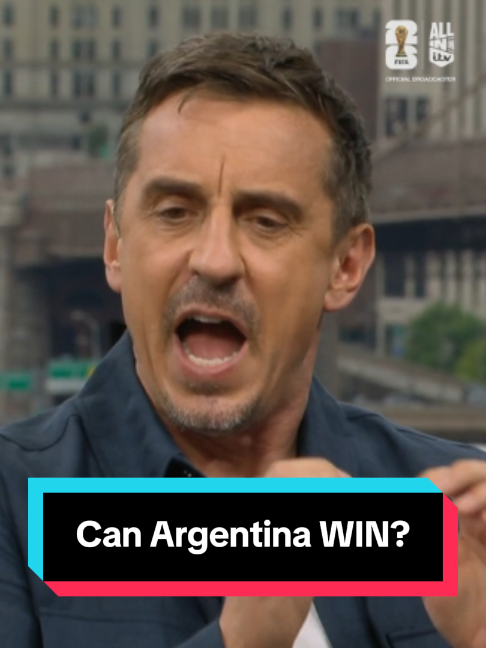
Neville, Keane and Wright DO NOT agree on the future of Argentina in the World Cup 👀
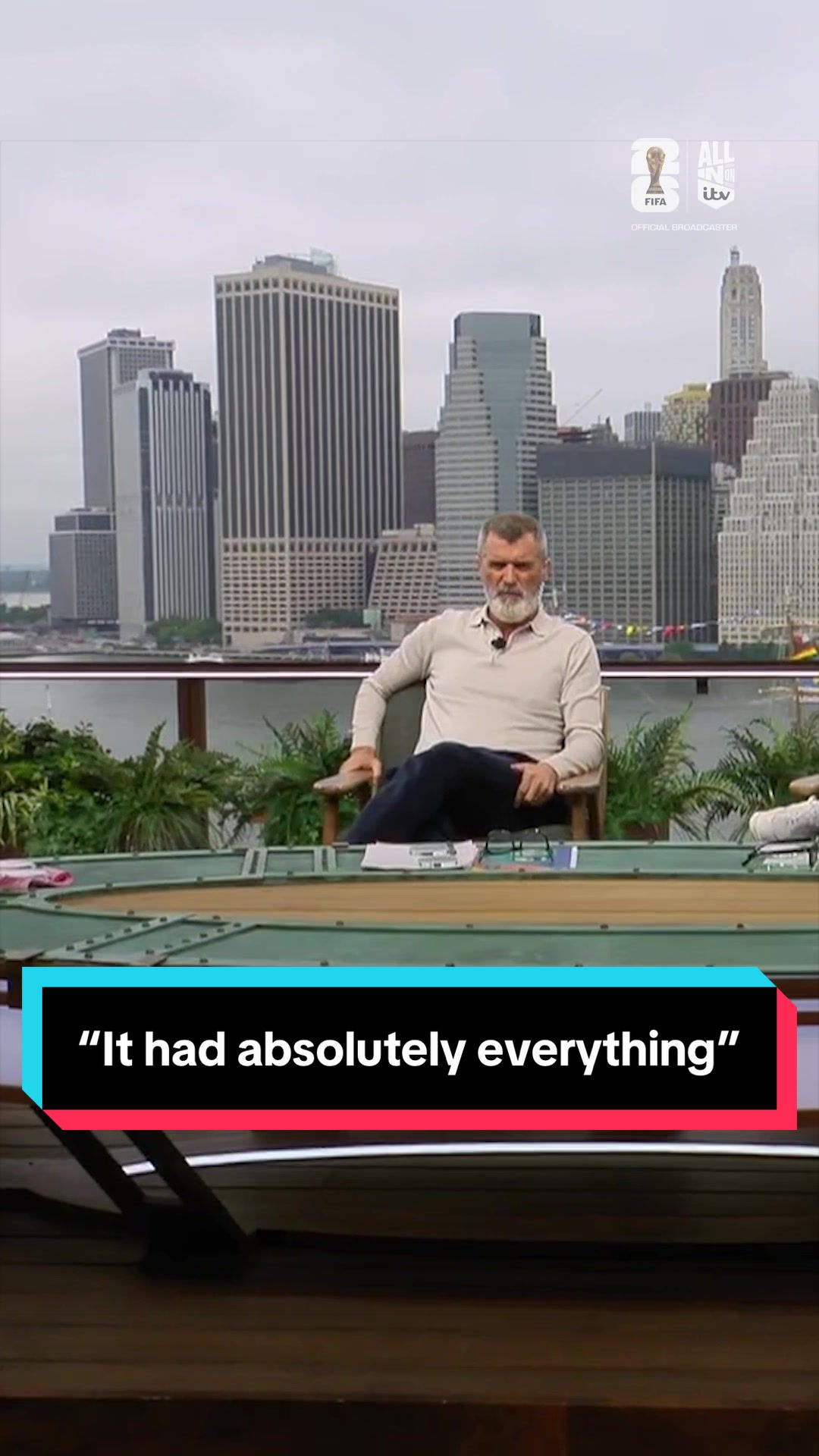
“It gave you everything” 👀
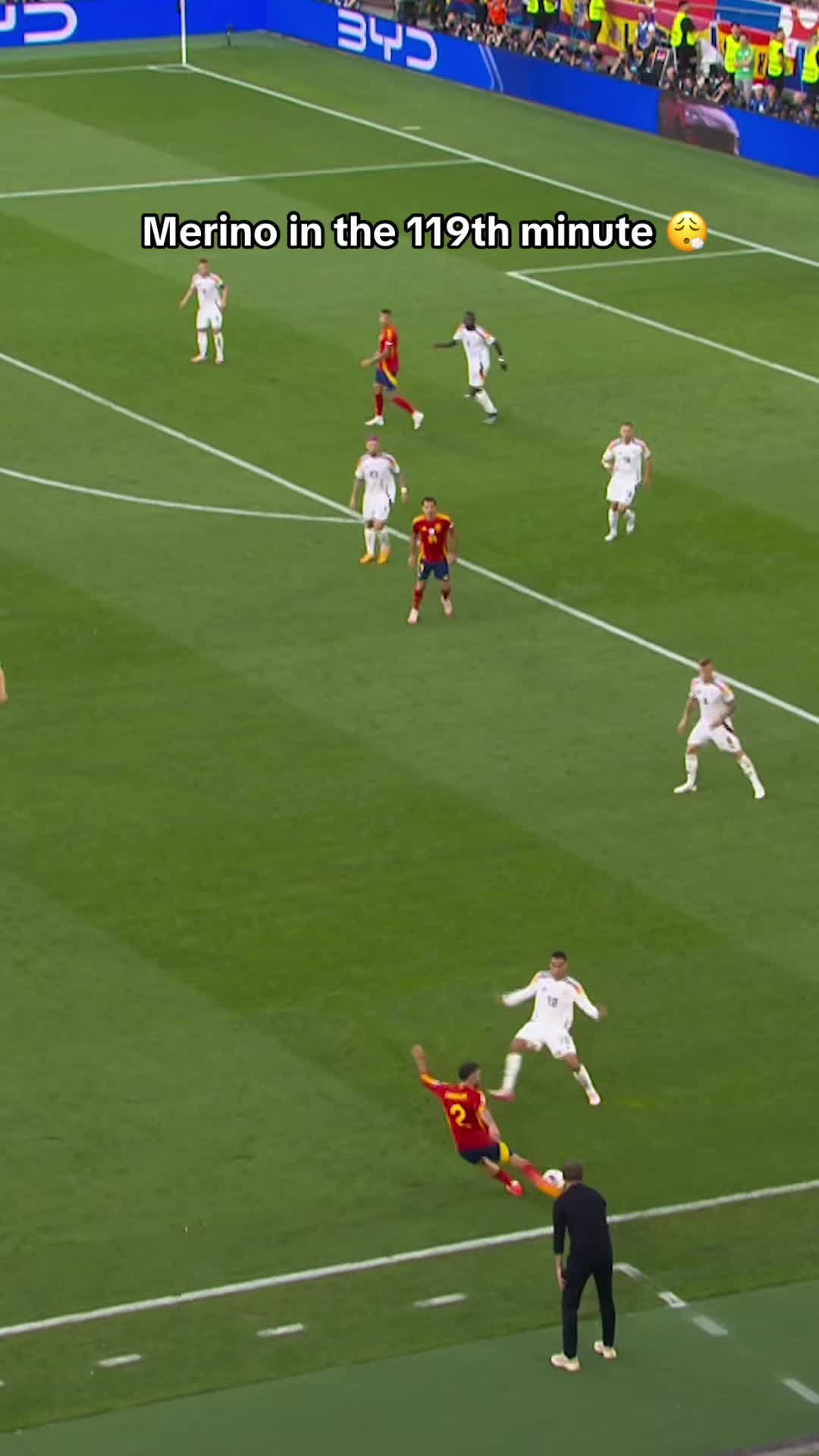
Clutch Merino 😮💨
merino goal today portugal 0-1 spain ronaldo interview today ronaldo retirement retiring
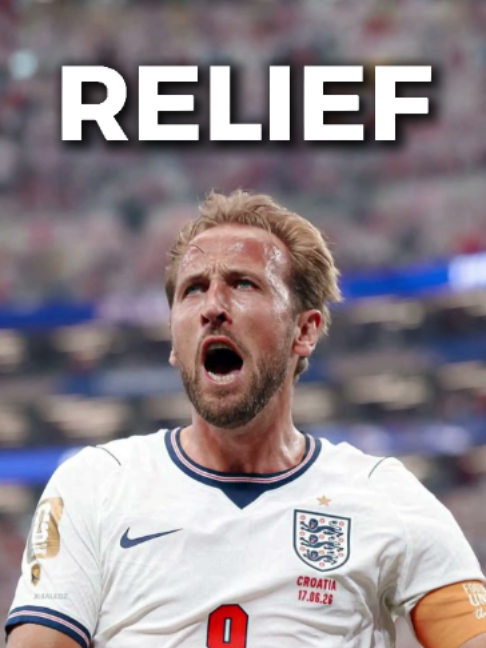
kane goal today kane highlights today england 2-1 congo
 Links
Links
 Contact
 App
App


