



Djokovic Withdraws from PTPA: A Silent Rift Between Idealism and Realpolitik



On January 5, 2026, Djokovic released a restrained but significant statement formally resigning from the Professional Tennis Players Association (PTPA), which he co-founded in 2020.

“After careful reflection, I have decided to fully withdraw from the Professional Tennis Players Association (PTPA). This decision stems from my longstanding concerns about the association’s transparency, management practices, and the way my viewpoints and image have been represented.
Vasek Pospisil and I founded the PTPA with the original intention of creating a stronger, independent voice for players, a mission I have always been proud of. However, it has become clear that my values and approach no longer align with the association’s current direction.
I will continue to focus on my tennis career and family, contributing to the sport in a manner consistent with my principles and original intentions. I wish all players and those involved the very best going forward. For me, this chapter now closes.”

The statement contains no dramatic accusations but clearly reveals a fundamental break between the founder and the PTPA: “My values and way of operating no longer align with the current development path of the association.”
Every word in this statement was carefully chosen. Terms like “transparency,” “management practices,” and “representation of viewpoints and image” — seemingly neutral phrases — point to a long-brewing internal ideological conflict. The phrase “contribute to the sport in a manner consistent with my principles and original intentions” reads like a gentle declaration: Djokovic has chosen a different path of resistance.
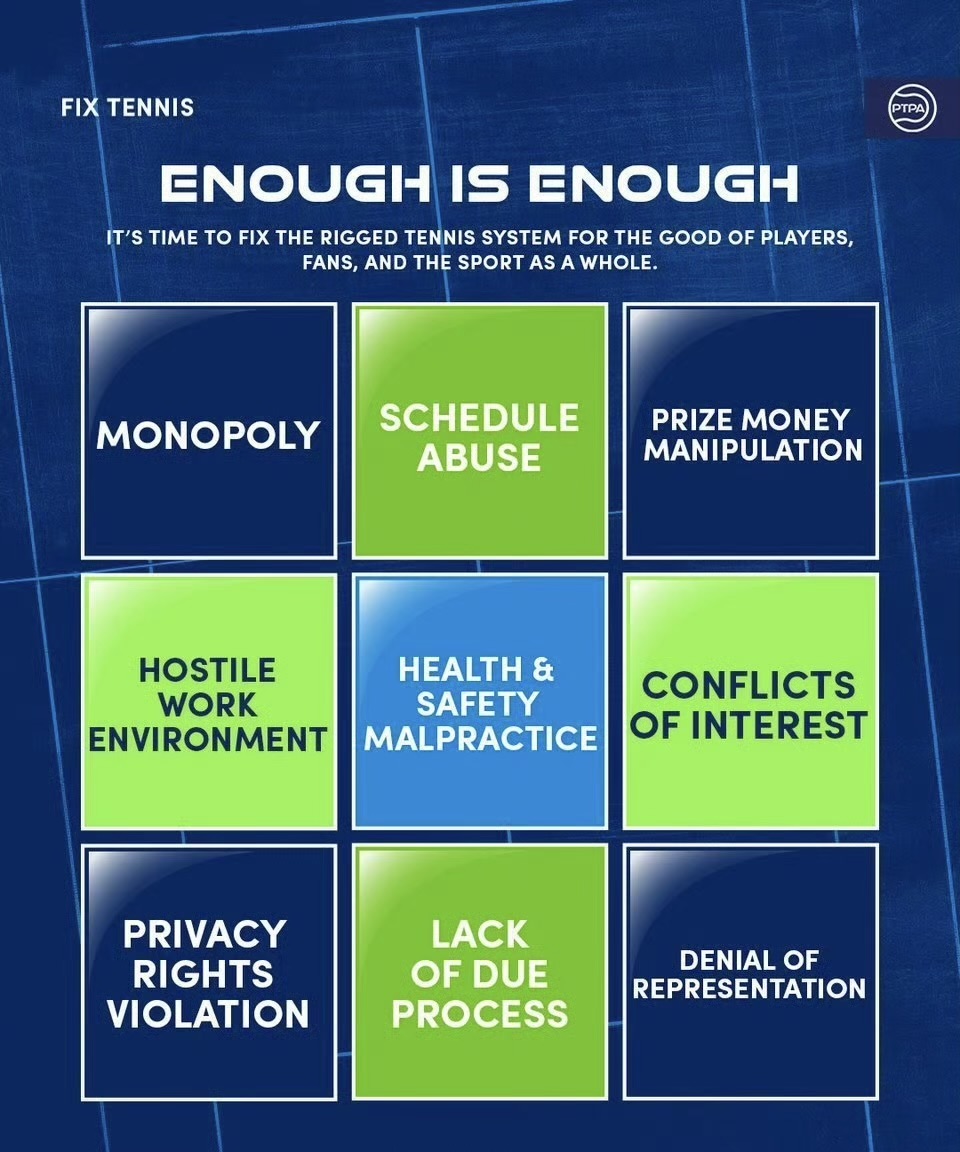
Rewinding to March 2025, the PTPA launched an unprecedented collective lawsuit against the four major tennis governing bodies (ATP, WTA, ITF, ITIA), accusing them of monopolistic behavior. At that crossroads, Djokovic, the most prominent founding member, refused to sign the strongly worded joint letter.
“I had some concerns,” Djokovic admitted at the time, “some of the language and accusations in the letter seemed too harsh.” This publicly expressed reservation foreshadowed today’s split. For him, change may require persistence but not confrontation; reform requires a voice but not necessarily a complete break.

The founding mission of the PTPA, as restated in the statement, was “to secure a stronger, independent voice for players.” The turmoil during the 2019-2020 tour exposed the limitations of traditional player representation. Djokovic believed that an organization fully led by active players, independent from tournament organizers, could more purely represent player interests.
However, once an idealistic organizational structure enters the complex waters of realpolitik, it must face thorny challenges: how to balance radical reform with gradual improvement? How to reconcile the interests of different tiers of players (top stars versus lower-ranked competitors)? How to choose between public confrontation and behind-the-scenes negotiation strategies?
Djokovic’s exit suggests he may prefer the role of an “internal reformer,” leveraging his example, existing channels with traditional institutions, and negotiation styles more aligned with his personality to drive change. Meanwhile, the PTPA is moving toward a more institutionalized and adversarial path.

Djokovic’s departure undoubtedly delivers a symbolic blow to the PTPA. As one of men’s tennis’ most successful players, his involvement lent crucial legitimacy to the emerging organization. Yet from its inception, the PTPA has faced structural challenges: fluctuating participation from top players and collective silence from the player base on major initiatives.
This reveals the inherent contradictions within the professional tennis player community: on one hand, they share common interests like improving prize money distribution, scheduling, and medical support; on the other, players differ widely in priorities based on ranking, age, and nationality. Such fragile unity is common in professional sports but complicates collective action.

For Djokovic, this decision may also mark a conscious shift in his career phase. Approaching 39, he has publicly stated his focus will be on tennis, family, and aiming for the 2028 Los Angeles Olympics, possibly his last major career goal. Cutting ties with PTPA affairs allows him to concentrate his limited energy on the court.
But this is more than just reallocating energy. The repeated references to “values,” “principles,” and “way of operating” in Djokovic’s statement hint that he is redefining his legacy. He may be seeking an impact beyond on-court achievements and beyond affiliation with a single organization: a contribution path more aligned with his personal style and sustainable over time.
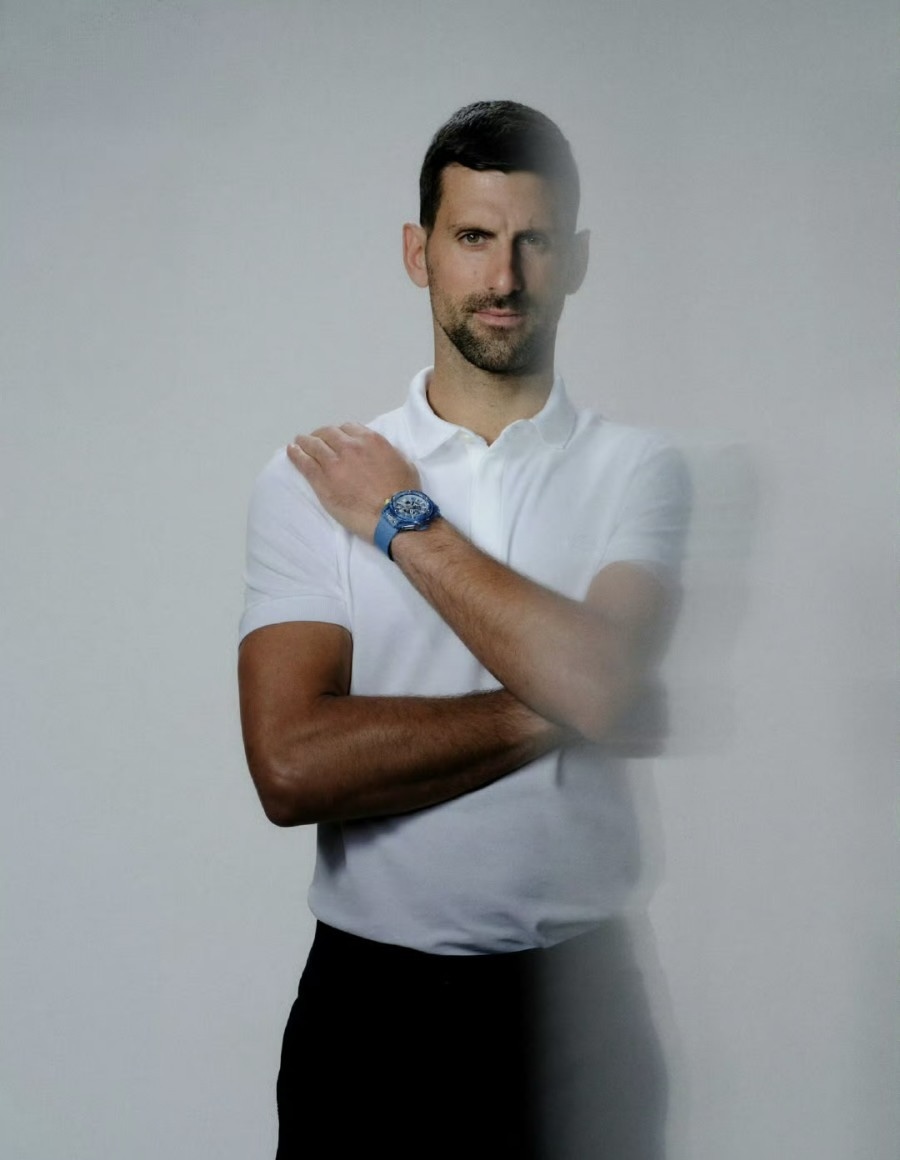
Djokovic’s amicable split from the PTPA reveals a profound reality about social change in sports: reform is never a linear process. Even when goals align, disagreements over methods, strategy, and timing can lead to divergence.
For skeptics of the PTPA’s effectiveness, this event might be seen as a failure of idealism; but for those who understand organizational development, it is likely just an inevitable adjustment period for a nascent group finding its identity. How the PTPA will redefine its mission and strategy without Djokovic remains to be seen, as does the mechanism through which Djokovic himself will continue to advocate for the reforms he believes in.

Djokovic concluded his statement with: “For me, this journey ends here.” Yet everyone understands that neither the long march for players’ rights nor Djokovic’s role as a transformative figure in the sport is near its final chapter. This is merely the close of one chapter, while the title of the next is still waiting to be written. In the world of sports, the interplay of ideological differences and unity, individual persistence and collective action, will always weave a complex and compelling narrative.(Source: Tennis Home, Author: Mei)

 Links
Links
 Contact
Address:UNIT 1804 SOUTH BANK TOWER, 55 UPPER GROUND,LONDON ENGLAND SE1 9E
Number:+85259695367
E-mali:[email protected]
 App
App


