



Alcaraz's new serve motion closely resembles Djokovic's, and Djokovic responded: "He should pay me royalties for those Aces."


Alcaraz started the new season with an important win, yet what drew more attention was a daring modification he made, which stirred many conversations. On his Melbourne debut at Rod Laver Arena, he beat Adam Walton 6-3, 7-6(2), 6-2 in a commanding fashion. Still, the real focus was on his serving technique, not the result.
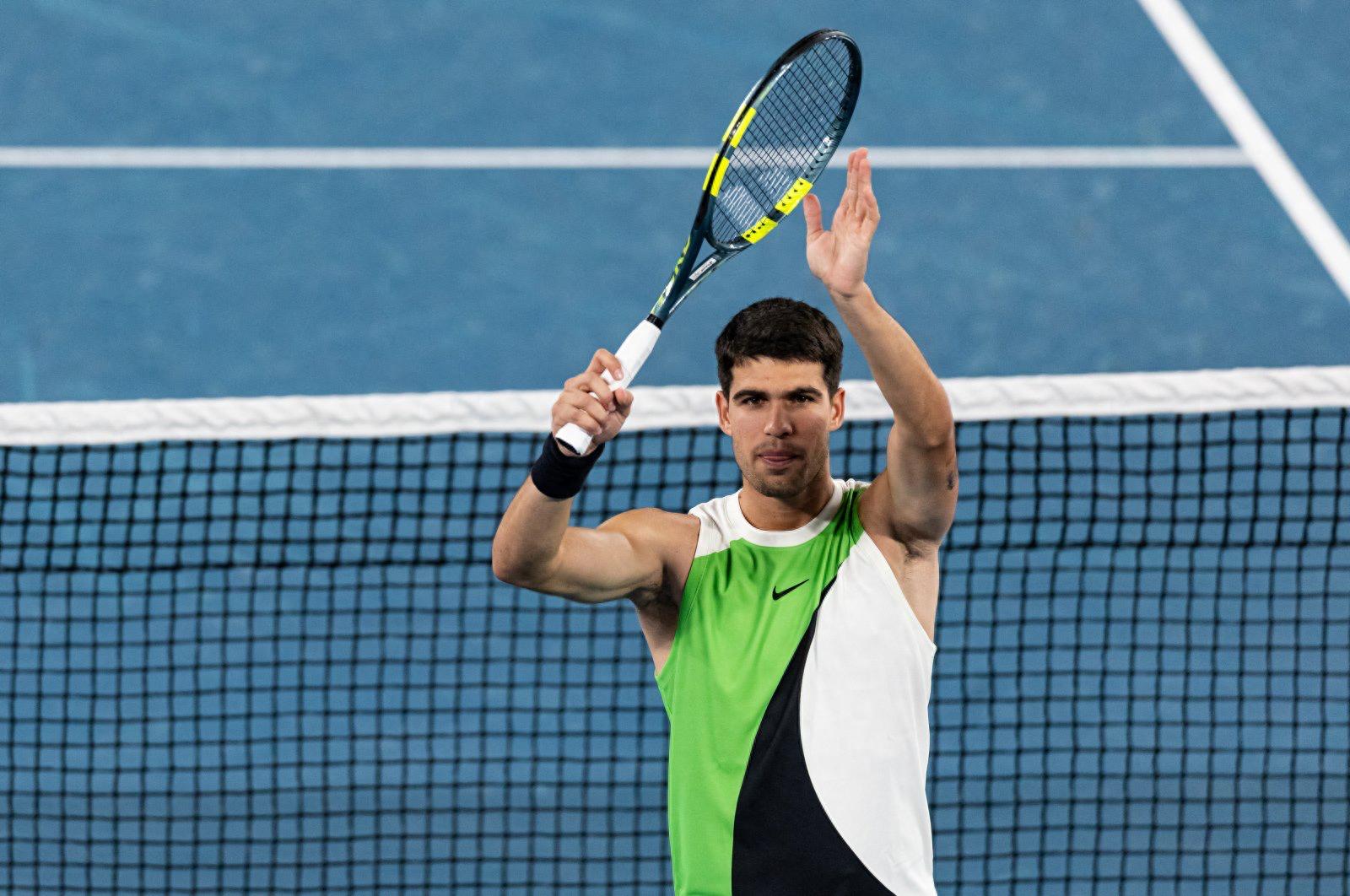
A completely new motion, a fresh rhythm, and a style that inevitably reminded people of Djokovic. His serve looked smooth and relaxed, with subtle tweaks in his ball toss.
Even Alcaraz himself admitted, "Are you trying to say my serve really looks like Djokovic’s? (laughs) I know that's what you’re thinking. I wasn’t aiming to copy Djokovic’s serve, but in the end, I can see the similarities myself."
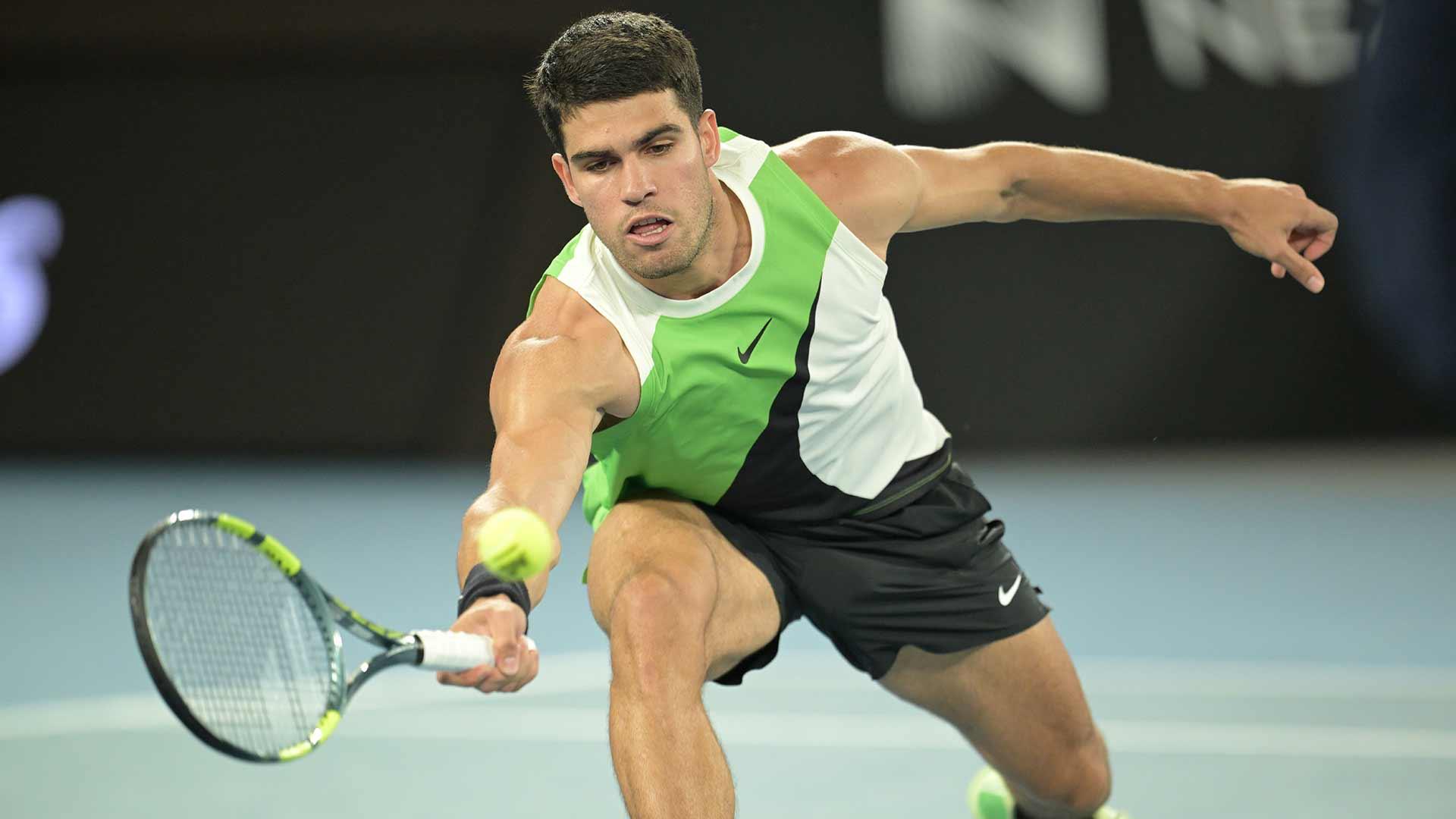
Soon, clips of his serve went viral online and reached Djokovic. At that time, the Serbian had just defeated Pedro Martinez in the Australian Open first round, and reporters mentioned the resemblance. Djokovic found it amusing and immediately treated it as a joke.
“As soon as I saw it, I messaged him saying we need to discuss copyright fees. Then when I met him here, I told him we should talk about sharing his prize money,” Djokovic said. “Every Ace he serves, I hope it’s a tribute to me. Let’s see if he honors that ‘deal’.” Meanwhile, Djokovic’s own serve was firing on all cylinders in Melbourne as well.
The ten-time Australian Open champion posted a 93% first-serve win rate against Martinez and didn’t face a single break point throughout the match. This marked his 100th hard-court Grand Slam victory, just two shy of Federer’s record of 102. Against this backdrop, Alcaraz’s evolving serve is more than a technical tweak—it’s a statement. So how did he get here? The answer is—it took him years.
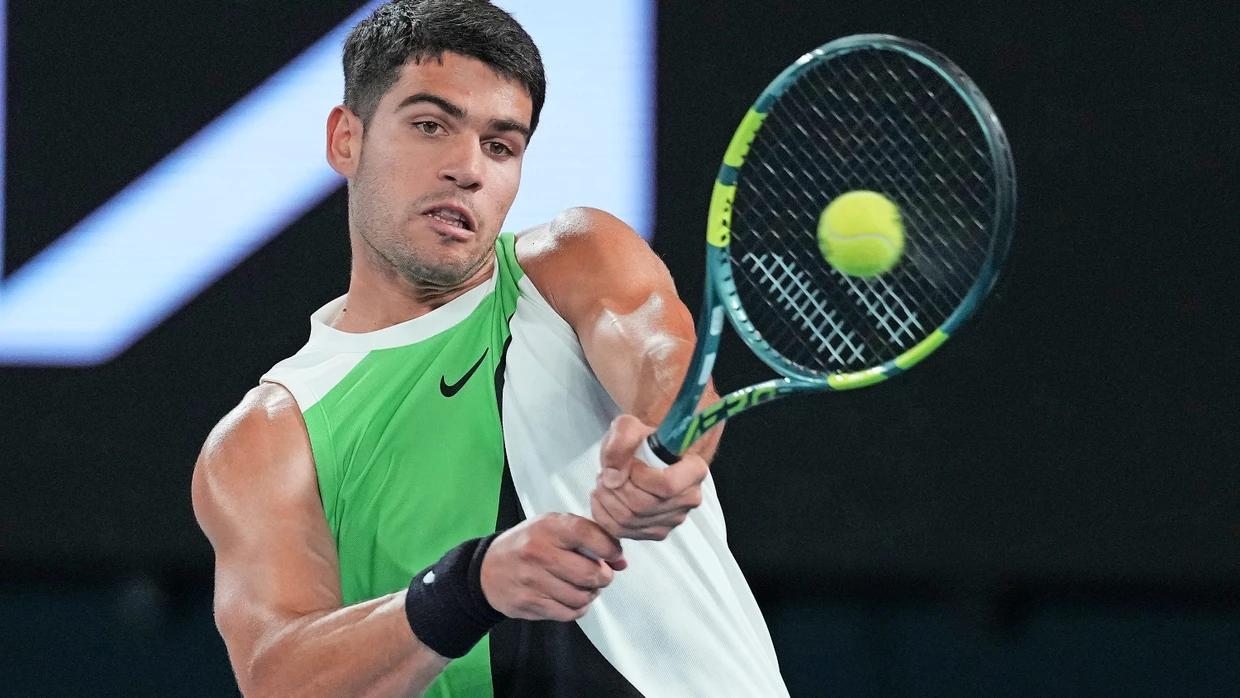
Alcaraz’s serve has long been a “work in progress.” Early on, his serve had plenty of power but lacked consistency, falling short compared to other top servers on tour. His first serve speed could reach 115 to 120 mph, sometimes faster, but placement was often an issue. Even his second serve relied more on topspin to push opponents back behind the baseline rather than pure pace.
In 2024, his serve motion included two brief pauses in the racket head’s path before contact, disrupting rhythm and hindering power flow. “Carlos used to stop twice when swinging his racket back, now he only pauses once, which helps him maintain rhythm during the serve,” said Antonio Martinez Cascales, head of the Ferrer Tennis Academy.
At that stage, Alcaraz often started his body rotation late, after both feet were planted and the racket swing had begun, reducing serve efficiency compared to modern pros. A breakthrough appeared in early 2025: a new video from January 3 showed his serve had evolved, eliminating the “delayed rotation” issue. The key change was in the “lag position”: previously his racket pointed sideways, now it points more downward.
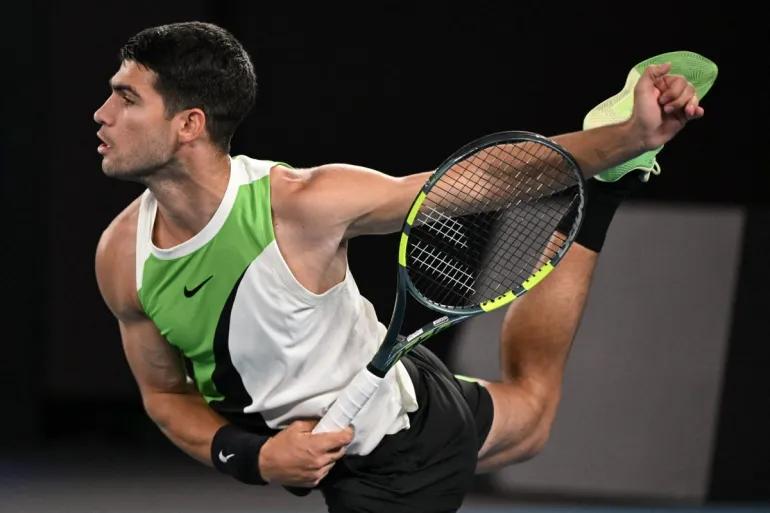
This subtle adjustment had a huge impact on rhythm. During the crucial lag phase, the racket tilts downward and slightly backward, allowing his elbow to rotate earlier and more smoothly, then the racket rises into the “trophy pose.” The delayed rotation was completely removed, making the entire motion more integrated and fluid, resembling the smooth trophy phase seen in players like Djokovic.
Now, after parting ways with longtime coach Ferrer during the off-season, Alcaraz arrived at the Australian Open with a freshly refined serve. With continuous improvement, every time he steps on court, he feels his serve is sharper, smoother, and more unstoppable than ever.(Source: Tennis Home, Author: Spark)

 Links
Links
 Contact
Address:UNIT 1804 SOUTH BANK TOWER, 55 UPPER GROUND,LONDON ENGLAND SE1 9E
Number:+85259695367
E-mali:[email protected]
 App
App


